

Illustrative conversation between an older adult and a dental clinician
General & Family Dentistry

Dental Care for Older Adults in Halton Hills

Told a tooth needs work and unsure what to do? Older adults from Halton Hills can talk through monitoring, repair and replacement, weighing each choice against comfort, health and the effort involved.

Halton Hills · decisions about dental work

Watch it, fix it, or replace it?

Sooner or later, most people with a lifetime of dental work hear that something might need attention. A filling has a crack line, a bridge shows wear, or a denture no longer sits as it should. The next question is rarely simple. Leaving it, mending it and replacing it each carry their own demands, and the right answer is personal.

Age is a poor guide to that answer. What matters is the condition of the tooth or appliance, the health of the gums and bone around it, your general health and medicines, and what you would like to achieve. Our role is to explain the findings plainly so you can compare the choices with your eyes open.

For households in Halton Hills, from Georgetown to Acton and the smaller hamlets, it is often a partner or neighbour who helps with the drive. Bring them in if you like and say how involved you want them. Hearing, vision, mobility or communication needs can be noted when you book.

Talk through your options
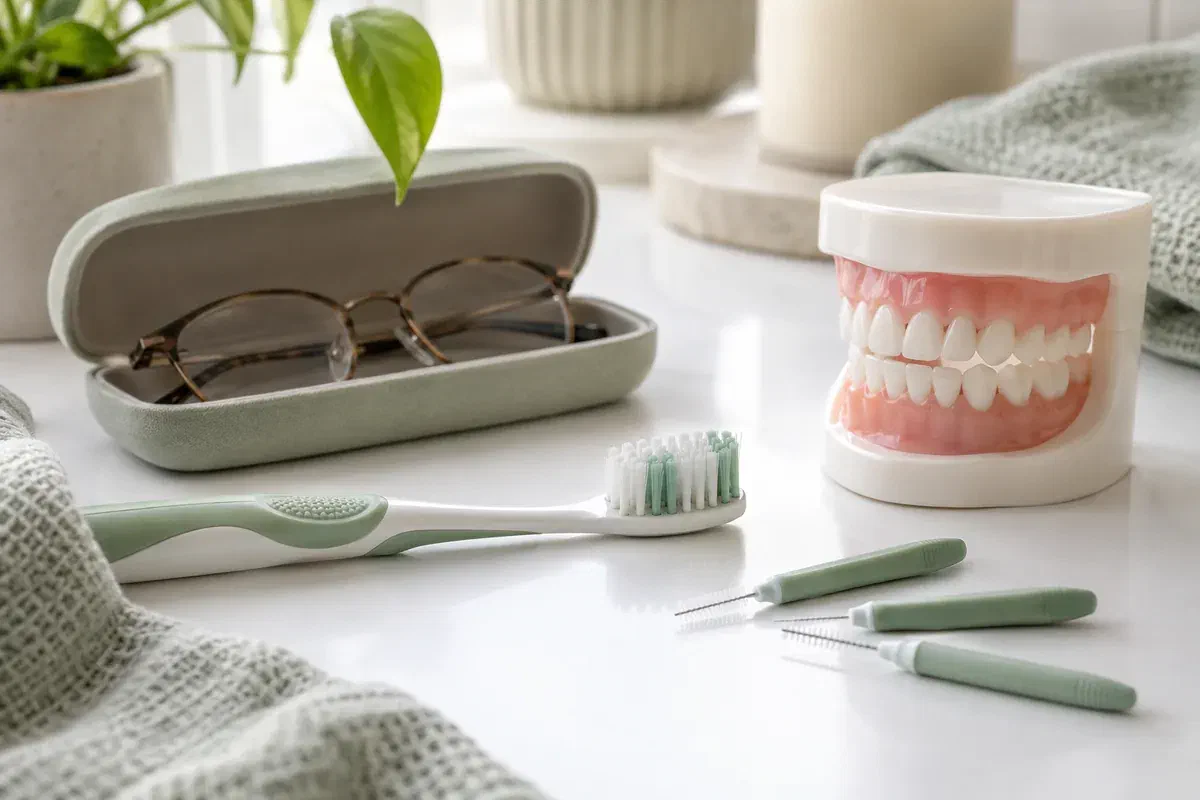
Easy-grip toothbrush, interdental brushes, dental model, and reading glasses
Where decisions often begin

Three situations that call for a clear choice

Most dental decisions start with a small sign rather than a crisis. Mention what you have noticed, even if it does not hurt, so the options can be explained before the situation narrows them.

An older restoration with a problem

Floss that shreds on one tooth, a corner that feels sharp, or food that wedges in the same gap can point to trouble at a filling or crown edge. The dentist examines the tooth and its supporting structures, then explains which options are realistic.

Dryness or an area that stays sore

A mouth that is dry day after day can raise decay risk around existing work. It frequently relates to medicines or health conditions, and it should not be written off as ageing. A tender patch or burning feeling also deserves an examination.

An appliance or routine that is failing

A partial or full denture that rubs, rocks or breaks often forces a choice between adjusting and replacing. Cleaning may also have become harder. Explain when the trouble happens so the appliance and gums can be judged together.

Some signs need prompt attention regardless of the decision at hand. Report a sore that will not heal, a new lump, unexplained bleeding, or any new difficulty with chewing or swallowing so it can be assessed properly.

Deciding with full information

Good choices come from good explanations

Start with the outcome you want. It might be keeping a tooth that anchors your bite, getting a denture that stays steady, or reducing the number of things you have to clean. Once that goal is clear, you can ask how each option serves it, how long it is likely to last, and what maintenance it brings.

Then look at the practical cost of each path. Number of appointments, recovery, fees and the help you might need at home all count. Staging treatment can make sense. Two people of the same age facing the same finding may reasonably choose differently, and the explanation you receive should allow for that.

Why a restoration needs attention, or not

Ask the dentist to show or describe what was found. Some restorations look old yet work well, and others need care sooner than expected. Age by itself is not enough reason to replace a filling or crown.

Cleaning that protects whatever you choose

Every option depends on good home care. The team can suggest handle styles, interdental aids and techniques for cleaning around bridges, crowns and dentures. A helper can learn alongside you, following your preferences.

The freedom to choose again later

Choosing to monitor today does not rule out treatment tomorrow. If your health, priorities or support change, tell us. The options can be reviewed and explained again before any next step.

How we help you decide

From first question to agreed plan

Please bring your medication list, recent health updates and any denture or appliance. If you have been given a treatment recommendation elsewhere, bring that too, along with your questions about it.

  1. Understand your situation

    We ask what brought you in and review your medical history and medicines. Daily life matters too: how chewing feels, what cleaning involves, what you have stopped doing. Tell us whether hearing, sight, seating or communication support would help.

  2. Assess the tooth, tissues or appliance

    The examination focuses on the area in question and the rest of the mouth that relates to it. X-rays or other imaging may be suggested when they would help answer whether something can be kept or repaired.

  3. Set the options side by side

    Monitoring, repair and replacement are compared on benefits, limits, durability, cost and the number of visits. Where your doctor’s view or a specialist opinion would help, you will hear why, and what that next step looks like, before anything is booked.

  4. Choose, then confirm the details

    Once you decide, confirm what happens next, how to care for the area at home and when to return. Written notes are available. A companion can help with arrangements if you wish, while the decision remains yours.

Protecting the decision you make

Home care keeps your options open

Whatever you choose, daily care should fit your natural teeth, dental work and appliances. Practising the essential steps with the team is often more useful than gathering tips from unrelated products.

Clean around dental work carefully

Fluoride toothpaste helps protect natural teeth and the edges of restorations. Pick an interdental aid that reaches under bridges or between crowns. A bigger handle may help if gripping is hard; show us your method.

Give the denture regular attention

Clean it according to its material and keep your gums clean too. Ask how many hours to wear it and when to take it out. If it rubs or loosens, report it rather than relying on adhesive.

Keep an eye on dryness

If your mouth has become drier, note when it started and whether a new medicine came first. Relief and extra protection can be discussed. Do not stop prescriptions yourself, and mention any fluid limits from your doctor.

Patient information: NIDCR — understanding persistent dry mouth · NIDCR — oral health resources for older adults

The three main paths

Each one asks something different of you

Keeping what works, repairing a problem and improving an appliance all have costs and benefits. Ask how much difference each would make compared with the treatment and upkeep it requires.

When a finding is stable

Monitor and maintain

You keep the current tooth or restoration, support it with good cleaning and prevention, and review it regularly. You will know what change would prompt treatment. Being comfortable now is helpful, but regular examinations still matter.

When a specific problem can be mended

Repair what is there

A chipped tooth, worn filling or gum concern may be treated directly. Ask whether a conservative repair is possible, how long it might last and what follow-up involves. The advice should rest on findings and health, not your birth year.

When repair is no longer sensible

Replace with something new

This may mean a new crown, a different denture or another way to replace teeth. Suitability is shaped by your mouth, health, wishes and the maintenance you can manage. Explain what you hope to eat or say more comfortably.

Decision questions

Asking the right questions before you agree

You can ask about alternatives, the evidence behind a recommendation, timing and practical arrangements. Writing questions down, or bringing someone, can help you feel prepared.

(905) 876-4488
Can I ask for a repair instead of a replacement?
You can always ask. Whether a repair is reasonable depends on the extent of damage, the surrounding tooth and gums, and how long a repair would be expected to last. The dentist can explain the trade-offs so you can choose.
What happens if I decide to just watch a tooth?
The area is reviewed at your regular visits, and you will be told which signs should prompt a call sooner, such as pain, swelling or a change in bite. Monitoring is an active choice, not a refusal of care.
Can a broken denture be fixed, or do I need a new one?
It depends on the break, the age and fit of the denture, and changes in your mouth. Some can be repaired, while others no longer fit well enough to be worth mending. Bring the pieces and the dentist can advise.
Is there a reason to remove a tooth rather than save it?
Occasionally a tooth cannot be restored predictably, or keeping it would cause ongoing problems. The dentist will explain the findings behind any such recommendation and the alternatives, including what replacing the tooth would involve.
Should I get a second opinion?
You are always free to. A clear explanation of the findings and options should help you decide whether you want one. Bring any previous recommendations, and the team can talk through how they compare.
How do I fit treatment visits around life in Halton Hills?
Tell us your best days and any transport arrangements. Ask whether treatment can be staged or some steps combined. If a symptom changes before your appointment, call first so the plan can be adjusted.
Older adult dental care for Halton Hills

Understand your options before you commit

Our Bronte Street practice can book an assessment to look at the tooth, restoration or denture you are wondering about. Bring any recommendations you have already received. We will explain the findings and help you compare choices that suit your health and priorities.

Let us know about hearing, vision, mobility or seating needs when booking so we can prepare ahead.

Visit Milton Dental Clinic
Unit 1, 342 Bronte St. S, Milton, ON L9T 5B7
Get directions Clinic hours
Monday–Thursday
11am–7pm
Friday–Sunday
By appointment only

Areas we serve

  • Milton
  • Oakville
  • Mississauga
  • Georgetown
  • Halton Hills
  • Acton
  • Campbellville
  • Brampton
  • Burlington
  • Puslinch
  • Rockwood
  • Erin
  • Caledon
  • Etobicoke
  • Old Milton
  • Bronte Meadows
  • Timberlea
  • Dorset Park
  • Dempsey
  • Clarke
  • Beaty
  • Coates
  • Harrison
  • Scott
  • Willmott
  • Ford
  • Bowes
  • Cobden
  • Walker
  • Mountain View
  • Milton Heights
  • Hawthorne Village
  • Valley View
  • Fallingbrook
  • Nassagaweya
  • Trafalgar
  • Esquesing
  • Nelson
  • Brookville
  • Moffat
  • Glen Williams
  • Norval
  • Limehouse
  • Stewarttown
  • Ashgrove
  • Hornby
  • Silver Creek
  • Speyside
  • Scotch Block
  • North Oakville
  • River Oaks
  • Glen Abbey
  • West Oak Trails
  • Palermo
  • Bronte Creek
  • College Park
  • Joshua Creek
  • Uptown Core
  • Preserve
  • Iroquois Ridge
  • Lisgar
  • Meadowvale
  • Meadowvale Village
  • Churchill Meadows
  • Erin Mills
  • Central Erin Mills
  • Streetsville
  • East Credit
  • Creditview
  • Heartland
  • Sheridan
  • Mount Pleasant
  • Credit Valley
  • Huttonville
  • Churchville
  • Springbrook
  • Northwest Brampton
  • Bram West
  • Fletcher's Meadow
  • Fletcher's Creek South
  • Alton Village
  • Orchard
  • Millcroft
  • Headon Forest
  • Tansley
  • Brant Hills
  • Tyandaga
  • Kilbride
  • Lowville
  • Aberfoyle
  • Morriston
  • Arkell
  • Hillsburgh
  • Freelton
  • Carlisle
  • Waterdown
  • Flamborough
  • Mountsberg

How can we help?

Milton Dental Clinic

Have a question about your smile? Choose the option that works best for you.

For urgent dental concerns, please call.
Messages are reviewed during clinic hours.