

Illustrative conversation between an older adult and a dental clinician
General & Family Dentistry

Dental Care for Older Adults in Oakville

Not every change in your mouth is “just getting older.” For adults coming from Oakville, we sort out which changes need treatment, which can be watched, and how to keep teeth, gums and dentures comfortable.

From Oakville · separating age from cause

“Is this normal at my age?” is a fair question to ask

Gums that bleed a little, a tooth that feels longer, a mouth that wakes up parched: it is tempting to file these under ageing and move on. Sometimes the change really is minor. Often there is a cause that can be identified and managed. The only reliable way to tell the difference is to look closely.

Your age is one detail among many, and rarely the most useful. What helps us more is knowing your medical history and medicines, what dental work you have, whether you wear a denture, and what you want to protect. With that in hand, the dentist can explain which findings matter and what can sensibly be left alone.

Coming in from Oakville with a spouse or grown child is perfectly fine. Let us know how you would like them to help, whether that is taking notes or simply keeping you company. Mention any hearing, vision or mobility needs when you call so the appointment can be set up to suit you.

Ask about a change you have noticed
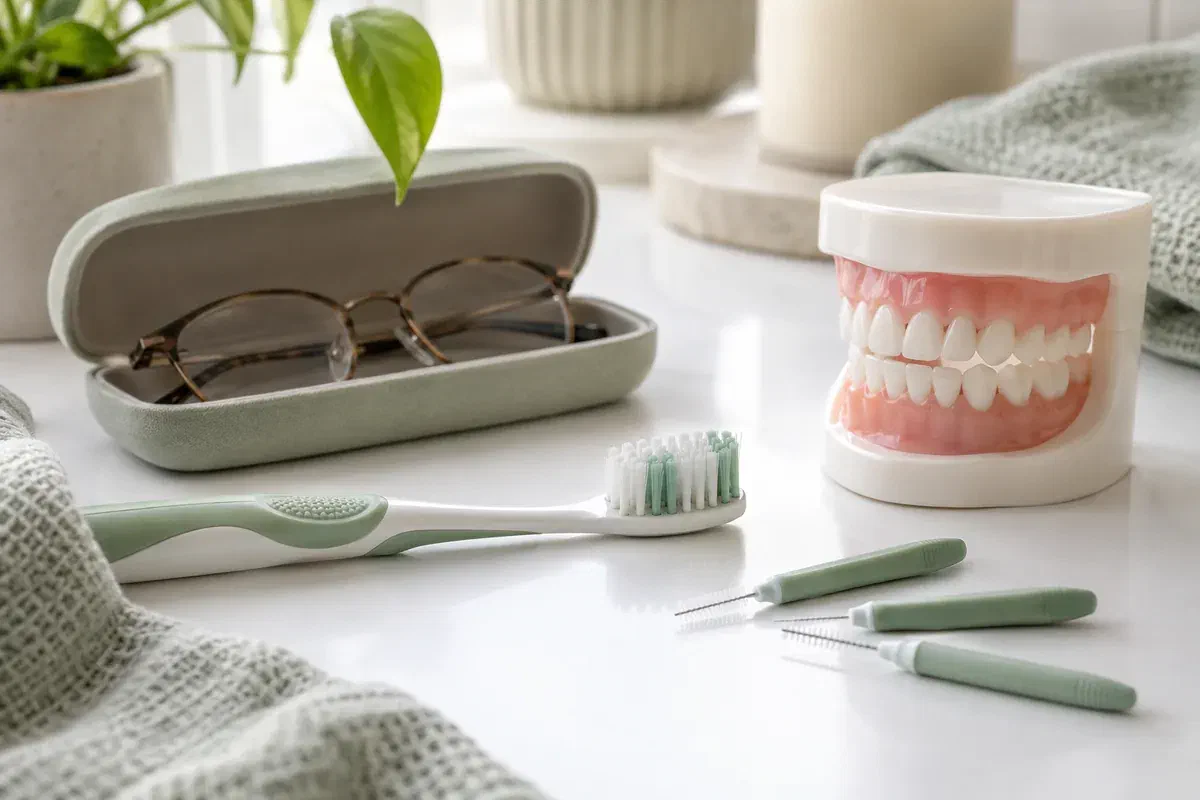
Easy-grip toothbrush, interdental brushes, dental model, and reading glasses
Not simply wear and tear

Changes that deserve a closer look

You do not need severe pain to justify a visit. Mild but persistent changes in comfort, function or appearance are often easier to understand early, before a minor issue grows.

Dental work that has started to misbehave

A filling or crown that once felt invisible may begin to snag floss, trap food or change how your teeth come together. These signs can point to a problem at the edge of the restoration. The dentist assesses the tooth before suggesting any course of action.

Dryness, burning or a lingering sore

A persistently dry mouth is common, but common is not the same as normal. Medicines and medical conditions are frequent contributors. A burning feeling, a tender patch or tissue that looks unfamiliar should be examined rather than managed with guesswork.

Routines or appliances getting harder

Changes in dexterity or eyesight can make brushing and flossing slower or less thorough. A denture that rubs, rocks or needs more adhesive than it used to is also a signal. Tell us when it happens so the appliance and gums can be checked together.

Age alone does not account for most changes in the mouth. A sore that persists, a new lump, unexplained bleeding, or difficulty chewing or swallowing should be reported so it can be assessed properly.

The value of a clear answer

Know what you are dealing with, then decide

Once the cause of a change is understood, decisions become more straightforward. You can ask whether something needs treatment now, can be monitored, or is genuinely nothing to worry about. Each recommendation should come with a reason tied to what was found, along with a sense of the care it will require afterward.

Practical considerations sit alongside the clinical ones. You can discuss appointment numbers, recovery, costs and whether anyone would need to help you at home. Treatment can sometimes be phased. Good advice gives you enough to compare choices and never assumes that people of a given age all want the same thing.

A frank review of older restorations

The dentist can tell you which fillings and crowns look sound and which are worth watching more carefully. That helps separate genuine problems from changes that are stable. How long a restoration has been in place does not, by itself, justify replacing it.

Cleaning advice that fits your hands

If gripping or reaching has become harder, the team can suggest handle styles, interdental aids and techniques for difficult areas. A family member who helps can be shown what to do, so their assistance matches your preferences.

Decisions that can be revisited

Health and circumstances shift. Tell us when a plan no longer feels right, whether it has become too demanding or your priorities have moved. Going back over the options is a normal part of ongoing care.

What happens at your visit

Questions first. Examination second. Choices third.

A current medication list, recent health updates and any dentures you wear are the most helpful things to bring. Note the changes that prompted you to book, along with roughly when they began.

  1. Review health, medicines and habits

    We ask what brought you in, go over your medical history and prescriptions, and learn how you eat and clean your mouth. Mention new diagnoses or medicine changes, since they can affect oral health. Tell us if hearing, sight, seating or communication support would help.

  2. Check the mouth as a whole

    The dentist examines gums, natural teeth, existing dental work and the tissues under any appliance. X-rays or other imaging may be suggested if they would answer a particular question. Describe symptoms that come and go, as they may be absent during the appointment.

  3. Explain findings and options

    You will hear what was found, what it likely means, and which choices are reasonable. For each, you can ask about benefits, drawbacks, cost and the number of visits. If your doctor or a specialist should be involved, the reason will be explained.

  4. Confirm a plan together

    The plan may be treatment, monitoring or both, plus home-care steps and a review date. Written information is available on request. With your agreement, a companion can help with logistics while you remain involved in each decision.

Looking after things at home

A routine built on what you actually have

Home care should reflect your own mix of natural teeth, restorations and appliances. A short demonstration of the steps that matter most tends to work better than trying every product on the shelf.

Choose aids that suit you

Fluoride toothpaste protects natural teeth, and cleaning between them matters too. If small handles are awkward, a larger grip or a different interdental tool may help. Bring what you use so we can see where the difficulty lies.

Care for the denture and the gums

Clean the appliance as its material requires and look after the tissues it rests on. Ask how long to wear it each day and when to give your gums a break. Rubbing or looseness should be checked rather than hidden with adhesive.

Raise dryness and new medicines

Note when the dry feeling began and whether it followed a prescription change or new diagnosis. Relief measures and extra protection for teeth can be discussed. Do not stop any medicine without your doctor’s advice, and mention any limits on fluids.

Patient information: NIDCR — understanding persistent dry mouth · NIDCR — oral health resources for older adults

Where the plan might go

Monitor, repair or replace?

Some plans preserve what already works, some solve one problem, and some improve an appliance. Ask how the likely benefit compares with the demands of treatment and the upkeep that follows.

When a change turns out to be stable

Watch and prevent

If findings are reassuring, the plan may centre on keeping natural teeth and dental work healthy with good cleaning, prevention and regular review. You will know what signs would prompt treatment later. Feeling comfortable is good news, though not a replacement for an examination.

When a cause needs addressing

Treat the underlying cause

A decayed tooth, gum condition or failing restoration may need specific care. Ask about conservative options, how long each might last and what follow-up involves. The recommendation should reflect findings and health, not assumptions about age.

When missing teeth limit daily life

Replace what is missing

Choices may include adjusting a current denture or looking at other replacement options. What suits you depends on your mouth, health, preferences and maintenance needs. Explain what you would like to eat or say with more ease so the comparison stays practical.

Frequently asked

Straight answers for changing needs

You are welcome to ask why something is recommended, what else is possible and how appointments can be arranged. A list or a companion can help you feel ready.

(905) 876-4488
Are bleeding gums normal as you get older?
Bleeding is a sign worth mentioning at any age. It can relate to gum inflammation, cleaning technique, certain medicines or other health factors. The dentist can check the gums, explain what is contributing and suggest how to manage it.
Why do my teeth look longer than they used to?
Gums can recede over time, exposing more of the tooth and sometimes the root surface. Root surfaces can be more prone to sensitivity and decay. An examination can show how much change has occurred and whether any preventive or treatment steps are worth discussing.
Can my medications affect my teeth and gums?
Some medicines reduce saliva or affect the gums, and that can change your risk of decay or discomfort. Bring an up-to-date list so the team can consider it. Never stop a prescribed medicine on your own; any concerns can be discussed with your physician.
Is it too late to save a tooth that has been bothering me?
Not necessarily. Whether a tooth can be kept depends on its condition, the supporting bone and gums, and your health and wishes. The dentist can explain what is possible, including the effort each choice involves, so you can decide.
Do people without natural teeth still need check-ups?
Yes. The gums, tongue and other tissues need attention, and dentures should be reviewed for fit and wear. Describe any rubbing, difficulty eating or changes you notice. How often you return should be based on your own needs.
How should I plan an appointment if I am coming from Oakville?
Tell us about any timing that works best for you and any support you need on arrival. If several things need attention, ask whether some can be addressed at the same visit. Call ahead if a symptom changes before your appointment.
Care for older adults from Oakville

Find out what is really going on

Call our Bronte Street practice to describe the change you have noticed and any appointment needs. You may be keeping natural teeth healthy, wondering about a denture, or puzzled by a new symptom. We begin with an assessment and a clear explanation of your options.

Share any hearing, vision, mobility or seating needs when booking so we can prepare in advance.

Visit Milton Dental Clinic
Unit 1, 342 Bronte St. S, Milton, ON L9T 5B7
Get directions Clinic hours
Monday–Thursday
11am–7pm
Friday–Sunday
By appointment only

Areas we serve

  • Milton
  • Oakville
  • Mississauga
  • Georgetown
  • Halton Hills
  • Acton
  • Campbellville
  • Brampton
  • Burlington
  • Puslinch
  • Rockwood
  • Erin
  • Caledon
  • Etobicoke
  • Old Milton
  • Bronte Meadows
  • Timberlea
  • Dorset Park
  • Dempsey
  • Clarke
  • Beaty
  • Coates
  • Harrison
  • Scott
  • Willmott
  • Ford
  • Bowes
  • Cobden
  • Walker
  • Mountain View
  • Milton Heights
  • Hawthorne Village
  • Valley View
  • Fallingbrook
  • Nassagaweya
  • Trafalgar
  • Esquesing
  • Nelson
  • Brookville
  • Moffat
  • Glen Williams
  • Norval
  • Limehouse
  • Stewarttown
  • Ashgrove
  • Hornby
  • Silver Creek
  • Speyside
  • Scotch Block
  • North Oakville
  • River Oaks
  • Glen Abbey
  • West Oak Trails
  • Palermo
  • Bronte Creek
  • College Park
  • Joshua Creek
  • Uptown Core
  • Preserve
  • Iroquois Ridge
  • Lisgar
  • Meadowvale
  • Meadowvale Village
  • Churchill Meadows
  • Erin Mills
  • Central Erin Mills
  • Streetsville
  • East Credit
  • Creditview
  • Heartland
  • Sheridan
  • Mount Pleasant
  • Credit Valley
  • Huttonville
  • Churchville
  • Springbrook
  • Northwest Brampton
  • Bram West
  • Fletcher's Meadow
  • Fletcher's Creek South
  • Alton Village
  • Orchard
  • Millcroft
  • Headon Forest
  • Tansley
  • Brant Hills
  • Tyandaga
  • Kilbride
  • Lowville
  • Aberfoyle
  • Morriston
  • Arkell
  • Hillsburgh
  • Freelton
  • Carlisle
  • Waterdown
  • Flamborough
  • Mountsberg

How can we help?

Milton Dental Clinic

Have a question about your smile? Choose the option that works best for you.

For urgent dental concerns, please call.
Messages are reviewed during clinic hours.