

Illustrative conversation between an older adult and a dental clinician
General & Family Dentistry

Dental Care for Older Adults in Rockwood

Hard to hear over the equipment, or to read the printed instructions? Older adults travelling from Rockwood can expect unhurried explanations, written notes and care for teeth, gums and dentures that you follow.

Rockwood · understanding every step

You nodded along last time. This time, you’ll follow it all.

Plenty of people leave a dental appointment unsure what was actually said. Masks muffle voices, a suction tube hums, the light is in your eyes, and it can feel awkward to ask for something to be repeated. Good dental care in later life depends on you understanding your own mouth, so clear communication is part of the treatment, not an extra. Asking twice is never a nuisance.

The care itself starts from your situation rather than a birthday. Teeth, gums, crowns or bridges and any denture are examined, and your health and medicines are taken into account. Then we explain what we found, sitting you upright and facing you, with time for questions and written notes if they help.

Coming from Rockwood with a relative who can listen alongside you is welcome. Decide together what their role will be. Tell us about hearing aids, glasses, lip-reading, interpreters or any other communication preference when you book, so we can plan the conversation.

Request a clearly explained visit
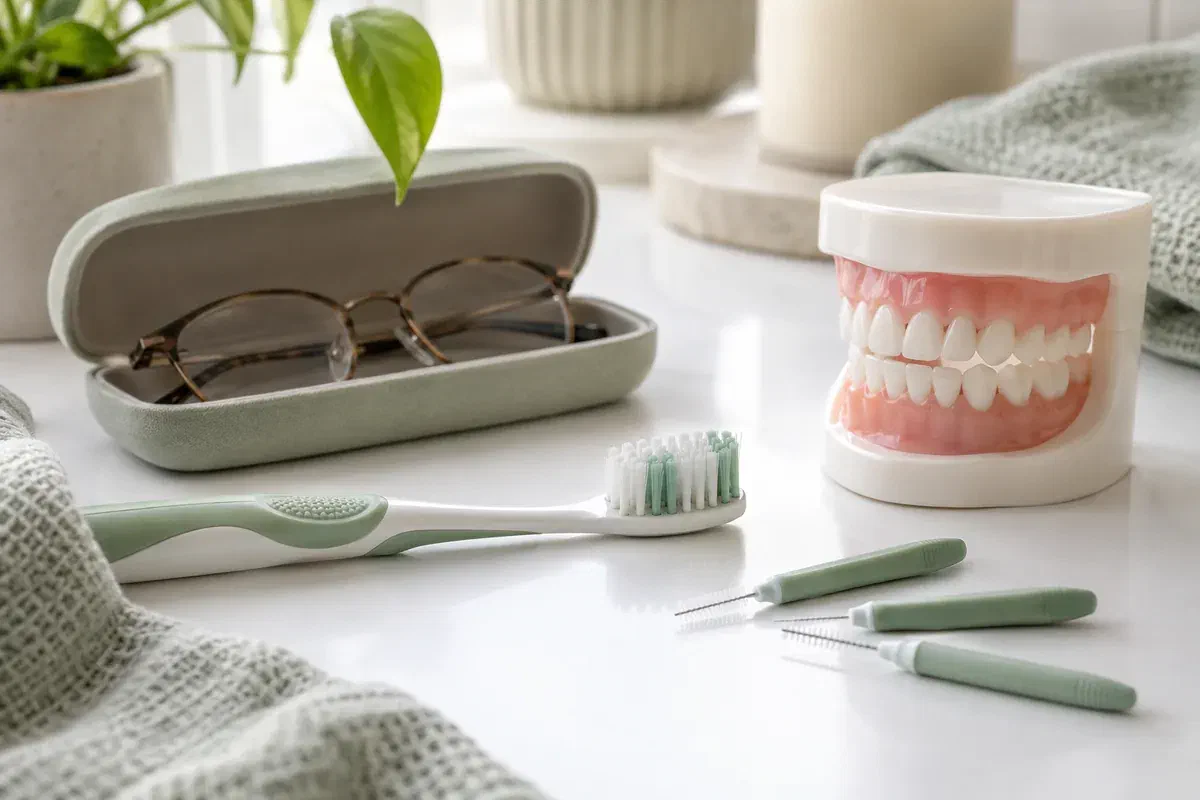
Easy-grip toothbrush, interdental brushes, dental model, and reading glasses
Things worth telling us

Small changes, clearly described, lead to better care

If something in your mouth feels different, it is worth bringing up even when it seems minor. Writing it down beforehand can help you remember everything once you are in the chair.

Fillings, crowns or bridges acting up

Long-standing restorations can still loosen, chip or trap food at the edge. You might notice a sharp area with your tongue or a change in how you bite. The dentist examines the tooth and surrounding area, then explains in plain terms whether to watch, repair or replace.

A dry mouth or sore area

Ongoing dryness frequently relates to medicines or medical conditions and should not be dismissed as ageing. A sore that persists, a burning feeling or tissue that looks different deserves examination, not a series of untested home treatments.

Cleaning or denture use becoming a struggle

Reduced vision can make it difficult to see whether teeth or a denture are clean, and less nimble hands slow everything down. Say which part is tricky. If an appliance rubs or shifts, note when, so it and the gums underneath can be checked.

A change in your mouth is not automatically down to age. Sores that refuse to heal, lumps you have not felt before, bleeding with no obvious cause, and any fresh trouble chewing or swallowing all need prompt assessment, so please mention them.

Clarity in planning

When you understand the plan, you can own it

A plan only works if it makes sense to you. It should begin with your goals, whether that is keeping a particular tooth, wearing a denture without discomfort or making your routine easier, and with the examination findings. Each recommendation should be explained in words you can repeat back, including what ongoing care it needs.

The practical side deserves the same clarity. You can ask how many visits are involved, what recovery may feel like, the costs and whether you would need help at home. Spacing out treatment may be possible. Expect enough information to compare options, and no assumption that everyone in later life wants the same result.

Dental work explained in plain language

The dentist can show you on a model or picture which restorations are healthy and which need watching. That makes it easier to tell urgent from stable. A filling that is old but sound is not replaced for that reason alone.

Home-care instructions you can see and hear

The team can demonstrate brushes, interdental aids and techniques slowly, then let you try. You can ask for the steps in writing to take home, and a helper can learn the routine with you.

Explanations repeated whenever needed

If you forget a detail or your situation changes, ask again. Reviewing a plan is part of ongoing care, and you are welcome to call before an appointment to go over questions.

How the visit runs

Talk face to face, examine, then explain again

Bring your list of medicines, health updates, any denture, and your glasses or hearing aids. A short written list of questions keeps the conversation on track.

  1. Conversation before the chair reclines

    We talk with you sitting upright, facing you, about why you came, your health history and medicines, and how eating and cleaning are going. Tell us how you communicate best and whether positioning or other support would help.

  2. A thorough, explained examination

    The dentist checks gums, teeth, existing dental work and denture-bearing areas, letting you know what is happening as it goes. Radiographs may be advised when they would help answer a specific question. Describe any symptom that comes and goes.

  3. Options set out clearly

    Each reasonable choice is described with its benefits, limits, costs and number of visits, at a pace that suits you. If a specialist or your physician should be involved, you will be told why before anything is arranged.

  4. A plan you can take home

    Confirm treatment or monitoring, home-care steps and when to return, with written notes if you like. With your consent, a support person can help with arrangements, while you remain at the centre of each decision.

At home after the visit

A routine you can see, feel and remember

Daily care should reflect what is actually in your mouth, from natural teeth to crowns and a denture. Watching a demonstration, then trying it yourself while someone guides you, usually sticks better than reading the back of a package.

Use touch as well as sight

A fluoride toothpaste on natural teeth, plus an interdental aid sized for your gaps, covers the essentials. Running your tongue over teeth afterward can help you feel missed spots. A wider handle may help if your grip is weak.

Keep denture care consistent

Clean the appliance in line with its material, using the same order every day so nothing is missed. Clean your gums too. Ask about wearing and resting times, and report rubbing rather than covering it with adhesive.

Write down dryness and medicine changes

Keep a note of when your mouth started to feel dry and any new medicine around that time. We can then talk about easing it and protecting your teeth. Do not stop prescriptions yourself, and mention fluid restrictions.

Patient information: NIDCR — understanding persistent dry mouth · NIDCR — oral health resources for older adults

Understanding your choices

Three directions, each explained in plain words

A plan may preserve what is working, fix one issue or improve an appliance. For each, you can ask what the benefit would be and what visits and upkeep it would require.

When your mouth feels comfortable

Looking after what you have

The focus is on keeping natural teeth and dental work healthy with cleaning, prevention and regular review. Any area being watched comes with an explanation of what would prompt treatment. Feeling comfortable is reassuring, though not a substitute for an examination.

When something specific needs attention

Fixing a particular issue

A damaged tooth, gum problem or uncomfortable crown may need specific treatment. Ask about conservative options, likely durability and follow-up. Recommendations should follow your findings and health, not your age.

When missing teeth affect daily life

Improving how you replace teeth

This might involve adjusting a denture or exploring a different way of filling gaps. The best match depends on the examination, your general health, your wishes and the upkeep you can manage. Tell us which meals or conversations have become harder, and the comparison can be explained against those.

Communication questions

Making sure nothing gets lost in translation

You can ask about alternatives, reasons for recommendations and arrangements for your visit. Bringing a list, or a relative to listen alongside you, can help.

(905) 876-4488
Can the dentist write down what we discussed?
Yes. Ask for written notes about findings, the plan and home-care steps. Having information to read later can help you remember details and share them with family if you wish.
Can I keep my hearing aids in during the appointment?
Usually, yes, and it often helps. Let the team know you wear them. If anything needs to be adjusted for a particular step, that will be explained first, and important conversations can happen with you sitting up.
Is it all right to ask the dentist to slow down or repeat something?
Absolutely. You are encouraged to ask for anything to be explained again, more slowly or in a different way. Understanding your care is essential to making decisions about it.
Can someone else listen in and help me remember?
With your permission, a relative or friend can join the conversation. Tell the team what role you want them to have. You will still be spoken to directly and remain involved in the decisions.
What if I get home and forget what was decided?
Call the practice and ask. Written notes from the visit can also help. There is no harm in checking, and it is better than guessing about home care or the next appointment.
Can I phone ahead from Rockwood to go over my questions?
Yes. Calling before your appointment lets you mention concerns, communication needs and any timing constraints, so the visit can be planned. If something changes before you travel, a call can help decide whether to come in.
Older adult dental care for Rockwood

Care you can understand from start to finish

Phone our Bronte Street practice and let us know how you communicate best. Whether the concern is a natural tooth, a denture or a new symptom, we will examine your mouth, explain what we see clearly and give you time to ask every question.

Please mention hearing, vision, language or positioning preferences when booking, so we can prepare.

Visit Milton Dental Clinic
Unit 1, 342 Bronte St. S, Milton, ON L9T 5B7
Get directions Clinic hours
Monday–Thursday
11am–7pm
Friday–Sunday
By appointment only

Areas we serve

  • Milton
  • Oakville
  • Mississauga
  • Georgetown
  • Halton Hills
  • Acton
  • Campbellville
  • Brampton
  • Burlington
  • Puslinch
  • Rockwood
  • Erin
  • Caledon
  • Etobicoke
  • Old Milton
  • Bronte Meadows
  • Timberlea
  • Dorset Park
  • Dempsey
  • Clarke
  • Beaty
  • Coates
  • Harrison
  • Scott
  • Willmott
  • Ford
  • Bowes
  • Cobden
  • Walker
  • Mountain View
  • Milton Heights
  • Hawthorne Village
  • Valley View
  • Fallingbrook
  • Nassagaweya
  • Trafalgar
  • Esquesing
  • Nelson
  • Brookville
  • Moffat
  • Glen Williams
  • Norval
  • Limehouse
  • Stewarttown
  • Ashgrove
  • Hornby
  • Silver Creek
  • Speyside
  • Scotch Block
  • North Oakville
  • River Oaks
  • Glen Abbey
  • West Oak Trails
  • Palermo
  • Bronte Creek
  • College Park
  • Joshua Creek
  • Uptown Core
  • Preserve
  • Iroquois Ridge
  • Lisgar
  • Meadowvale
  • Meadowvale Village
  • Churchill Meadows
  • Erin Mills
  • Central Erin Mills
  • Streetsville
  • East Credit
  • Creditview
  • Heartland
  • Sheridan
  • Mount Pleasant
  • Credit Valley
  • Huttonville
  • Churchville
  • Springbrook
  • Northwest Brampton
  • Bram West
  • Fletcher's Meadow
  • Fletcher's Creek South
  • Alton Village
  • Orchard
  • Millcroft
  • Headon Forest
  • Tansley
  • Brant Hills
  • Tyandaga
  • Kilbride
  • Lowville
  • Aberfoyle
  • Morriston
  • Arkell
  • Hillsburgh
  • Freelton
  • Carlisle
  • Waterdown
  • Flamborough
  • Mountsberg

How can we help?

Milton Dental Clinic

Have a question about your smile? Choose the option that works best for you.

For urgent dental concerns, please call.
Messages are reviewed during clinic hours.