

Illustrative consultation reviewing health information before dental care
General & Family Dentistry

Dental Care for Patients Taking Multiple Medications in Caledon

Medicines change over the years, and your dental care should keep pace. For adults travelling from Caledon, Bolton and nearby villages, our team revisits your list at each stage, examines what has changed, and adjusts the plan with your other clinicians.

Ongoing medication-aware care for Caledon

A medication review is not a one-time event.

The list you bring this spring will probably look different in two years. A dose goes up, a medicine is swapped, a supplement is dropped, a short course comes and goes. Each change can matter to your mouth and to how dental treatment is planned, which is why we ask for the current version at every visit, occasional products and supplements included.

Think of it as an ongoing conversation rather than a form. Each time, the dentist asks what you take now, its purpose if you know it, what has changed since last time, and whether any treatment is coming up. Spotting which change might relate to a mouth symptom is something we work through with you, so you do not need to arrive with an explanation.

Over time, watch for gradual shifts: a mouth that is drier than it used to be, gums that bleed more, new sore spots, changes in taste or cleaning that has become more difficult. These can creep up and have several causes. When a pharmacist or prescriber should weigh in, we keep the question precise. Leave any decision to pause or change a medicine with the clinician who prescribes it.

Keep your dental record current
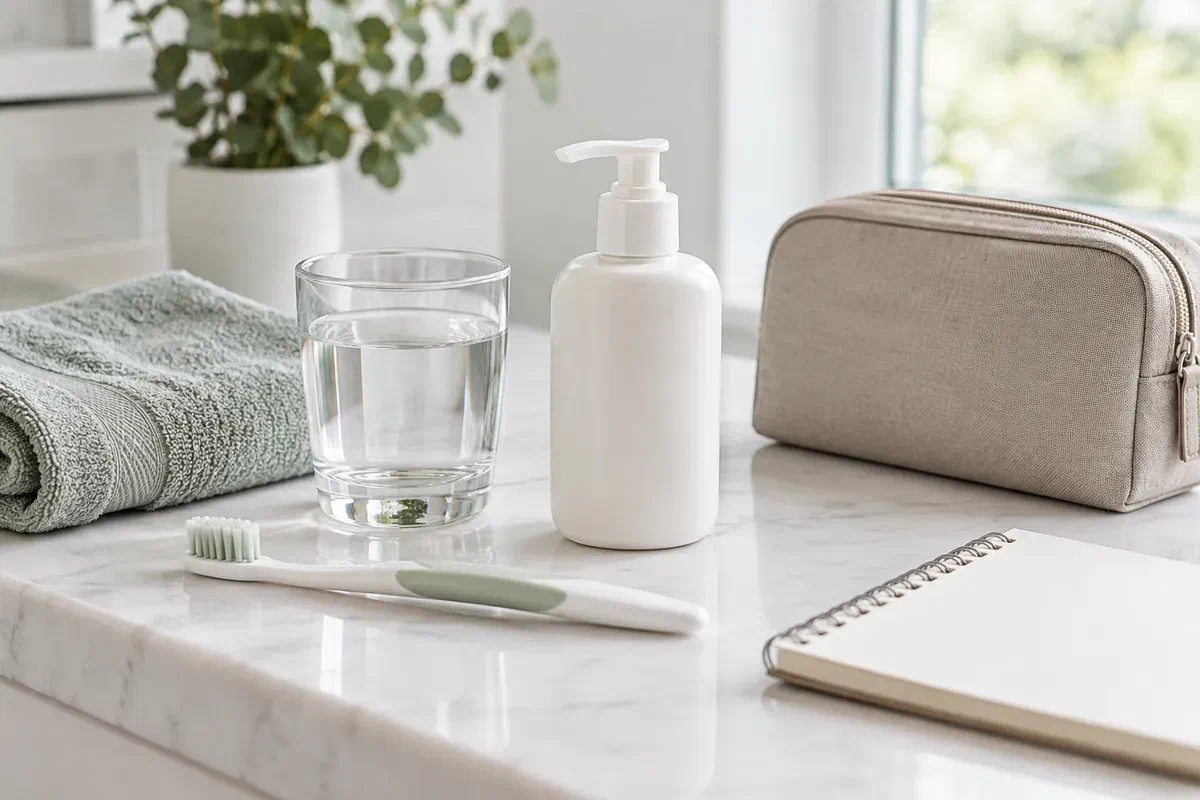
Water, toothbrush, plain oral moisturizing bottle, and notebook on a light counter
Changes since your last visit

What is different this time?

Bring a list of what you take today, including products used only occasionally. Highlight what has changed since your previous appointment and any mouth symptoms that have appeared or worsened.

Dryness that has crept up

Dryness often builds slowly. You may only notice that you keep water nearby, that dry foods are harder to swallow, or that a denture is less comfortable than it was. Medicines can contribute, alongside other factors. Tell us roughly when you first noticed it and whether it is worse at night.

Adjustments by other clinicians

Between dental visits, a family doctor, specialist or hospital team may have changed several things. Bring the latest details and flag anything you are not sure of. Medicines given by injection or infusion every few weeks or months should also be on the list.

A dental prescription after changes

If the dentist suggests a pain reliever, antibiotic or rinse, ask how it fits with your current treatment, not last year’s. Mention reactions you have had and any pharmacist advice. A dental medicine that suited you before may need checking again.

The list should carry over-the-counter painkillers, sleep products, vitamins and herbal items, inhalers and anything you keep for occasional use. Rely on names and strengths, not on how a tablet looks.

The value of keeping it current

Small updates now, fewer surprises later

Saliva, the comfort of your gums and mouth lining, bleeding and the choice of dental medicines can all be influenced by what you take. As your combination and health change, so can what matters. A current history lets the dentist decide whether a new symptom needs investigating, whether a prescription should be looked at again, or whether medical advice is needed before treatment.

Regular updates also keep you from having to reconstruct years of changes in one sitting. Ask what details are needed and which clinician is best placed to answer a question. A recent pharmacy printout and a note of what changed since your last visit make each review quicker.

Patient information: American Dental Association — medication considerations in dental care

A record that ages well

Updating at each visit means stopped prescriptions do not linger in your chart. Tell the team about medicines a prescriber has ended and about any you take differently from the printed directions.

Trends, not just snapshots

Comparing visits can show whether dryness or gum changes are developing. Timing alone still does not prove a medicine is responsible, and the examination may reveal a dental problem needing separate care. Ask what is changing and what is unclear.

Prevention that evolves

Home care, fluoride measures and recall intervals can be adjusted as your health and medicines change. After every review, the updated plan should spell out daily care, the signs worth a call, and the point where a pharmacist or physician comes in.

At each review

Compare, examine, adjust and record

Bring an up-to-date pharmacy printout or other reliable record, and add anything it misses. Include new allergies or reactions and any changes in who prescribes for you.

  1. Compare with last time

    We check names, doses, schedules and changes since your previous visit. Point out medicines used occasionally and anything you are unsure of. Uncertain items are noted for confirmation rather than assumed.

  2. Examine for changes

    The dentist looks for differences in your teeth, gums and tissues and reads them in light of your medication history. Dryness, sores and gum changes may each call for something new. Tell us if eating, speaking, sleep or an appliance has become harder.

  3. Revisit any planned treatment

    If treatment or a dental prescription is under consideration, the dentist reviews interactions and your current medical situation. A prescriber or pharmacist may need to be consulted. Ask whether anything has changed the plan since it was first discussed.

  4. Update the plan and the record

    We adjust home care, comfort measures and your next review date. If a clinician changes a medicine before then, tell us ahead of any procedure. Written instructions help keep a short dental prescription apart from your long-term medicines.

Long-term home care

Habits that adapt as your treatment does

Your home routine should follow the latest examination and stay in step with current medical advice. If something we suggest no longer fits your other instructions, let us know.

Adjusting for dryness

If dryness has increased, ask whether a moisturizing product or added cavity prevention makes sense now. Sipping water helps some people, but any fluid restriction from your doctor still comes first. Choose products for comfort, swallowing and the latest findings, not for advertising.

Cleaning that still works

Fluoride toothpaste and cleaning between teeth remain central. If new soreness, gum changes or reduced dexterity make a step harder, ask about a different technique or tool. A strong rinse is not a fix for irritation whose cause is unknown.

A list you keep up to date

Update your record whenever a prescriber changes treatment, and bring it every time. Note why a short course was given and when it finished. If you are unsure how a new dental medicine fits with the rest, ask your pharmacist before combining them.

Patient information: NIDCR — dry mouth causes and care

How the plan can shift

Steady care with room to change course

Being on several medicines does not mean a fixed dental treatment. Each review looks at current symptoms, findings and any question that needs answering before deciding what is next.

When protection and symptom relief remain the focus

Prevention and comfort

This may involve updated cleaning advice, dryness support and a recall interval that reflects your current risk. Ask how to tell whether a measure is still helping and when a new symptom is worth a call. The plan is revised as your treatment changes.

When decay, damage or gum disease develops

Treatment for a new dental problem

Decay, a failing filling or gum disease may need treatment even when medicines contribute to symptoms. You will be told what was found and which treatments are possible. Changing a prescription would not, on its own, repair damage that has already occurred.

When a medicine change raises a new question

A fresh question for your prescriber or pharmacist

We may seek advice about an interaction, an oral side effect or a consideration for treatment. Decisions about your existing prescriptions remain with the clinician who manages them. Ask how you will hear the answer and how it affects your next visit.

Caledon questions about ongoing care

Keeping your dental care in step with your health

Ask about products, symptoms or instructions that no longer seem to match. You do not need to identify interactions yourself; a current list is what lets the team help.

(905) 876-4488
How often should I give the clinic an updated medication list?
Bring an updated list to every visit, and call before a planned procedure if anything has changed since your appointment was booked. Even small changes, such as a new dose, are worth mentioning.
Should I bring my list even for a routine cleaning?
Yes. A hygiene visit is a good chance to update your record, and changes can affect how your gums and mouth are cared for. It also means the information is ready if treatment is needed later.
Will my recall interval change if my medicines change?
It might. If a change seems to affect dryness, gum health or cavity risk, the dentist may suggest seeing you sooner or adjusting prevention. Ask what the recommended interval is based on.
Is it normal for my mouth to feel different as my treatment changes over the years?
Mouths do change over time, for many reasons including health, age and medicines. A change is still worth reporting rather than accepting as normal, so the dentist can examine it and decide whether anything needs attention.
Can my reviews be spaced to reduce trips from Caledon?
Ask when booking. Where it is appropriate, the team can try to combine a medication review with a cleaning or examination. If a medical question needs an answer before treatment, the team will explain what that means for timing.
What should I do if I start a new medicine between dental visits?
Add it to your list and let the clinic know before any planned procedure. Keep taking it as prescribed. If you notice a mouth change after starting it, mention that too so it can be examined.
Planning care from Caledon

Check in whenever your treatment changes.

Get in touch with our Bronte Street office to book a review and ask what to bring. A new prescription, a gradual change in your mouth or treatment on the horizon are all good reasons to come in, and an up-to-date history lets us plan with your wider health in mind.

Bring your current medication list and point out what has changed since your last visit. For urgent symptoms, call rather than using the online request.

Visit Milton Dental Clinic
Unit 1, 342 Bronte St. S, Milton, ON L9T 5B7
Get directions Clinic hours
Monday–Thursday
11am–7pm
Friday–Sunday
By appointment only

Areas we serve

  • Milton
  • Oakville
  • Mississauga
  • Georgetown
  • Halton Hills
  • Acton
  • Campbellville
  • Brampton
  • Burlington
  • Puslinch
  • Rockwood
  • Erin
  • Caledon
  • Etobicoke
  • Old Milton
  • Bronte Meadows
  • Timberlea
  • Dorset Park
  • Dempsey
  • Clarke
  • Beaty
  • Coates
  • Harrison
  • Scott
  • Willmott
  • Ford
  • Bowes
  • Cobden
  • Walker
  • Mountain View
  • Milton Heights
  • Hawthorne Village
  • Valley View
  • Fallingbrook
  • Nassagaweya
  • Trafalgar
  • Esquesing
  • Nelson
  • Brookville
  • Moffat
  • Glen Williams
  • Norval
  • Limehouse
  • Stewarttown
  • Ashgrove
  • Hornby
  • Silver Creek
  • Speyside
  • Scotch Block
  • North Oakville
  • River Oaks
  • Glen Abbey
  • West Oak Trails
  • Palermo
  • Bronte Creek
  • College Park
  • Joshua Creek
  • Uptown Core
  • Preserve
  • Iroquois Ridge
  • Lisgar
  • Meadowvale
  • Meadowvale Village
  • Churchill Meadows
  • Erin Mills
  • Central Erin Mills
  • Streetsville
  • East Credit
  • Creditview
  • Heartland
  • Sheridan
  • Mount Pleasant
  • Credit Valley
  • Huttonville
  • Churchville
  • Springbrook
  • Northwest Brampton
  • Bram West
  • Fletcher's Meadow
  • Fletcher's Creek South
  • Alton Village
  • Orchard
  • Millcroft
  • Headon Forest
  • Tansley
  • Brant Hills
  • Tyandaga
  • Kilbride
  • Lowville
  • Aberfoyle
  • Morriston
  • Arkell
  • Hillsburgh
  • Freelton
  • Carlisle
  • Waterdown
  • Flamborough
  • Mountsberg

How can we help?

Milton Dental Clinic

Have a question about your smile? Choose the option that works best for you.

For urgent dental concerns, please call.
Messages are reviewed during clinic hours.