

Illustrative consultation reviewing health information before dental care
General & Family Dentistry

Dental Care for Patients Taking Multiple Medications in Milton

Several medicines in your day can shape how your mouth feels and how dental work is planned. Our Milton team reviews the whole list with you, looks at what is happening in your mouth, and keeps your other clinicians in the picture.

Medicines and your mouth, close to home in Milton

Empty the cupboard onto the table before your visit.

The evening before a dental appointment is a good time to gather everything you take: the daily prescriptions, the pain reliever kept in a drawer, the vitamin by the kettle, the cream or inhaler used now and then. Writing all of it down, or asking your pharmacy for a printout, gives the dentist a far better starting point than memory alone.

Our Milton team treats the medication review as part of getting to know you, not as a form to sign. We want to hear what each medicine is for when you know it, what has changed lately, and what dental care is being considered. Working out which product might be behind a mouth symptom is our job to explore with you, so there is no need to solve it beforehand.

Mention anything that feels different: a dry or sticky mouth, sore spots, food tasting odd, gums that bleed, or brushing that has become awkward. More than one thing can cause each of these, so they are worth examining. When a pharmacist or prescriber needs to weigh in, a clear and specific question works best. Please keep taking your medicines as directed while that is sorted out.

Book a medication and mouth review
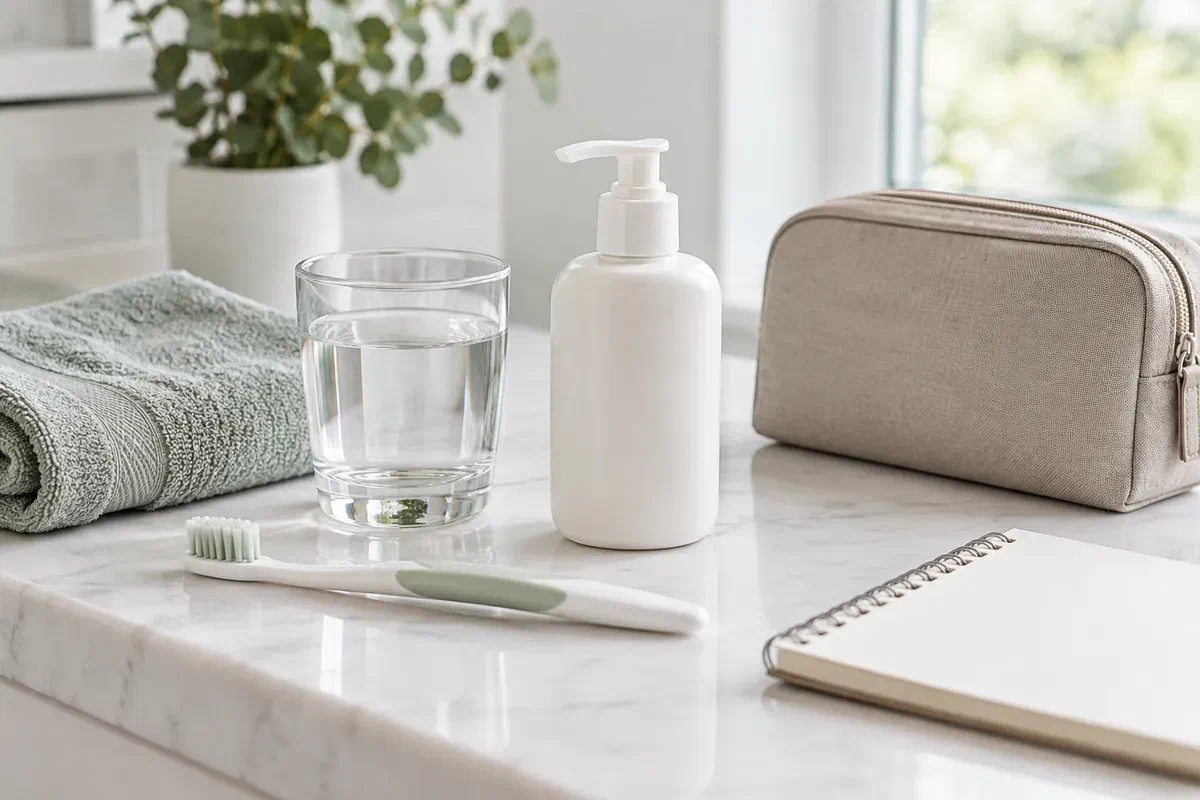
Water, toothbrush, plain oral moisturizing bottle, and notebook on a light counter
Details worth saying out loud

The occasional pill counts as much as the daily one.

A helpful history reflects what you really take today, including things used only now and then. Point out anything started or changed recently and any mouth symptoms that showed up around that time.

A mouth that feels dry or sticky

Reaching for a drink all day, waking with a parched mouth, or finding a denture harder to keep comfortable are all worth raising. Medicines may play a part in dryness, yet the cause still needs checking. Let us know if it is constant, mostly at night, or began after a specific change.

Changes after a hospital stay or specialist visit

The list on file may predate a prescription added in hospital or a dose adjusted by another doctor. Bring the latest information and flag anything you are unsure about. Medicines given by injection or infusion belong on the list too, even when they are not daily.

How a dental prescription would fit

If the dentist suggests a pain reliever, antibiotic or other product, ask how it sits alongside your current treatment. Share past reactions and anything your pharmacist has told you. Having used a product before does not by itself mean it suits the medicines you take now.

Remember over-the-counter pain relief, sleep aids, herbal remedies, vitamins, inhalers and anything taken only as needed. A pill’s colour or shape is not a reliable way to identify it.

What a full picture changes

Fewer gaps, steadier decisions.

Medicines can influence comfort in the mouth, saliva flow, bleeding and how other drugs are chosen. Which of these matters depends on your particular combination and your general health. With a careful history, the dentist can judge whether a symptom calls for closer investigation, whether a prescription deserves a second look, or whether medical input is needed before treatment.

Coordination also spares you from acting as the go-between for several clinicians. You can ask exactly what information is needed and who is best placed to answer. A pharmacy printout, your prescribers’ contact details and a short note of recent changes make those conversations quicker and clearer.

Patient information: American Dental Association — medication considerations in dental care

A record that matches real life

Checking what you take today separates active medicines from old prescriptions that linger in a chart. Tell us if a prescriber has stopped something, or if you take a medicine differently from what the label says.

Symptoms looked at with an open mind

When a mouth change began can be a useful clue, but timing alone does not show that a medicine is responsible. An examination may find a tooth or tissue problem that needs care on its own terms. Ask what was found and what is still unclear.

Care that keeps pace with you

Prevention, symptom relief and review visits can be set to suit your current situation. Your plan should spell out what to do at home, which changes to report, and when to involve a pharmacist or physician.

What happens in the chair

List first, mouth second, plan third.

A recent pharmacy printout or other dependable record is ideal. Add any missing products, plus allergies, past reactions and the names of the clinicians who look after you.

  1. Go over today’s medicines

    Together we check names, doses, timing and recent changes where they matter. Tell us about occasional use and anything you are uncertain of. Where the list has gaps, the team notes what needs confirming instead of treating a best guess as fact.

  2. Look at symptoms and the mouth itself

    The dentist examines the concerns you raise and weighs your medication history alongside what the examination shows. Dryness, ulcers and gum changes can each call for a different approach. Let us know if eating, talking, sleep or an appliance is affected.

  3. Weigh the proposed treatment

    Ahead of a procedure or new prescription, the dentist considers possible interactions and your medical circumstances. Sometimes a prescriber or pharmacist needs to be consulted. You can ask whether the plan can go ahead now or whether one question has to be settled first.

  4. Leave with clear next steps

    We confirm preventive advice, comfort measures and any follow-up date. If another clinician changes a medicine, let the dental team know before your next treatment. Written instructions help keep a short dental prescription separate from your regular routine.

Between visits

Look after your mouth and leave the medical plan intact.

Home care should follow what the examination found and fit around the health advice you already have. If a suggested product or habit clashes with existing instructions, tell us.

Ease ongoing dryness

If dryness persists, ask which moisturizing products and cavity-prevention steps might suit you. Small sips of water help some people, though any fluid limits set by your doctor still stand. Choose products for comfort, ease of swallowing and what the dentist found, not for their packaging.

Clean thoroughly but kindly

Brush with fluoride toothpaste and clean between your teeth in a way that suits your mouth. If soreness or gum changes get in the way, ask about a different technique or tool. A harsh rinse cannot replace finding out what is causing the irritation.

Maintain a single, current list

Update your record whenever a prescriber changes something, and bring it to every dental visit. Jot down why a short course was given and whether it has finished. When unsure how a new dental medicine fits, check with your pharmacist before taking them together.

Patient information: NIDCR — dry mouth causes and care

Where the findings can lead

Care for what we find, and connect the rest.

A long medication list does not lead to one particular dental treatment. What comes next depends on your symptoms, the examination and any further information needed before a sound recommendation.

When protecting teeth and easing symptoms is the goal

Prevention and comfort care

This may involve personalized cleaning advice, help with dryness and a review schedule that fits. Ask how you will know a measure is working and when lingering symptoms should be reported. The approach can be adjusted whenever your medical treatment changes.

When the examination finds disease or damage

Treating a separate dental problem

Decay, a worn filling or gum disease may need treatment even if a medicine is adding to your symptoms. The dentist will explain the diagnosis and the options. Changing a prescription would not, on its own, repair damage that is already there.

When a medication question needs an answer

Checking with a prescriber or pharmacist

We may ask for advice about a possible interaction, an effect on the mouth or a consideration for a procedure. Decisions about changing your existing medicines rest with the clinician who prescribes them. Ask who will share the answer and how it shapes your appointment.

Common questions from Milton

Ask anything about your medicines and your mouth.

Questions about products, symptoms or advice that seems to conflict are all welcome. You do not need to spot interactions yourself; what helps most is accurate information.

(905) 876-4488
My records are already on file. Why do you ask for my medicines again at each visit?
Treatment can change between appointments without the dental chart knowing. A quick review catches new prescriptions, stopped medicines and dose changes. Bring an updated list and point out anything that differs from last time, including products you buy yourself.
Is it worth mentioning a medicine I only take a few times a year?
Yes. Medicines used occasionally can still matter, especially if one might be needed around the time of dental treatment. Tell the team what it is, roughly how often you use it, and when you last took it.
Could my mouth problem be caused by something other than my pills?
It could. Dryness, soreness or bleeding gums can come from dental disease, other health conditions or several factors together. That is why the dentist examines your mouth rather than assuming a medicine is to blame, and explains what the findings point to.
What should I do if a doctor changes my prescription after my dental appointment is booked?
Let the clinic know before the visit, especially if treatment is planned. A change can affect how the dentist approaches a procedure or a new prescription. Bring the updated details and keep taking the medicine as your doctor has directed.
Can a family member help me prepare my medication list?
Yes, and that can be very helpful. Someone who helps with your medicines may know about recent changes or products you forget to mention. Your pharmacy can also print a current list. Tell the team which details still need confirming.
Do I need to tell you about vitamins or herbal products?
Please do. Some non-prescription products can be relevant to bleeding, sedation or interactions with a dental medicine. Add them to your list, and ask the dentist or pharmacist about your actual combination instead of assuming a natural product is always compatible.
Medication-aware dental care in Milton

Come in with your questions and your list.

Call our Bronte Street practice to set up an assessment and ask what to bring. A new symptom, an upcoming treatment or simply a growing list of medicines are all good reasons to book, and an accurate history lets us plan with your wider care in mind.

Bring your current medication list and mention any recent changes. For urgent symptoms, please phone the clinic rather than sending an online request.

Visit Milton Dental Clinic
Unit 1, 342 Bronte St. S, Milton, ON L9T 5B7
Get directions Clinic hours
Monday–Thursday
11am–7pm
Friday–Sunday
By appointment only

Areas we serve

  • Milton
  • Oakville
  • Mississauga
  • Georgetown
  • Halton Hills
  • Acton
  • Campbellville
  • Brampton
  • Burlington
  • Puslinch
  • Rockwood
  • Erin
  • Caledon
  • Etobicoke
  • Old Milton
  • Bronte Meadows
  • Timberlea
  • Dorset Park
  • Dempsey
  • Clarke
  • Beaty
  • Coates
  • Harrison
  • Scott
  • Willmott
  • Ford
  • Bowes
  • Cobden
  • Walker
  • Mountain View
  • Milton Heights
  • Hawthorne Village
  • Valley View
  • Fallingbrook
  • Nassagaweya
  • Trafalgar
  • Esquesing
  • Nelson
  • Brookville
  • Moffat
  • Glen Williams
  • Norval
  • Limehouse
  • Stewarttown
  • Ashgrove
  • Hornby
  • Silver Creek
  • Speyside
  • Scotch Block
  • North Oakville
  • River Oaks
  • Glen Abbey
  • West Oak Trails
  • Palermo
  • Bronte Creek
  • College Park
  • Joshua Creek
  • Uptown Core
  • Preserve
  • Iroquois Ridge
  • Lisgar
  • Meadowvale
  • Meadowvale Village
  • Churchill Meadows
  • Erin Mills
  • Central Erin Mills
  • Streetsville
  • East Credit
  • Creditview
  • Heartland
  • Sheridan
  • Mount Pleasant
  • Credit Valley
  • Huttonville
  • Churchville
  • Springbrook
  • Northwest Brampton
  • Bram West
  • Fletcher's Meadow
  • Fletcher's Creek South
  • Alton Village
  • Orchard
  • Millcroft
  • Headon Forest
  • Tansley
  • Brant Hills
  • Tyandaga
  • Kilbride
  • Lowville
  • Aberfoyle
  • Morriston
  • Arkell
  • Hillsburgh
  • Freelton
  • Carlisle
  • Waterdown
  • Flamborough
  • Mountsberg

How can we help?

Milton Dental Clinic

Have a question about your smile? Choose the option that works best for you.

For urgent dental concerns, please call.
Messages are reviewed during clinic hours.