

Illustrative consultation reviewing health information before dental care
General & Family Dentistry

Dental Care for Patients Taking Multiple Medications in Oakville

Wondering whether your medicines are behind a dry or sore mouth? From Oakville, you can bring the question and your full list to our team, who will examine what is going on and plan care that fits with your doctors’ advice.

Coming from Oakville with a medication question

Is it the pills, or is it something else?

That is often the first thing people ask when their mouth starts to feel parched, tender or just different. It is a fair question, and the honest answer is that it takes an examination and a complete medication list to find out. Daily prescriptions, a pain reliever taken now and then, and the supplements on your counter can all be part of the story.

So we start by listening. Our team wants to know what you take, the reason for each medicine when you know it, what has changed in recent months, and whether any dental treatment is being planned. You are not expected to arrive with a theory about which product is responsible. Sorting that out is part of the visit.

Describe what you notice in everyday terms: needing water through a meal, food tasting flat, gums that bleed, sore patches, or a toothbrush that suddenly feels rough. These signs can have several causes. If we need your pharmacist or prescriber to clarify something, we will frame a specific question. Until then, carry on with your medicines exactly as directed.

Ask about a medication and mouth assessment
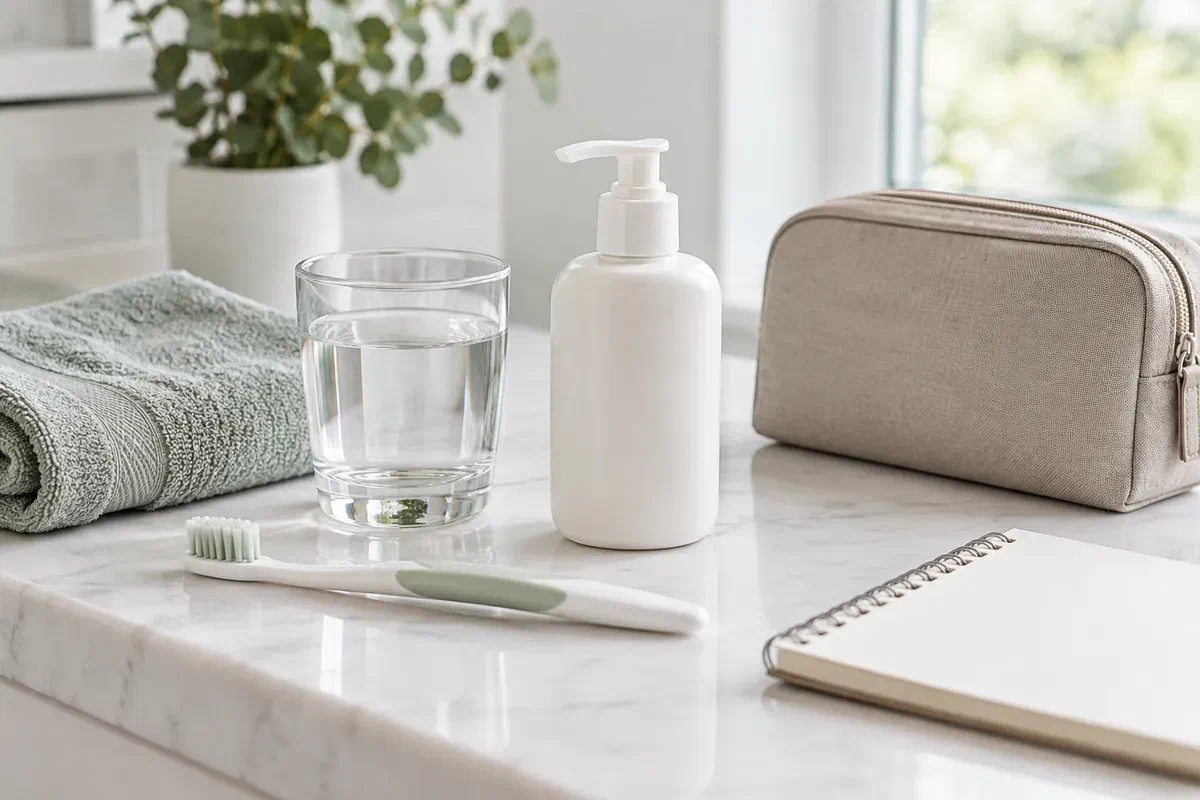
Water, toothbrush, plain oral moisturizing bottle, and notebook on a light counter
Clues to bring with you

When did it start, and what changed around then?

The most useful history describes what you take now, including products used only on some days. Note anything added or adjusted recently and any mouth symptoms that seemed to appear at the same time.

Dryness that interrupts meals or sleep

Struggling to swallow dry food, keeping a glass by the bed, or noticing a denture loosen and rub are all worth describing. Medicines are a known contributor to dryness, but not the only one. Say whether the feeling is constant, worse at night, or linked to a particular change.

Prescriptions started elsewhere

A specialist, walk-in clinic or hospital team may have added or adjusted something that your last list does not show. Bring the newest information you have and point out entries you are unsure of. Include injections or infusions given at intervals.

A dental medicine you might be offered

If pain relief, an antibiotic or a special rinse comes up, ask how it would combine with your current treatment. Mention earlier reactions and any guidance from your pharmacist. A product being familiar does not confirm it suits what you take today.

Add non-prescription painkillers, sleep aids, herbal remedies, vitamins, inhalers and as-needed medicines. Identifying a tablet by how it looks is not reliable.

How the answer gets clearer

A full list narrows the possibilities.

Saliva, the comfort of the soft tissues, bleeding and the choice of other medicines can all be influenced by what you take. Which of those applies depends on your own combination and health. A careful history helps the dentist decide whether a symptom needs more investigation, a prescription deserves review, or medical input should come before treatment.

Being clear about who answers what also saves you from shuttling messages between offices. You can ask which details the dentist needs and which questions belong with your pharmacist or doctor. A printed pharmacy list, prescriber contacts and a note of recent changes all help.

Patient information: American Dental Association — medication considerations in dental care

Accuracy from the outset

Confirming what you take now separates active medicines from expired ones still listed in a chart. Tell the team if something was stopped by a prescriber or if you use a medicine differently from its label.

Findings, not assumptions

A symptom that began soon after a new medicine is a useful lead, though it does not prove the connection. The examination may uncover a tooth or tissue problem that needs treating regardless. Ask what was found and what remains open.

Steady, practical support

Preventive steps, symptom relief and review appointments can be matched to how things are now. You should leave knowing what to do at home, what to watch for, and when a pharmacist or physician needs to be part of the conversation.

The appointment, in four parts

From your list to a plan you understand

Bring a recent pharmacy printout or a record you trust. Add anything missing, along with allergies, past reactions and contact details for the clinicians who manage your health.

  1. Confirm the current list

    We check medicine names, doses, timing and recent changes where they matter. Tell us what you take only occasionally and what you are unsure about. Gaps are recorded as questions to confirm, not filled in with guesses.

  2. Examine what you are feeling

    The dentist looks carefully at the symptoms you describe and reads them alongside your medication history. A dry mouth, ulcers and gum changes may each need a different response. Explain how eating, speaking, sleeping or an appliance is affected.

  3. Think through any treatment

    Before a procedure or new prescription, the dentist weighs relevant interactions and medical factors. Input from your prescriber or pharmacist may be needed. Ask whether you can go ahead now or whether something must be clarified first.

  4. Agree what happens next

    We confirm home care, comfort measures and a review date if one is needed. If another clinician changes a medicine before your next visit, let us know. Written instructions help you keep a short dental prescription apart from your everyday medicines.

Living with a drier mouth

Comfort at home, within your doctors’ advice

Daily care should build on what the examination showed and fit the health instructions you already follow. If a product or routine we suggest conflicts with other advice, tell us.

Managing dryness day to day

Ask about moisturizing products and extra cavity protection if dryness persists. Frequent sips of water suit some people, though any fluid restriction your doctor has set still comes first. Base product choices on comfort, swallowing and the dentist’s findings, not marketing.

Brushing that does not hurt

Keep using fluoride toothpaste and cleaning between your teeth. If tenderness or gum changes make that hard, ask for help with technique or a softer tool. A strong rinse will not replace understanding the cause of the irritation.

An up-to-date medicine record

Refresh your list whenever a prescriber changes something and bring it to each dental appointment. Note why a short course was prescribed and whether it has ended. Ask your pharmacist before combining a new dental medicine with your usual ones if in doubt.

Patient information: NIDCR — dry mouth causes and care

What the visit may point to

Three common directions after the review

Taking several medicines does not lead to one set treatment. The next step depends on your symptoms, what the examination shows and whether more information is needed first.

When dryness or sensitivity is the main concern

Protection and comfort

This may include cleaning advice tailored to your mouth, ways to manage dryness and a review interval that suits you. Ask how to judge whether a step is working and when to report symptoms that persist. The approach can shift as your medical care changes.

When there is decay, damage or gum disease

Treating a dental problem we find

Even when medicines explain part of the discomfort, a broken filling, cavity or gum condition still has to be dealt with directly. Expect a plain explanation of what was found and the ways it can be treated. No prescription change, on its own, will mend existing damage.

When a medicine question needs a specific answer

Clarifying with your prescriber or pharmacist

We may seek advice about an interaction, an oral side effect or a procedural concern. Any change to your current prescriptions is up to the clinician responsible for them. Ask who will share the result and how it affects your dental plan.

Dry mouth and medicine questions from Oakville

What people want to know before they book

Bring questions about symptoms, products or advice that seems to conflict. You do not need to work out interactions on your own; accurate information is what helps the team most.

(905) 876-4488
How can I tell whether my dry mouth comes from medicines or from not drinking enough?
You cannot reliably tell on your own, and it may be a mix of causes. The dentist will examine your mouth and ask when the dryness started, when it is worse and what you take. That helps decide what support or follow-up makes sense.
Does a dry mouth make cavities more likely?
Saliva helps protect teeth, so ongoing dryness can increase the risk of decay for some people. That is one reason to mention it rather than putting up with it. The dentist can suggest preventive steps based on your examination.
Should I ask my doctor to switch medicines because my mouth is dry?
Any change to a prescription is a decision for the clinician who manages it. You can tell your doctor about the symptom, and the dental team can describe what they found. Keep taking the medicine as directed in the meantime.
Which products help a dry mouth feel more comfortable?
Several moisturizing gels, sprays and rinses are available, and they suit people differently. Ask the dentist which type fits your findings, comfort and any swallowing concerns. Choosing by advertising alone may not give you what you need.
My pharmacist printed a list. Is that enough?
It is a great start. Check it for anything missing, such as products you buy off the shelf, vitamins, inhalers or medicines from another pharmacy. Mark any items that have been stopped so the dentist sees what is truly current.
Can North Oakville households book a medication review alongside a routine cleaning?
Often, yes. Mention when booking that you would like your medicines reviewed so enough time is set aside. If treatment needs input from a prescriber first, the team will explain what happens next and whether another visit is needed.
Planning your visit from Oakville

Bring the question that has been bothering you.

Get in touch with our Bronte Street office to book an assessment and find out what to bring. Ongoing dryness, a sore spot or upcoming treatment are all reasons to come in, and a full medication history helps us plan care that respects the rest of your health.

Bring your up-to-date medication list and note recent changes. Phone us directly about urgent symptoms instead of relying on the online request.

Visit Milton Dental Clinic
Unit 1, 342 Bronte St. S, Milton, ON L9T 5B7
Get directions Clinic hours
Monday–Thursday
11am–7pm
Friday–Sunday
By appointment only

Areas we serve

  • Milton
  • Oakville
  • Mississauga
  • Georgetown
  • Halton Hills
  • Acton
  • Campbellville
  • Brampton
  • Burlington
  • Puslinch
  • Rockwood
  • Erin
  • Caledon
  • Etobicoke
  • Old Milton
  • Bronte Meadows
  • Timberlea
  • Dorset Park
  • Dempsey
  • Clarke
  • Beaty
  • Coates
  • Harrison
  • Scott
  • Willmott
  • Ford
  • Bowes
  • Cobden
  • Walker
  • Mountain View
  • Milton Heights
  • Hawthorne Village
  • Valley View
  • Fallingbrook
  • Nassagaweya
  • Trafalgar
  • Esquesing
  • Nelson
  • Brookville
  • Moffat
  • Glen Williams
  • Norval
  • Limehouse
  • Stewarttown
  • Ashgrove
  • Hornby
  • Silver Creek
  • Speyside
  • Scotch Block
  • North Oakville
  • River Oaks
  • Glen Abbey
  • West Oak Trails
  • Palermo
  • Bronte Creek
  • College Park
  • Joshua Creek
  • Uptown Core
  • Preserve
  • Iroquois Ridge
  • Lisgar
  • Meadowvale
  • Meadowvale Village
  • Churchill Meadows
  • Erin Mills
  • Central Erin Mills
  • Streetsville
  • East Credit
  • Creditview
  • Heartland
  • Sheridan
  • Mount Pleasant
  • Credit Valley
  • Huttonville
  • Churchville
  • Springbrook
  • Northwest Brampton
  • Bram West
  • Fletcher's Meadow
  • Fletcher's Creek South
  • Alton Village
  • Orchard
  • Millcroft
  • Headon Forest
  • Tansley
  • Brant Hills
  • Tyandaga
  • Kilbride
  • Lowville
  • Aberfoyle
  • Morriston
  • Arkell
  • Hillsburgh
  • Freelton
  • Carlisle
  • Waterdown
  • Flamborough
  • Mountsberg

How can we help?

Milton Dental Clinic

Have a question about your smile? Choose the option that works best for you.

For urgent dental concerns, please call.
Messages are reviewed during clinic hours.