

Illustrative consultation reviewing health information before dental care
General & Family Dentistry

Dental Care for Patients Taking Multiple Medications in Puslinch

A metallic taste, a tender tongue or a sore that lingers can make you wonder whether one of your medicines is to blame. From Puslinch, bring the symptom and the full list to our team for an examination and a plan that leaves your prescriptions in safe hands.

Taste, tenderness and your medicines

Before you skip a pill because your mouth hurts

Coffee tastes like tin. Your tongue stings after toast. A sore near your cheek will not settle. When you take several medicines, it is tempting to guess which one is responsible and quietly leave it out for a few days. Please don’t. That experiment can cause real medical problems and usually does not answer the question anyway.

A better step is an examination with the complete list in hand: regular prescriptions, the pain reliever you take on hard days, vitamins and herbal products. Our dentists consider what you take, what each item is for when you know, what changed recently, and what dental care may be needed. Connecting a symptom to a medicine, if there is a connection, is work we do with you.

Taste changes, burning, ulcers, bleeding, dryness and difficulty brushing all have more than one possible explanation, including dental disease that needs its own care. If a pharmacist or prescriber should look at a possible link, the dentist can help shape a precise question for them. Any change to a prescription is then made safely by the person who manages it.

Have a mouth symptom examined
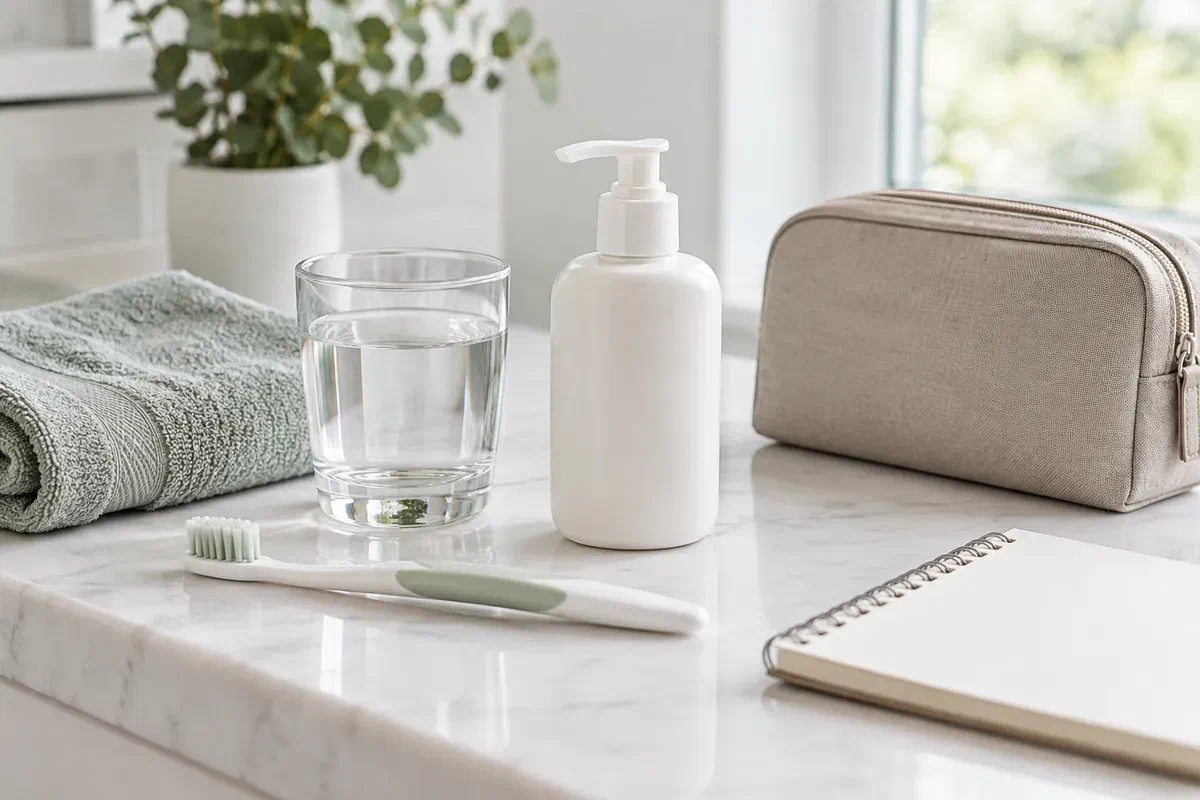
Water, toothbrush, plain oral moisturizing bottle, and notebook on a light counter
Symptoms to describe

Odd tastes, sore spots and the timing behind them

Tell us what you take now, including anything used only some of the time. Explain when symptoms began, what has changed in your medicines lately, and whether anything makes the discomfort better or worse.

Dryness alongside the soreness

A dry mouth can make tissues more tender and food harder to manage. You might notice a sticky feeling, a constant need to sip or a denture that rubs. Medicines can contribute, but so can other things, which is why the cause is checked rather than assumed.

A recent start, stop or dose change

Symptoms sometimes follow a change made at a hospital or by a specialist that your old list does not show. Bring the latest details and mark what you are not sure about. Injections and infusions given every few weeks or months belong on the list too.

Products for relief and dental prescriptions

Before using a numbing gel, medicated rinse, pain reliever or antibiotic, ask how it fits with your existing medicines. Describe past reactions and any pharmacist guidance. Familiarity with a product does not by itself make it suitable with your current mix.

Mention store-bought pain relief, sleep aids, herbal products, vitamins, inhalers and anything taken when needed. Describing a medicine by colour or shape is not reliable.

Why examine before changing anything

Find the cause before blaming a prescription.

Medicines can affect saliva, tissue comfort and bleeding, and some change how other drugs should be used. Whether any of that explains your symptom depends on the real combination and your health. An examination plus a complete history lets the dentist judge if more investigation is needed, if a prescription deserves review, or if a physician should be involved before treatment.

It also keeps you out of the middle. You can ask what the dentist needs and which professional should answer a medicine question. Your pharmacy list, prescriber contact details and a note of recent changes all make the exchange faster.

Patient information: American Dental Association — medication considerations in dental care

Up-to-date information

Confirming today’s medicines removes old prescriptions still sitting in a chart. Tell the team if a doctor ended a medicine or if your actual routine departs from the label.

Symptoms taken seriously

A taste change after a new prescription is a reasonable lead, but it does not prove the link. The examination may find an ulcer, infection or tooth problem that needs treatment on its own. Ask what the findings show and what is not yet clear.

Comfort while answers are found

Symptom relief, prevention and review visits can be set to match your needs. You should know what to do at home, what would warrant an earlier call, and when to involve your pharmacist or doctor.

What the visit involves

Listen, look, link and plan

Bring a current pharmacy printout or another reliable record and fill in the gaps. Include allergies, earlier reactions and how to reach each clinician who prescribes for you.

  1. Hear the story and check the list

    We ask when the symptom began and go through medicine names, doses, timing and recent changes. Tell us about occasional products and anything uncertain. Whatever cannot be confirmed is noted as a question, not entered as fact.

  2. Examine the sore or changed area

    The dentist looks closely at tongue, cheeks, gums and teeth, keeping your medication history in mind while doing so. A burning tongue, an ulcer and inflamed gums may each need different care. Explain how eating, talking or sleep is affected.

  3. Decide what needs outside advice

    If a medicine link seems possible, or a procedure or dental prescription is planned, the dentist considers interactions and your medical picture. A pharmacist or prescriber may be asked a specific question. You can ask what is being checked and why.

  4. Agree on relief and review

    We confirm comfort measures, home care and when to return to check the area. Should a prescriber adjust anything in the meantime, a quick call keeps your dental record right. You will also get written directions, so a short dental product never gets confused with your usual medicines.

While the area settles

Gentle routines that leave your prescriptions alone

Looking after a sore mouth at home means following what the examination found while staying consistent with your existing health advice. If a product or habit we suggest clashes with other instructions, let us know.

If dryness adds to the discomfort

Ask whether a moisturizing product would help and how to protect your teeth from decay while dryness lasts. Sips of water suit some people, but a doctor’s fluid limit still stands. Choose products for comfort, swallowing ease and the findings rather than promises on a label.

Brushing around sore spots

Keep using fluoride toothpaste and cleaning between teeth, adjusting your technique around tender areas. Ask about a softer brush or other aids if needed. Strong or alcohol-heavy rinses can sting, and they do not deal with the cause of irritation.

Notes on symptoms and medicines

Keep one current medicine list, updated after any change, and jot down when symptoms flare or ease. Record the reason for any short course. Check with your pharmacist before combining a dental product with your regular medicines if you are unsure.

Patient information: NIDCR — dry mouth causes and care

After the examination

Soothe it, treat it, or ask the right person.

A long medication list does not dictate a dental treatment. What happens next depends on the symptom, the examination findings and whether a question about a medicine needs answering.

When comfort and protection come first

Relief and prevention

This may mean advice on gentle cleaning, dryness management and a review to check the area has healed. Ask how you will know a measure is helping and when a persisting symptom should be reported sooner. The plan can be revised as your medicines change.

When an ulcer, infection, decay or gum problem is found

Treatment for a dental cause

A rough filling, a broken tooth, infection or gum disease may need treatment whether or not a medicine is involved. The dentist explains the diagnosis and options. Stopping a prescription would not repair a dental problem already present.

When a medicine may be linked to the symptom

A specific question to your prescriber or pharmacist

We may seek advice about a possible oral side effect, an interaction or a precaution for treatment. Whether to alter an existing medicine is for the prescribing clinician to decide. Ask who will tell you the outcome and what it means for your care.

Puslinch questions about mouth symptoms

When something in your mouth feels off

Ask about any product, symptom or advice that seems contradictory. Identifying interactions is not up to you; complete, honest information is what helps the team most.

(905) 876-4488
Everything tastes metallic lately. Could a medicine be responsible?
Some medicines can affect taste, but so can dental problems, dryness, infections and other health changes. The dentist will examine your mouth and review your list, then suggest whether your prescriber or pharmacist should be consulted.
My tongue burns. Should I see a dentist or a doctor first?
Either is a reasonable place to start. The dentist can examine your tongue and mouth for local causes, review your medicines, and let you know if your doctor should also be involved.
Can I take a smaller dose if a medicine seems to make my mouth sore?
Not without your prescriber’s advice. Altering a dose yourself can cause medical problems. Describe the symptom to the dentist and to whoever prescribes the medicine so it can be assessed safely.
How long should a mouth sore last before I get it checked?
A sore that has not healed within about two weeks should be examined, and sooner if it is very painful, growing or accompanied by swelling or fever. Mention your medicines at the visit.
Can the dentist tell me exactly which medicine is causing my symptom?
Not always. The dentist can examine your mouth, identify dental causes and note whether a medicine link seems possible. Confirming or acting on that link usually involves your pharmacist or prescriber.
Should I phone before driving in from Puslinch about a new sore?
Yes, a quick call helps. The team can advise how soon you should be seen and what to bring. For severe swelling, fever or breathing difficulty, seek urgent medical care closer to home.
Planning a visit from Puslinch

Bring the symptom, the list and the timeline.

A phone call to the Bronte Street clinic is all it takes to arrange an examination, and the team will tell you what is worth bringing. A lingering sore, a taste that will not go away or planned dental work are all reasons to come in, and a complete history helps the dentist plan care that protects your wider health.

Bring your current medication list and note when symptoms began. For urgent problems, phone the clinic rather than using an online request.

Visit Milton Dental Clinic
Unit 1, 342 Bronte St. S, Milton, ON L9T 5B7
Get directions Clinic hours
Monday–Thursday
11am–7pm
Friday–Sunday
By appointment only

Areas we serve

  • Milton
  • Oakville
  • Mississauga
  • Georgetown
  • Halton Hills
  • Acton
  • Campbellville
  • Brampton
  • Burlington
  • Puslinch
  • Rockwood
  • Erin
  • Caledon
  • Etobicoke
  • Old Milton
  • Bronte Meadows
  • Timberlea
  • Dorset Park
  • Dempsey
  • Clarke
  • Beaty
  • Coates
  • Harrison
  • Scott
  • Willmott
  • Ford
  • Bowes
  • Cobden
  • Walker
  • Mountain View
  • Milton Heights
  • Hawthorne Village
  • Valley View
  • Fallingbrook
  • Nassagaweya
  • Trafalgar
  • Esquesing
  • Nelson
  • Brookville
  • Moffat
  • Glen Williams
  • Norval
  • Limehouse
  • Stewarttown
  • Ashgrove
  • Hornby
  • Silver Creek
  • Speyside
  • Scotch Block
  • North Oakville
  • River Oaks
  • Glen Abbey
  • West Oak Trails
  • Palermo
  • Bronte Creek
  • College Park
  • Joshua Creek
  • Uptown Core
  • Preserve
  • Iroquois Ridge
  • Lisgar
  • Meadowvale
  • Meadowvale Village
  • Churchill Meadows
  • Erin Mills
  • Central Erin Mills
  • Streetsville
  • East Credit
  • Creditview
  • Heartland
  • Sheridan
  • Mount Pleasant
  • Credit Valley
  • Huttonville
  • Churchville
  • Springbrook
  • Northwest Brampton
  • Bram West
  • Fletcher's Meadow
  • Fletcher's Creek South
  • Alton Village
  • Orchard
  • Millcroft
  • Headon Forest
  • Tansley
  • Brant Hills
  • Tyandaga
  • Kilbride
  • Lowville
  • Aberfoyle
  • Morriston
  • Arkell
  • Hillsburgh
  • Freelton
  • Carlisle
  • Waterdown
  • Flamborough
  • Mountsberg

How can we help?

Milton Dental Clinic

Have a question about your smile? Choose the option that works best for you.

For urgent dental concerns, please call.
Messages are reviewed during clinic hours.