
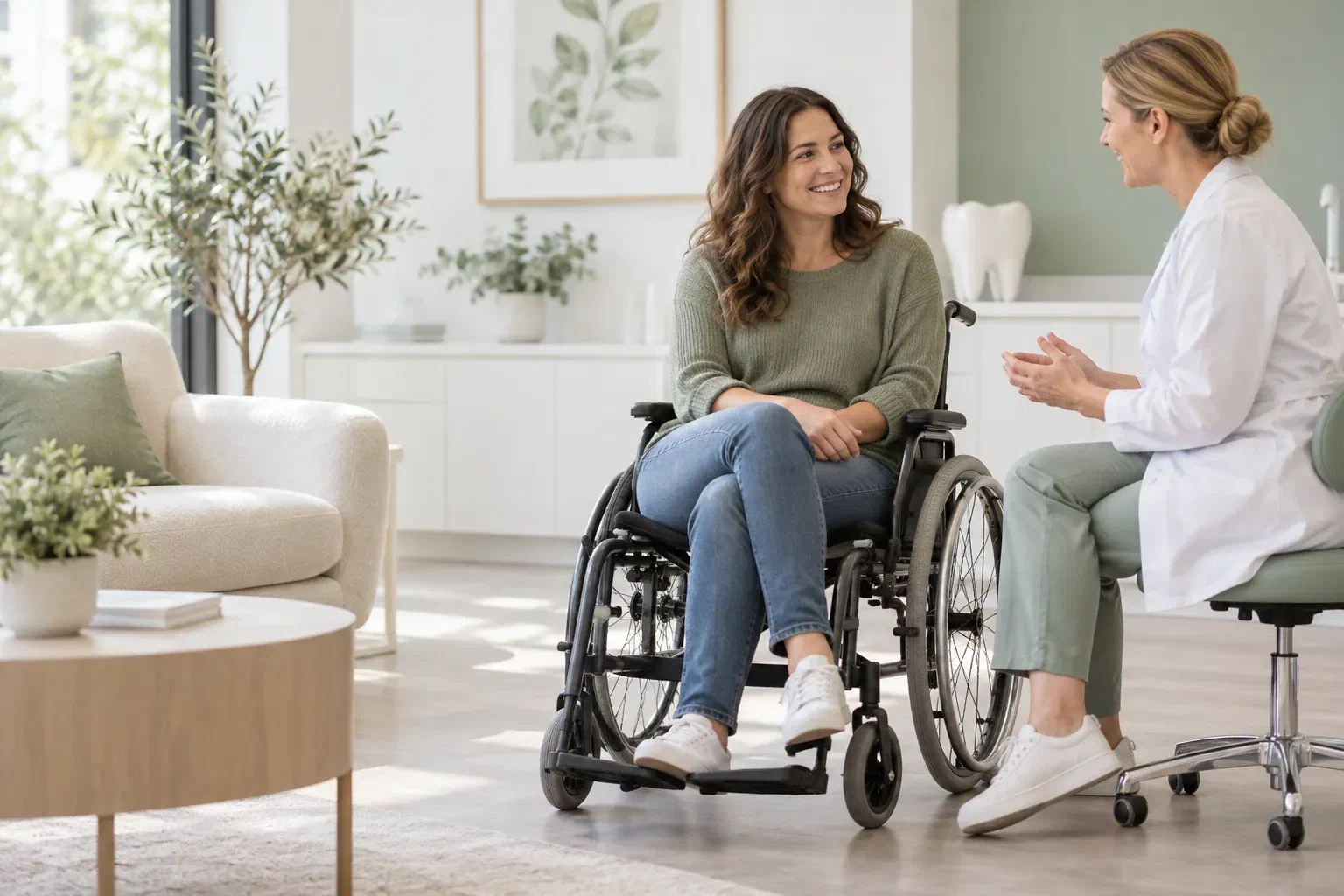

Illustrative consultation with a wheelchair user, not a photograph of the clinic or its access facilities
General & Family Dentistry

Dental Care for Patients with Limited Mobility

Plan the practical details before your dental visit. Talk with our Milton team about access, positioning, fatigue, and the support you need so the appointment can be considered around you.

A closer look at dental care with limited mobility

Start with the arrangements that make a visit possible.

A dental appointment involves more than the time spent examining teeth. Getting into the building, moving through the space, sitting comfortably, and returning home can each need planning. If mobility is limited, those practical details deserve attention before a visit is confirmed, alongside the dental problem you want addressed.

At Milton Dental Clinic, contact us in advance to describe what you need. Limited mobility can be temporary or ongoing and may affect walking, transferring, positioning, hand movements, or stamina in different ways. Tell us what you can manage independently and where assistance or equipment is needed. Your own knowledge of what works is central to the conversation.

We will discuss whether the required arrangements can be provided for the proposed appointment and what needs confirmation. Do not assume that a transfer aid, particular chair configuration, or treatment in a wheelchair is available without checking. If another setting is needed, the next step should be explained. Planning ahead helps keep the focus on an appropriate, manageable route to dental care.

Discuss access and appointment needs
Easy-grip toothbrush and interdental brushes illustrating adaptable oral care tools
Details to discuss before attending

Describe the task that is difficult, not just the diagnosis.

Two people using the same mobility aid may need very different arrangements. Specific information helps the team understand the appointment requirements and avoid making assumptions about assistance.

Getting in and moving around

Ask about the route from arrival to the treatment area, relevant clearances, and any other access details important to you. If you use a wheelchair or scooter, dimensions or turning needs may be useful. Confirm arrangements before organizing transport.

Transferring or staying comfortable

Explain whether you can transfer independently, require a particular aid, or need support from a trained person. Mention positions that cause pain, spasms, dizziness, or breathing difficulty. A transfer or position should not be improvised simply to keep an appointment moving.

Managing time and energy

Travel, waiting, and prolonged positioning may be tiring even when the dental procedure is short. Tell us when you tend to feel most comfortable and whether breaks are important. Discuss the likely appointment length and what can reasonably be completed.

Please confirm access, transfer, and positioning requirements directly with the clinic. The images on this page are illustrative and do not establish that specific facilities, lifting equipment, or treatment arrangements are available.

Why advance discussion helps

Make room for comfort, independence, and a workable plan.

Knowing the practical requirements allows the team to consider them alongside the examination or treatment being requested. Some barriers may be addressed through appointment planning; others may require a different setting or additional support. A clear conversation is more useful than assuming that every dental procedure can be delivered in the same way.

Your preferences remain important throughout. Explain how you want assistance offered and whether you would like a support person involved. A mobility limitation does not determine your ability to understand treatment or make decisions. The team should speak with you directly and clarify what help you want rather than automatically directing the conversation elsewhere.

Fewer practical surprises

Confirming details before travel can identify questions about access, transfers, or appointment duration while there is time to resolve them. Keep a note of agreed arrangements and contact the clinic if your needs change before the visit.

A visit paced around the task

An initial assessment may have different demands from a longer treatment session. Ask what is planned for each appointment and whether stages or breaks are appropriate. The aim is a realistic schedule rather than an expectation to tolerate discomfort silently.

Home care that reflects how you move

If hand strength, reach, or fatigue affects brushing, the dental discussion can include alternative tools and techniques. Explain the exact movement that is difficult. Advice works best when it fits what you can comfortably do in your own setting.

Planning the appointment together

Confirm the arrangements before beginning the care.

Call with your dental concern and the practical support you need. If another person helps organize appointments, they can assist with the details while keeping your preferences and participation central.

  1. Discuss access and support requirements

    Explain your mobility aid, transfer method, positioning limits, and any equipment or trained assistance usually required. Ask the clinic to confirm what can be accommodated. Do not treat a general booking confirmation as confirmation of a specific physical arrangement.

  2. Review the health and dental concern

    Share relevant diagnoses, medicines, recent changes, and the reason for the visit. Tell us about pain, fatigue, or symptoms that may affect positioning. The dentist can consider which assessment is needed and whether additional medical information would help.

  3. Agree a manageable way to proceed

    Before treatment, confirm the position, communication signal for a pause, and the planned scope of the visit. If an arrangement proves uncomfortable or unsuitable, say so. The team should reconsider the approach rather than assume that the original plan must continue.

  4. Plan follow-up and departure

    Discuss aftercare, any assistance needed at home, and the next appointment. Confirm transport arrangements if the procedure affects what you can manage afterward. Allow the practical plan to reflect the treatment actually provided, especially if it differs from the original expectation.

Making daily care easier

Choose tools and routines that work in your hands.

A useful home-care plan accounts for reach, grip, stamina, and the support you want. Ask for a demonstration and explain when a suggested technique does not feel manageable.

Adapt the grip or cleaning method

A larger handle, powered brush, or suitable interdental aid may be worth discussing. The best choice depends on the areas being cleaned and what you can control comfortably. Avoid assuming that the most expensive device will solve a specific movement difficulty.

Organize supplies for comfortable use

Consider where you can sit or position yourself comfortably and reach the items you need. If moving between spaces is difficult, explain that when asking for advice. Any routine involving rinsing or assistance should also respect existing swallowing or medical instructions.

Clarify the support person's role

If someone helps with mouth care, discuss which steps you want help with and how you signal discomfort. A practical demonstration can make the routine clearer. Support should be adapted to your preferences rather than taking over tasks you can and want to do.

Finding the appropriate route

The care setting should match both the dental and practical needs.

An assessment helps identify what treatment is needed, while advance planning establishes how it can be provided. Ask what has been confirmed and which arrangements remain to be resolved.

When the visit can be accommodated

An appointment with confirmed arrangements

The plan may involve a clearly defined assessment or treatment visit with agreed positioning, timing, and support. Confirm any changes before attending. A workable arrangement for one procedure may need review for a different or longer appointment.

When duration or fatigue affects treatment

Care delivered in manageable stages

Where clinically appropriate, treatment may be divided into visits that fit your stamina and practical needs. Ask how staging affects the overall plan, temporary care, and number of journeys. Convenience and clinical priorities both belong in that discussion.

When additional facilities or support are required

Referral or an alternative setting

Some needs may require equipment or a care environment beyond what can be provided at the clinic. Ask for a clear explanation of the referral and the next step. A different setting should address the identified requirement rather than leave you without a plan.

Questions about mobility and dental appointments

Confirm the practical details that matter to you.

A diagnosis alone does not describe your access or support needs. Share the arrangements that work for you and ask the team to confirm them before travel.

(905) 876-4488
Can I assume the clinic has a hoist or transfer board for my dental visit?
No. Contact the clinic to describe the equipment and trained assistance you require, and obtain confirmation before attending. Do not plan an improvised transfer with whoever happens to be present. If the required arrangement is unavailable, discuss an appropriate alternative care pathway.
Is dental treatment possible while I remain in my wheelchair?
That depends on the procedure, positioning, equipment, and facilities available. It should be assessed and confirmed in advance rather than promised from a website description. Explain your needs and ask whether the proposed visit can be provided appropriately in your circumstances.
What should I mention if lying back makes my pain or breathing worse?
Tell the clinic before the appointment and explain the positions you can tolerate. Include relevant medical instructions and whether symptoms have changed recently. The dentist can consider the implications for assessment and treatment, including whether another arrangement or setting is needed.
Can a dental visit be planned around fatigue and accessible transport times?
Discuss both when booking so the team can consider the expected appointment length and practical limits. Some care may be staged where appropriate, but arrangements need confirmation. Leave room for the treatment actually required rather than assuming every visit will take the same amount of time.
Will using a mobility aid change who makes my dental treatment decisions?
A mobility aid does not determine decision-making ability. The conversation should involve you directly, with support according to your preferences. Tell the team how you want another person involved and what information may be shared while treatment options are explained.
Can I ask for help adapting toothbrushing after a temporary injury?
Yes. Explain which hand movements or positions are limited and how long the restriction may last. A different handle, suitable aid, or temporary support routine may be discussed. Bring your current toothbrush if that helps demonstrate the difficulty you are experiencing.
Dental care with limited mobility in Milton

Let’s discuss the visit before you make the journey.

Call our Bronte Street clinic with your dental concern and the access, positioning, or support arrangements you need. We can clarify the proposed appointment and what must be confirmed. Your practical experience helps shape a realistic next step.

Access and transfer arrangements require direct confirmation. An online request does not confirm particular equipment or facilities.

Visit Milton Dental Clinic
Unit 1, 342 Bronte St. S, Milton, ON L9T 5B7
Get directions Clinic hours
Monday–Thursday
11am–7pm
Friday–Sunday
By appointment only

How can we help?

Milton Dental Clinic

Have a question about your smile? Choose the option that works best for you.

For urgent dental concerns, please call.
Messages are reviewed during clinic hours.