
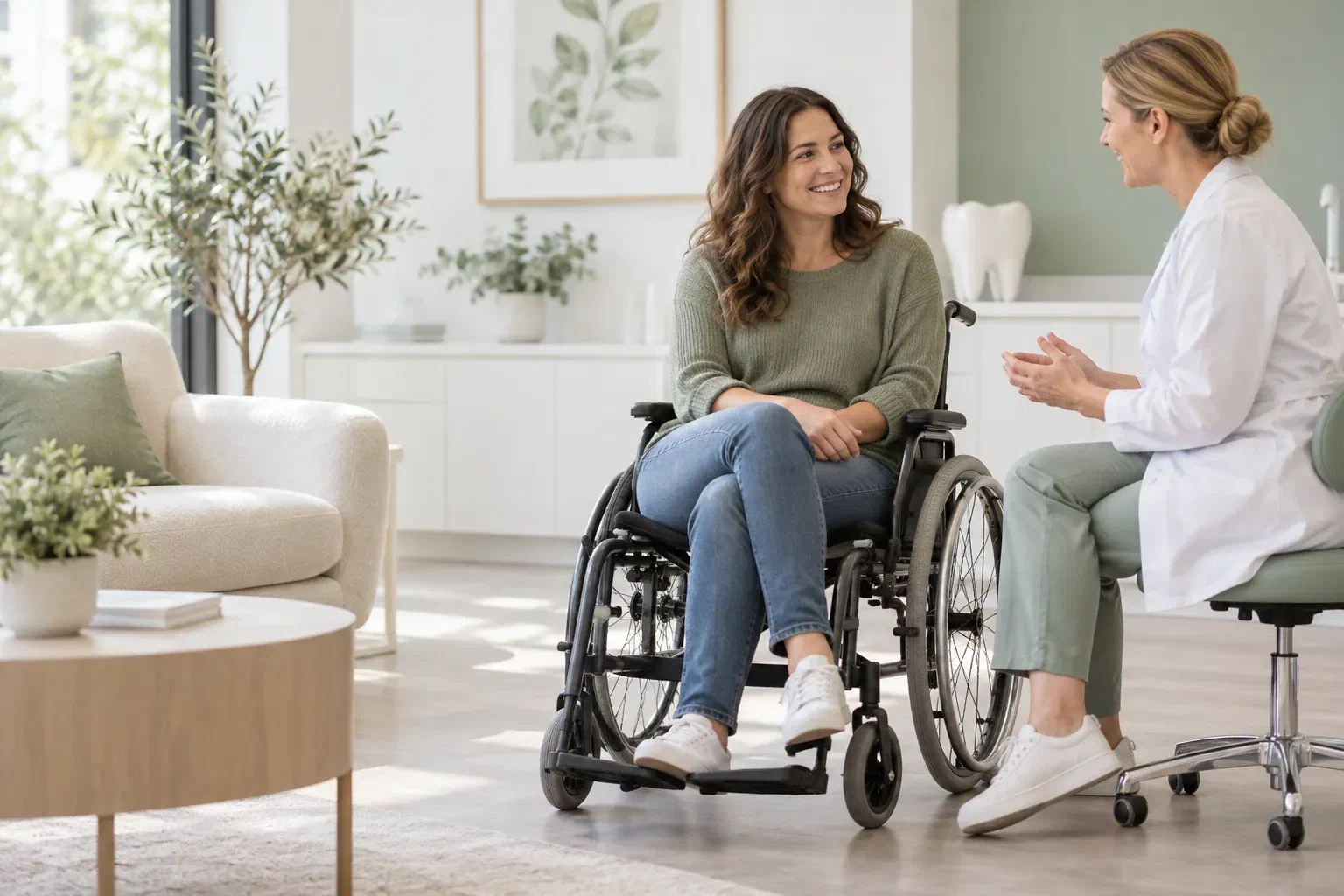
Illustrative consultation with a wheelchair user, not a photograph of the clinic or its access facilities
General & Family Dentistry

Dental Care for Patients with Limited Mobility in Brampton

Often a son, daughter or partner makes the call, while someone else will sit in the chair. Both voices matter. Talk with us about mobility, transfers and support, and keep the patient’s own wishes at the centre.

When a relative is organizing the visit

One person books it. Another person lives it.

In many households, the person who juggles calendars and drives is not the person who needs the dental care. A parent who has had a stroke, a partner who uses a wheelchair, or a grandparent whose balance has become unreliable may depend on family for scheduling and transport. That help is valuable. It works best when the plan reflects what the patient can do, wants and finds comfortable.

Whoever phones from Brampton, the most useful thing is detail. Explain how the patient walks, stands, transfers, sits and copes with fatigue, and what equipment or trained help is normally involved. Limitations may be recent or long-standing and can affect hands and posture as well as walking. If the patient can join the call, even briefly, their own account of what works is often the clearest.

We can then discuss whether those needs can be met for the proposed appointment and what still needs to be checked. A transfer aid, a certain chair position, or treatment in a wheelchair should never be presumed available. If a different setting would serve better, both of you should hear a clear explanation of the next step.

Plan a visit for a family member
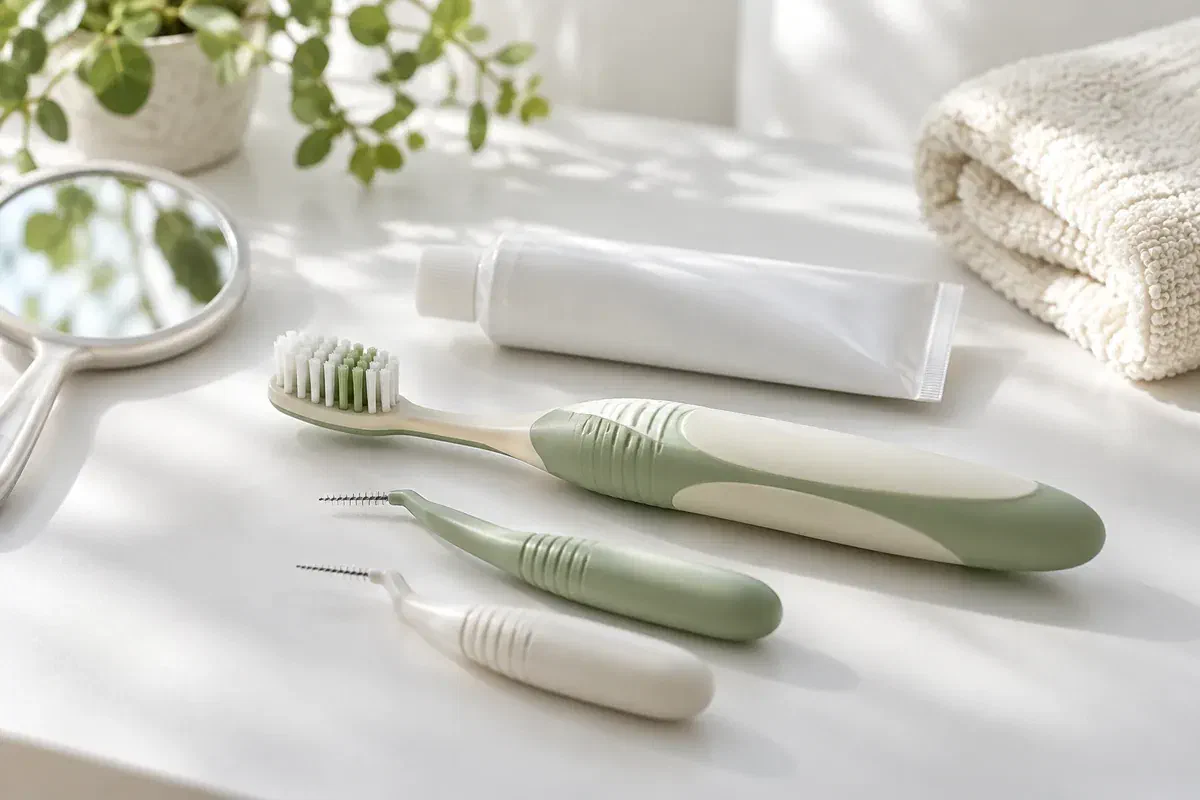
Easy-grip toothbrush and interdental brushes illustrating adaptable oral care tools
Information that helps us prepare

Describe a typical outing, step by step.

Labels such as “frail” or “unsteady” leave a lot unsaid. Walking us through an ordinary trip out of the house shows the team where help is actually needed and where it isn’t.

Arrival and the route inside

Ask what the way from the entrance to the treatment area is like and whether its widths and layout will work. For a wheelchair or scooter, measurements and turning room can be relevant. Get these answers before booking the drive.

Moving to and from a seat

Say whether the patient transfers alone, uses a specific device, or needs a trained person to assist. Mention positions that lead to pain, spasms, dizziness or breathlessness. Family members should not be asked to attempt an unplanned lift to keep things on time.

Energy, patience and timing

Getting ready, the drive and the wait can be tiring even when the dental part is quick. Share the time of day that suits the patient and whether rest breaks help. Ask how long the appointment should take and what can sensibly be done.

Please check access, transfer and positioning needs with the clinic directly. Pictures used here are for illustration only; they are not evidence of specific facilities, lifting aids or treatment arrangements.

Why a joint conversation helps

Practical support without losing the patient’s voice.

Hearing the practical picture early lets the team plan it together with the examination or treatment requested. Some obstacles disappear with a different time slot or shorter session. Others suggest another setting or extra support. Talking openly beats assuming that every person and procedure can be handled the same way.

Family help is welcome, and the patient’s preferences still lead. They decide how assistance is offered and who joins them in the room. Needing help to move does not mean needing someone else to make dental decisions. The dentist should address the patient directly and confirm what involvement they want from relatives.

Less pressure on the day

Agreeing on details in advance gives the family time to sort out questions about access, transfers or length before anyone gets in the car. Write down the plan, and call if the patient’s needs change in the meantime.

Realistic expectations for each visit

A first examination is usually less demanding than a long treatment appointment. Ask what each visit is meant to achieve and whether stages or pauses are sensible. Nobody should feel they must endure discomfort quietly to avoid inconveniencing others.

A routine the household can keep

If grip, reach or tiredness makes brushing hard, the appointment can include easier tools and methods for the patient and anyone helping. Point to the movement that causes trouble. Practical advice should fit daily life at home.

How planning works

Talk it through together before the day arrives.

A relative can phone and handle logistics. Wherever possible, include the patient so their preferences and questions are heard firsthand.

  1. Outline mobility and assistance

    Cover the mobility aid, how transfers happen, which positions to avoid, and any equipment or trained help usually needed. Ask what the clinic can accommodate. An appointment slot alone does not confirm that a specific physical arrangement will be in place.

  2. Update health and medication details

    List diagnoses, current medicines, recent hospital stays or changes, and the reason for the visit. Note pain, fatigue or symptoms that could affect positioning. The dentist can then plan the right assessment and ask for medical information if it would help.

  3. Confirm the approach with the patient

    Before treatment, the patient and dentist agree on positioning, a way to signal a pause, and the scope of the visit. If anything feels wrong, it should be said aloud. The team should adjust rather than continue simply because a plan was made.

  4. Arrange aftercare at home

    Discuss aftercare, who will help at home, and the next appointment. Make sure the ride home suits how the patient may feel after treatment. Adjust the plan to the care actually delivered, especially if it differed from the original expectation.

Brushing with or without help

Make home care a shared, respectful routine.

A good plan considers the patient’s grip, reach and stamina, and how much help they actually want. Ask for a demonstration that includes the family member who assists.

Find a tool the patient can hold

Wider handles, powered brushes, and interdental aids are all worth discussing. The right choice depends on which teeth and gums need attention and what the patient controls comfortably. A pricier product does not automatically answer a particular movement problem.

Pick a place that works for everyone

A helper may find it easier to assist when the patient is seated somewhere stable with good light and supplies nearby. Mention if moving to the bathroom is difficult. Rinsing or assisted care should still respect swallowing or medical instructions already in place.

Agree where help starts and stops

Decide together which steps a relative handles and how the patient will show that something hurts. Seeing the routine demonstrated can help both of you. Assistance should respect the patient’s preferences and leave them the tasks they can and want to do.

What the plan might look like

Several workable paths, depending on needs.

The exam determines what dental care is required. Practical planning determines how to deliver it. Keep asking which pieces are confirmed and which are still open.

When the appointment can be accommodated

A visit arranged in advance

This might be a defined assessment or treatment visit with seating, timing and support worked out beforehand. Let the clinic know of any changes before coming in. A setup that works for a checkup might need adjusting for longer treatment.

When stamina limits a single visit

Care split into smaller pieces

Where clinically suitable, work may be spread across appointments the patient can manage. Ask how that affects the plan, temporary care, and how many drives from Brampton the family will need to arrange. Clinical priorities and practical limits both count.

When more equipment or support is required

Another care setting

Some needs go beyond what the clinic can provide. Ask for a plain explanation of where the patient is being referred and why. The referral should address the specific need and come with a clear next step.

Questions from Brampton households

Supporting someone without speaking for them.

A diagnosis on its own doesn’t explain what support is needed. Share what works day to day and ask for arrangements to be confirmed before you travel.

(905) 876-4488
Can I make the appointment on my mother’s behalf?
Yes, a family member can help with booking and logistics. It helps to include her in the conversation where possible so her preferences are heard. Let the clinic know what information she is comfortable having shared.
Do I need to stay in the treatment room with my relative?
That is the patient’s choice. Some people want a family member present; others prefer privacy. Discuss it in advance, and agree what role you will play. The dentist will speak with the patient directly about treatment.
Can I help lift my father into the dental chair?
Do not plan an improvised lift. Describe his transfer needs to the clinic beforehand and ask what can be confirmed. If trained help or specific equipment is required and unavailable, the team should discuss another route to care.
What should we bring to the first visit?
Bring a current list of medicines, any surgeon or physician instructions about positioning, and the toothbrush or aids used at home. Notes about what tires the patient or causes discomfort can also be useful to share.
My relative has trouble lying back. What should we tell you?
Explain which positions cause pain, dizziness or breathing trouble, and whether this has changed recently. Share relevant medical instructions. The dentist can consider what this means for the visit and whether a different arrangement or setting is needed.
How can I help with brushing without taking over?
Ask the patient which steps they want help with and agree on a signal for discomfort. A demonstration at the visit can show both of you techniques that suit their hands. Let them keep doing the parts they can manage.
Family-supported care for Brampton

Plan together, then make the drive.

Phone our Bronte Street clinic to describe the dental problem along with transfer, seating and support needs. We can outline what the proposed visit would involve and what still has to be confirmed. The patient’s own experience helps shape a realistic next step.

Access and transfer arrangements must be confirmed directly with the clinic. An online request is not confirmation of particular equipment or facilities.

Visit Milton Dental Clinic
Unit 1, 342 Bronte St. S, Milton, ON L9T 5B7
Get directions Clinic hours
Monday–Thursday
11am–7pm
Friday–Sunday
By appointment only

Areas we serve

  • Milton
  • Oakville
  • Mississauga
  • Georgetown
  • Halton Hills
  • Acton
  • Campbellville
  • Brampton
  • Burlington
  • Puslinch
  • Rockwood
  • Erin
  • Caledon
  • Etobicoke
  • Old Milton
  • Bronte Meadows
  • Timberlea
  • Dorset Park
  • Dempsey
  • Clarke
  • Beaty
  • Coates
  • Harrison
  • Scott
  • Willmott
  • Ford
  • Bowes
  • Cobden
  • Walker
  • Mountain View
  • Milton Heights
  • Hawthorne Village
  • Valley View
  • Fallingbrook
  • Nassagaweya
  • Trafalgar
  • Esquesing
  • Nelson
  • Brookville
  • Moffat
  • Glen Williams
  • Norval
  • Limehouse
  • Stewarttown
  • Ashgrove
  • Hornby
  • Silver Creek
  • Speyside
  • Scotch Block
  • North Oakville
  • River Oaks
  • Glen Abbey
  • West Oak Trails
  • Palermo
  • Bronte Creek
  • College Park
  • Joshua Creek
  • Uptown Core
  • Preserve
  • Iroquois Ridge
  • Lisgar
  • Meadowvale
  • Meadowvale Village
  • Churchill Meadows
  • Erin Mills
  • Central Erin Mills
  • Streetsville
  • East Credit
  • Creditview
  • Heartland
  • Sheridan
  • Mount Pleasant
  • Credit Valley
  • Huttonville
  • Churchville
  • Springbrook
  • Northwest Brampton
  • Bram West
  • Fletcher's Meadow
  • Fletcher's Creek South
  • Alton Village
  • Orchard
  • Millcroft
  • Headon Forest
  • Tansley
  • Brant Hills
  • Tyandaga
  • Kilbride
  • Lowville
  • Aberfoyle
  • Morriston
  • Arkell
  • Hillsburgh
  • Freelton
  • Carlisle
  • Waterdown
  • Flamborough
  • Mountsberg

How can we help?

Milton Dental Clinic

Have a question about your smile? Choose the option that works best for you.

For urgent dental concerns, please call.
Messages are reviewed during clinic hours.