Coming in the door
Ask what lies between your arrival and the treatment room and whether its clearances work for you. Scooter and wheelchair users might share dimensions or turning needs. Settle these points before you line up a ride.

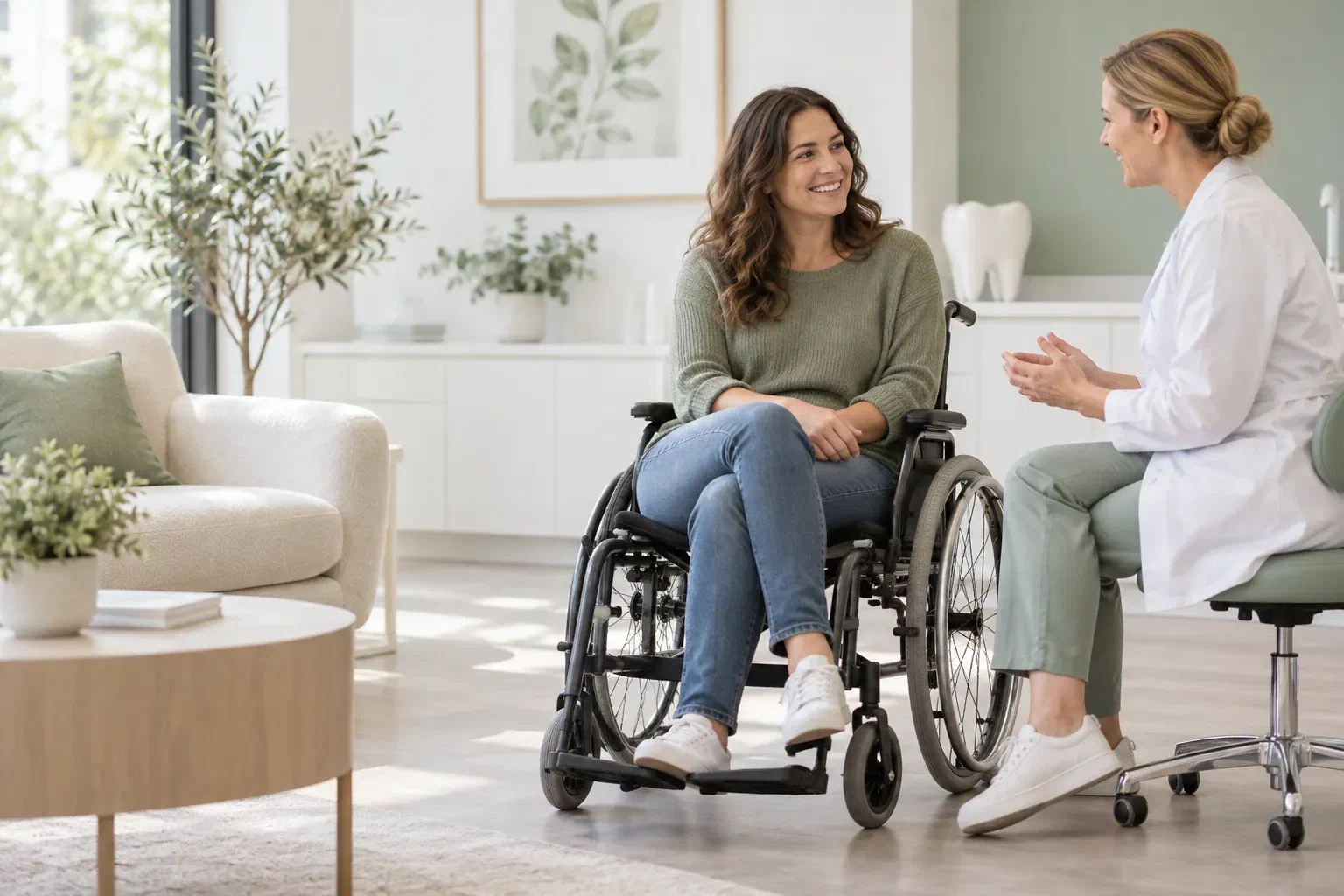
Sometimes the first sign is at the bathroom sink: a brush that’s hard to hold, back teeth you can’t reach. From Halton Hills, talk with us about home care and about planning a dental visit that suits how you move.
Limited mobility often shows up in the mouth before it shows up at the dental office. Standing at the sink becomes tiring, a shoulder won’t lift far enough to reach the back teeth, or stiff fingers let the brush slip. Over time, those small struggles can make cleaning less thorough. They are also a good reason to plan a visit that takes your movement into account from the start.
Households across Georgetown, Acton, Glen Williams and the smaller hamlets of Halton Hills can phone our Milton clinic before booking. Tell us how you move around, transfer and sit, and what your hands can and can’t do. Limitations may be temporary or long-term and affect people very differently. Mention what you manage independently and where you need equipment or someone’s help. Your experience of your own routine is what we need to hear.
Together we can work out whether your requirements can be met for the visit you have in mind and what still needs checking. A transfer aid, a certain chair position, or treatment in a wheelchair shouldn’t be taken for granted. If another setting would suit you better, the next step should be clearly explained.
Knowing that someone has arthritis or uses a cane is a start, but the specific movement that causes trouble is what shapes a plan. Detail stops the team from guessing about the help you need.
Ask what lies between your arrival and the treatment room and whether its clearances work for you. Scooter and wheelchair users might share dimensions or turning needs. Settle these points before you line up a ride.
Explain whether you can move into a chair on your own, use a specific aid, or need a trained helper. Note any position that causes pain, cramping, dizziness or short breath. A transfer should be planned, never pieced together to stay on schedule.
The trip, the wait and holding your mouth open can all be tiring. Tell us your most comfortable time of day and whether you need to rest partway. Ask what the visit involves and how much is realistic at once.
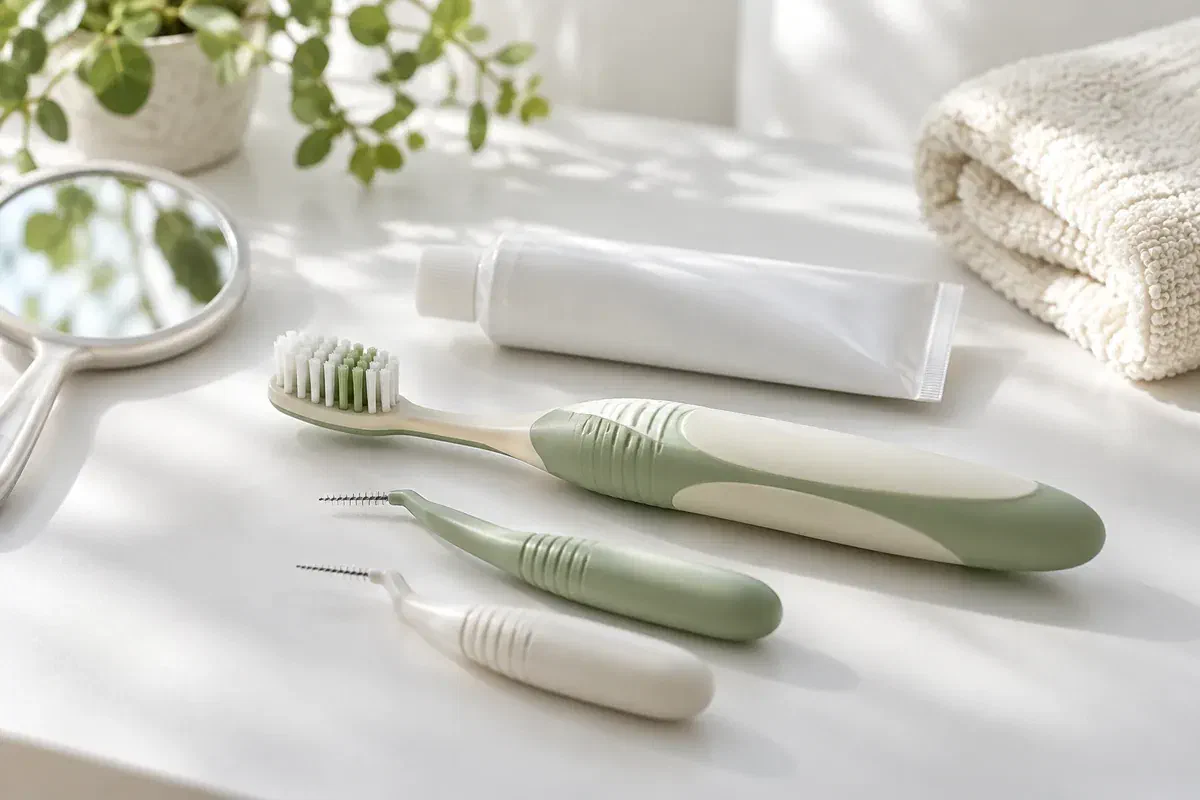
Please confirm access, transfer and positioning needs with the clinic. The images on this page are illustrations and should not be read as proof of particular facilities, lifting devices or treatment arrangements.
When the team knows about your practical needs ahead of time, it can consider them together with the dental care you want. Some challenges can be met with timing or appointment length. Others might require a different setting or support. A plain conversation is more helpful than assuming one way of working fits everyone.
Your preferences guide the plan from start to finish. Tell us how you want help offered, and whether someone should come with you. Reduced mobility has no bearing on your ability to follow options and make decisions. The team should talk with you directly and ask what help you want, not turn first to a companion.
Checking details before travelling raises questions about access, transfers or visit length while there is time to sort them out. Write down what you agreed, and let the clinic know if your needs change.
An exam and a longer treatment appointment make different demands. Ask what each visit covers and whether stages or breaks would help. A realistic plan matters more than toughing out discomfort.
If you struggle with grip, reach or fatigue, your appointment can include tools and methods chosen for you. Show us the movement that is difficult. Advice helps most when it suits the space and routine you have at home.
Phone with the dental problem and the support that helps you. If a relative usually arranges appointments, they can assist with details while your preferences lead.
Describe your cane, walker, wheelchair or other aid, how you transfer, positions you can’t hold, and any equipment or trained help you need. Ask what the clinic can accommodate. An appointment time alone doesn’t confirm a specific physical arrangement.
Tell us about diagnoses, medicines, recent changes and the reason for the visit. Mention pain or tiredness that could affect how you sit or lie back. The dentist can then plan the assessment and decide whether input from your doctor would be useful.
Before starting, settle your position, a signal to pause, and what today’s visit will include. If something feels uncomfortable or wrong, say so. The team should adapt rather than continue just because a plan was made earlier.
Review aftercare, any help you might need at home, and the next appointment. Check transport if the procedure might change what you can manage later. Shape the plan around what was actually done, particularly if it differed from what was planned.
Home care should fit your grip, reach and energy, and include only the help you want. Ask to try a technique during your visit, and tell us if something seems beyond you.
Thicker grips, powered brushes and interdental aids are all options to discuss. The best one depends on which teeth are hardest to clean and how much control you have. A more costly gadget won’t necessarily solve the movement that gives you trouble.
A chair at the sink or a table with supplies nearby can take the strain off standing. If getting to the bathroom is hard, say so when asking for advice. Any rinsing or assisted routine should follow existing swallowing or medical guidance.
If a family member helps with mouth care, agree on which steps they handle and how you’ll signal that something hurts. A demonstration can make the routine clearer. Support should respect what you can and want to do yourself.
A diagnosis doesn’t tell us how you manage day to day. Describe what works and ask for arrangements to be confirmed before you travel.
Get in touch with our Bronte Street clinic about your dental concern, your home-care struggles, and the access or support you rely on. We can explain the proposed appointment and what still needs confirming. Your day-to-day experience guides the next step.
Access and transfer arrangements need to be confirmed directly. An online request doesn’t confirm specific equipment or facilities.
