
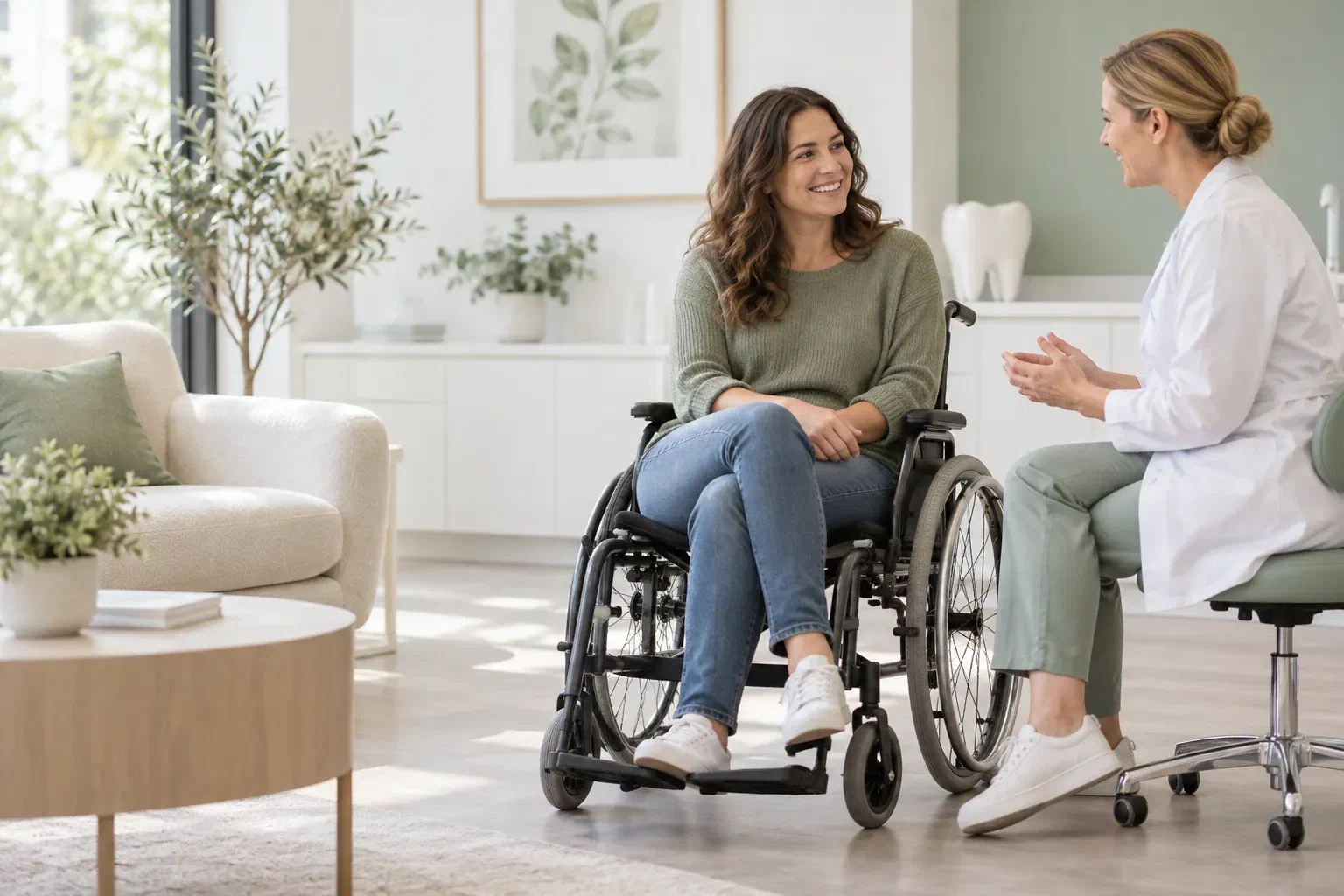
Illustrative consultation with a wheelchair user, not a photograph of the clinic or its access facilities
General & Family Dentistry

Dental Care for Patients with Limited Mobility in Milton

The most useful part of a mobility-aware dental visit often happens on the phone. Tell our Milton team how you move, sit, transfer and tire, and we can talk through what the appointment would ask of you.

Mobility and dental visits in Milton

The first conversation is a planning call, not a booking slot.

Most people picture a dental appointment as the half hour in the chair. When walking, standing, reaching or sitting for long periods is hard, the visit actually starts much earlier: leaving the house, coming through the door, getting settled, and having enough energy left to get home. Each of those steps can be planned for, and none of them should be an afterthought.

Living here in Milton, you may already know roughly where our Bronte Street practice is. What you may not know is whether the arrangements you rely on can be offered there. That is the reason to call before anything is confirmed. Describe what you do on your own, what you need help with, and any equipment or trained support that is usually part of your day. You are the expert on how your body manages.

From there we can talk honestly about what the proposed visit involves and which arrangements still need checking. Please don’t take for granted that a transfer aid, a certain chair setup, or treatment while seated in a wheelchair is available until that has been confirmed with you. If a different setting would serve you better, we should explain how to get there.

Start the planning conversation
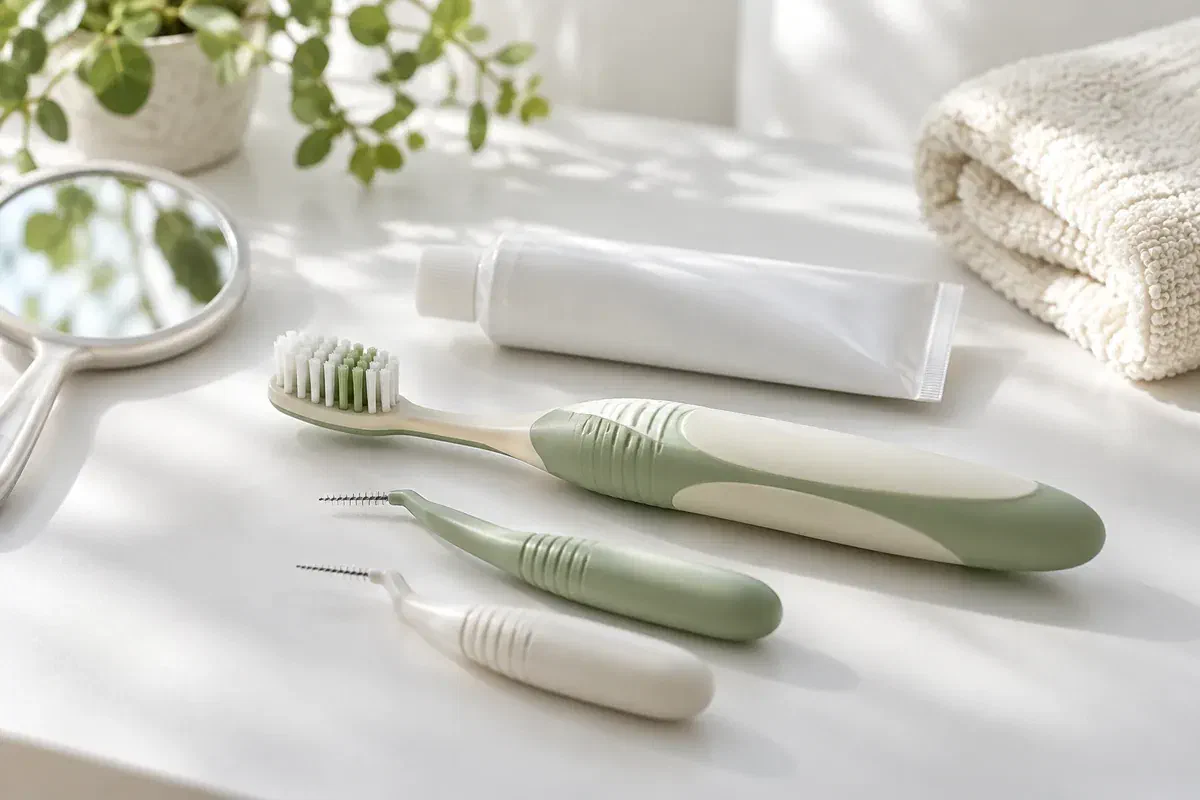
Easy-grip toothbrush and interdental brushes illustrating adaptable oral care tools
What to describe when you call

Tell us what the hard part of the day looks like.

A label such as “uses a walker” says very little on its own. Concrete details about movement and stamina let the team picture the appointment accurately rather than guess at what you need.

From the door to the treatment room

Ask how the path from arrival to the treatment area works and whether the clearances suit you. For a wheelchair or scooter, its width, length or turning space can be helpful to share. Get those answers before you book a ride.

Moving into position

Say whether you move across on your own, use a specific aid, or need a trained helper. Note any position that brings on pain, muscle spasms, light-headedness or shortness of breath. No one should improvise a transfer just to stay on schedule.

How much the visit takes out of you

Even a short procedure can follow a tiring trip and some waiting. Let us know which time of day suits your energy and whether you need pauses. Ask how long the visit is likely to run and how much is realistic in one sitting.

Access, transfer and positioning needs should be confirmed with the clinic directly. Pictures on this page are illustrations only and do not show that particular equipment, lifting aids or treatment arrangements are available.

What planning ahead changes

Less guesswork, more of the visit spent on your teeth.

When the team knows the practical side in advance, it can be weighed together with the dental care you are asking for. Some obstacles can be handled through timing and appointment design. Others may point toward another setting or extra help. Either way, an open discussion beats assuming that every procedure can be done the same way for everyone.

Throughout, your wishes guide the process. Say how you prefer help to be offered and whether a support person should join you. Limited movement says nothing about your ability to follow treatment options or decide for yourself. You should be spoken to directly, and asked what help you want, instead of having the conversation routed past you.

Questions answered early

Sorting out access, transfers or timing before the day leaves room to solve problems calmly. Jot down what was agreed, and get in touch if anything about your mobility shifts before the appointment.

A schedule that fits the work

A first assessment usually asks different things of you than a longer treatment visit. Find out what each appointment is meant to cover and whether breaks or separate stages make sense. Nobody expects you to sit through discomfort without saying so.

Home advice built around your movement

When grip, reach or tiredness makes brushing difficult, the appointment can cover other tools and methods. Point out the specific motion that is a struggle. Suggestions are most useful when they match what you can do comfortably at home.

How we plan it with you

Sort the logistics, then start the dentistry.

Phone with the reason for your visit and the support you rely on. A relative or carer who usually books appointments is welcome to help with details, while you stay at the centre of every decision.

  1. Talk through access and support

    Describe your mobility aid, how you transfer, which positions are off limits, and any equipment or trained help you normally use. Ask what can be accommodated. A general booking confirmation is not the same as confirmation of a specific physical arrangement.

  2. Share the health and dental picture

    Mention diagnoses, medications, recent changes and why you are coming in. Flag any pain, fatigue or symptoms that could affect how you are positioned. The dentist can then judge what kind of assessment is needed and whether information from your physician would help.

  3. Settle on a workable approach

    Before anything begins, agree on your position, a signal for stopping, and what the visit will cover. If something turns out uncomfortable or unsuitable, speak up. The plan should be adjusted rather than pushed through because it was decided earlier.

  4. Arrange aftercare and the trip home

    Go over aftercare, any help you may need once home, and when to return. Check your ride if the procedure could change what you can manage afterward. Let the plan follow the treatment that was actually done, particularly if it differed from what was expected.

Daily care at home

A routine that suits your grip, reach and energy.

Good home care takes your hand strength, stamina and preferred level of help into account. Ask to see a technique demonstrated, and say so plainly if a suggestion does not feel doable.

Change the handle or the method

A thicker handle, a powered toothbrush, or a suitable interdental cleaner may be worth exploring. What works depends on which areas need cleaning and what you can control with ease. A pricier gadget will not automatically fix a particular movement problem.

Set things up within easy reach

Think about where you can sit or rest comfortably and keep supplies close by. If moving between rooms is hard, mention it when asking for suggestions. Any routine that involves rinsing or a helper should also follow swallowing or medical guidance you already have.

Decide what a helper does

When someone assists with mouth care, agree which steps they handle and how you will show that something hurts. Seeing the routine demonstrated can make it clearer for both of you. Help should follow your preferences, not take over tasks you can and want to do.

Possible paths forward

Where your care happens should fit your teeth and your day.

An examination shows what treatment is needed. Planning in advance settles how it can be delivered. Keep asking what has been confirmed and what is still open.

When the appointment can be accommodated

A visit with arrangements agreed

This may be a clearly scoped assessment or treatment visit with positioning, timing and support worked out ahead. Check any changes before you come. What works for one procedure may need another look for a longer or different appointment.

When stamina or session length is the issue

Treatment split into shorter visits

If it is clinically suitable, care may be spread across visits that respect your energy and practical limits. Ask how that affects the overall plan, any temporary work, and the number of trips. Comfort and clinical priorities both deserve a voice.

When other facilities or support are needed

A referral elsewhere

Some needs call for equipment or an environment the clinic cannot offer. Ask for a plain explanation of where you are being referred and what happens next. The new setting should meet the need that was identified, not leave you without a plan.

Common questions from Milton callers

Practical answers before you book.

Your diagnosis does not tell us how you get around or what support helps. Describe what works for you and ask for those arrangements to be confirmed ahead of your visit.

(905) 876-4488
What details should I have ready when I phone about access?
It helps to know your mobility aid’s rough dimensions, how you usually transfer, which positions are uncomfortable, and roughly how long you can sit before needing a break. Mention anyone who will come with you. The team can then explain what needs confirming.
Does the dental chair have to be reclined for my exam?
Not always in the same way, but the answer depends on the exam, the equipment and what you can tolerate. Tell us beforehand if reclining causes pain, dizziness or breathing difficulty. The dentist can consider whether another position or arrangement is needed.
Can my support worker stay in the room with me?
Ask about this when you call. If you want a support worker or family member present, say so, and explain what you would like them to do. Decisions about your care remain yours, and the team should speak with you directly.
Is it possible to have a cleaning and an exam on separate days?
Where it is clinically appropriate, care may be divided so each visit is shorter. Discuss your stamina and travel arrangements when booking. The dentist can explain how splitting appointments would affect the plan and the number of visits involved.
My hands are stiff in the morning. Can we talk about brushing at another time of day?
Yes. Describe when your hands work best and which movements are hardest. The conversation can include handle changes, powered brushes or other aids, along with timing that suits you. Bring your current brush if showing the difficulty is easier than describing it.
If my mobility changes after I book, what should I do?
Contact the clinic before the appointment and explain what is different. A new injury, a different mobility aid or a change in stamina may affect the arrangements that were agreed. It is better to review the plan than to arrive expecting something that no longer fits.
Planning your visit in Milton

Call us before you organize the trip.

Phone our Bronte Street practice with your dental concern and the access, positioning or support you need. We can talk through what the appointment would involve and what still needs to be confirmed. What you know about your own mobility shapes the next step.

Access and transfer arrangements must be confirmed directly. Sending an online request does not confirm any particular equipment or facility.

Visit Milton Dental Clinic
Unit 1, 342 Bronte St. S, Milton, ON L9T 5B7
Get directions Clinic hours
Monday–Thursday
11am–7pm
Friday–Sunday
By appointment only

Areas we serve

  • Milton
  • Oakville
  • Mississauga
  • Georgetown
  • Halton Hills
  • Acton
  • Campbellville
  • Brampton
  • Burlington
  • Puslinch
  • Rockwood
  • Erin
  • Caledon
  • Etobicoke
  • Old Milton
  • Bronte Meadows
  • Timberlea
  • Dorset Park
  • Dempsey
  • Clarke
  • Beaty
  • Coates
  • Harrison
  • Scott
  • Willmott
  • Ford
  • Bowes
  • Cobden
  • Walker
  • Mountain View
  • Milton Heights
  • Hawthorne Village
  • Valley View
  • Fallingbrook
  • Nassagaweya
  • Trafalgar
  • Esquesing
  • Nelson
  • Brookville
  • Moffat
  • Glen Williams
  • Norval
  • Limehouse
  • Stewarttown
  • Ashgrove
  • Hornby
  • Silver Creek
  • Speyside
  • Scotch Block
  • North Oakville
  • River Oaks
  • Glen Abbey
  • West Oak Trails
  • Palermo
  • Bronte Creek
  • College Park
  • Joshua Creek
  • Uptown Core
  • Preserve
  • Iroquois Ridge
  • Lisgar
  • Meadowvale
  • Meadowvale Village
  • Churchill Meadows
  • Erin Mills
  • Central Erin Mills
  • Streetsville
  • East Credit
  • Creditview
  • Heartland
  • Sheridan
  • Mount Pleasant
  • Credit Valley
  • Huttonville
  • Churchville
  • Springbrook
  • Northwest Brampton
  • Bram West
  • Fletcher's Meadow
  • Fletcher's Creek South
  • Alton Village
  • Orchard
  • Millcroft
  • Headon Forest
  • Tansley
  • Brant Hills
  • Tyandaga
  • Kilbride
  • Lowville
  • Aberfoyle
  • Morriston
  • Arkell
  • Hillsburgh
  • Freelton
  • Carlisle
  • Waterdown
  • Flamborough
  • Mountsberg

How can we help?

Milton Dental Clinic

Have a question about your smile? Choose the option that works best for you.

For urgent dental concerns, please call.
Messages are reviewed during clinic hours.