
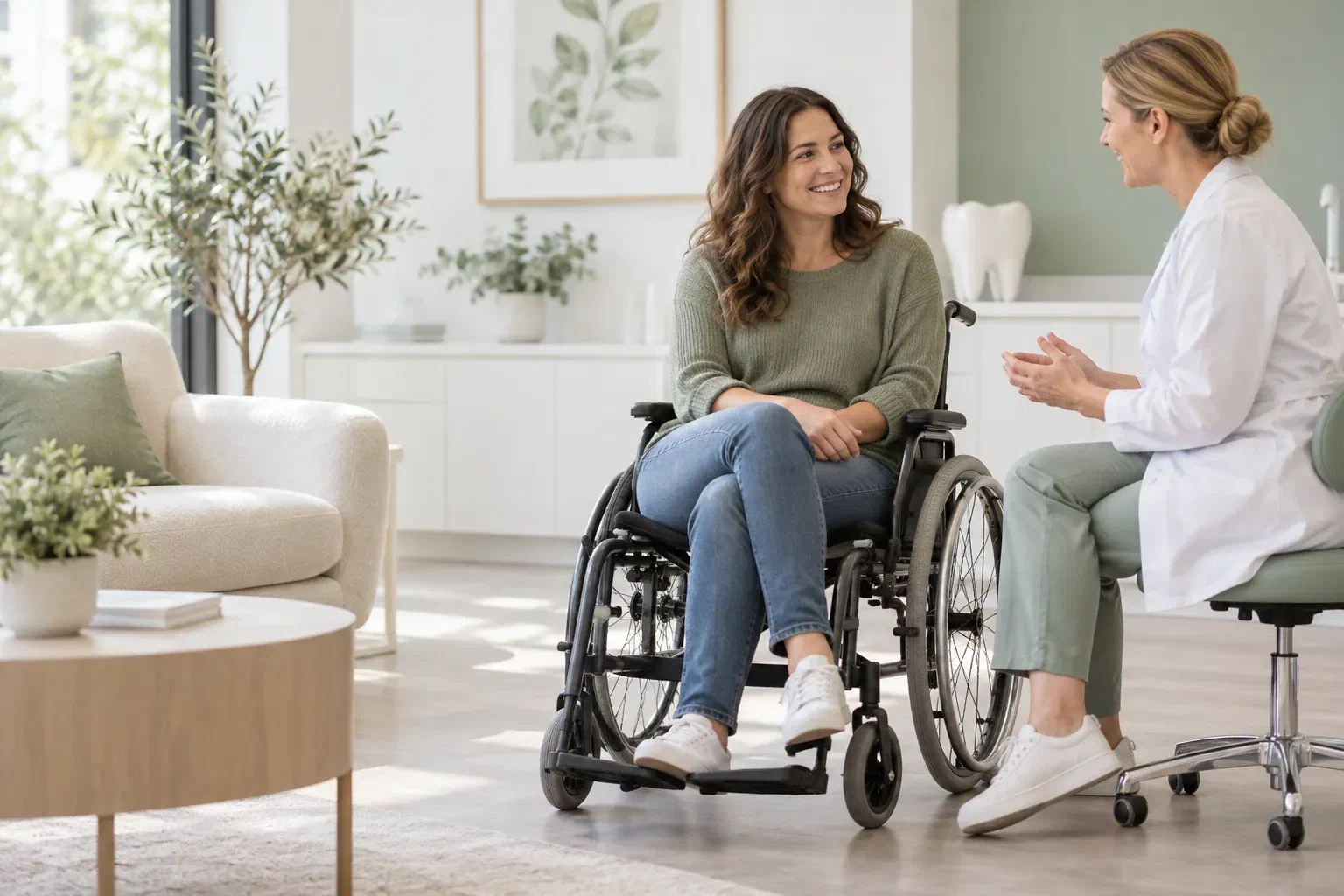
Illustrative consultation with a wheelchair user, not a photograph of the clinic or its access facilities
General & Family Dentistry

Dental Care for Patients with Limited Mobility in Oakville

Stay in your wheelchair, or move to the dental chair? That question, and the ones around it, are worth settling before you travel. Call from Oakville and we can talk through transfers, positioning and pacing first.

Planning a visit from Oakville

Where will you sit during treatment?

For many wheelchair users, the first real question about a dental visit has nothing to do with teeth. It is whether a transfer will be needed, who would help with it, and what happens if a position becomes painful halfway through. Those answers shape everything else, from the length of the appointment to how you plan the ride from Oakville and back.

So please raise them early. Phone our Milton clinic and explain how you move: on your own, with a slide board, with a trained helper, or not at all from your own chair. Limited mobility can be short-term after an injury or part of a long-standing condition, and it may affect walking, balance, posture, hands or energy. You know which arrangements actually work, and that knowledge should lead the planning.

We will talk through whether what you need can be provided for the visit you are considering, and be clear about anything still unconfirmed. Treatment while seated in a wheelchair, a particular chair configuration, or a transfer aid should not be assumed from a website. When another setting would suit you better, we should explain the next step.

Ask about transfers and seating
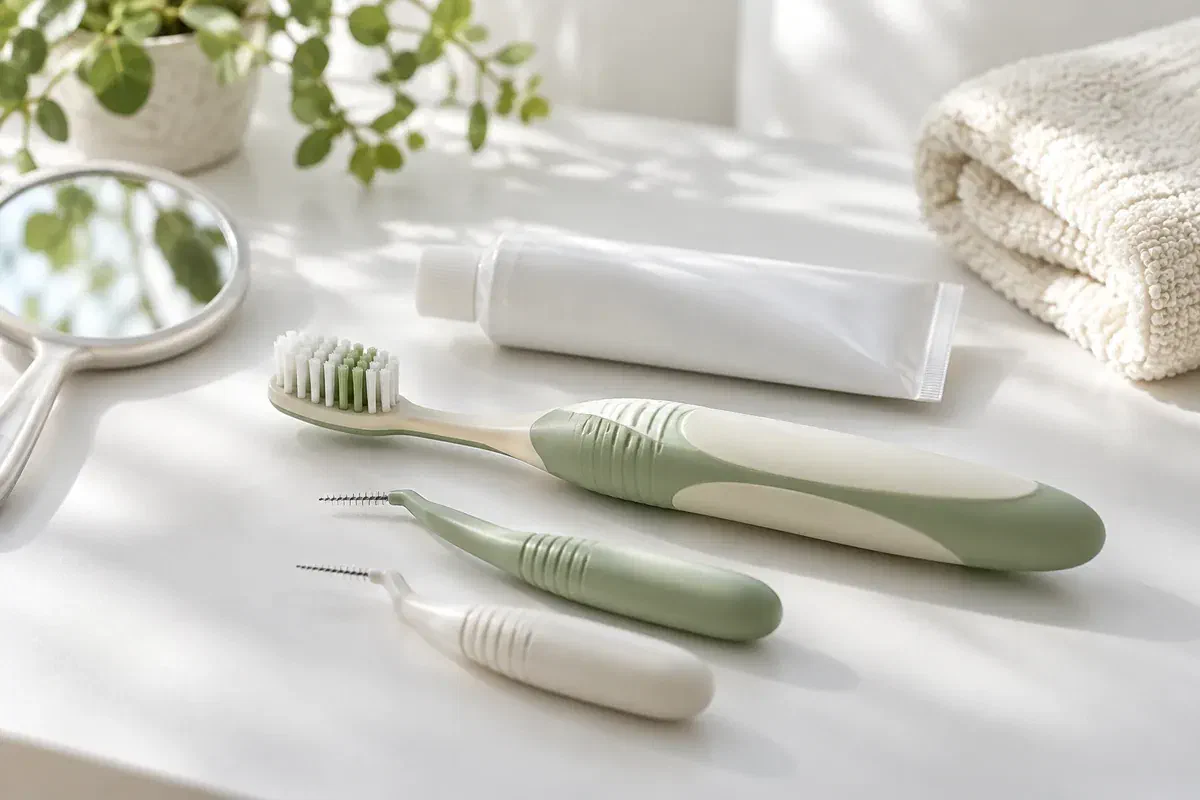
Easy-grip toothbrush and interdental brushes illustrating adaptable oral care tools
Before anyone books the ride

Three practical questions to settle.

Saying you use a power chair is a start, but the details matter far more. Two people with the same equipment can need entirely different arrangements, and specifics keep the team from guessing.

The route inside

Ask what lies between arrival and the treatment room, including clearances and anything else that matters to you. Share your chair’s or scooter’s size and turning needs if you know them. Wait for answers before you organize transport.

The transfer question

Tell us whether you transfer independently, need a specific aid, or require a person trained to assist. Describe positions that bring on pain, spasm, dizziness or breathing trouble. Nobody should invent a transfer method in the moment to keep an appointment on time.

Energy across the outing

The trip, the wait and staying in one posture can wear you out before the dentistry is finished. Let us know when you usually feel best and whether pauses help. Ask how long the visit will probably be and what is realistic to complete.

Confirm access, transfer and positioning needs directly with the clinic. Images on this page are illustrative only and do not show that particular facilities, lifting equipment or treatment arrangements are available.

What a planning call gives you

Answers you can rely on, decided with you.

With your practical needs on the table early, the team can weigh them alongside the assessment or treatment you want. Certain barriers can be handled by how the appointment is set up; others might need another setting or extra support. Honest discussion serves you better than an assumption that every procedure looks the same for every person.

You remain in charge of how help is given. Say whether you want assistance offered or only provided when you ask, and whether a companion should be included. Using a wheelchair has no bearing on your ability to understand options and decide. The team should talk to you, not over your head to whoever came along.

No surprises at the door

Checking arrangements before you travel can bring up questions about access, transfers or timing while there is still a chance to solve them. Keep a record of what was agreed and call if anything changes before the visit.

Time matched to the treatment

A first exam asks different things of you than a longer restorative session. Ask what each appointment will involve and whether breaks or separate stages are sensible. You should not be expected to put up with discomfort in silence.

Home care that respects your reach

If arm movement, grip or fatigue makes brushing difficult, the visit can include other tools and techniques. Describe the precise movement that is the problem. Advice is only useful if it fits what you can comfortably manage at home.

From first call to follow-up

Four conversations, in a sensible order.

Get in touch with your dental concern and the practical help you rely on. If someone else usually arranges your appointments, they can help with details while you stay at the centre of the decisions.

  1. Access and support

    Describe your wheelchair or other aid, how you transfer, positions you cannot hold, and any equipment or trained help you normally have. Ask what the clinic can accommodate. An ordinary appointment confirmation does not confirm a specific physical arrangement.

  2. Health and dental background

    Share diagnoses, medicines, recent changes and the reason for your visit. Flag pain, fatigue or symptoms that could influence positioning. The dentist can then consider which assessment is needed and whether information from your medical team would help.

  3. The plan for the chair, or your chair

    Before treatment starts, confirm your position, a signal to pause, and how much will be done today. If an arrangement turns out to be uncomfortable or unsuitable, say so. The team should change course instead of assuming the original plan has to continue.

  4. Aftercare and the return trip

    Talk through aftercare, any help you may need at home, and your next visit. Check your transport if the procedure could affect what you can do afterward. Let the plan follow the treatment actually provided, particularly if it differed from what was expected.

Keeping teeth clean between visits

Adapt the routine to your hands, not the other way round.

A home-care plan should account for reach, grip, stamina and the amount of help you want. Ask to see a method demonstrated, and say so when something does not feel manageable.

Rethink the brush

A wider handle, a powered toothbrush, or a well-chosen interdental cleaner may be worth talking about. The best option depends on what needs cleaning and what you can control comfortably. Spending more on a device will not automatically address a specific movement difficulty.

Rethink the setup

Brushing at a table or while seated in your own chair may be easier than reaching over a sink. If moving between rooms is a barrier, mention it when asking for ideas. Any routine that involves rinsing or a helper should follow existing swallowing or medical guidance.

Rethink who does what

If a partner or attendant helps with mouth care, decide which steps you want help with and how you will signal discomfort. A practical demonstration can make the routine clearer. Help should fit your preferences and leave you the tasks you can and want to do.

Three possible routes

Match the setting to the treatment and to you.

An exam identifies the dental care required. Advance planning works out how it can be delivered. Ask which arrangements are confirmed and which still need resolving.

When the appointment can be accommodated

One visit, arrangements confirmed

This could be a clearly defined assessment or treatment visit with seating, timing and support agreed ahead. Confirm any changes before you come. What works for a short exam may need reviewing for a different or longer procedure.

When sitting time or fatigue is the limit

Several shorter sessions

Where clinically appropriate, treatment might be broken into visits that suit your stamina and practical needs. Ask how that affects the overall plan, any temporary care, and the number of trips from Oakville. Comfort and clinical priorities both count.

When more equipment or support is needed

Referral to another setting

Some needs call for facilities or a care environment beyond what the clinic can provide. Ask for a clear explanation of the referral and what comes next. The alternative should meet the need that was identified rather than leave you stranded.

Wheelchair and transfer questions

Straight answers about seating and support.

A diagnosis does not tell the team how you move or what helps. Describe the arrangements that work for you and ask for them to be confirmed before you travel.

(905) 876-4488
Should I bring my own slide board or transfer aid?
Talk about it with the clinic first. Describe the aid, how you use it, and who usually helps. Whether bringing it makes sense depends on the setting and the arrangements that can be confirmed. Do not plan a transfer that has not been agreed in advance.
Who would help me move from my wheelchair to the dental chair?
That needs to be discussed and confirmed before the visit, not decided on the day. Explain the help you normally need and whether trained assistance is required. If a safe transfer cannot be arranged, the team should explain other options, including another care setting.
Does a tilting power chair change what treatment is possible?
It may affect positioning, but suitability depends on the procedure, the equipment and the facilities available. Describe what your chair does and ask the clinic to confirm whether the proposed visit can be provided appropriately in your circumstances.
How long can I expect to stay in one position?
It depends on the treatment planned. Tell the team how long you can comfortably hold a position and what happens when you reach that limit. Some care can be staged where appropriate, and a pause signal should be agreed before starting.
Will the dentist talk to me or to my attendant?
To you. Using a wheelchair does not determine your ability to make decisions. Tell the team how you would like your attendant involved and what may be shared. Treatment options should be explained to you directly.
What makes a good day and time for a visit from Oakville?
Think about your own energy pattern and when accessible transport is reliable for you. Share both when booking so the expected appointment length can be planned around them. Clinic hours are Monday to Thursday, 11 a.m. to 7 p.m., with weekend and Friday visits by appointment.
Accessible dental planning for Oakville

Settle the seating question before the trip.

Call our Bronte Street clinic with your dental concern and the transfer, positioning or support arrangements you need. We can talk through the proposed appointment and what must still be confirmed. Your experience of what works is the starting point.

Access and transfer arrangements need direct confirmation with the clinic. An online request does not confirm particular equipment or facilities.

Visit Milton Dental Clinic
Unit 1, 342 Bronte St. S, Milton, ON L9T 5B7
Get directions Clinic hours
Monday–Thursday
11am–7pm
Friday–Sunday
By appointment only

Areas we serve

  • Milton
  • Oakville
  • Mississauga
  • Georgetown
  • Halton Hills
  • Acton
  • Campbellville
  • Brampton
  • Burlington
  • Puslinch
  • Rockwood
  • Erin
  • Caledon
  • Etobicoke
  • Old Milton
  • Bronte Meadows
  • Timberlea
  • Dorset Park
  • Dempsey
  • Clarke
  • Beaty
  • Coates
  • Harrison
  • Scott
  • Willmott
  • Ford
  • Bowes
  • Cobden
  • Walker
  • Mountain View
  • Milton Heights
  • Hawthorne Village
  • Valley View
  • Fallingbrook
  • Nassagaweya
  • Trafalgar
  • Esquesing
  • Nelson
  • Brookville
  • Moffat
  • Glen Williams
  • Norval
  • Limehouse
  • Stewarttown
  • Ashgrove
  • Hornby
  • Silver Creek
  • Speyside
  • Scotch Block
  • North Oakville
  • River Oaks
  • Glen Abbey
  • West Oak Trails
  • Palermo
  • Bronte Creek
  • College Park
  • Joshua Creek
  • Uptown Core
  • Preserve
  • Iroquois Ridge
  • Lisgar
  • Meadowvale
  • Meadowvale Village
  • Churchill Meadows
  • Erin Mills
  • Central Erin Mills
  • Streetsville
  • East Credit
  • Creditview
  • Heartland
  • Sheridan
  • Mount Pleasant
  • Credit Valley
  • Huttonville
  • Churchville
  • Springbrook
  • Northwest Brampton
  • Bram West
  • Fletcher's Meadow
  • Fletcher's Creek South
  • Alton Village
  • Orchard
  • Millcroft
  • Headon Forest
  • Tansley
  • Brant Hills
  • Tyandaga
  • Kilbride
  • Lowville
  • Aberfoyle
  • Morriston
  • Arkell
  • Hillsburgh
  • Freelton
  • Carlisle
  • Waterdown
  • Flamborough
  • Mountsberg

How can we help?

Milton Dental Clinic

Have a question about your smile? Choose the option that works best for you.

For urgent dental concerns, please call.
Messages are reviewed during clinic hours.