
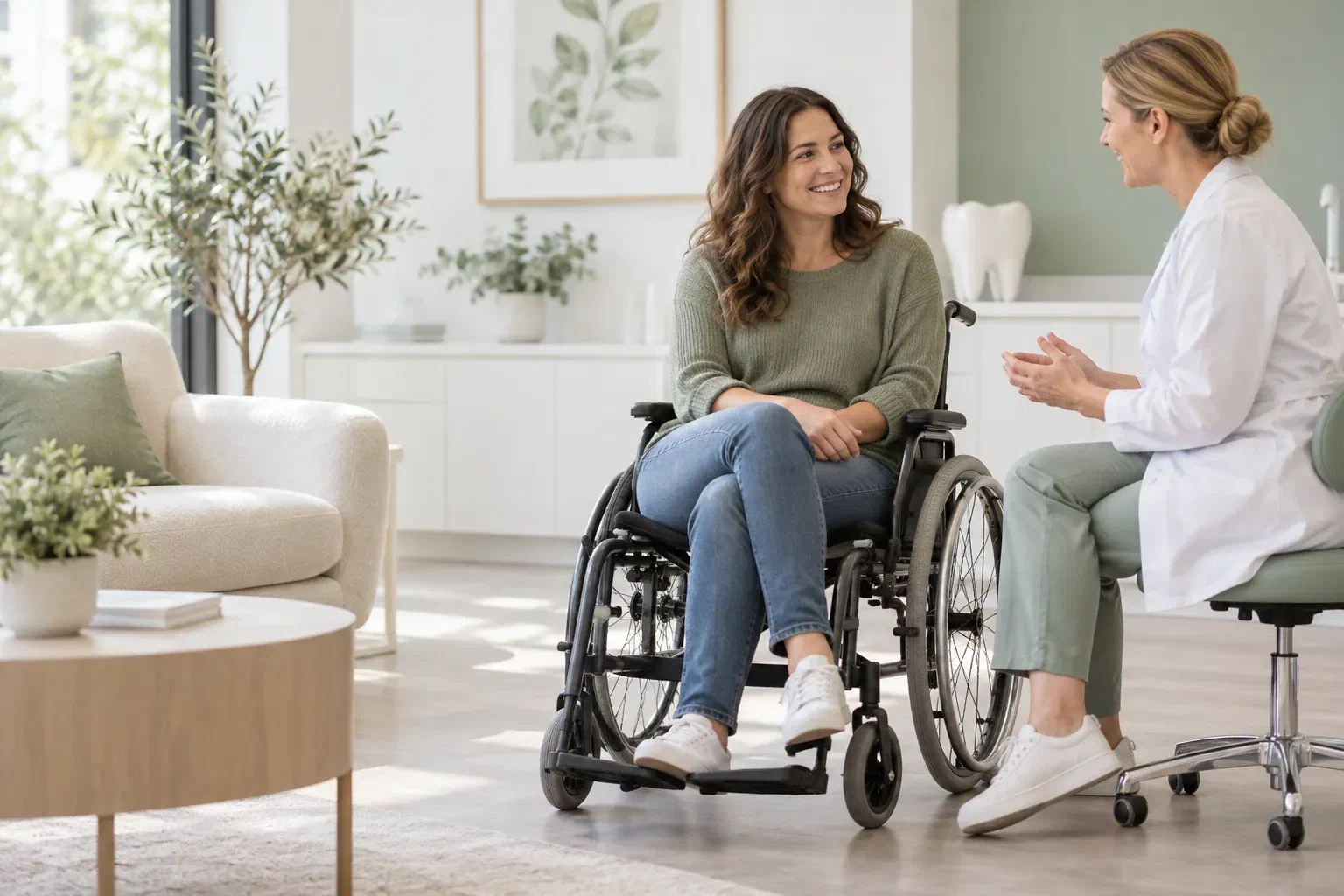
Illustrative consultation with a wheelchair user, not a photograph of the clinic or its access facilities
General & Family Dentistry

Dental Care for Patients with Limited Mobility in Old Milton

When getting around has become harder than it used to be, your dental routine may need to change with it. Let us know what is different now, and we can plan the practical side of your visit before you come in.

Old Milton, and a body that has changed

What worked at your last checkup may not work now.

Plenty of people in Milton’s historic downtown have been seeing a dentist for decades without giving the trip a second thought. Then a hip replacement, a fall, arthritis or a neurological condition changes things. Climbing into a dental chair, lying back for twenty minutes, or holding a toothbrush steadily can suddenly take real effort, and the old way of booking a visit no longer fits.

Our Bronte Street practice sits close to Old Milton, but nearness does not settle the practical questions. Before you confirm an appointment, call and tell us what has changed. Mobility limits can be short-term or lasting, and they affect people very differently: walking, standing up, shifting sideways, gripping, or simply stamina. Explain what you still do independently and where help or equipment now comes in.

We will then talk through whether the arrangements you need can be offered for the visit you have in mind, and what still has to be checked. A transfer board, a particular chair position, or care in your own wheelchair should never be assumed. If another setting turns out to be the better route, the next step deserves a clear explanation.

Tell us what has changed
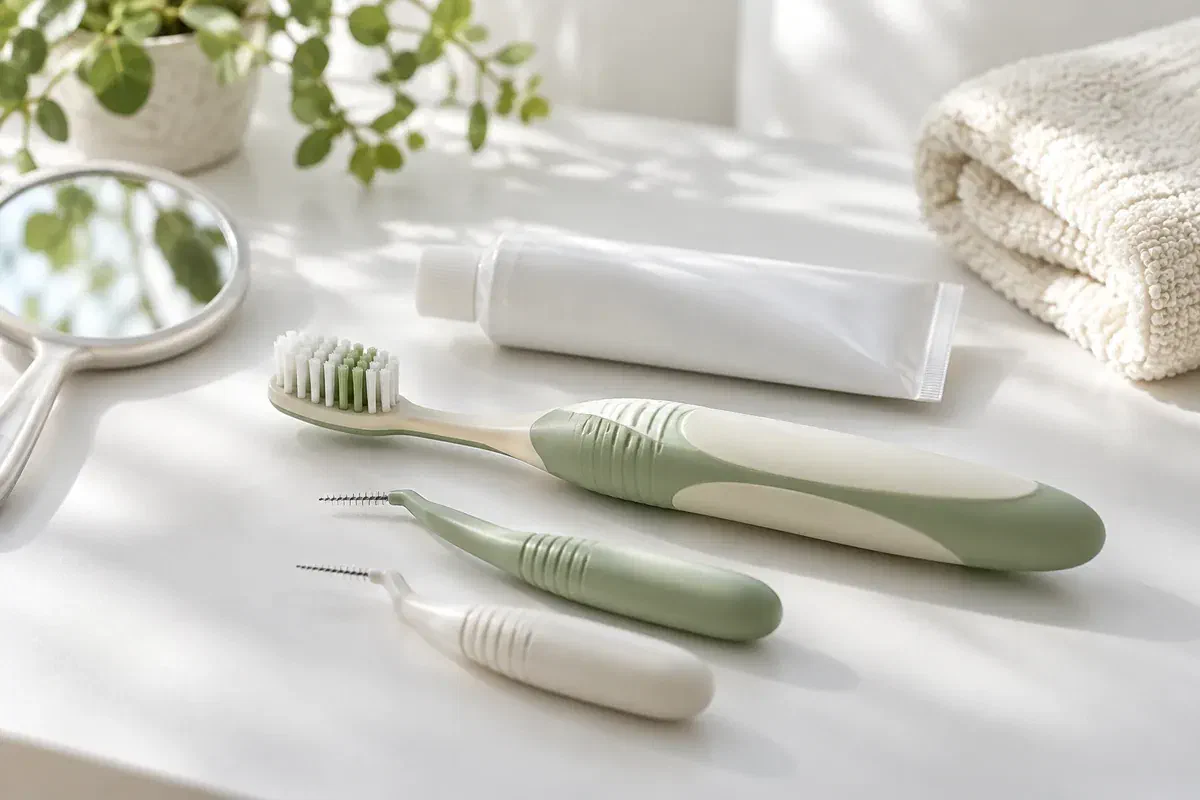
Easy-grip toothbrush and interdental brushes illustrating adaptable oral care tools
Points worth raising

Be specific about the movement, not only the condition.

Two people recovering from the same surgery can have quite different limits. The more precisely you describe what is hard, the less the team has to assume about the help you need.

Arriving and finding your way in

Ask what the route from the entrance to the treatment area involves and whether it suits how you move. Wheelchair or scooter users may want to share measurements or turning needs. Have those answers in hand before arranging a ride.

Getting into the chair, or not

Explain whether you shift across unaided, use a specific aid, or rely on someone trained to help. Note positions that trigger pain, cramping, dizziness or breathlessness. A transfer should never be pieced together on the spot to keep things moving.

Your stamina on the day

The outing, the wait and holding one position can tire you more than the dental work itself. Tell us when in the day you usually feel strongest and whether short breaks help. Ask how long the visit should take and what is sensible to finish.

Please check access, transfer and positioning needs with the clinic directly. Images here are illustrations and do not confirm that specific facilities, lifting equipment or treatment arrangements exist.

The value of a conversation first

A plan that respects how you move today.

Once the team understands your practical needs, they can be considered together with the examination or treatment you want. Some hurdles can be solved by scheduling; others might call for a different setting or added support. Talking it through openly is far more helpful than assuming one approach suits every patient and every procedure.

Your say continues all the way through. Tell us how you would like assistance offered and whether someone should accompany you. A change in mobility does not change your capacity to weigh options or make choices. The team should address you directly and ask what help you want, rather than turning to whoever came with you.

Problems spotted before the day

Checking the details ahead of time can raise questions about access, transfers or visit length while they can still be solved. Write down what was agreed, and call if your needs shift before the appointment.

Pacing tied to the procedure

A first assessment and a longer treatment session ask different things of you. Find out what each visit is for and whether stages or rest breaks make sense. The goal is a realistic schedule, not quietly enduring discomfort.

Brushing advice that matches your hands

If arthritis, weakness or tiredness affects how you clean your teeth, the appointment can cover other tools and techniques. Show us the movement that is hard. Advice is most useful when it fits what you can manage at home.

Step by step

Arrangements first. Dentistry second.

Ring us with your dental concern and the support you now rely on. If a spouse, son or daughter helps with appointments, they can handle details while your wishes stay central.

  1. Explain the access and support you need

    Describe your walker, cane, wheelchair or other aid, how you move across, positions you cannot hold, and any equipment or trained assistance you depend on. Ask the clinic what it can accommodate. A routine booking is not proof that a particular physical arrangement is in place.

  2. Bring the health history up to date

    Tell us about new diagnoses, surgery, medicines and the reason for your visit. Mention pain, fatigue or symptoms that might affect positioning. The dentist can decide what kind of assessment is suitable and whether more medical information would be useful.

  3. Agree how the visit will run

    Before treatment begins, settle on your position, a signal for a pause, and what will be covered today. If an arrangement becomes uncomfortable or unsuitable, tell us. The approach should be rethought rather than carried on because it was the original plan.

  4. Plan the follow-up and the way home

    Review aftercare, any help you may need at home, and the next visit. Double-check transport if the procedure could affect what you can manage afterward. Let the plan reflect what was actually done, especially if it turned out differently than expected.

Rethinking the home routine

Your toothbrush may need to change too.

Daily mouth care has to fit your current grip, reach and energy, and the level of help you want. Ask for a demonstration, and say when a suggestion feels out of reach.

Try a different grip or tool

A built-up handle, a powered brush, or an interdental aid might be worth discussing. The right choice depends on which areas need attention and what you can control easily. A costly device will not necessarily solve the specific movement that is difficult.

Rearrange where you brush

Think about whether sitting at a table or a stable spot would be easier than standing at the sink. If moving between rooms is tiring, mention it. Any routine with rinsing or a helper should still respect swallowing or medical instructions you already follow.

Agree on how a helper assists

If a family member or caregiver helps with your mouth care, decide which steps they take on and how you will signal discomfort. A short demonstration can make the routine easier for both of you. Support should follow your wishes, not replace what you still want to do yourself.

Ways care can be arranged

The right setting depends on two things: the dental need and the practical one.

An exam tells us what treatment is required; planning ahead tells us how it can be delivered. Keep asking which arrangements are confirmed and which are still pending.

When we can accommodate the appointment

A visit with the details settled

The plan might be a defined assessment or treatment appointment with positioning, timing and support already agreed. Let us know about any changes before attending. An arrangement that suits one procedure may need revisiting for a longer one.

When fatigue or session length matters

Shorter appointments over time

Where it is clinically suitable, treatment can sometimes be spread over visits that match your energy. Ask how this affects the overall plan, any temporary work, and how many trips are involved. Both convenience and clinical priority belong in the conversation.

When added facilities or support are needed

Care in another setting

Some needs call for equipment or an environment beyond what the clinic offers. Ask for a clear account of the referral and what comes next. The alternative should answer the specific need identified, not leave you without direction.

Old Milton questions

Things people ask once their mobility has changed.

A diagnosis does not explain your access or support needs on its own. Tell us what works and ask for those arrangements to be confirmed before you head out.

(905) 876-4488
I’ve been a patient for years. Do I need to tell you about my new walker?
Yes, please do. Even if the clinic knows you well, a new mobility aid, recent surgery or a change in balance may affect how the appointment should be planned. Updating us beforehand avoids assumptions based on how things used to be.
After my hip surgery, are there positions I should avoid in the dental chair?
Follow the precautions your surgeon or physiotherapist gave you and share them with the clinic in advance. The dentist can consider how they affect positioning. If surgery was recent, ask whether a routine visit should wait or whether something needs attention sooner.
What if lying back for long makes me dizzy or short of breath?
Mention it before the appointment and describe the positions you can manage. Include relevant medical instructions and any recent change in symptoms. The dentist can think about what this means for the assessment and whether a different arrangement or setting is needed.
Can my daughter book appointments for me and still let me decide?
Yes. A family member can help with scheduling and details while decisions remain yours. Tell the team how you want her involved and what information may be shared. The conversation about treatment should still include you directly.
My arthritis makes flossing hard. Are there alternatives?
There may be. Explain which finger or wrist movements are difficult. Interdental brushes, floss holders, larger handles or a powered brush might be discussed, depending on your teeth and gums. Bringing what you use now can help show the problem.
Should I cancel if I’m having a bad day with my mobility?
Call the clinic and explain how you are feeling. Pushing through a visit when pain or fatigue is high may not be sensible, but an urgent dental problem should not be postponed. The team can help you decide whether to rearrange or still attend.
Mobility-aware dental care near Old Milton

Talk to us first, and we’ll plan from there.

Phone our Bronte Street practice with your dental concern and the access, seating or support you now need. We can explain what the proposed appointment involves and which arrangements still need confirming. Your experience of what has changed guides the plan.

Access and transfer arrangements need direct confirmation. An online request does not confirm specific equipment or facilities.

Visit Milton Dental Clinic
Unit 1, 342 Bronte St. S, Milton, ON L9T 5B7
Get directions Clinic hours
Monday–Thursday
11am–7pm
Friday–Sunday
By appointment only

Areas we serve

  • Milton
  • Oakville
  • Mississauga
  • Georgetown
  • Halton Hills
  • Acton
  • Campbellville
  • Brampton
  • Burlington
  • Puslinch
  • Rockwood
  • Erin
  • Caledon
  • Etobicoke
  • Old Milton
  • Bronte Meadows
  • Timberlea
  • Dorset Park
  • Dempsey
  • Clarke
  • Beaty
  • Coates
  • Harrison
  • Scott
  • Willmott
  • Ford
  • Bowes
  • Cobden
  • Walker
  • Mountain View
  • Milton Heights
  • Hawthorne Village
  • Valley View
  • Fallingbrook
  • Nassagaweya
  • Trafalgar
  • Esquesing
  • Nelson
  • Brookville
  • Moffat
  • Glen Williams
  • Norval
  • Limehouse
  • Stewarttown
  • Ashgrove
  • Hornby
  • Silver Creek
  • Speyside
  • Scotch Block
  • North Oakville
  • River Oaks
  • Glen Abbey
  • West Oak Trails
  • Palermo
  • Bronte Creek
  • College Park
  • Joshua Creek
  • Uptown Core
  • Preserve
  • Iroquois Ridge
  • Lisgar
  • Meadowvale
  • Meadowvale Village
  • Churchill Meadows
  • Erin Mills
  • Central Erin Mills
  • Streetsville
  • East Credit
  • Creditview
  • Heartland
  • Sheridan
  • Mount Pleasant
  • Credit Valley
  • Huttonville
  • Churchville
  • Springbrook
  • Northwest Brampton
  • Bram West
  • Fletcher's Meadow
  • Fletcher's Creek South
  • Alton Village
  • Orchard
  • Millcroft
  • Headon Forest
  • Tansley
  • Brant Hills
  • Tyandaga
  • Kilbride
  • Lowville
  • Aberfoyle
  • Morriston
  • Arkell
  • Hillsburgh
  • Freelton
  • Carlisle
  • Waterdown
  • Flamborough
  • Mountsberg

How can we help?

Milton Dental Clinic

Have a question about your smile? Choose the option that works best for you.

For urgent dental concerns, please call.
Messages are reviewed during clinic hours.