Can I get in and around?
Ask what the route from arrival to the treatment area involves and whether its widths and layout suit you. Share wheelchair or scooter measurements if you have them. Settle this before anyone arranges transport.

It’s fair to ask, before you travel: can this clinic actually meet my needs, and if not, what then? From Puslinch, call us to talk through access, transfers and support, and get a straight answer either way.
People with limited mobility often learn to ask the awkward question early, because the alternative is discovering a problem in a waiting room after a long drive. For someone in rural Puslinch, west of Milton, a wasted trip can cost a whole day and someone else’s time behind the wheel. A clear yes, a clear no, or a clear “here’s what we need to check” is worth far more than a vague reassurance.
So give us the details when you phone our Milton clinic. Describe how you walk, stand, transfer and sit, and whether your hands, breathing or stamina are part of the picture. Some limits pass with time; others are permanent. Explain what you manage alone and what requires equipment or a trained helper. You know your situation better than any form could capture it.
We will tell you whether the arrangements you need appear possible for the proposed visit, and which pieces still require confirmation. A transfer device, a specific chair setup, or treatment while you stay in your wheelchair should never be assumed from this page. If another setting is the better fit, we should explain why and help you understand the next step.

General labels hide important differences between people. Describing exact tasks makes it possible to judge whether an appointment will work, rather than guessing and hoping.
Ask what the route from arrival to the treatment area involves and whether its widths and layout suit you. Share wheelchair or scooter measurements if you have them. Settle this before anyone arranges transport.
Explain whether you transfer by yourself, use a particular aid, or need a trained person. Mention positions that cause pain, spasm, dizziness or breathing problems. If a safe transfer can’t be arranged, we should say so rather than improvise.
The journey and the wait add to whatever the treatment asks of you. Tell us which part of the day suits you and whether you need breaks. Ask how long the visit is expected to run and how much is sensible to do.
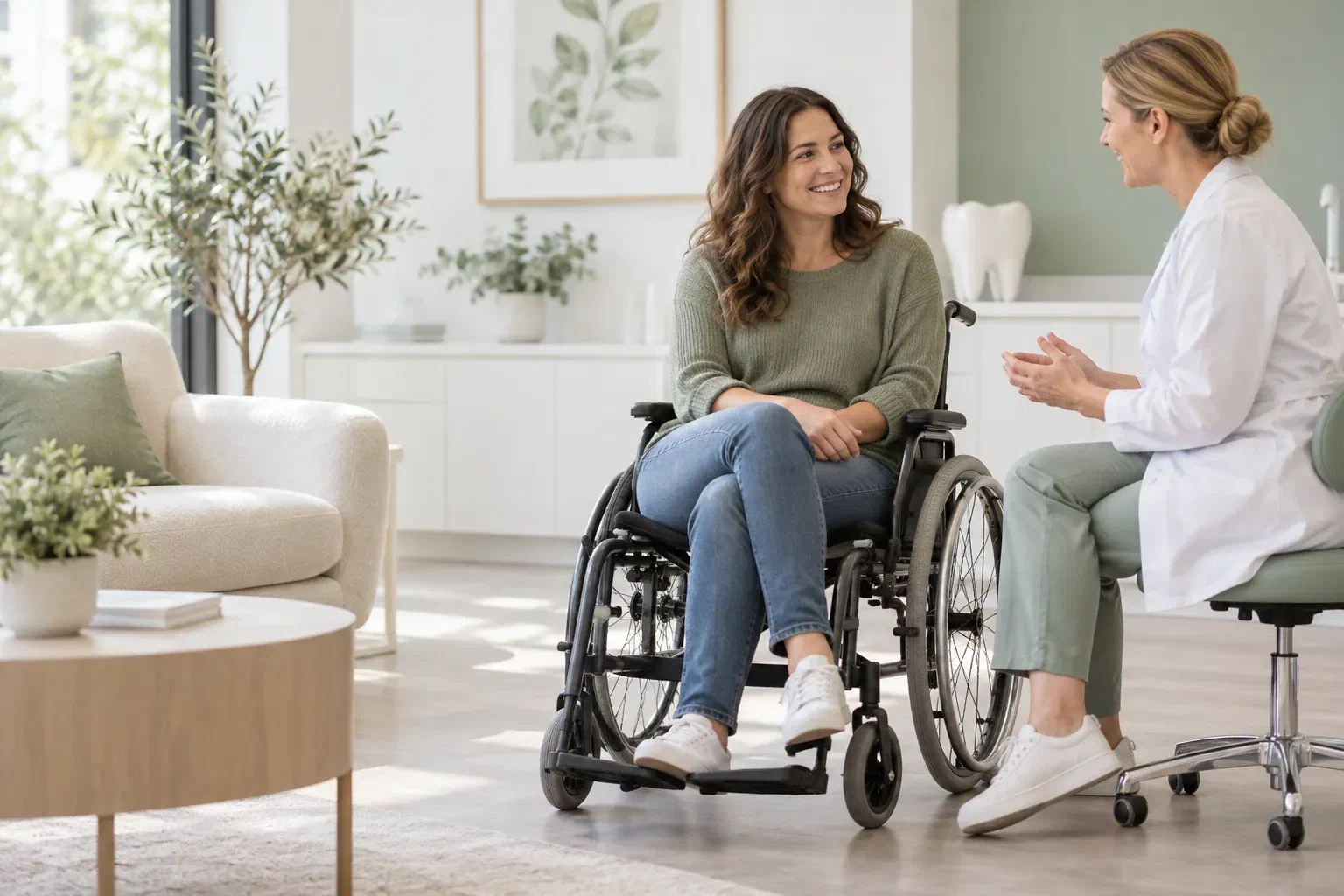
Please confirm access, transfer and positioning needs with the clinic directly. Images on this page are illustrations and do not represent that any specific facility, lifting equipment or treatment arrangement is available.
When we understand your practical needs early, we can consider them together with the dental care you want, and tell you sooner if something is beyond what we can offer. Some barriers can be managed with timing or shorter visits. Others need a different setting or more support. Clarity serves you better than an assumption that everything can be done in one place.
Your preferences stay central, whatever the answer. Tell us how you want help offered and whether a companion should be involved. Reduced mobility doesn’t affect your capacity to understand options and make choices. You should be spoken to directly and asked what you want, rather than having decisions made around you.
Checking access, transfers and duration by phone means problems surface before the trip, not at the door. Keep a note of what was agreed, and let us know if your needs change before the date.
An initial exam is often simpler to accommodate than longer treatment. Ask what each visit will involve and whether stages or breaks are an option. The plan should be realistic, not dependent on you tolerating discomfort.
Even if treatment happens elsewhere, advice about tools and techniques for limited grip, reach or energy can still be discussed. Describe the movement that is hard. Suggestions should fit what you can manage at home.
Phone with the dental concern and the support you rely on. Someone who helps you with appointments can join the conversation, while you stay at the heart of every decision.
Describe your mobility aid, transfer method, positions you can’t hold, and the equipment or trained support you normally use. Ask plainly what the clinic can and cannot accommodate. A booked appointment doesn’t confirm any specific physical arrangement.
Share diagnoses, medicines, recent changes and the dental issue. Mention symptoms that worsen in certain positions. The dentist can then consider what assessment is needed, whether medical information would help, and whether the clinic is the right setting.
If the visit goes ahead, settle your position, a pause signal and the scope of treatment before starting. If something proves uncomfortable or unsuitable, say so. The approach should be reconsidered rather than pushed through.
Discuss aftercare, help at home and the next appointment, or the referral if one is needed. Check transport if treatment could affect how you feel afterward. Let the follow-up reflect the care actually given, particularly if plans changed.
Home care should fit your grip, reach and stamina, and the help you want. Ask for a demonstration, and say if a technique seems unmanageable.
A wider grip, a powered brush or a well-suited interdental aid might be worth considering. The best choice depends on the teeth you find hardest to clean and the control you have. A high price doesn’t mean a device will fix a particular movement problem.
Sitting somewhere stable with supplies within reach can make a real difference. If getting to the bathroom is difficult, mention it. Rinsing and assisted care should still follow swallowing or medical instructions already in place.
If someone helps with your mouth care, agree on what they do and how you’ll signal discomfort. A demonstration makes the routine clearer. Their help should follow your preferences and leave you the steps you’d rather do yourself.
A diagnosis alone doesn’t explain your needs. Describe what works, and ask for a clear answer about what can be confirmed before you travel.
Phone our Bronte Street clinic, tell us about your dental concern and the access, transfer or support you need, and ask what we can confirm. If something isn’t possible here, we’ll talk through what a better next step might be.
Access and transfer arrangements have to be confirmed with the clinic directly. Sending a request online is not confirmation of any equipment or facility.
