

Illustrative patient-led dental conversation using a notebook for communication
General & Family Dentistry

Dental Care for Patients with Special Healthcare Needs in Acton

Seizure plans, feeding guidance, a long medication list, several specialists. When health is complicated, dental care needs that information first. We review it and plan the visit with you.

When the health file is thick

Bring the binder. We will read it.

Some families keep a binder for every appointment: seizure protocols, a feeding plan from a swallowing specialist, cardiology letters, a list of medicines that runs two pages. Cerebral palsy, genetic syndromes, heart conditions and many other diagnoses can bring this kind of paperwork. Dental care has to fit around all of it, and around the person too.

Before booking, let us know which pieces of that history matter most to daily life. Explain how this person communicates, how past dental appointments went and which moments were hardest. Describe how they show ease, pain or a need to stop. Parents and carers from Acton tend to know the medical story in detail, and we still talk with the patient first.

Reviewing this early lets the dentist judge whether care at our clinic suits the person and what needs checking with other clinicians. Some situations call for a specialist or hospital-based dentistry. A condition's name does not settle the question, and no two plans look alike. We will tell you plainly what we can and cannot offer.

Share medical details before booking
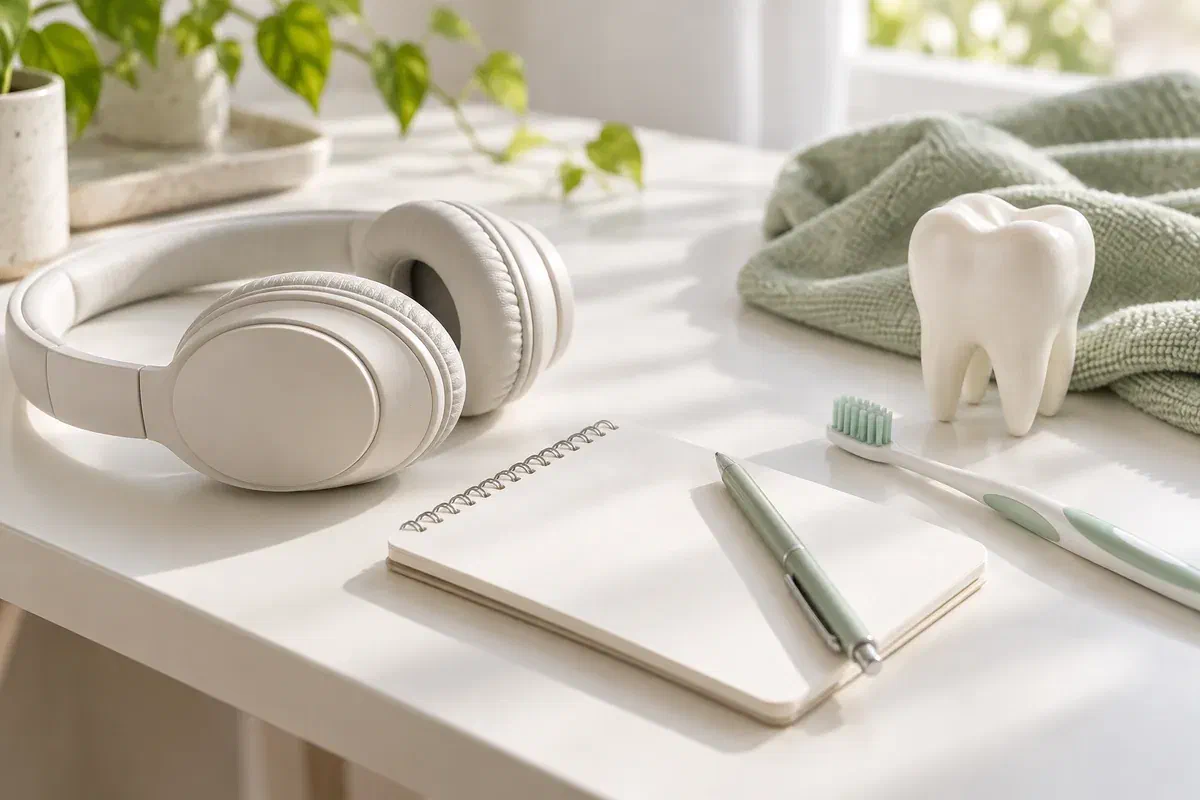
Headphones, notebook, toothbrush, and tooth model illustrating preparation for an individual dental visit
Medical details we look for

The facts that change how a dentist plans.

Specific information beats a list of diagnoses. Summarize how the person communicates, what affects their comfort, which health facts are current and what the dental worry is.

Communication alongside medical needs

Fatigue, medication effects or a condition itself may change how well someone communicates on a given day. Tell us their usual method and how much time they need to answer. We address the patient and allow space for their reply.

What makes a visit stressful

Describe sounds, lights, tastes, touch or procedures that cause distress, and anything that can trigger a medical issue, such as overstimulation for some people with seizures. Share calming approaches and a stop signal so we can plan what is realistic.

Seizures, movement, swallowing and medicines

Bring the full medication list, allergies, seizure action plan and any swallowing or positioning instructions. Note involuntary movements, reflux or breathing concerns. The dentist reviews these to decide whether care can safely proceed here or needs other support.

Discomfort in a person with complex health needs can be easy to attribute to something else. Report changes such as refusing feeds or meals, more disrupted sleep or new resistance to mouth care. An exam can check the mouth, though these signs alone do not confirm a dental cause.

What early review achieves

Medical questions answered before the chair, not during it.

Sharing health details ahead of time means the dentist can spot questions that need a physician's answer before the visit. It also gives room to plan communication, positioning and comfort. The appointment can then have a safe, realistic aim, instead of discovering mid-exam that something needs clearing first.

Families gain clarity about logistics. Confirm which documents to bring, who will attend and what the appointment will include. If another setting is advised, ask what drives that recommendation and who will coordinate it. Each dental issue should be tied to a named next step and responsible person.

Patient information: NIDCR — individual needs and oral health care

The patient still leads

Even with complex medical needs, a person may want to answer for themselves using words, gestures or a device. Show us how they express choice and concern. Carers support participation rather than replacing it.

A plan medical teams can see

With permission, dental plans can be shared with other clinicians, which helps when medicines or procedures overlap. Ask whether a short first visit or set pauses would be wise, and confirm the arrangements with us.

Mouth care that fits medical routines

Home advice should work with feeding plans, swallowing precautions, physical ability and support at home. Tell us which part of mouth care is hardest. A safe technique demonstrated in person is more useful than generic instructions.

From records to plan

Review, consent, examine, coordinate.

An early appointment may centre on health information and a comfortable look at what can be examined. Treatment choices come after the findings, any medical advice and a consent conversation suited to the person.

  1. Review the medical picture

    We go over the dental concern, diagnoses, medicines, allergies and earlier dental experiences. Tell us about communication and physical assistance. With consent, we may contact a physician or specialist about a particular question, such as medication or seizure management.

  2. Discuss consent properly

    Proposed care is explained in a way the patient can understand, and the dentist confirms the consent arrangements. Having a complex condition or communication difference does not settle capacity by itself. A substitute decision-maker's role is established before it is relied upon.

  3. Examine with safety plans in place

    We agree on a pause signal and review what to do if a seizure or other event occurs. The exam may involve breaks, a limited scope or adjusted positioning. If something is not working, the approach is reconsidered, and distress is never ignored.

  4. Coordinate what comes next

    After the exam, you hear what was found, the options and whether more visits, medical clearance or referral are advisable. We confirm who contacts whom and what to do if urgent problems arise. Written notes can be shared with the person's other care providers.

Daily mouth care with medical needs

Safe routines, built around existing care plans.

Home care should respect any swallowing, feeding or medical instructions already in place, as well as comfort and communication. Ask for a demonstration of techniques that suit those limits.

Pinpoint the difficulty

It may be positioning, managing saliva and water safely, a flavour, gripping the brush or understanding the steps. Each difficulty calls for a different change. Adapted tools or a gradual routine can be discussed, recognizing that methods differ person to person.

Support without force

Agree on how the person shows willingness, discomfort or wanting to stop. If you assist, ask for guidance that fits their abilities and any swallowing precautions. Persistent resistance may signal pain or another problem worth assessing, rather than a reason to push.

Keep records current

Update us about new medicines, hospital stays or changes in health. Note shifts in appetite, sleep, facial comfort or tolerance of mouth care, especially when pain is hard to communicate. These details help us read new concerns accurately.

Choosing a setting

Medical needs help decide where care happens.

The best route depends on dental findings, medical complexity, comfort and the services this clinic can safely provide. Ask the dentist to explain the reasoning behind a recommendation.

When medical needs can be managed here

An adjusted visit at our clinic

Care can start with an exam that follows agreed communication, positioning and safety plans. A first appointment sets priorities rather than promising to complete everything. Discuss what a useful outcome would be before the day.

When shorter visits are safer or easier

Care in planned stages

If clinically suitable, treatment may be divided into shorter appointments to limit fatigue or stress. Find out what the plan is for any decay or infection while the stages are under way, so pacing never delays urgent care.

When medical support is needed on site

Hospital or specialist dentistry

Some conditions or treatments are best managed where additional medical support is available. Should sedation or general anaesthesia come up, it is planned separately, with a dedicated assessment, a consent discussion and a qualified provider. It should not be assumed necessary, or available at this clinic.

Medical questions from Acton families

Health details, safety and dental planning.

Tell us what makes visits easier or harder and which medical questions you need answered. Plans should be specific without suggesting every appointment will go the same way.

(905) 876-4488
Should we bring the seizure action plan to the dental visit?
Yes. It helps the team understand warning signs, what to do and when to call for help. Mention recent seizure patterns and any triggers, such as fatigue or bright lights, that might be relevant in a dental setting.
Does the dentist need to know about every medication, including supplements?
Please list them all. Some products affect bleeding, saliva or healing, and the dentist decides which ones matter for planned care. Do not stop or change any medicine for dental reasons unless the prescribing clinician advises it.
Can dental care be planned for someone on a modified diet or tube feeding?
Yes. Mouth care still matters when little or nothing is eaten by mouth. Share the feeding plan and swallowing precautions so the dentist can tailor advice about cleaning and assessment safely.
Will the dentist talk to my child's specialists before treatment?
If a medical question affects dental care, the dentist may ask for information from the relevant clinician, with permission. Let us know who is involved so contact details are ready.
Can a patient with complex health needs make their own treatment decisions?
Possibly. Capacity relates to the specific decision, not the diagnosis. The dentist explains options in an accessible way and checks consent arrangements, involving a substitute decision-maker only where appropriate.
When is a hospital setting recommended instead of a clinic?
A hospital is usually suggested when medical risks, the type of treatment or the need for sedation or general anaesthesia call for additional resources. The dentist will explain the reasons and what the referral involves.
Planning care from Acton

Send the medical picture first.

Call our Bronte Street practice to discuss the dental concern, the medical history that matters and the support this person relies on. We can describe the assessment and whether a physician's input or a referral should come first. Early review makes a safer start.

Please tell us about specific support or medical requirements before the visit. Requesting an appointment online does not confirm specialist resources or a set treatment approach.

Visit Milton Dental Clinic
Unit 1, 342 Bronte St. S, Milton, ON L9T 5B7
Get directions Clinic hours
Monday–Thursday
11am–7pm
Friday–Sunday
By appointment only

Areas we serve

  • Milton
  • Oakville
  • Mississauga
  • Georgetown
  • Halton Hills
  • Acton
  • Campbellville
  • Brampton
  • Burlington
  • Puslinch
  • Rockwood
  • Erin
  • Caledon
  • Etobicoke
  • Old Milton
  • Bronte Meadows
  • Timberlea
  • Dorset Park
  • Dempsey
  • Clarke
  • Beaty
  • Coates
  • Harrison
  • Scott
  • Willmott
  • Ford
  • Bowes
  • Cobden
  • Walker
  • Mountain View
  • Milton Heights
  • Hawthorne Village
  • Valley View
  • Fallingbrook
  • Nassagaweya
  • Trafalgar
  • Esquesing
  • Nelson
  • Brookville
  • Moffat
  • Glen Williams
  • Norval
  • Limehouse
  • Stewarttown
  • Ashgrove
  • Hornby
  • Silver Creek
  • Speyside
  • Scotch Block
  • North Oakville
  • River Oaks
  • Glen Abbey
  • West Oak Trails
  • Palermo
  • Bronte Creek
  • College Park
  • Joshua Creek
  • Uptown Core
  • Preserve
  • Iroquois Ridge
  • Lisgar
  • Meadowvale
  • Meadowvale Village
  • Churchill Meadows
  • Erin Mills
  • Central Erin Mills
  • Streetsville
  • East Credit
  • Creditview
  • Heartland
  • Sheridan
  • Mount Pleasant
  • Credit Valley
  • Huttonville
  • Churchville
  • Springbrook
  • Northwest Brampton
  • Bram West
  • Fletcher's Meadow
  • Fletcher's Creek South
  • Alton Village
  • Orchard
  • Millcroft
  • Headon Forest
  • Tansley
  • Brant Hills
  • Tyandaga
  • Kilbride
  • Lowville
  • Aberfoyle
  • Morriston
  • Arkell
  • Hillsburgh
  • Freelton
  • Carlisle
  • Waterdown
  • Flamborough
  • Mountsberg

How can we help?

Milton Dental Clinic

Have a question about your smile? Choose the option that works best for you.

For urgent dental concerns, please call.
Messages are reviewed during clinic hours.