

Illustrative patient-led dental conversation using a notebook for communication
General & Family Dentistry

Dental Care for Patients with Special Healthcare Needs in Georgetown

Skipped meals, restless nights, a hand pressed to the jaw. When someone cannot tell you a tooth hurts, the signs show up in other ways. Bring what you have noticed and we will plan an exam.

When something seems off

Pain does not always arrive as words.

Often a caregiver is the first to sense a problem. A teenager stops eating toast, an adult with an intellectual disability bites their hand more often, or a parent with advanced illness pulls away from the washcloth. These changes may come from the mouth or from something else entirely. Either way, they are worth taking seriously.

Start by telling us what you have seen and when it began. Then describe the person: how they usually communicate, how past dental visits went, and what tends to calm or upset them. How do they show contentment, hurt or wanting a break? Relatives from Georgetown often know these signals best, and we will still involve the patient directly.

From that, we can judge whether an exam here is a sensible starting point and what might need more preparation. Sometimes medical input, a specialist or a hospital dental service is the better route. We do not let a diagnosis decide the plan or assume one approach fits everyone. You will hear what we can do and what should happen next.

Describe what you have noticed
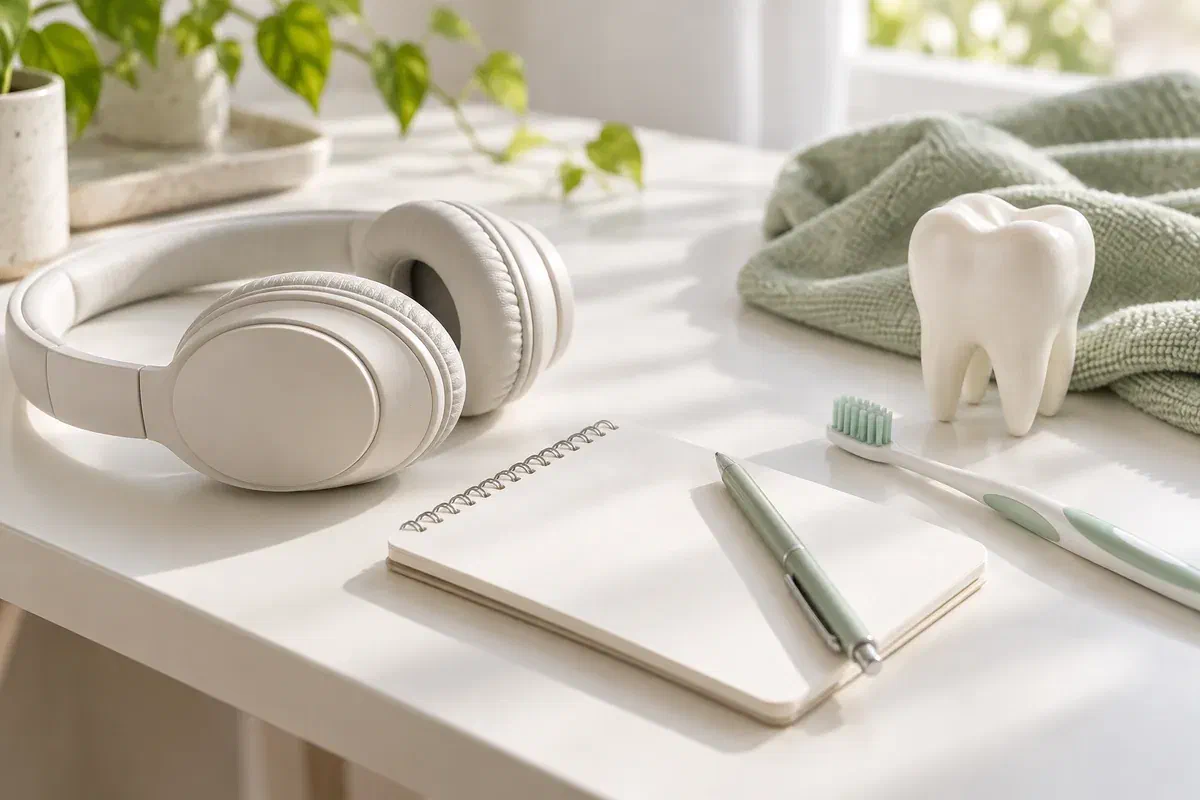
Headphones, notebook, toothbrush, and tooth model illustrating preparation for an individual dental visit
Reading the signs together

Observations are valuable. So is context.

Your everyday account helps more than a diagnosis alone. Tell us how the person communicates, what affects their comfort, which health details apply and what change prompted the call.

Their usual way of expressing things

Explain the person's normal communication, whether spoken, gestural, written, pictured or device-based, and how long they need to respond. Knowing the baseline helps everyone spot what is new. We will still speak with the patient and wait for their answer.

Triggers that make visits hard

Note sounds, lights, flavours, touch or unfamiliar steps that cause distress, along with what soothes. Agree on a signal for stopping. We can discuss, ahead of the visit, which of these needs can reasonably be met.

Medical and physical background

Bring a medication list, allergies and instructions from other clinicians. Mention seizures, movement disorders, positioning limits or swallowing difficulty. Some of these can also affect behaviour, so the dentist considers them when deciding how to assess and what support is needed.

Keep a short log of what you see: foods avoided, nights disrupted, face touched, brushing refused, and roughly when each began. That record helps plan the exam. Behaviour can point to discomfort, but only an assessment can show whether teeth or gums are involved.

Why careful planning helps

A well-prepared exam finds more and upsets less.

Discussing needs before the visit shows us what helps the person feel ready to take part. The dentist can review medical information, plan how to explain each step and prepare the room. With that groundwork, the appointment can focus on finding the likely source of discomfort rather than racing through every procedure.

It gives family and support staff a clearer role too. Decide what notes to bring, who will come and what the visit should cover. If the dentist advises another setting, ask what prompted it and who will make the arrangements. Any suspected problem should end the visit with a defined next action.

Patient information: NIDCR — individual needs and oral health care

Their own way of answering

The person may respond by pointing, gesturing, using a device or simply showing where it feels wrong. Let us know how they signal agreement or worry. Supporters can help them take part rather than speaking on their behalf every time.

Knowing the steps ahead

Predictability may lower stress during an exam for possible pain. Ask whether brief explanations, a focused first visit or planned pauses would help. These arrangements are confirmed in conversation, not assumed from this page.

Comfortable mouth care afterward

Home advice should account for sensitivity, abilities and available help, especially while a sore area heals. Explain what part of brushing is hardest. A gentle adjustment, shown at the visit, may be more helpful than detailed written steps.

What the exam looks like

A careful search for the source.

The first appointment may focus on understanding the change you noticed and examining what is comfortable. Treatment choices depend on what is found, health information and an appropriate consent discussion.

  1. Start with your observations

    We go over what you noticed, when it began, health history, medicines and past dental experiences. Share communication preferences and assistance needs. With permission, a family doctor may help rule other causes in or out.

  2. Explain and agree on consent

    The dentist describes what the exam involves in terms the patient can follow and confirms the consent arrangements. Communicating without speech does not automatically mean someone cannot decide. If a substitute decision-maker is needed, their authority is properly verified.

  3. Examine gently, watching for cues

    We agree on a stop signal and watch for signs of discomfort as we look. The exam may involve breaks or a limited area to start. If an approach causes distress, we change course. A difficult exam still tells us something, and distress is never dismissed.

  4. Explain what we found

    You hear what was seen and whether the mouth seems to explain the change. We discuss options and whether further visits, medical input or a referral are needed. You will know who arranges the next step and how to handle worsening pain meanwhile.

After the appointment

Keep watching, keep sharing.

A home routine should be gentle on sensitive areas, suit how the person communicates and follow any directions other clinicians have given about swallowing or health. Ask us to show you gentle techniques instead of experimenting alone.

Work out the tricky step

The problem may be gripping the brush, a flavour, reaching a sore area or following the sequence. Each calls for a different response. We can talk about softer tools or a gradual approach, knowing one method rarely works for everyone.

Go gently when helping

Agree on how the person shows readiness, discomfort or wanting to stop. If you assist, ask for practical guidance suited to their abilities. Renewed or increasing resistance may mean the problem has not settled and needs another look.

Watch whether the signs ease

After treatment or advice, notice whether appetite, sleep, face-touching or brushing tolerance return to normal. Tell us if they do not, or if new changes appear. Keep medication and health details current so we can interpret what you report.

Possible next steps

From a focused exam to specialist care.

What comes next rests on the exam, the person's health, their comfort and the care this clinic can properly offer. If one route is suggested over another, ask for the reasoning and what it would mean in practice.

When an appointment here suits

A focused exam with adjustments

Care may start with an exam aimed at the area of concern, using agreed communication, pacing and practical support. It sets priorities without promising every procedure is finished. Agree what the visit should aim to find out.

When gradual care is appropriate

Follow-up in manageable steps

If clinically suitable, further care may be split across short visits. Ask how the suspected problem will be managed in the meantime. Taking things slowly must not leave pain or infection untreated.

When more support is needed

Specialist or hospital assessment

Complex medical needs or treatment may call for another setting. Sedation or general anaesthesia, if considered, requires separate assessment, consent and an appropriate provider. It is not automatic, and it should not be assumed available at this clinic.

Georgetown questions about hidden pain

Signs, exams and what to do next.

Tell us what you have seen and what makes visits easier or harder. We aim to be clear about next steps without promising every exam will go the same way.

(905) 876-4488
What behaviour changes might suggest a dental problem?
Avoiding hard or cold foods, chewing on one side, rubbing the face, disturbed sleep and new refusal of brushing are common examples. They can have other causes too, which is why an exam, and sometimes a medical check, is needed.
Should we see the family doctor or the dentist first?
If you are unsure, it is reasonable to call both. A dentist can check teeth and gums, while a doctor can look at other causes like ear infections. Seek emergency care for swelling affecting breathing or swallowing.
Is it helpful to bring a log of eating and sleep changes?
Very. Dates and specific details help the dentist judge how long a problem may have been developing and what to look for. Even rough notes on a phone are useful.
Can an exam be done if the person will not open wide?
Sometimes a partial look is possible, with pauses and explanations. If that is not enough to find the cause, the dentist will discuss other approaches, which may include a specialist or hospital setting.
Who consents to treatment if the patient cannot explain their symptoms?
Not being able to describe symptoms is different from being unable to decide. The dentist considers whether the person can consent with support, and involves an appropriate substitute decision-maker only if needed.
What if the exam does not find a dental cause?
The dentist will tell you what was and was not seen. If the mouth looks healthy, following up with the family doctor may help explore other explanations. Keep noting changes and let us know if they continue.
Dental assessment for Georgetown families

Bring your notes and your questions.

Call our Bronte Street practice to share what you have noticed, the relevant health information and the support this person needs. We can outline how the exam would work and say early on if a referral looks likely. That first call helps focus the search for answers.

Let us know about specific support or medical requirements before you come. An online booking request does not guarantee specialist facilities or a particular approach to treatment.

Visit Milton Dental Clinic
Unit 1, 342 Bronte St. S, Milton, ON L9T 5B7
Get directions Clinic hours
Monday–Thursday
11am–7pm
Friday–Sunday
By appointment only

Areas we serve

  • Milton
  • Oakville
  • Mississauga
  • Georgetown
  • Halton Hills
  • Acton
  • Campbellville
  • Brampton
  • Burlington
  • Puslinch
  • Rockwood
  • Erin
  • Caledon
  • Etobicoke
  • Old Milton
  • Bronte Meadows
  • Timberlea
  • Dorset Park
  • Dempsey
  • Clarke
  • Beaty
  • Coates
  • Harrison
  • Scott
  • Willmott
  • Ford
  • Bowes
  • Cobden
  • Walker
  • Mountain View
  • Milton Heights
  • Hawthorne Village
  • Valley View
  • Fallingbrook
  • Nassagaweya
  • Trafalgar
  • Esquesing
  • Nelson
  • Brookville
  • Moffat
  • Glen Williams
  • Norval
  • Limehouse
  • Stewarttown
  • Ashgrove
  • Hornby
  • Silver Creek
  • Speyside
  • Scotch Block
  • North Oakville
  • River Oaks
  • Glen Abbey
  • West Oak Trails
  • Palermo
  • Bronte Creek
  • College Park
  • Joshua Creek
  • Uptown Core
  • Preserve
  • Iroquois Ridge
  • Lisgar
  • Meadowvale
  • Meadowvale Village
  • Churchill Meadows
  • Erin Mills
  • Central Erin Mills
  • Streetsville
  • East Credit
  • Creditview
  • Heartland
  • Sheridan
  • Mount Pleasant
  • Credit Valley
  • Huttonville
  • Churchville
  • Springbrook
  • Northwest Brampton
  • Bram West
  • Fletcher's Meadow
  • Fletcher's Creek South
  • Alton Village
  • Orchard
  • Millcroft
  • Headon Forest
  • Tansley
  • Brant Hills
  • Tyandaga
  • Kilbride
  • Lowville
  • Aberfoyle
  • Morriston
  • Arkell
  • Hillsburgh
  • Freelton
  • Carlisle
  • Waterdown
  • Flamborough
  • Mountsberg

How can we help?

Milton Dental Clinic

Have a question about your smile? Choose the option that works best for you.

For urgent dental concerns, please call.
Messages are reviewed during clinic hours.