

Illustrative conversation with a dental hygienist before an appointment
General & Family Dentistry

Dental Hygiene Appointments in Burlington

A cleaning is more than a polish. For people coming from Burlington, a hygiene visit sorts out whether your gums need routine upkeep or closer treatment, and explains the difference clearly.

Burlington hygiene visits

Is a cleaning really just a polish?

Many adults picture a hygiene visit as a quick scrape and shine before the dentist pops in. In practice, the appointment is mostly about the gums: how healthy the tissue is, how deep the spaces around each tooth have become and whether deposits are sitting where you cannot reach them.

That assessment decides what kind of care makes sense. Healthy gums usually need maintenance, while inflamed or receding tissue may call for something more involved. Knowing which category you fall into helps you understand why one visit is short and another is spread over several dates.

You can help by describing what you notice. Gums that bleed on the floss, a tooth that feels slightly longer, food that packs into the same gap or teeth that are sensitive to cold all point the team in a useful direction. Your care should follow those findings, not a package designed for everyone.

Plan your hygiene visit
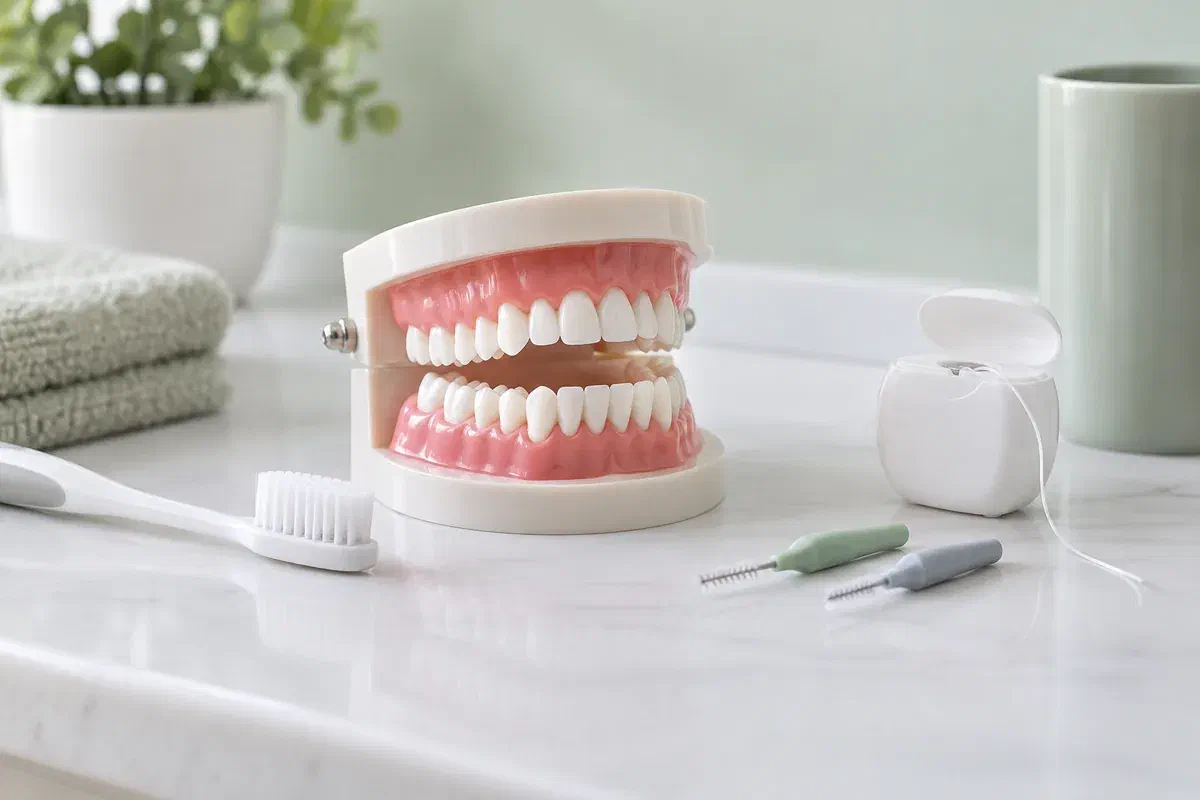
Dental teaching model with a toothbrush, interdental brushes, and floss
Questions worth asking

Notice something small? It counts.

Changes in the way your mouth feels can be early signals, even without pain. Let us know where you notice them, how long they have lasted and what you have tried at home.

Gums that bleed or look puffy

Swollen, red or bleeding gums often reflect inflammation linked to plaque, though other factors can contribute. It is not automatically a sign of rough brushing. Mention whether it affects one area or many, and whether any tooth feels less stable than before.

Tartar along the gumline

Once plaque hardens, it bonds firmly to the tooth and no toothbrush will remove it. It tends to collect where saliva pools and where teeth overlap. Ask the hygienist to point out where it has formed and how you can keep that surface cleaner.

Teeth that react to cold or instruments

Sensitivity can make a cleaning feel daunting. If an earlier appointment was difficult, describe what made it so, whether that was cold water, pressure or the length of the visit. The team can discuss pacing, breaks and suitable comfort measures with you.

Please tell us about health changes, pregnancy, new medicines or advice from your doctor before the appointment. Accurate information is part of safe care, however routine the visit seems.

The value of a hygiene visit

Know where your gums stand, and how to keep them there.

Plaque is a living film of bacteria that resettles on teeth within hours of brushing. Tartar is what plaque becomes when it hardens, and it takes professional instruments to remove. Because both can inflame the gums, the hygienist examines the tissue as well as the surfaces of the teeth.

The appointment doubles as a practical lesson. Small corrections in angle, pressure or the size of a between-teeth brush often matter more than a new product. Ask the hygienist to show you the area on a model or in a mirror, and say whether the advice feels doable.

Patient information: NIDCR — oral hygiene and professional care

Measurements that tell a story

Gum pocket depths and other observations, recorded over time, show whether your gums are holding steady. Ask which readings are healthy and which ones will be rechecked. Progress is easier to follow when you know what is being tracked.

Care that matches the diagnosis

A maintenance cleaning and treatment for gum disease have different goals and may involve different numbers of visits. The team should be clear about which one you need before you plan your calendar around a single appointment.

Home tools you will actually use

Different gaps and different hands call for different aids. Ask for suggestions based on your teeth, any crowns or bridges and how easily you can grip small tools. One or two well-matched items are usually enough.

Inside the appointment

From your history to a plan you understand.

Tell the team what you want explained and how you would like to signal for a break. Open talk about tenderness and tricky tools helps the time go further.

  1. Talk through your health and symptoms

    We review medical information and ask what has changed since your previous cleaning. Mention dryness, bleeding, sensitivity, new medicines and any area you steer around when brushing. A long interval since your last visit is simply useful background.

  2. Measure and assess the gums

    The hygienist checks deposits, tissue health and pocket depths where relevant. Depending on what is found, the dentist may want to examine you or take radiographs. Hygiene care is part of your overall dental assessment rather than all of it.

  3. Clean according to the findings

    Manual or ultrasonic instruments may be used, matched to each area. Polishing and preventive treatments are offered when they add value, not as a fixed routine. Mention any tenderness so the method can be discussed.

  4. Demonstrate, then decide the interval

    Try out any new technique before leaving so the hygienist can guide you. Confirm whether further gum care or a reassessment is needed, and ask why the proposed interval suits your mouth. The next visit should have a stated purpose.

Keeping the results

A light touch, every day, makes the difference.

What you do at home and what happens in the chair support one another. Follow any instructions specific to your treatment, and ask if you are unsure how to care for a tender spot.

Brush gently at the gum margin

Choose fluoride toothpaste and a soft brush, guided towards the areas reviewed at your visit. Pressing harder does not remove more plaque. If certain teeth are awkward to reach, ask about a smaller head or an adjusted grip.

Clean each gap with the right aid

Follow the size and type of interdental cleaner suggested for each space. Avoid pushing a brush into a tight gap or snapping floss into the gum. If an aid snags repeatedly, mention it rather than forcing it through.

Report symptoms that change

Some tenderness after deeper cleaning can be expected for a short time, but call if pain worsens or bleeding continues. New swelling, a loose tooth or difficulty chewing needs attention. Do not wait for your next scheduled cleaning.

Two kinds of cleaning, and a third focus

Maintenance keeps healthy gums healthy. Treatment addresses disease.

The assessment points to the right kind of care. Ask what the results mean and whether any further evaluation is needed before a plan is settled.

For prevention and stable gums

Maintenance cleaning

Deposits are removed, the gums are reviewed and home care is fine-tuned. The interval between visits should suit you. Healthy-feeling gums still benefit from periodic checks, because early changes often have no symptoms.

For periodontal disease that needs care

Gum disease treatment

Treatment may include cleaning below the gumline, follow-up reassessment or referral to a periodontist. It is not just a firmer version of a routine polish. Ask about your diagnosis, how many visits are expected and how healing will be judged.

For areas that are hard to reach or manage

Routine coaching

The focus may shift to bridges, crowded teeth, braces or tools that fit your hands. Demonstration should target the specific place you find difficult, and there should be time to ask about anything unclear.

Patient information: NIDCR — gum disease assessment and treatment

Frequently asked

Cleaning, scaling and what the terms mean.

Recommendations depend on your gums and your circumstances. Before treatment begins, it is fair to ask how much will be done, what it costs, how comfort is handled and whether more visits are likely.

(905) 876-4488
What do the numbers called out during a gum check mean?
The hygienist may measure the small space between each tooth and its gum in millimetres. Shallower readings are generally healthier, while deeper ones can suggest inflammation or gum disease. Ask what your numbers show and which areas will be rechecked.
What is the difference between scaling and root planing?
Scaling removes deposits from tooth surfaces, above and sometimes below the gumline. Root planing smooths the root surface below the gum as part of treating gum disease. Your hygienist can explain which, if either, is recommended and why.
Will I need freezing for a deeper gum cleaning?
It depends on the areas involved and your comfort. Local anaesthetic is sometimes used for cleaning below the gumline. Ask about comfort options during planning, and tell the team if you have had trouble with freezing before.
Once my gums are treated, can I return to regular cleanings?
Many people move to a maintenance schedule after gum treatment, often with closer intervals at first. The plan depends on how your gums respond at reassessment. Ask what will be measured and what would change the schedule.
Can polishing remove coffee and tea stains?
Polishing can lift some surface stain, but it does not change the natural colour of your teeth. If you would like a brighter shade, ask about cosmetic options separately from the hygiene care your gums need.
How can I plan reassessment visits from Burlington around work?
Ask the team to map out the expected appointments when treatment is proposed. Weekday hours run late morning to early evening, Monday through Thursday, and Friday to Sunday slots are arranged by appointment. Booking follow-ups early can make the schedule easier to manage.
Hygiene appointments for Burlington

Find out what your gums actually need.

Call our Bronte Street practice to arrange a hygiene appointment. Bring questions about bleeding, gum measurements, deeper cleaning or how often to return. We will explain the findings in plain terms and agree on the next steps together.

Toothache, swelling or something else new since your last visit? Flag it on the phone, and extra time to examine it can be built into the appointment.

Visit Milton Dental Clinic
Unit 1, 342 Bronte St. S, Milton, ON L9T 5B7
Get directions Clinic hours
Monday–Thursday
11am–7pm
Friday–Sunday
By appointment only

Areas we serve

  • Milton
  • Oakville
  • Mississauga
  • Georgetown
  • Halton Hills
  • Acton
  • Campbellville
  • Brampton
  • Burlington
  • Puslinch
  • Rockwood
  • Erin
  • Caledon
  • Etobicoke
  • Old Milton
  • Bronte Meadows
  • Timberlea
  • Dorset Park
  • Dempsey
  • Clarke
  • Beaty
  • Coates
  • Harrison
  • Scott
  • Willmott
  • Ford
  • Bowes
  • Cobden
  • Walker
  • Mountain View
  • Milton Heights
  • Hawthorne Village
  • Valley View
  • Fallingbrook
  • Nassagaweya
  • Trafalgar
  • Esquesing
  • Nelson
  • Brookville
  • Moffat
  • Glen Williams
  • Norval
  • Limehouse
  • Stewarttown
  • Ashgrove
  • Hornby
  • Silver Creek
  • Speyside
  • Scotch Block
  • North Oakville
  • River Oaks
  • Glen Abbey
  • West Oak Trails
  • Palermo
  • Bronte Creek
  • College Park
  • Joshua Creek
  • Uptown Core
  • Preserve
  • Iroquois Ridge
  • Lisgar
  • Meadowvale
  • Meadowvale Village
  • Churchill Meadows
  • Erin Mills
  • Central Erin Mills
  • Streetsville
  • East Credit
  • Creditview
  • Heartland
  • Sheridan
  • Mount Pleasant
  • Credit Valley
  • Huttonville
  • Churchville
  • Springbrook
  • Northwest Brampton
  • Bram West
  • Fletcher's Meadow
  • Fletcher's Creek South
  • Alton Village
  • Orchard
  • Millcroft
  • Headon Forest
  • Tansley
  • Brant Hills
  • Tyandaga
  • Kilbride
  • Lowville
  • Aberfoyle
  • Morriston
  • Arkell
  • Hillsburgh
  • Freelton
  • Carlisle
  • Waterdown
  • Flamborough
  • Mountsberg

How can we help?

Milton Dental Clinic

Have a question about your smile? Choose the option that works best for you.

For urgent dental concerns, please call.
Messages are reviewed during clinic hours.