

Illustrative conversation with a dental hygienist before an appointment
General & Family Dentistry

Dental Hygiene Appointments in Erin

Every evening, something lodges between the same two teeth. If you are coming from Erin or Hillsburgh, a hygiene visit looks at why, clears hardened deposits and gives your home routine a sensible tune-up.

Everyday hygiene for Erin

Something always gets stuck in the same spot.

It happens after supper: a fibre of meat or a seed wedges between two back teeth, and you reach for a toothpick or your tongue goes looking. Once in a while is normal. When it is the same gap every night, it is worth asking why, and whether the gum around it is getting irritated.

A hygiene appointment is a good place to start. The hygienist checks the gum tissue in that area and elsewhere, removes hardened deposits your brush cannot shift and looks at how your teeth meet. If the gap suggests a problem with a filling or a tooth, a dentist's opinion can be arranged.

Bring the details from your own bathroom routine. When you brush, how long it takes, what you use between teeth and which bits you skip when you are tired all matter. Mention bleeding, tenderness or sensitivity as well. That way the advice fits the evenings you actually have, not an idealised version.

Arrange a cleaning
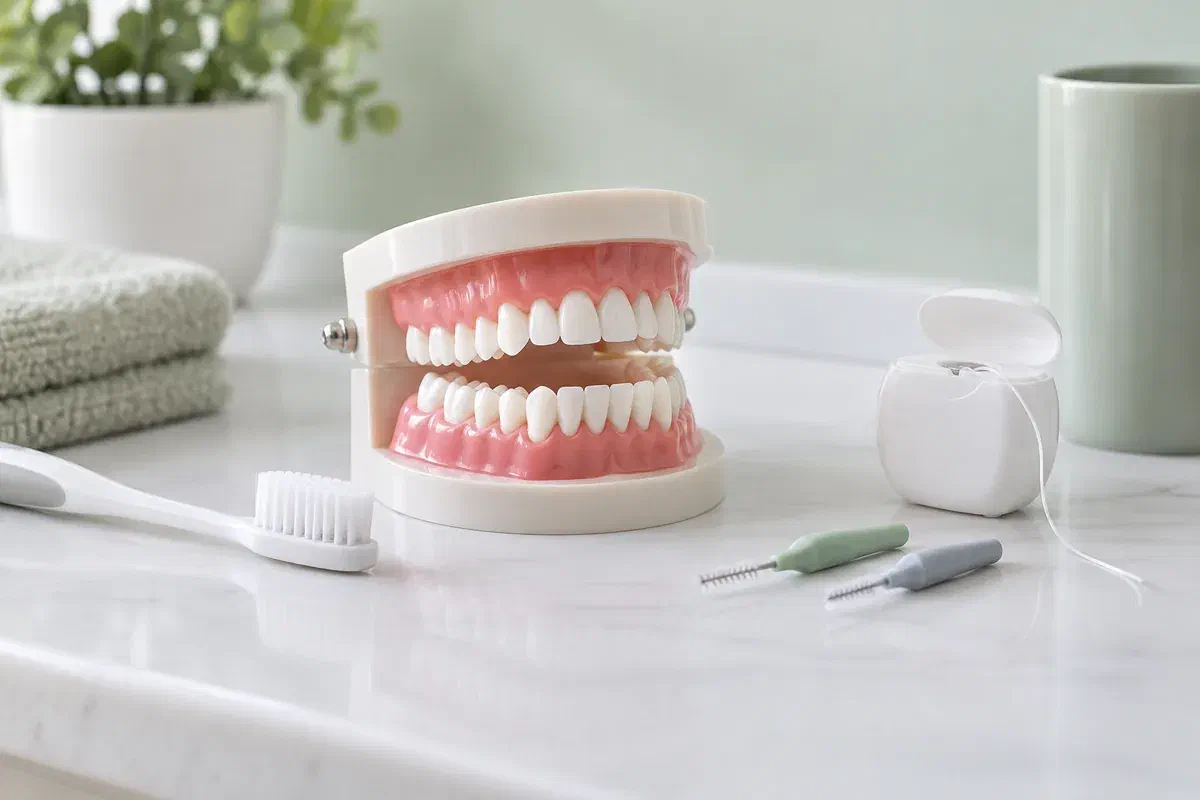
Dental teaching model with a toothbrush, interdental brushes, and floss
Clues from your evening routine

Small, nightly annoyances can say a lot.

Things that happen every day at home can point to areas that need care. Tell the team where they occur, how long they have been going on and what you usually do about them.

Sore or bleeding gum beside a food trap

Trapped food and plaque can irritate the gum between teeth, which may then bleed or feel sore. Other factors can contribute too. Let us know which gap it is, how long it has been happening and whether you have noticed swelling or movement.

Hard deposits in hard-to-reach places

Back teeth, crowded areas and the edges of crowns or bridges are prime spots for tartar. Once it hardens, no amount of brushing will remove it. The hygienist can show you exactly where it has built up and suggest a way to reach that surface.

Cleaning that hurts, or a visit that did

If flossing a certain gap stings, or a previous cleaning left you uneasy, mention it. Describe what felt uncomfortable and when. The team can talk you through the plan, pause when you signal and discuss ways to keep things comfortable.

Let us know about any health conditions, pregnancy, medicines or doctor's instructions before your appointment. A complete history matters for every visit, including a routine cleaning.

What you get out of it

A cleaner gap, calmer gums and an evening routine that fits.

Plaque builds up continuously and can be removed with brushing and cleaning between teeth. If it is left, it hardens into tartar, which only professional tools can remove. Both can inflame the gums, so the hygienist looks at the tissue around problem gaps as well as at the deposits themselves.

The most practical part of the visit may be learning how to clean that one troublesome space. A wider floss, a particular interdental brush or a small change in angle can stop food from lingering there. Ask the hygienist to demonstrate on your teeth, and be honest about what you will do at the end of a long day.

Patient information: NIDCR — oral hygiene and professional care

Notes to compare over time

Gum measurements and observations, recorded at each visit, show whether the area is settling. Ask which findings are reassuring and which the team will keep watching. It helps to know what will be looked at next time.

Care that suits the findings

Some visits are simply maintenance. Others uncover gum disease or a dental problem that needs separate treatment. The hygienist should explain which applies before you assume one appointment will cover it.

One or two aids that actually help

Ask for tools suited to your specific gaps, dental work and hands. A single interdental brush sized for that food trap may help more than a selection of products you rarely reach for.

Inside the visit

From the problem gap to the whole mouth.

Tell the team what you hope to sort out and agree a way to ask for a short break. Being open about sore areas or tools you dislike makes the appointment more productive.

  1. Start with history and the spot that bothers you

    We go over your health details and medicines and ask what you notice at home. Point to the gap that traps food, and mention any bleeding, dryness or sensitivity. If it has been some time since your last cleaning, that is fine.

  2. Examine gums, gaps and deposits

    The hygienist assesses the gum tissue, checks for tartar and measures pocket depths where appropriate. If a food trap suggests a cavity or a worn filling, a dentist's examination may be recommended, with imaging if needed.

  3. Clean thoroughly and carefully

    Hand or ultrasonic instruments may be used depending on the area. Polishing and preventive treatments are offered when they help. If a gap is tender, let the hygienist know so the approach can be discussed.

  4. Practise the fix, then plan ahead

    Before you leave, try the recommended aid in the troublesome gap while the hygienist watches. Ask whether further gum care, a dental check or a recheck is needed, and why the suggested interval suits you.

Your evening routine

A few gentle minutes before bed.

Daily care and professional cleaning support each other. Stick with any advice you were given at your visit, and ring the clinic if a gum stays sore and you are not sure what to do.

Brush slowly along the gumline

Tilt a soft-bristled brush towards the gums, with a fluoride paste, and cover the areas you were shown. Gentle strokes clean better than scrubbing. If the back teeth are hard to reach, ask about a smaller head or a powered brush.

Clean the food trap every night

Use the specific aid recommended for that gap and the right size for others. Do not force a brush in or snap floss against the gum. If the space still catches food after a few weeks, let us know.

Call if the area gets worse

Some tenderness after a cleaning is normal for a short time. Phone if pain grows, bleeding continues, the gum swells or the tooth begins to feel loose. A change in your bite also deserves attention before your next routine visit.

Next steps after the assessment

Maintenance, gum care or help with one tricky gap.

What the hygienist finds shapes what comes next. Have the results explained in everyday words, and find out if anything else should be checked before the plan is final.

For gums that are generally healthy

Ongoing maintenance

Deposits are cleared, gum health is reviewed and your routine is adjusted. The interval should be based on your own needs. Regular checks matter even when only one spot bothers you, because other changes may be silent.

For signs of gum disease

Periodontal treatment

Treatment may involve cleaning below the gumline, a reassessment or referral to a periodontist. It has a different purpose from routine care. Ask about the diagnosis, the appointments involved and how improvement will be judged.

For a gap or surface that is hard to clean

Help with a specific problem area

The visit can focus on a food trap, a bridge, crowded teeth or an appliance, with tools that suit your hands. Demonstration should target that exact area, with time for you to try it and ask questions.

Patient information: NIDCR — gum disease assessment and treatment

Everyday questions

What to ask about your home routine.

What we suggest depends on your findings and situation. Ask about the planned care, fees, comfort and whether more visits may be needed before anything starts.

(905) 876-4488
Why does food keep catching between the same two teeth?
A small gap, a worn or broken filling, a cavity or a change in how teeth meet can all create a food trap. The hygienist can look at the area, and a dentist may need to assess it further.
Is it safe to use a toothpick to clear food?
Used gently, a toothpick may dislodge food, but it can also injure the gum if pushed hard. An interdental brush or floss sized for the gap is usually a better choice. Ask the hygienist what suits that spot.
Should I brush before or after breakfast?
Both approaches can work. If you have had something acidic, some people are advised to wait a little before brushing. Ask the hygienist what fits your routine and your teeth.
How long should I spend brushing each time?
About two minutes, reaching every surface, is a common guideline. Coverage matters more than speed or pressure. The hygienist can point out areas you tend to rush.
Can a cleaning reveal a cavity in a food trap?
The hygienist may notice signs worth investigating, but diagnosing decay is part of the dentist’s examination, often with X-rays. Ask whether an exam is booked or recommended.
Should I call before driving in from Erin if a sore spot flares up?
Yes. Phoning first lets the team advise whether your planned hygiene appointment is still suitable or whether a different assessment is needed. For severe symptoms, seek care without delay.
Hygiene visits for Erin and Hillsburgh

Sort out that food trap for good.

Contact our Bronte Street practice to book a hygiene appointment. Bring questions about the gap that catches food, bleeding gums or which aids to use. We will explain our findings and help you set up an evening routine you can keep.

Is a tooth already aching or a gum swollen? Mention it as you book so the right assessment can be lined up with your cleaning.

Visit Milton Dental Clinic
Unit 1, 342 Bronte St. S, Milton, ON L9T 5B7
Get directions Clinic hours
Monday–Thursday
11am–7pm
Friday–Sunday
By appointment only

Areas we serve

  • Milton
  • Oakville
  • Mississauga
  • Georgetown
  • Halton Hills
  • Acton
  • Campbellville
  • Brampton
  • Burlington
  • Puslinch
  • Rockwood
  • Erin
  • Caledon
  • Etobicoke
  • Old Milton
  • Bronte Meadows
  • Timberlea
  • Dorset Park
  • Dempsey
  • Clarke
  • Beaty
  • Coates
  • Harrison
  • Scott
  • Willmott
  • Ford
  • Bowes
  • Cobden
  • Walker
  • Mountain View
  • Milton Heights
  • Hawthorne Village
  • Valley View
  • Fallingbrook
  • Nassagaweya
  • Trafalgar
  • Esquesing
  • Nelson
  • Brookville
  • Moffat
  • Glen Williams
  • Norval
  • Limehouse
  • Stewarttown
  • Ashgrove
  • Hornby
  • Silver Creek
  • Speyside
  • Scotch Block
  • North Oakville
  • River Oaks
  • Glen Abbey
  • West Oak Trails
  • Palermo
  • Bronte Creek
  • College Park
  • Joshua Creek
  • Uptown Core
  • Preserve
  • Iroquois Ridge
  • Lisgar
  • Meadowvale
  • Meadowvale Village
  • Churchill Meadows
  • Erin Mills
  • Central Erin Mills
  • Streetsville
  • East Credit
  • Creditview
  • Heartland
  • Sheridan
  • Mount Pleasant
  • Credit Valley
  • Huttonville
  • Churchville
  • Springbrook
  • Northwest Brampton
  • Bram West
  • Fletcher's Meadow
  • Fletcher's Creek South
  • Alton Village
  • Orchard
  • Millcroft
  • Headon Forest
  • Tansley
  • Brant Hills
  • Tyandaga
  • Kilbride
  • Lowville
  • Aberfoyle
  • Morriston
  • Arkell
  • Hillsburgh
  • Freelton
  • Carlisle
  • Waterdown
  • Flamborough
  • Mountsberg

How can we help?

Milton Dental Clinic

Have a question about your smile? Choose the option that works best for you.

For urgent dental concerns, please call.
Messages are reviewed during clinic hours.