

Illustrative conversation with a dental hygienist before an appointment
General & Family Dentistry

Dental Hygiene Appointments in Milton

It has been a while, and that is fine. A hygiene visit close to home in Milton looks at your gums, removes what brushing leaves behind, and helps you rebuild a routine you can keep.

Coming back after a gap in Milton

Start from where your mouth is today.

Plenty of people put off a cleaning for a year, then two, then longer. A new baby, a move across town, a job change or simple worry about what the team will find can push it down the list. None of that needs an apology. The visit begins with the condition of your gums and teeth now, not with how long it has been.

Hardened deposits build up in places a toothbrush cannot clear, usually along the gumline and between teeth. A hygiene appointment removes what is appropriate, checks how the gums are responding, and points out the spots your daily cleaning tends to skip. You leave knowing which areas need more attention at home.

Tell us what has changed since you last sat in a dental chair. Gums that bleed, a tooth that catches food, cold sensitivity or floss that shreds are all worth mentioning. Those details help the team decide what this appointment should include, rather than following a standard checklist that may not match your mouth.

Book a hygiene visit in Milton
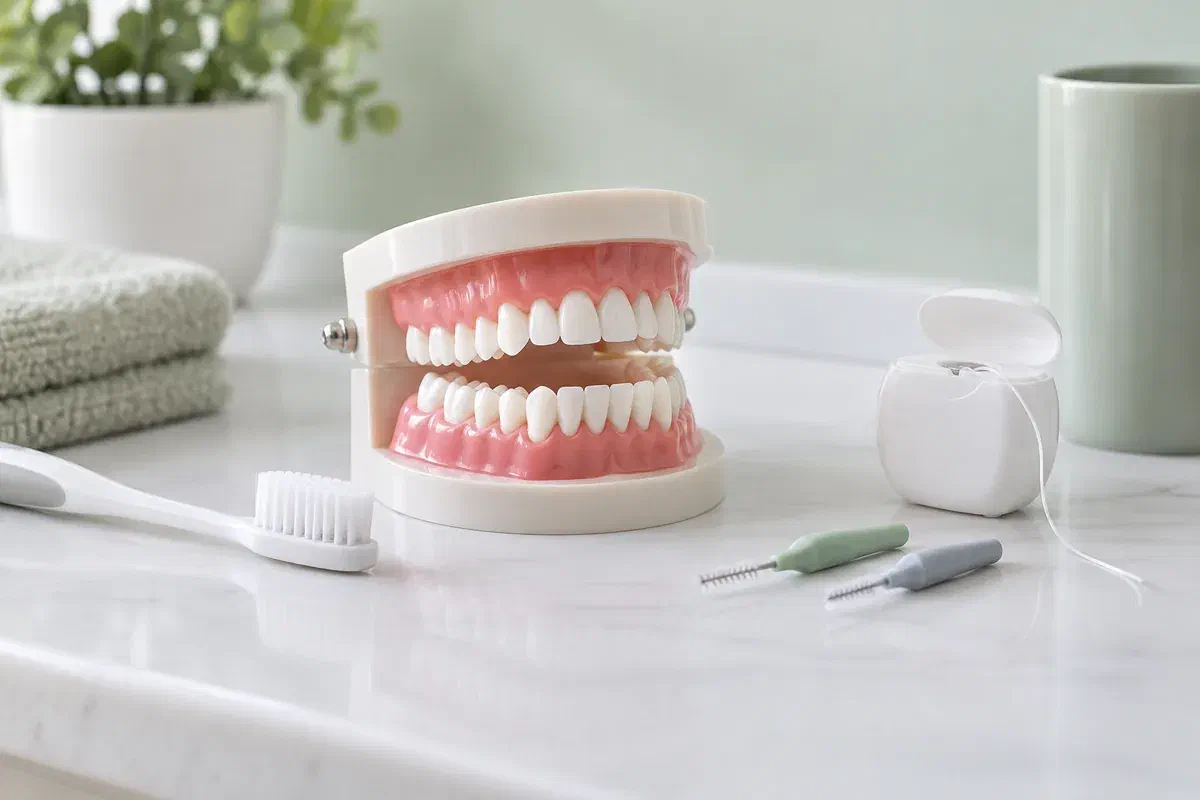
Dental teaching model with a toothbrush, interdental brushes, and floss
Signs worth raising

What have you been putting up with?

Small annoyances often carry useful information. Say where the problem sits, when you first noticed it and whether anything you have tried made a difference.

Gums that bleed or feel sore

A little pink in the sink is common, but it still deserves a look. Plaque along the gumline is one possible cause, and other health factors can play a part. Mention whether one area bleeds or many, and whether you have noticed puffiness or a tooth that feels less firm.

Rough spots that brushing will not shift

Tartar forms when plaque hardens, and once it sets, a brush simply slides over it. Overlapping teeth, crowns and bridges create extra ledges where it collects. Ask the hygienist to show you exactly where the build-up sits and how to reach that surface.

A past visit that left you uneasy

If a previous cleaning felt rushed, sore or overwhelming, say so at the start. Describe what made it difficult, whether it was cold air, scraping sounds or lying back for too long. The team can talk through the plan, agree a signal for breaks and discuss comfort options.

Let us know about new diagnoses, pregnancy, medication changes or instructions from your physician before the appointment. An up-to-date history matters even for a visit you expect to be straightforward.

Why the chair time matters

Professional cleaning, and a better routine to go with it.

Plaque is a soft, sticky film of bacteria that you can brush away. Tartar is plaque that has hardened, and it needs professional instruments to remove. Both are linked with gum inflammation, so the hygienist looks at the tissue around each tooth as well as the deposits on it.

A good appointment is also a short coaching session. Changing the angle of your brush or switching to a different size of interdental brush can make a real difference to how easy cleaning feels. Ask to see the problem area in a mirror and say honestly whether the suggestion will work for you.

Patient information: NIDCR — oral hygiene and professional care

Notes you can compare next time

Gum measurements and observations give the team a baseline for future visits. Ask which results look healthy and which areas are being watched. Knowing what will be rechecked makes it easier to see whether your changes at home are helping.

Care sized to what is found

Some mouths need routine maintenance, while others show signs that call for deeper gum treatment. The hygienist should explain which applies to you, and whether the work can be completed in one sitting or needs to be spread across visits.

Tools chosen for your teeth

Floss, picks and small brushes suit different gaps, hands and types of dental work. Ask for a short list tied to your own mouth rather than a bag of samples. Each item you take home should have a clear job.

How the hour usually runs

Four parts, with time for your questions in each.

Before anything starts, mention what you would like explained and agree how you will ask for a pause. Open conversation about soreness or confusion makes the time more useful.

  1. Catch up on your health and concerns

    We go over medical history, current medicines and anything you have noticed since your last cleaning, however long ago it was. Bleeding, dryness, sensitivity and areas you avoid are all relevant. There is no need to justify a long gap.

  2. Look closely at gums and deposits

    The hygienist checks tissue health, build-up and relevant gum measurements. Depending on what is found, a dentist's examination or X-rays may also be recommended. A hygiene visit is one part of your dental care, not a replacement for all of it.

  3. Clean in a way that suits the findings

    Hand instruments, ultrasonic tools or both may be used depending on the area. Polishing and preventive treatments are offered where they make sense, not by default. Speak up if a spot feels tender so the approach can be adjusted or discussed.

  4. Practise at home care and plan the next step

    Ask the hygienist to walk you through any new technique before you go. Confirm whether further gum treatment or a recheck is needed and why the suggested interval fits your situation. Each future visit should have a reason.

Between appointments

Gentle, steady habits do most of the work.

Your daily cleaning and professional care depend on each other. Follow any specific instructions you were given and call if you are unsure how to look after a sore area.

Aim the brush at the gumline

Use a fluoride toothpaste and a soft, comfortable stroke that reaches the surfaces you were shown. Scrubbing harder does not clean better. If one side of your mouth is awkward to reach, ask about a different brush head or hand position.

Use the right aid between teeth

Pick the floss or interdental brush size recommended for each gap. Never force a brush into a space that resists, and ease floss down rather than snapping it. If a tool keeps catching or shredding, tell us instead of pulling harder.

Watch for symptoms that do not settle

Mild tenderness after a cleaning often eases, but call if pain gets worse or bleeding continues. A new swelling, a loose tooth or a change in your bite needs attention. Changing symptoms are a reason to call now, not at your next recall.

Different needs, different visits

Not every cleaning is the same kind of appointment.

What the hygienist finds helps decide the right type of care. Ask what the results mean and whether more assessment is needed before the plan is settled.

For healthy gums you want to keep that way

Regular preventive cleaning

This usually means removing deposits, checking gum health and fine-tuning your home routine. The interval should be based on your needs. Even a mouth that feels fine benefits from a periodic look, since early changes are often silent.

When findings point to periodontal problems

Treatment for gum disease

Cleaning below the gumline, a follow-up reassessment or referral to a gum specialist may be recommended. This is a different treatment from a polish, not a harder one. Ask about the diagnosis, the number of visits and how healing will be checked.

When reaching certain areas is the real issue

Hands-on help with a tricky routine

The time may focus on cleaning around bridges, crowded teeth or orthodontic appliances, and on tools that suit your grip. Practice should centre on the exact spot you struggle with, with room to ask as many questions as you need.

Patient information: NIDCR — gum disease assessment and treatment

Common questions from Milton

Before you book that overdue cleaning.

Your findings and circumstances shape what is recommended. Ask about the likely scope, fees, comfort and any follow-up visits before treatment starts.

(905) 876-4488
My last cleaning was several years ago. Will one visit be enough?
Sometimes, and sometimes not. If there is a lot of build-up or the gums show signs of disease, the hygienist may suggest spreading care over more than one appointment. They should explain the reason, so you know the plan is tied to a specific need.
Will the hygienist lecture me about not flossing?
The aim is to help, not to judge. Be honest about what you actually do each day, and the team can suggest changes that fit your routine. Small, realistic steps tend to last longer than an ambitious plan that falls apart after a week.
Why do my gums bleed more in the days after a cleaning?
Gums that were inflamed can feel tender and bleed a little while they settle, especially if deposits were removed from below the gumline. Keep cleaning gently. If bleeding is heavy, continues beyond the period you were told to expect, or comes with swelling, call the clinic.
Does a hygiene visit include a check for cavities?
Hygiene care centres on gums, deposits and prevention. Checking for decay and other problems is part of a dentist’s examination, which may be booked alongside or separately. Ask when you book what your appointment includes and whether X-rays are due.
My teeth look yellow. Will a cleaning make them whiter?
Removing surface stain can brighten the look of your teeth, but cleaning does not change the colour of the tooth itself. If shade is the main concern, mention it so the options can be discussed separately from the care your gums need.
Can I book an evening cleaning around school pickup in Milton?
Our Bronte Street practice is open Monday to Thursday from 11am to 7pm, with Friday to Sunday visits by appointment only. Ask the team which times fit your week, and mention if you would like several family members seen on the same day.
Hygiene care in Milton

Ready to get back on track?

Call or book online to arrange a cleaning at our Bronte Street practice. Bring your questions about bleeding, tender spots, which tools to use or how often to come in. We will talk through what we find and agree on sensible next steps together.

If something hurts or looks different, mention it when you book so the right assessment can be planned alongside your cleaning.

Visit Milton Dental Clinic
Unit 1, 342 Bronte St. S, Milton, ON L9T 5B7
Get directions Clinic hours
Monday–Thursday
11am–7pm
Friday–Sunday
By appointment only

Areas we serve

  • Milton
  • Oakville
  • Mississauga
  • Georgetown
  • Halton Hills
  • Acton
  • Campbellville
  • Brampton
  • Burlington
  • Puslinch
  • Rockwood
  • Erin
  • Caledon
  • Etobicoke
  • Old Milton
  • Bronte Meadows
  • Timberlea
  • Dorset Park
  • Dempsey
  • Clarke
  • Beaty
  • Coates
  • Harrison
  • Scott
  • Willmott
  • Ford
  • Bowes
  • Cobden
  • Walker
  • Mountain View
  • Milton Heights
  • Hawthorne Village
  • Valley View
  • Fallingbrook
  • Nassagaweya
  • Trafalgar
  • Esquesing
  • Nelson
  • Brookville
  • Moffat
  • Glen Williams
  • Norval
  • Limehouse
  • Stewarttown
  • Ashgrove
  • Hornby
  • Silver Creek
  • Speyside
  • Scotch Block
  • North Oakville
  • River Oaks
  • Glen Abbey
  • West Oak Trails
  • Palermo
  • Bronte Creek
  • College Park
  • Joshua Creek
  • Uptown Core
  • Preserve
  • Iroquois Ridge
  • Lisgar
  • Meadowvale
  • Meadowvale Village
  • Churchill Meadows
  • Erin Mills
  • Central Erin Mills
  • Streetsville
  • East Credit
  • Creditview
  • Heartland
  • Sheridan
  • Mount Pleasant
  • Credit Valley
  • Huttonville
  • Churchville
  • Springbrook
  • Northwest Brampton
  • Bram West
  • Fletcher's Meadow
  • Fletcher's Creek South
  • Alton Village
  • Orchard
  • Millcroft
  • Headon Forest
  • Tansley
  • Brant Hills
  • Tyandaga
  • Kilbride
  • Lowville
  • Aberfoyle
  • Morriston
  • Arkell
  • Hillsburgh
  • Freelton
  • Carlisle
  • Waterdown
  • Flamborough
  • Mountsberg

How can we help?

Milton Dental Clinic

Have a question about your smile? Choose the option that works best for you.

For urgent dental concerns, please call.
Messages are reviewed during clinic hours.