

Illustrative conversation with a dental hygienist before an appointment
General & Family Dentistry

Dental Hygiene Appointments in Oakville

Pink foam in the sink is easy to ignore. A hygiene appointment for Oakville households checks what is behind the bleeding, clears hardened deposits and fine-tunes how you clean.

Hygiene care for Oakville

That spot of red when you rinse.

Most people first think about their gums on an ordinary morning, when they spit out toothpaste and see a streak of blood. It rarely hurts, so it is tempting to brush more lightly and move on. Bleeding is a sign worth understanding, though, and a hygiene visit is a sensible place to start.

During the appointment, the hygienist looks at where plaque and tartar have built up, how the gum tissue is responding and which surfaces your brush tends to miss. Deposits that have hardened are removed professionally, and you get practical guidance on reaching the trouble spots yourself.

Come with a few notes if you can. Which side bleeds, whether floss draws blood, any tenderness or a bad taste, and how often you clean between teeth all help. From North Oakville or closer to the lake, that information lets the team plan care around your mouth rather than a standard script.

Schedule a cleaning
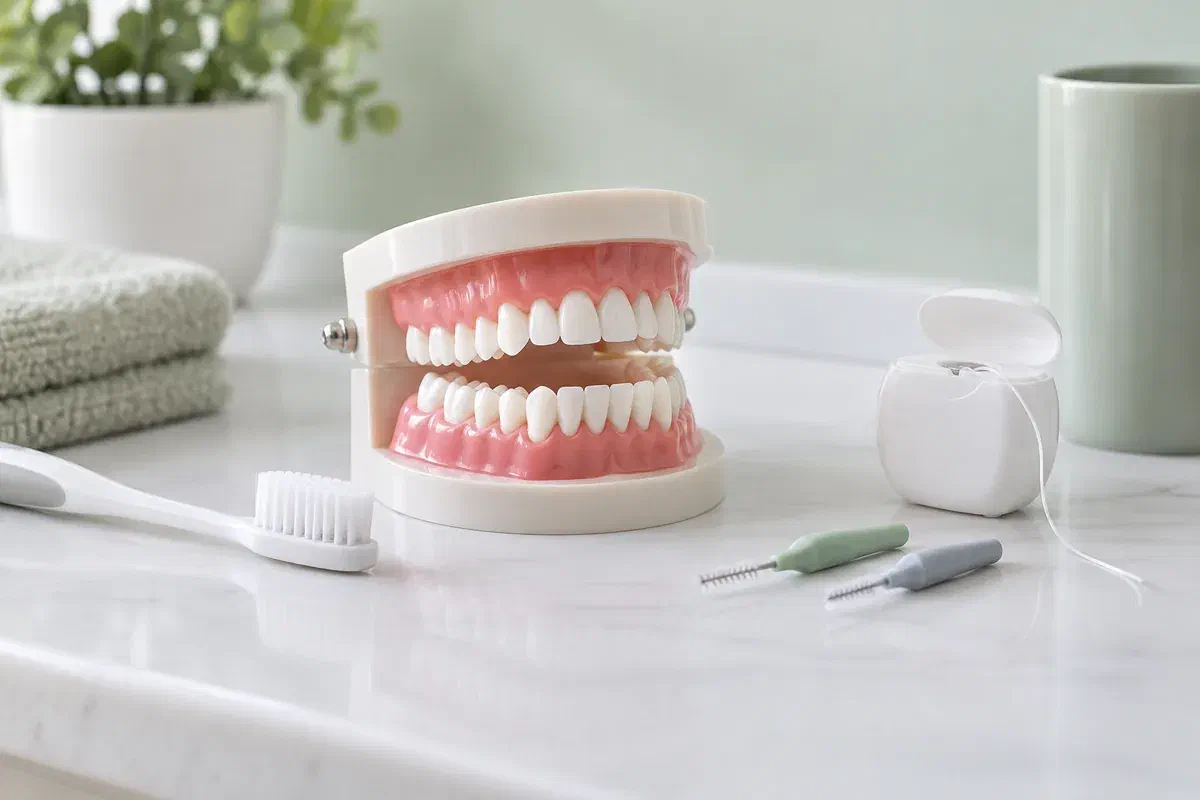
Dental teaching model with a toothbrush, interdental brushes, and floss
What brings people in

Three clues your gums are asking for attention

Even when nothing aches, changes in how your mouth feels or looks can be meaningful. Tell us where the issue is, how long it has lasted and what you have already tried.

Bleeding when you brush or floss

Inflammation from plaque along the gumline is a frequent cause, though not the only one. Brushing too hard is not always the explanation. Let us know whether it is one area or several, and whether you have seen swelling, receding gums or teeth that seem to move.

Hard build-up behind the front teeth

The inner surfaces of the lower front teeth are a common place for tartar to form, and your tongue may notice the roughness before you do. Brushing will not lift it. Crowding and dental work can create similar ledges elsewhere, and the hygienist can show you where.

Worry about soreness during cleaning

Inflamed gums can feel tender when they are cleaned. If you dread that, or a previous appointment was uncomfortable, say so early. The team can explain each step, stop when you raise a hand and talk about options that may make the visit easier.

Tell us about pregnancy, diabetes, blood thinners, new prescriptions or medical advice you have been given. These can affect gum health and how care is planned, even for a routine cleaning.

Why it helps

Settle inflamed gums and learn the stroke that keeps them calm.

Bacterial plaque forms on teeth every day and can usually be brushed off. When it stays put, minerals in saliva harden it into tartar, which needs professional removal. Either can irritate the gums, which is why the hygienist checks the tissue as carefully as the teeth.

Seeing the technique in action often helps more than reading about it. Tilting the bristles towards the gum, or using a slightly larger interdental brush, can change results within weeks. Ask for a mirror so you can watch, and say plainly whether you can repeat it at home.

Patient information: NIDCR — oral hygiene and professional care

A clear picture of how your gums change

Recorded measurements make it possible to compare one appointment with the next. Ask what is healthy, what is borderline and what will be measured again. Those details help you see whether bleeding is settling.

The right depth of cleaning

Routine maintenance suits some mouths, while others need treatment for gum disease. The hygienist should tell you which applies before you assume a single visit will cover everything.

Cleaning aids with a purpose

A water flosser, tape floss or tiny brushes each suit certain gaps and habits. Ask what will help your mouth most, including around fillings or crowns. You do not need a drawer full of gadgets.

What happens at your visit

Talk, look, clean, practise.

Start by telling the team what you want to learn and how you will signal for a break. Being open about tender spots and difficult tools makes the appointment more productive.

  1. Share symptoms and health updates

    We ask about medicines, medical changes and what you have noticed since your last visit, including bleeding, dryness or sensitivity. Point out any areas you avoid. A long gap since your last cleaning needs no explanation.

  2. Check gum tissue and build-up

    The hygienist looks at plaque and tartar, measures the gum pockets where relevant and notes any inflammation. Based on the findings, an examination by the dentist or X-rays may be suggested as part of your wider care.

  3. Remove deposits with suitable instruments

    Hand scalers, ultrasonic tools or both may be used depending on the area. Polishing and preventive steps are added when they are useful. Mention tenderness at any point so the approach can be talked over.

  4. Show the technique and plan the follow-up

    Practise any new brushing or between-teeth method before you leave. Ask whether a reassessment of the gums or further treatment is needed, and why the suggested interval suits you.

The weeks after

Keep going gently, even if your gums still bleed a little.

Professional care works best alongside steady habits at home. Follow any specific instructions you received, and phone us with questions about a spot that still feels raw.

Brush the gumline softly

Pair a fluoride paste with soft bristles, angled to reach the surfaces you were shown. Pressing hard can irritate gums without cleaning better. If an area stays hard to reach, ask about a different brush or position.

Clean between teeth every day

Use the aid and size recommended for each gap. Slide floss gently and never force a small brush into a tight space. If a tool catches or shreds in the same place, tell us rather than tugging harder.

Notice what does not improve

Some bleeding may settle as inflammation calms, but call if it continues, worsens or comes with pain or swelling. A loose tooth or a change in your bite also needs a look. Do not hold off until your next routine cleaning.

Finding the right care

Mild inflammation and gum disease call for different plans.

Your assessment shapes what comes next. Ask what the findings show and whether more evaluation is needed before treatment is settled.

When gums are mostly healthy

Preventive maintenance

Expect removal of deposits, a review of gum health and adjustments to your routine. The return interval should reflect your own risk. Regular checks matter even when nothing hurts, because early gum changes are often quiet.

When gum disease is confirmed

Periodontal therapy

This may involve cleaning beneath the gumline, a reassessment and sometimes referral to a gum specialist. It differs from a routine polish in purpose. Ask about the diagnosis, the visits involved and how improvement will be measured.

When cleaning certain areas is the hurdle

Technique-focused support

Extra time may go to braces, bridges, crowded teeth or limited dexterity, with tools adapted to suit you. Demonstrations should target the area you find hardest, and you should have room to ask questions.

Patient information: NIDCR — gum disease assessment and treatment

Asked by Oakville patients

Your gum questions, answered plainly.

What we recommend depends on your findings and circumstances. Ask about scope, fees, comfort and possible follow-up visits before care begins.

(905) 876-4488
My gums bleed but don't hurt. Is that still a problem?
Bleeding without pain is common and still worth assessing. Gum inflammation often causes little discomfort in its early stages. A hygiene visit can look at the cause and help you clean the area effectively.
Can pregnancy make my gums bleed more?
Hormonal changes during pregnancy can make gums more prone to inflammation and bleeding. Let us know you are pregnant when you book. Keep cleaning gently and ask the team about safe, comfortable care during this time.
Is an electric toothbrush better for bleeding gums?
Either type can work well when used correctly. Some people find a powered brush easier to guide along the gumline. Bring your usual brush or describe it, and the hygienist can suggest whether a change would help you.
Should I use a mouthwash for bleeding gums?
A rinse can support your routine but does not replace brushing and cleaning between teeth. Ask the team before relying on one, especially if you have sensitivity or dryness. Getting the bleeding assessed is the more important step.
If my gums are inflamed, will I need more than a single cleaning?
Possibly. Extensive deposits or signs of gum disease can lead to a plan with several visits or a reassessment. The hygienist should explain why, so additional appointments are linked to a clear need.
Does a cleaning include checking my teeth for decay?
Hygiene care focuses on gums, deposits and prevention. Looking for cavities and other problems is part of the dentist’s examination. Ask when you book whether an exam or X-rays are included or due.
Booking from Oakville

Bring the bleeding question to someone who can look.

Contact our Bronte Street practice to set up a hygiene appointment. Weekday appointments run Monday to Thursday into the early evening, and Friday through Sunday times are by arrangement. Bring your questions about bleeding, tools or how often to come back, and we will explain what we see.

Bleeding that comes with throbbing pain or a swollen gum is more than a cleaning question. Describe it on the phone so the dentist can look at it too.

Visit Milton Dental Clinic
Unit 1, 342 Bronte St. S, Milton, ON L9T 5B7
Get directions Clinic hours
Monday–Thursday
11am–7pm
Friday–Sunday
By appointment only

Areas we serve

  • Milton
  • Oakville
  • Mississauga
  • Georgetown
  • Halton Hills
  • Acton
  • Campbellville
  • Brampton
  • Burlington
  • Puslinch
  • Rockwood
  • Erin
  • Caledon
  • Etobicoke
  • Old Milton
  • Bronte Meadows
  • Timberlea
  • Dorset Park
  • Dempsey
  • Clarke
  • Beaty
  • Coates
  • Harrison
  • Scott
  • Willmott
  • Ford
  • Bowes
  • Cobden
  • Walker
  • Mountain View
  • Milton Heights
  • Hawthorne Village
  • Valley View
  • Fallingbrook
  • Nassagaweya
  • Trafalgar
  • Esquesing
  • Nelson
  • Brookville
  • Moffat
  • Glen Williams
  • Norval
  • Limehouse
  • Stewarttown
  • Ashgrove
  • Hornby
  • Silver Creek
  • Speyside
  • Scotch Block
  • North Oakville
  • River Oaks
  • Glen Abbey
  • West Oak Trails
  • Palermo
  • Bronte Creek
  • College Park
  • Joshua Creek
  • Uptown Core
  • Preserve
  • Iroquois Ridge
  • Lisgar
  • Meadowvale
  • Meadowvale Village
  • Churchill Meadows
  • Erin Mills
  • Central Erin Mills
  • Streetsville
  • East Credit
  • Creditview
  • Heartland
  • Sheridan
  • Mount Pleasant
  • Credit Valley
  • Huttonville
  • Churchville
  • Springbrook
  • Northwest Brampton
  • Bram West
  • Fletcher's Meadow
  • Fletcher's Creek South
  • Alton Village
  • Orchard
  • Millcroft
  • Headon Forest
  • Tansley
  • Brant Hills
  • Tyandaga
  • Kilbride
  • Lowville
  • Aberfoyle
  • Morriston
  • Arkell
  • Hillsburgh
  • Freelton
  • Carlisle
  • Waterdown
  • Flamborough
  • Mountsberg

How can we help?

Milton Dental Clinic

Have a question about your smile? Choose the option that works best for you.

For urgent dental concerns, please call.
Messages are reviewed during clinic hours.