
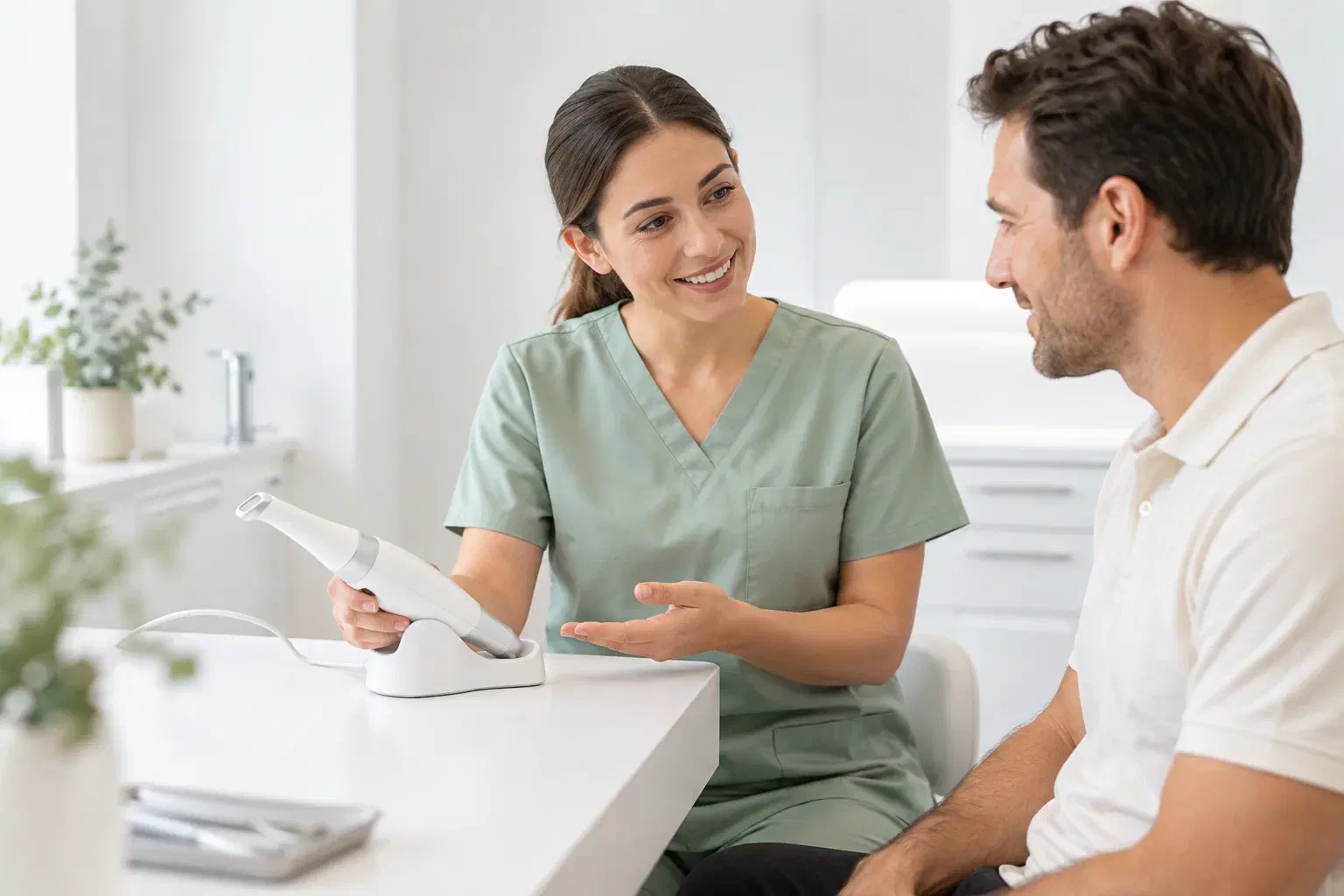
Illustrative discussion of an optical dental scanner, not a photograph of clinic equipment
General & Family Dentistry

Digital Dental Impressions in Caledon

A parent’s crown, a teenager’s mouthguard, a grandparent’s denture: one household can need several kinds of dental record. For Caledon households, learn when an optical scan may suit each of them and when a traditional impression is the better fit.

Family records, from Bolton to rural Caledon

Different people, different reasons for a record.

In one family, the reasons for an impression can look quite different. An adult may need a crown after a cracked tooth, a teenager a custom sports guard, an older relative a new denture. What they share is the need for a reliable copy of the teeth and surrounding tissue, so the piece or plan can be built to fit. A digital impression gathers that copy with an optical scanner as a three-dimensional surface model.

In every case the impression is a step for collecting information, not a treatment in itself. Scanning can replace impression material where it suits, but what is being made, which part of the mouth is involved and the detail required all influence the choice. One person in the family may be scanned while another is better served by a tray, and finished work may still need adjusting.

When booking for anyone in the household, ask how the impression will be taken for that person and what arrangements are available. Tell us about a child’s nervousness, an older adult’s limited opening, a gag reflex or a past difficult impression. Our team can explain suitability person by person, rather than assuming one approach works for the whole family.

Ask about impressions for your family
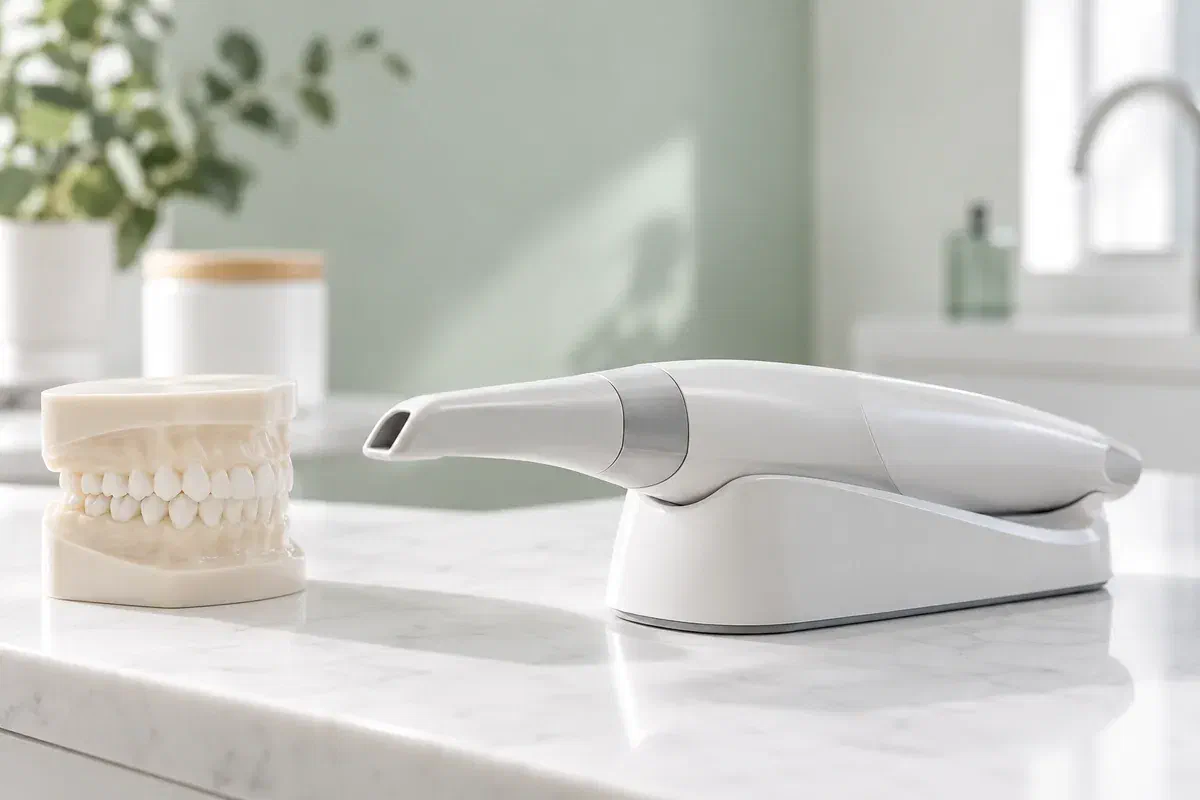
Illustrative unbranded optical scanner beside a dental teaching model
Why someone at home may need one

Start with what each person needs made.

The right record depends on the work. For each family member, ask which surfaces will be recorded and how the model will be used to plan or produce their treatment.

Crowns, guards, dentures and more

A crown has to be shaped to a prepared tooth and sit well against the teeth around and opposite it. A guard or other appliance may need a full arch, and a denture may need the gums and ridges as well. The purpose shapes the method, so ask what each case requires.

Comfort that varies by age and temperament

A child may be wary of anything new, while an adult may remember gagging on a tray. Describe what each person finds difficult. Scanning may be worth discussing where it suits the work, though it still involves a device in the mouth and cannot promise an easy visit.

Mouths that change

Children’s teeth erupt and shift, adults have fillings replaced and dentures wear. Any of these can make an older record unreliable. Let the team know what has changed, and they will decide whether an existing file still serves the current work.

For every member of the family, a digital impression records surfaces alone. It differs from dental X-rays and CBCT imaging, which assess what lies beneath, and it cannot replace imaging that a clinician judges necessary.

How scanning can help a household

Gaps caught on the spot, for everyone.

With an optical record, gaps or unclear areas are usually visible during the visit and can be rescanned before the file is accepted. That can spare a family member a second trip just for records. The finished model then moves into the clinical and laboratory steps for their particular piece. What counts is a usable record, whatever the age of the patient.

Some people, children included, may find scanning easier than biting into a tray, though reactions vary and scanning time depends on what has to be captured. Before starting, agree on breaks, comfortable opening and how each person would like to be positioned.

Patient information: UCLH — digital impressions in dental care

A screen that can help explain

Where possible, the model can be shown on screen, which some children and adults find interesting and reassuring. It can also show why neighbouring or opposing teeth are recorded. It is a planning tool, not a diagnosis.

Records ready for different pieces

A suitable file may be passed through the appropriate professional workflow so a crown, guard or denture can be designed and made. Ask who handles each piece and what that involves. A scan alone does not determine when it will be ready.

Completeness checked each time

Every record must include the details its piece depends on. When something is missing, another pass or another method may be used. That step is part of producing a worthwhile impression for each person.

A typical visit, adapted to the person

The same four stages, paced for whoever is in the chair.

What the appointment involves depends on the treatment. Ask whether the visit is for records alone, or whether tooth preparation, a temporary or other care is also planned.

  1. Explain the purpose to the patient

    The dentist describes why the impression is needed, in terms that suit the person, and whether a scan is appropriate and offered. Ask about alternatives and fees, and share comfort, anxiety or opening concerns.

  2. Prepare the surfaces

    The scanner needs dry, reachable teeth and, for some pieces, gum tissue too. Depending on the procedure, the team may gently manage the gums. A tooth prepared for a crown needs its edges captured precisely.

  3. Capture teeth, tissue and bite

    A handheld wand is moved around the areas the piece depends on while the model builds. The opposite jaw and bite may be recorded as well. The team gives positioning instructions and pauses whenever the agreed signal is used.

  4. Confirm the record and the plan

    The team reviews the model for completeness, rescanning or switching methods if needed. Before leaving, note the next appointment, any temporary care instructions and when the finished work will be tried in.

Back at home

Aftercare depends on who was treated and how.

A scan alone rarely needs recovery time. If freezing, tooth shaping or a temporary was part of the same visit, follow the specific instructions given, and keep an eye on children who may still be numb.

Look after any temporary

If a temporary restoration was placed, follow the guidance on eating and cleaning. Call the clinic if it loosens, cracks or hurts. A scan of the final work is no reason to leave a broken temporary as it is.

Tell us about changes

A tooth that chips, work redone elsewhere, a child’s new tooth coming through or a bite that changes can affect the record. Let the team know. Fresh pain or swelling deserves an assessment rather than waiting for the finished piece.

Bring everyone back for fitting

Each crown, guard or denture needs to be tried in and checked for fit, bite and comfort, with advice on cleaning. Adjustments are common. A digital workflow does not remove that visit or any later follow-up.

Choosing per person

The best method for one may not suit another.

The dentist considers what information each piece needs and whether it can be captured reliably for that person. Ask why a method is recommended rather than assuming the most modern option is right for everyone.

Where a surface model suits the piece

Optical scanning

A scanner creates a virtual model that can support a suitable restorative or appliance workflow. Confirm it suits the case and is offered. Recording is one stage; assessment, design, manufacture and fitting are separate.

Where a physical mould works better

Impression material

Some pieces and clinical needs are still best recorded with a tray. Share what has made impressions hard before so comfort can be planned. Choosing a tray does not mean the result will be any less good.

Where questions remain

More records

Pictures, an extra bite record, X-rays or a repeat impression may each fill a different gap, and the dentist can say what each one is for. No surface scan can show everything about a tooth, its supporting tissues or whether a treatment is suitable.

Caledon household questions

Scans for children, adults and grandparents.

Ask about the work planned for each person, the method that suits them and what follows. Helpful answers link each record to a clear clinical purpose.

(905) 876-4488
Is scanning used for dentures as well as crowns?
Sometimes. Dentures can require detail of the gums and supporting tissues that may be recorded in different ways. The dentist will explain whether a scan, a material impression or a combination suits the denture being planned.
Is a digital impression a good option for an anxious child?
It may be, depending on the child and the work. Some children are curious about seeing their teeth on screen, while others find any device in the mouth hard. Talk to the team about your child so the visit can be explained and paced.
Can I stay with my child during the scan?
Ask the team when you book. Arrangements can be discussed based on the child’s age, needs and the treatment involved. Telling them what usually helps your child stay calm is useful either way.
Does a custom sports mouthguard need an impression?
A custom guard is made from a record of the teeth, which may be a scan or a material impression depending on the workflow. The dentist will explain which method suits the guard and the person wearing it.
What if a family member has a health condition that affects dental visits?
Let the clinic know before the appointment, including medicines and any limits on positioning or time in the chair. The dentist may need to coordinate with the person’s physician before certain treatment, and can plan the visit accordingly.
How can households in Caledon keep several family appointments organised?
Ask the front desk for a summary of each person’s next steps and expected visits. Where it makes sense, appointments may be grouped. Keep written temporary care instructions together so everyone knows when a call is needed.
Planning family visits from Caledon

One call can sort out the records your family needs.

Phone our Bronte Street practice about the crowns, guards, dentures or other work your household is planning, and any worries about impressions. We will explain which records each person may need and confirm what can be arranged. Questions about comfort, timing and children’s visits are welcome.

Suitability and availability depend on each person’s treatment and should be confirmed. The scanner pictures on this page are illustrative only.

Visit Milton Dental Clinic
Unit 1, 342 Bronte St. S, Milton, ON L9T 5B7
Get directions Clinic hours
Monday–Thursday
11am–7pm
Friday–Sunday
By appointment only

Areas we serve

  • Milton
  • Oakville
  • Mississauga
  • Georgetown
  • Halton Hills
  • Acton
  • Campbellville
  • Brampton
  • Burlington
  • Puslinch
  • Rockwood
  • Erin
  • Caledon
  • Etobicoke
  • Old Milton
  • Bronte Meadows
  • Timberlea
  • Dorset Park
  • Dempsey
  • Clarke
  • Beaty
  • Coates
  • Harrison
  • Scott
  • Willmott
  • Ford
  • Bowes
  • Cobden
  • Walker
  • Mountain View
  • Milton Heights
  • Hawthorne Village
  • Valley View
  • Fallingbrook
  • Nassagaweya
  • Trafalgar
  • Esquesing
  • Nelson
  • Brookville
  • Moffat
  • Glen Williams
  • Norval
  • Limehouse
  • Stewarttown
  • Ashgrove
  • Hornby
  • Silver Creek
  • Speyside
  • Scotch Block
  • North Oakville
  • River Oaks
  • Glen Abbey
  • West Oak Trails
  • Palermo
  • Bronte Creek
  • College Park
  • Joshua Creek
  • Uptown Core
  • Preserve
  • Iroquois Ridge
  • Lisgar
  • Meadowvale
  • Meadowvale Village
  • Churchill Meadows
  • Erin Mills
  • Central Erin Mills
  • Streetsville
  • East Credit
  • Creditview
  • Heartland
  • Sheridan
  • Mount Pleasant
  • Credit Valley
  • Huttonville
  • Churchville
  • Springbrook
  • Northwest Brampton
  • Bram West
  • Fletcher's Meadow
  • Fletcher's Creek South
  • Alton Village
  • Orchard
  • Millcroft
  • Headon Forest
  • Tansley
  • Brant Hills
  • Tyandaga
  • Kilbride
  • Lowville
  • Aberfoyle
  • Morriston
  • Arkell
  • Hillsburgh
  • Freelton
  • Carlisle
  • Waterdown
  • Flamborough
  • Mountsberg

How can we help?

Milton Dental Clinic

Have a question about your smile? Choose the option that works best for you.

For urgent dental concerns, please call.
Messages are reviewed during clinic hours.