
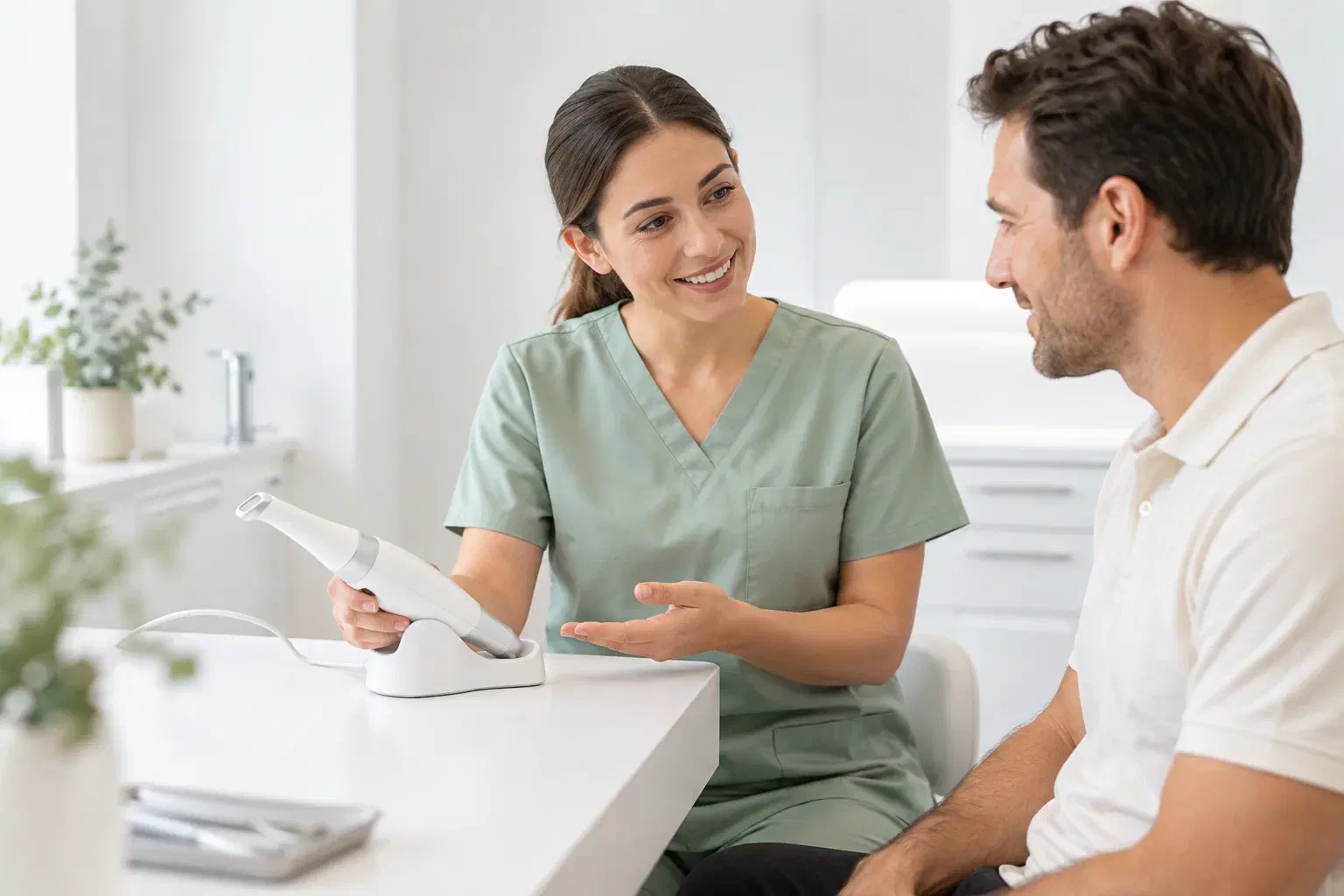
Illustrative discussion of an optical dental scanner, not a photograph of clinic equipment
General & Family Dentistry

Digital Dental Impressions in Etobicoke

A longer trip makes every appointment count. Coming from Etobicoke, learn how a complete optical impression supports crown and appliance work, why a scan does not mean same-day results, and how to plan visits and back-up care sensibly.

Making the trip from Etobicoke worthwhile

One good record can save a return visit.

When the drive is a long one, nobody wants to come back simply because an impression was incomplete. That is a good reason to understand what the record does. An impression captures the shape and arrangement of the teeth and nearby tissues so a crown, appliance or plan can be developed. A digital impression gathers it with an optical scanner, producing a three-dimensional model on screen.

Keep in mind that this is a measurement, not a treatment. In suitable cases it can replace a tray of impression material, and it lets the team see during the visit whether anything is missing. It does not mean every impression can be scanned, that the work will be ready the same day or that the finished piece will need no adjustment.

When booking, ask how the record will be taken for your care and what the appointment sequence is likely to be. Mention a sensitive gag reflex, limited opening or a difficult impression in the past. Our team can explain suitability and the visit plan without assuming a single method works best for everyone.

Ask how many visits to expect
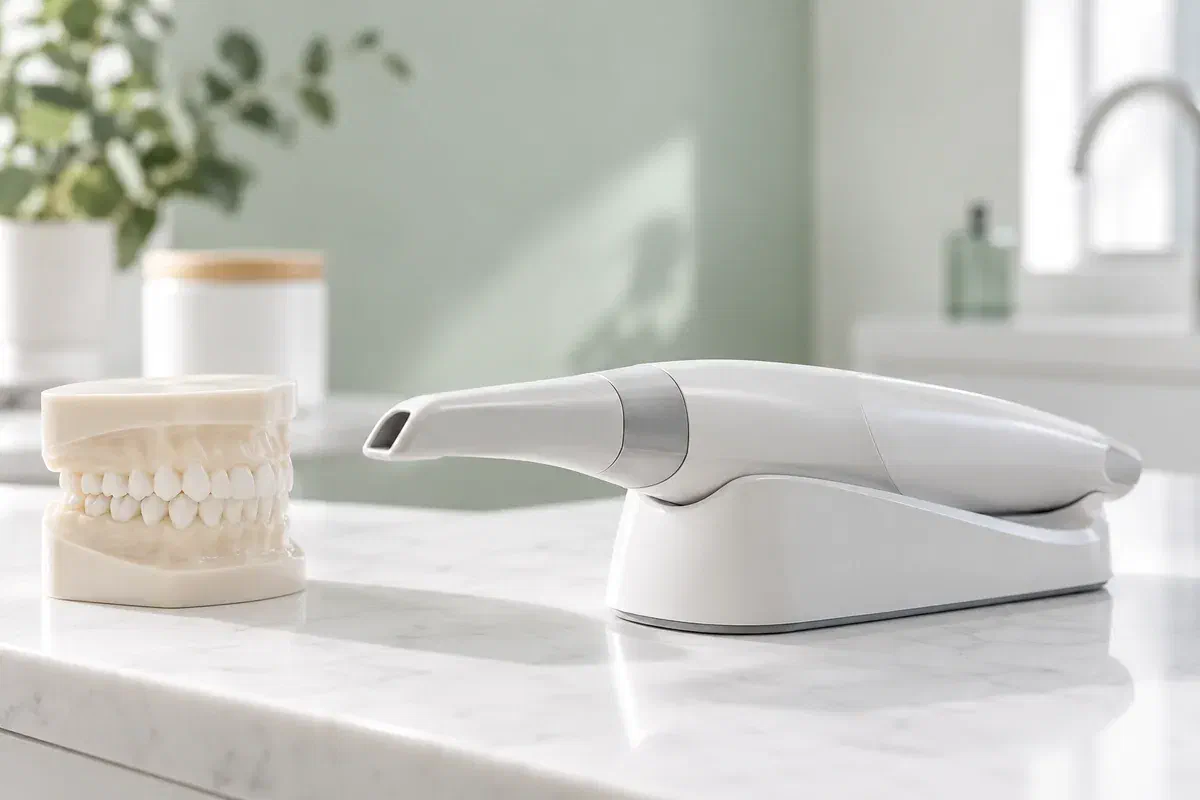
Illustrative unbranded optical scanner beside a dental teaching model
What brings people to the question

Know the purpose before you travel.

Coming prepared helps. Find out which surfaces will be recorded and how the impression feeds into the design and making of your dental work, so the visit is used well.

A crown or appliance in the plan

Making a crown or other suitable restoration may require detailed records of the prepared tooth, the neighbouring teeth and the bite. Some appliances need a full, accurate model. Ask what your case needs, so a scan is taken for a reason rather than out of habit.

Earlier impressions that went badly

If a tray made you gag or feel panicked, describe it. Where it suits the treatment, scanning may be worth discussing. A scanner still has to reach the teeth, and it cannot be promised to take away every difficulty.

A gap of months since the last record

Teeth can shift and fillings get replaced between appointments, especially when treatment is spread out. Tell the team what has happened. An existing file is only used if it still holds what the current work needs.

A digital impression captures surface shape. It is not an X-ray or CBCT scan, and it does not replace any imaging needed to assess structures below those surfaces.

Why the on-screen model helps

Problems found before you leave the building.

With an optical record, the team can usually see straight away whether an area is missing or unclear, and scan it again while you are still there. That matters when another trip is a significant commitment. Once accepted, the file moves into the clinical and laboratory steps for your work. A complete, usable record is what counts.

Skipping the tray of material makes things easier for some patients, although comfort varies and the length of scanning depends on the case. Discuss breaks, mouth opening and positioning before the visit begins, so it can be planned around your needs.

Patient information: UCLH — digital impressions in dental care

Clarity about what was captured

Where the system allows, the team can show you the model and explain why nearby teeth or the opposite jaw were recorded. That makes it easier to understand the plan. The model supports decisions but is not a diagnosis.

A file ready for the next stage

A suitable record may be sent through the proper professional workflow to help design or make the work. Ask who handles it and how long that stage tends to take. A completed scan does not set a delivery date on its own.

Fewer surprises later

The model needs all the details the restoration or appliance depends on. If something is lacking, another pass or another method may be used during the same visit. That check helps avoid having to come back just for records.

Planning the appointment

What to expect, so you can plan the day.

The length and content of the visit depend on the treatment. Confirm in advance whether it is just for records, or whether preparing a tooth or placing a temporary is planned too.

  1. Check the plan before you set out

    The dentist explains why an impression is needed and whether a scan suits your case and is available. Ask about limits, alternatives, fees and how many appointments the treatment usually takes. Mention gagging or opening difficulties.

  2. Prepare what needs recording

    The relevant teeth must be clear and accessible to the scanner. That may mean drying the area or managing the gum around a tooth. A tooth prepared for a crown needs its edges recorded in fine detail.

  3. Record the teeth and the bite

    The scanner is moved around the teeth involved as the model forms. The opposing teeth and how your bite meets may be recorded as well. Follow the instructions on position, and signal when you need to rest.

  4. Review it and map the next visits

    The team checks the record is suitable, rescanning or switching method if needed. Leave with the date of your next appointment, written temporary care instructions and a clear idea of when the finished work will be fitted.

Between appointments

Know what to watch for while you wait.

There is usually no recovery needed after scanning alone. Any freezing, tooth shaping, temporary work or other procedure done during the same visit may come with separate advice.

Look after the temporary

If a temporary restoration is in place, follow the guidance on eating and cleaning. Call us if it loosens, cracks or becomes uncomfortable, and ask whether it needs to be seen. A scanned final crown does not make a broken temporary safe to ignore.

Phone ahead if something changes

If a tooth breaks, work is replaced elsewhere or your bite shifts after the scan, call before your next visit. The record may need to be reviewed, and a phone conversation can help decide whether a trip is needed sooner.

Plan for the fitting visit

The finished piece still needs checking in person for fit, bite, comfort and cleaning. Adjustments may be needed. A digital workflow does not remove that step or the need for follow-up if something later feels wrong.

Recording methods compared

Choosing the record that will hold up.

The dentist considers what information is needed and whether each method can capture it reliably. Ask why a method is recommended, rather than assuming the newest choice is automatically the right one.

If surface scanning fits the work

Digital optical scan

The scanner creates a virtual model that may be used in an appropriate restorative or appliance process. Confirm suitability and availability. Recording is one step; assessment, design, manufacture and fitting follow separately.

If a physical mould is better suited

Traditional impression

A tray and material may still be the recommendation for certain clinical needs or arrangements. Describe any past difficulty so comfort can be considered. Quality depends on a sound record, not on which tool produced it.

If the picture is not yet complete

Additional records

Sometimes photos, radiographs, a second bite registration or a material impression are needed to settle other questions, and you can ask why. A surface scan cannot tell everything about a tooth, the tissues around it or whether a treatment is suitable.

Etobicoke questions about planning

Timing, trips and what the scan can do.

Ask about the treatment being planned, the method available and what happens after the record. Useful answers connect the scan to a specific clinical need and to your schedule.

(905) 876-4488
Can the scan and the tooth preparation happen at the same appointment?
Often a tooth is prepared and then recorded at the same visit, but it depends on the treatment. Ask the team to outline what each appointment will include so you can plan your time and travel.
If I’m in Etobicoke and my temporary comes off, what should I do?
Call the clinic first to describe what happened and get advice. If you have significant pain or swelling and cannot get to us promptly, seek care closer to home. Swelling affecting breathing or swallowing needs emergency medical care.
Can I get a copy of my scan for my records?
Ask the team. Dental records, including digital impressions, can usually be shared with you or another provider through the proper process. The file’s usefulness elsewhere depends on whether it still reflects your mouth and suits the work planned.
Why might I be asked back for another impression?
Sometimes the teeth or plan change, or the lab needs further detail before the work can be made. The team aims to capture everything at one visit, but a repeat record may occasionally be needed for the work to fit properly.
Does scanning make the lab work faster?
It depends on the case and the design and manufacturing arrangements. A digital file can be sent on promptly, but the time to make and finish the piece varies. Ask for a realistic timeline rather than assuming it will be quick.
Should I brush and floss before a scanning appointment?
Yes, cleaning your teeth as usual beforehand is a good idea. The team will still prepare the area during the visit, which may include drying the teeth so the scanner can record them clearly.
Planning your visits from Etobicoke

Let’s plan the impression around fewer, well-organised trips.

Call our Bronte Street practice to talk through your restoration or appliance, how the impression would be taken and how the appointments are likely to fall. We can explain which records may be needed and confirm the arrangements available. Ask anything about comfort, timing and back-up care.

Suitability and availability should be confirmed for your treatment. Scanner pictures on this page are illustrations and do not show clinic equipment.

Visit Milton Dental Clinic
Unit 1, 342 Bronte St. S, Milton, ON L9T 5B7
Get directions Clinic hours
Monday–Thursday
11am–7pm
Friday–Sunday
By appointment only

Areas we serve

  • Milton
  • Oakville
  • Mississauga
  • Georgetown
  • Halton Hills
  • Acton
  • Campbellville
  • Brampton
  • Burlington
  • Puslinch
  • Rockwood
  • Erin
  • Caledon
  • Etobicoke
  • Old Milton
  • Bronte Meadows
  • Timberlea
  • Dorset Park
  • Dempsey
  • Clarke
  • Beaty
  • Coates
  • Harrison
  • Scott
  • Willmott
  • Ford
  • Bowes
  • Cobden
  • Walker
  • Mountain View
  • Milton Heights
  • Hawthorne Village
  • Valley View
  • Fallingbrook
  • Nassagaweya
  • Trafalgar
  • Esquesing
  • Nelson
  • Brookville
  • Moffat
  • Glen Williams
  • Norval
  • Limehouse
  • Stewarttown
  • Ashgrove
  • Hornby
  • Silver Creek
  • Speyside
  • Scotch Block
  • North Oakville
  • River Oaks
  • Glen Abbey
  • West Oak Trails
  • Palermo
  • Bronte Creek
  • College Park
  • Joshua Creek
  • Uptown Core
  • Preserve
  • Iroquois Ridge
  • Lisgar
  • Meadowvale
  • Meadowvale Village
  • Churchill Meadows
  • Erin Mills
  • Central Erin Mills
  • Streetsville
  • East Credit
  • Creditview
  • Heartland
  • Sheridan
  • Mount Pleasant
  • Credit Valley
  • Huttonville
  • Churchville
  • Springbrook
  • Northwest Brampton
  • Bram West
  • Fletcher's Meadow
  • Fletcher's Creek South
  • Alton Village
  • Orchard
  • Millcroft
  • Headon Forest
  • Tansley
  • Brant Hills
  • Tyandaga
  • Kilbride
  • Lowville
  • Aberfoyle
  • Morriston
  • Arkell
  • Hillsburgh
  • Freelton
  • Carlisle
  • Waterdown
  • Flamborough
  • Mountsberg

How can we help?

Milton Dental Clinic

Have a question about your smile? Choose the option that works best for you.

For urgent dental concerns, please call.
Messages are reviewed during clinic hours.