Worn or chipped teeth
Years of use can flatten or chip edges. A photo can show where, but not how deep the change runs or what caused it. Share sensitivity, bite changes or recent falls so the dentist has the full context.


Dental decisions are often made with someone else: a spouse, an adult child, a caregiver who drives you in. Intraoral camera photos can give everyone involved the same clear view of a visible finding, so the conversation afterward starts from shared facts rather than half-remembered words.
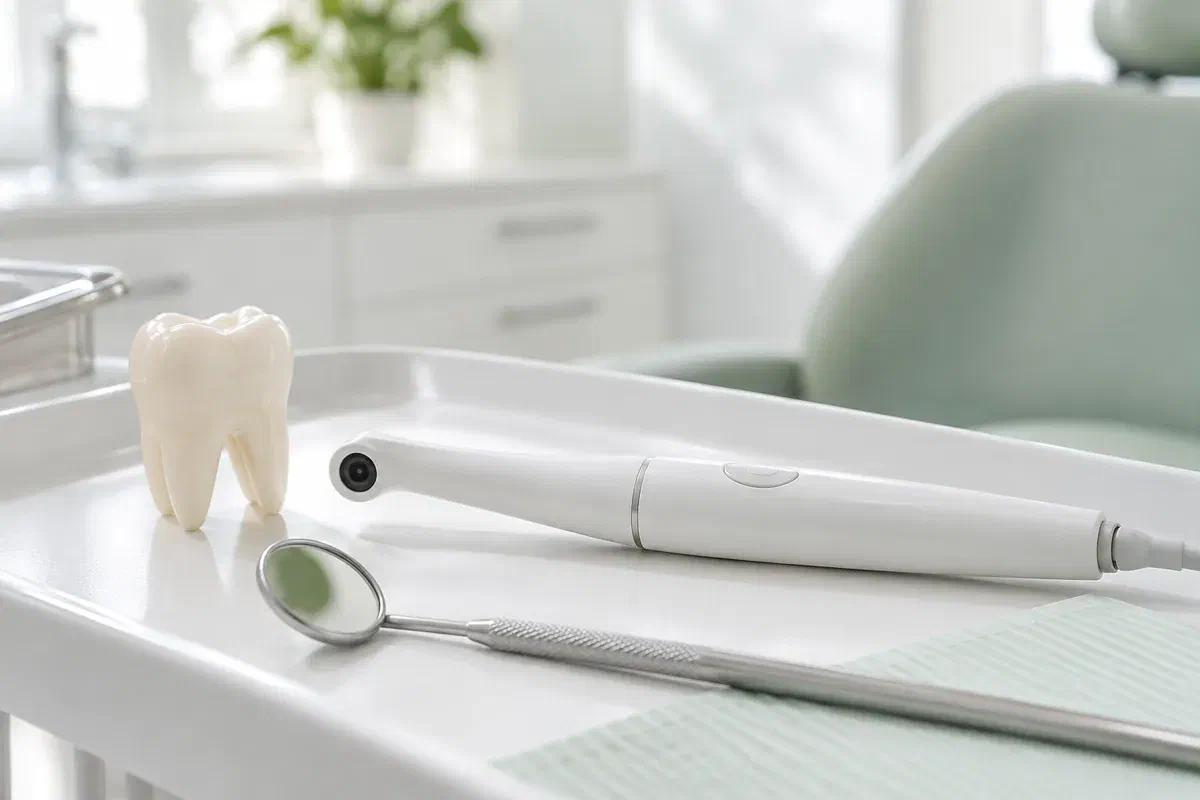
Think of an older parent who hears that a crown is wearing thin, then tries to explain it to their daughter on the drive home. Details get lost. An intraoral camera can help close that gap. It is a slim, handheld device with a built-in light that captures enlarged photos of reachable teeth and gums, so the person in the chair and anyone helping them can see the spot being described.
Seeing is not the same as diagnosing, though. Lighting, moisture, the angle of the lens and the parts of a tooth it cannot reach all influence the image. Your dentist interprets the photograph together with symptoms, medical and dental history and the hands-on findings, and only then explains what it means and whether treatment is worth considering.
Families in Bolton and the villages across Caledon, northeast of Milton, can mention when booking if a support person will attend and ask whether photographs would help with the concern. During the visit, ask which tooth appears on screen, which feature matters and what is still unknown. A vivid close-up should help everyone think calmly about options.
A picture is most useful with a clear question behind it. Name the tooth or area in question and ask how the photo fits with the rest of the examination.
Years of use can flatten or chip edges. A photo can show where, but not how deep the change runs or what caused it. Share sensitivity, bite changes or recent falls so the dentist has the full context.
A close-up may show a dark margin or a chipped edge on older dental work. That is not automatically a reason to replace it. Ask what other checks inform the recommendation and whether monitoring is reasonable.
If reduced dexterity or a busy routine makes some areas hard to reach, a photo can show where buildup collects. Ask for a demonstration that the patient, or the person helping with care, can repeat at home.
An intraoral photograph, an X-ray and a 3D digital impression are distinct records. Each answers its own question, so one cannot stand in for the others.
When the dentist points to the precise surface on screen, the patient and a support person hear the same explanation about the same spot. That reduces confusion later. Nobody needs to interpret every highlight or tint; it is enough to know which corner of the picture the discussion is about.
Photos can be kept in the clinical record where appropriate and may help at a later review. Lighting and angle can make a tooth look different from one visit to the next, so a comparison should always be weighed with a fresh exam and history rather than treated as proof by itself.
Patient information: Carestream Dental — intraoral camera image capture and review
Have the tooth and surface named for you. That helps both the patient and helper notice symptoms and focus cleaning. Enlarged views can look strange, so ask about orientation and real size.
With the image in front of everyone, ask what a proposed treatment would fix and what findings support it. Alternatives, including monitoring, may exist. Decisions should rest on benefits, limits and the patient’s own wishes, not on how dramatic a picture looks.
For an area under observation, find out what the team will look at next time and which changes mean calling sooner. Photos can complement notes, symptoms and other records.
Photographs are a small part of the clinical visit. Mention tender spots, gagging, difficulty opening, or any health condition that affects comfort so images can be captured carefully.
The patient, with a support person if they wish, describes the concern, and the dentist examines the area. Ask what a photograph would contribute. Some issues cannot be judged by appearance, and the camera never replaces assessment.
The lens is positioned close to the relevant tooth or gum. Small adjustments or a quick blot of saliva may sharpen the view. Agree on a signal for pausing before starting.
Ask the dentist to indicate the relevant detail and say what is observed versus what is concluded. A photo can show something is visible without proving depth, activity or cause. Other findings complete the explanation.
The outcome may be advice, monitoring, more tests or treatment options. Confirm the reasoning and timing. Ask how images are stored, who may view them and what consent is needed before they are shared with family or another provider.
Being photographed needs no recovery care. What matters is following the plan from the full exam, and making sure whoever helps with care understands it.
Before leaving, confirm the tooth, the likely explanation and what is uncertain, and make sure the support person hears it too. Ask about any unfamiliar terms. Magnified images can look alarming, so context is what everyone should remember.
If the finding involves cleaning, a worn tooth or the gums, follow the advice for that issue. If someone helps with brushing, ask for the demonstration to include them. The picture itself does not repair anything.
If the area is being monitored, write down when it will be checked and which symptoms mean calling earlier. A stored photo is not a substitute for an exam. Fresh pain, swelling or difficulty chewing should prompt a call regardless of earlier images.
No one in the room needs to interpret a dental photo unaided. The dentist should link the image to the exam, be honest about uncertainty and answer questions from the patient and, with permission, their support person.
Reach our Bronte Street practice and let us know the concern and whether someone will be coming with you. The team can say if camera photos are likely to help and how to arrange the visit. Your dentist will talk through the pictures, including what they cannot settle, so everyone leaves with the same plan.
Camera images support, rather than replace, a clinical exam. The photography on this page is illustrative and does not show our equipment.
