

Illustrative dental consultation with a small intraoral camera, not actual clinic equipment
General & Family Dentistry

Intraoral Camera Examinations in Milton

“Lower left, second from the back” is hard to picture while you are lying in the chair. Close-up photographs from an intraoral camera can put the tooth in front of you, so your questions about a visible finding start from the same view as your dentist’s.

Camera-assisted checkups in Milton

When words alone leave you guessing

Most people nod along when a dentist describes a molar they have never actually seen, and a hand mirror rarely helps. An intraoral camera is a slim, handheld device that takes close-up photographs of reachable surfaces inside the mouth. Once the image is on a screen, you and your Milton dentist are talking about the same spot.

That picture is a supporting piece of the exam, not the exam itself. A photo can be shaped by glare, saliva, the angle of the lens and how much of the tooth is actually exposed. Your dentist still has to weigh it against what you have felt, what the rest of the examination found and your history before saying what it means or whether anything needs treatment.

For Milton households booking a routine visit or a check of one problem tooth, it is reasonable to ask whether photographs would help with that concern and what arrangements are available. Ask which tooth is on the screen, which detail matters and what is still unknown. A magnified image should leave you better informed, not rushed into a choice because something looks alarming up close.

Ask about a camera-assisted examination
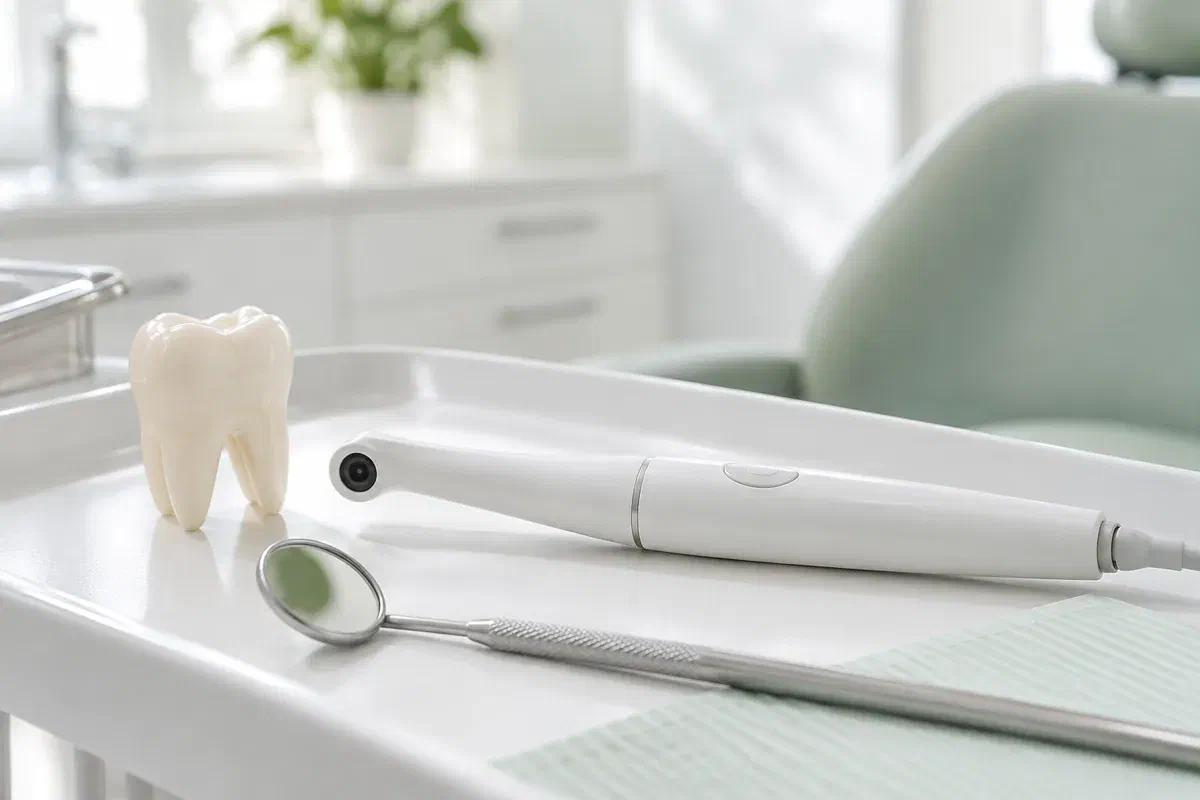
Illustrative pen-shaped intraoral camera beside a tooth model and dental mirror
Moments a photo can clarify

Start with the spot you are curious about

A photograph earns its place when it answers something specific. Tell the dentist which area is on your mind, then ask how the picture fits with everything else found during the visit.

An edge that feels rough to your tongue

A close-up may show where enamel has chipped or a biting surface has flattened. It cannot tell, on its own, how far the damage reaches or what caused it. Mention any twinges with cold, changes in how your teeth meet, or an old knock to the mouth so the image is read in context.

The margin of an older filling

Seeing where a filling meets the tooth can make a conversation about trapped food or a visible gap easier. A shadow or uneven line still has to be interpreted by the dentist. Ask what else would be checked before anyone concludes the filling needs to come out.

A place your toothbrush keeps missing

Some gumline areas and tight spaces are simply out of view at home. A photo can show where plaque tends to sit, but it only helps if it is paired with a clear, hands-on cleaning tip you can repeat at your own sink.

Camera photographs, dental X-rays and three-dimensional digital scans are separate records. Each one answers its own kind of question, and one cannot simply stand in for another.

Why the picture can help

Looking together tends to sharpen the questions

With a photo on screen, the dentist can point straight at the feature being described while explaining why it matters. That is especially handy for teeth tucked at the back or surfaces that face the tongue. You do not need to decode every reflection or shade of colour; ask which part of the image is the one to focus on.

Where appropriate, photographs can be kept as part of your dental record. Looking at an earlier image beside a newer one may support a review, although changes in lighting and angle can make two shots of the same tooth look different. Any comparison belongs alongside the exam and your history rather than being treated as proof of change on its own.

Patient information: Carestream Dental — intraoral camera image capture and review

Knowing exactly where the issue is

Ask which tooth and which surface the photo shows. Once you know the location, it becomes easier to describe symptoms later and to aim your brush or floss correctly. An enlarged view can look strange until the dentist explains which way is up and how big the area really is.

Talking through choices with something concrete

The image gives you a reference when asking what a suggested treatment would fix and which findings support it. Other approaches may still be available. A photograph is one part of the explanation and should not cut short a conversation about benefits, limits and alternatives.

A reference point for a later check

When an area is being watched, ask what will be compared at the next visit. Photos may be useful together with measurements, symptoms and other records. A good monitoring plan also spells out which changes would mean calling sooner.

How the visit usually unfolds

From your question to a picture you understand

The camera supports a clinical appointment rather than replacing any part of it. Let the team know about sore spots, a strong gag reflex or trouble opening wide so photos can be taken with your comfort in mind.

  1. Name the concern

    You and the dentist talk about what prompted the visit, and the area is examined. Ask what a photo could add here. Some dental questions cannot be settled by looking, and a camera is never a replacement for a proper assessment.

  2. Capture the close-up

    The slim camera is held near the tooth or gum surface that needs to be seen. The team may adjust the angle or dry the area for a clearer shot. Use your agreed hand signal if anything feels uncomfortable or you would like a break.

  3. Look at it together

    Ask the dentist to show you the relevant feature and to separate what is being observed from what is being diagnosed. A photo can show that something is visible without revealing how deep it goes, whether it is active or why it formed. The rest of the exam fills in that picture.

  4. Settle on what happens next

    The result might be advice, a plan to watch the area, further tests or a talk about treatment options. Confirm the reasoning and any follow-up timing. If images are stored or shared as part of your care, you can ask how they are kept in your record and what consent applies.

Once you have seen the photos

Leave with a plan you could explain to someone else

Having photographs taken does not usually call for any recovery care. What carries forward is the advice or treatment plan based on the whole assessment.

Put the finding into your own words

Before heading home, make sure you know what was seen, what it suggests and what remains unclear. Ask about any dental terms that did not land. A tooth can look far more dramatic when magnified many times, so the explanation matters as much as the image.

Act on the real issue

If the visit points to a hard-to-clean area, a damaged tooth or a gum concern, follow the instructions that fit that particular finding. Ask to be shown a technique if it helps. A photograph does not clean, repair or replace a planned treatment.

Keep the follow-up you agreed to

If the plan is to watch an area, confirm the next check and which symptoms should prompt an earlier call. A saved photo does not replace future exams, and fresh pain deserves attention even if a previous picture looked fine.

Photos, X-rays or scans

Matching the record to the question

Your dentist chooses tools based on what needs to be found out. Ask what each suggested image or record would add and how it shapes the recommendation.

Helpful when surface detail is the topic

Intraoral photographs

These close-ups can document features that are visible and reachable, and they make it easier to show where a concern sits. How useful they are depends on image quality and interpretation. They are a strong communication aid but cannot supply every part of a diagnosis.

Used when the question goes below the surface

Clinical tests and X-rays where indicated

Some symptoms or findings call for tests or radiographs that reveal information no photo can. Ask why they are being suggested. A sharp camera picture does not cancel the need for a separate investigation when that investigation is looking at something different.

Used when a restoration or appliance needs a model

Optical scans for shape and fit

A digital scanner can build a three-dimensional impression for suitable treatment steps. That job is quite different from snapping a close-up photo. Check which records your planned care actually needs and what can be arranged.

Common questions

What people ask after seeing their teeth on screen

Nobody expects you to read a dental photo on your own. Your dentist should link the image to the exam, be honest about uncertainty and answer questions about any suggested next step.

(905) 876-4488
Why does my tooth look so yellow or cracked on the screen when it looks fine in the mirror?
Magnification and the camera’s light can exaggerate natural colour variation and fine surface lines that are normally invisible. Many of these features are harmless. Ask the dentist which details are significant and which are simply what a healthy tooth looks like up close.
Does the camera need to touch my teeth?
The camera is held close to the surface being photographed and may rest lightly against the tooth or cheek to steady the shot. Let the team know about sensitive areas. You can ask for a pause at any time using the signal agreed at the start.
Can I ask for a copy of the photos from my visit?
You can ask the clinic how images in your record are handled and what is possible. Keep in mind that a photo is most meaningful with the dentist’s explanation beside it. If you want to remember a finding, writing down the tooth and the advice can help too.
Will a camera photo show whether an old filling is leaking underneath?
A standard camera only captures surfaces it can see, so it cannot look through a filling. Signs around the edge may prompt the dentist to use other examination methods or suitable imaging. Ask which question the photo answers and what else would be needed.
Is every routine checkup done with an intraoral camera?
Not necessarily. Photographs are used when they help explain or document something. If you would find a picture useful for a particular concern, mention it when booking or during the exam and ask what arrangements are available.
If I am unsure about a recommendation, can the image help me think it over?
It can clarify what is being discussed, but the decision should rest on the full assessment. Ask what the finding means, what the options are and what waiting might involve. Taking time is reasonable when the situation is not urgent.
Booking in Milton

Bring the question; we will help you see the answer.

Reach out to our Bronte Street practice and mention the tooth or area you want looked at. Ask whether close-up photos would help explain it and what appointment arrangements are available. We can walk through what the images show, where they fall short and what makes sense next for your care.

Photographs support a clinical assessment. The illustrative images on this page do not show equipment used at the clinic.

Visit Milton Dental Clinic
Unit 1, 342 Bronte St. S, Milton, ON L9T 5B7
Get directions Clinic hours
Monday–Thursday
11am–7pm
Friday–Sunday
By appointment only

Areas we serve

  • Milton
  • Oakville
  • Mississauga
  • Georgetown
  • Halton Hills
  • Acton
  • Campbellville
  • Brampton
  • Burlington
  • Puslinch
  • Rockwood
  • Erin
  • Caledon
  • Etobicoke
  • Old Milton
  • Bronte Meadows
  • Timberlea
  • Dorset Park
  • Dempsey
  • Clarke
  • Beaty
  • Coates
  • Harrison
  • Scott
  • Willmott
  • Ford
  • Bowes
  • Cobden
  • Walker
  • Mountain View
  • Milton Heights
  • Hawthorne Village
  • Valley View
  • Fallingbrook
  • Nassagaweya
  • Trafalgar
  • Esquesing
  • Nelson
  • Brookville
  • Moffat
  • Glen Williams
  • Norval
  • Limehouse
  • Stewarttown
  • Ashgrove
  • Hornby
  • Silver Creek
  • Speyside
  • Scotch Block
  • North Oakville
  • River Oaks
  • Glen Abbey
  • West Oak Trails
  • Palermo
  • Bronte Creek
  • College Park
  • Joshua Creek
  • Uptown Core
  • Preserve
  • Iroquois Ridge
  • Lisgar
  • Meadowvale
  • Meadowvale Village
  • Churchill Meadows
  • Erin Mills
  • Central Erin Mills
  • Streetsville
  • East Credit
  • Creditview
  • Heartland
  • Sheridan
  • Mount Pleasant
  • Credit Valley
  • Huttonville
  • Churchville
  • Springbrook
  • Northwest Brampton
  • Bram West
  • Fletcher's Meadow
  • Fletcher's Creek South
  • Alton Village
  • Orchard
  • Millcroft
  • Headon Forest
  • Tansley
  • Brant Hills
  • Tyandaga
  • Kilbride
  • Lowville
  • Aberfoyle
  • Morriston
  • Arkell
  • Hillsburgh
  • Freelton
  • Carlisle
  • Waterdown
  • Flamborough
  • Mountsberg

How can we help?

Milton Dental Clinic

Have a question about your smile? Choose the option that works best for you.

For urgent dental concerns, please call.
Messages are reviewed during clinic hours.