

Illustrative first dental consultation with a patient and clinician
General & Family Dentistry

New Patient Dental Examinations in Rockwood

Getting into the chair, hearing the explanation, and remembering it later all matter as much as the examination itself. From Rockwood, a first visit with us is planned around the support you need, then focused on clear findings.

Planned around your needs

Comfort and clarity come first.

For some people, the hardest parts of a dental visit happen before and after the examination. Moving from a wheelchair, hearing over equipment noise, following explanations in a second language, or remembering details afterward can all get in the way. If you’re arranging care from Rockwood, mentioning these needs early means the first examination can be planned around them.

You, or the person helping you, can describe what works and what doesn’t. Perhaps short breaks help, or written notes, or a family member who translates. There’s no need to know what the clinic can offer beforehand; ask, and the team will explain what can be arranged. It is also fine to say that a previous office didn’t get it right and describe what went wrong.

The examination itself sorts findings into what needs prompt care, what can be monitored, and what needs more information. When booking, confirm what the appointment includes, likely fees, and whether hygiene care will be scheduled separately.

Plan a first visit from Rockwood
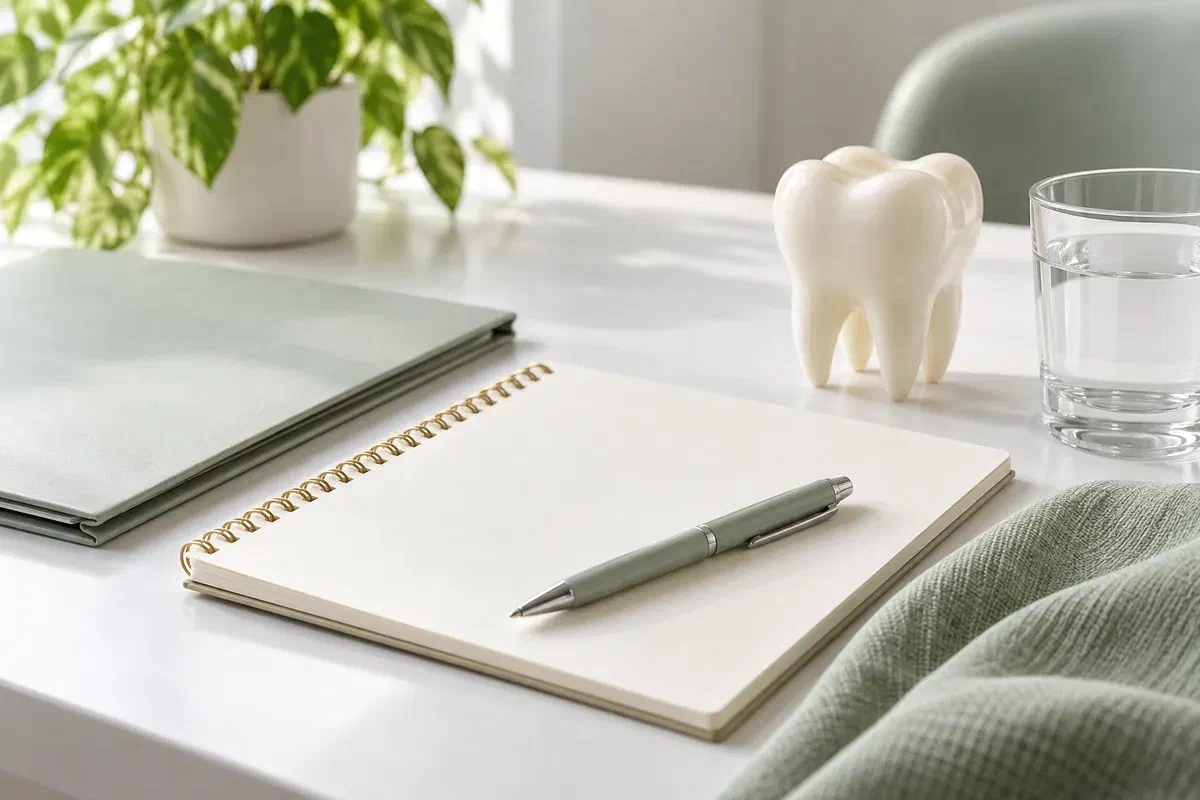
Notebook, folder, pen, water, and tooth model illustrating preparation for a first visit
Worth raising early

The right preparation starts with three details.

An introductory examination and a tooth causing pain call for different appointments. Say which applies, and describe any access, communication, or support needs so arrangements can be considered.

A symptom needing attention

If a tooth hurts, the gums are swollen, something has broken, or the bite has shifted, say so when you call. Explain when it began and whether it interferes with eating or sleep, so the team can weigh how quickly the visit should happen.

Records held by another office

Tell us where you, or the person you support, last had dental care. Earlier X-rays and notes can be requested with appropriate consent. The dentist decides whether that information is recent and adequate for the current question.

Access and communication

Describe mobility aids, difficulty with positioning, hearing or vision needs, or a preferred language. Ask which arrangements should be confirmed ahead of time. Planning these points early makes the visit easier for you and for anyone coming with you.

Bring a current medication list and health information, including allergies and recent changes. If a caregiver or pharmacist manages these details, ask them to confirm the list before the appointment.

What the visit gives you

Understanding your mouth, in a way that works for you

An examination links what you or your caregiver have noticed with what the dentist observes, and records a baseline for later. A comfortable tooth might still need care, and a visible change might be harmless. Each finding should be explained in a way you can follow, whether that means slower explanations, a picture, or a written summary.

Practical priorities shape the plan as well. You may want shorter appointments, fewer trips, or care focused on comfort and eating. Share time, support, and budget limits so the sequence of care is realistic for you and the people who help you.

Patient information: Canadian Dental Association — visiting your dentist

A clear account of oral health

The dentist assesses teeth, gums, crowns and fillings, and soft tissues as appropriate. Ask for findings to be explained at a pace that suits you, with the most important ones first.

Treatment options in context

For any recommendation, ask what it treats, the alternatives, and what waiting might mean. Also ask how each option would work with your mobility, communication, or support needs.

Continuity for the visits ahead

Notes about your needs and an agreed review plan help each later visit start on the right footing. Tell us about changes between appointments, including changes in your support arrangements.

During the appointment

Settle in, then examine, then explain.

What is covered depends on the reason for the visit and the time booked. Ask whether it is an examination alone, involves additional assessments, or is paired with hygiene care at another visit.

  1. Getting settled and talking first

    We start by making sure you’re as comfortable as possible and can hear and follow the conversation. Then we review your reason for coming, medicines, health, and past dental care. Tell us how you want any companion involved.

  2. Examining at a manageable pace

    The dentist checks teeth, gums, restorations, and soft tissues as appropriate, and may look at bite or jaw concerns. Positioning can be discussed. Agree on a signal for stopping, and use it whenever you need a break.

  3. Reviewing records and tests

    Earlier records are reviewed when available. Imaging or other tests may be recommended to answer a clinical question. Ask what each would add, and mention if a particular test would be difficult so alternatives can be discussed.

  4. Explaining findings clearly

    The dentist describes what was found, any uncertainty, and next steps. Ask for key points in writing if that helps. Confirm which visits are recommended, what each is for, and which changes should prompt a call.

When you get home

Share the plan with whoever helps you.

An examination alone usually needs no recovery care. If treatment was also given, follow those instructions and confirm how it fits into the wider plan.

Go over the notes together

Review findings and priorities with a family member or caregiver while the visit is recent. Call with any questions. Written notes make it easier for everyone involved to understand the plan and their part in it.

Arrange follow-up that suits your needs

Book recommended treatment, hygiene care, or a review, and mention any support arrangements needed again. If timing or cost is difficult, raise it so the effect of waiting can be explained. Improvement in symptoms doesn’t always mean care is finished.

Update us when things change

New medicines, a change in health, a new mobility aid, or care received elsewhere are all worth passing on. Mention any new pain, swelling, or trouble eating. The first examination is a starting point, not a final word.

Looking ahead

Care paths that account for your support needs

A first visit may lead to prevention, focused treatment, or more investigation. The next step should have a clear purpose and take account of clinical need, practical needs, and your informed wishes.

When the focus is keeping things stable

Prevention and daily care

Hygiene visits, cleaning advice adapted to your abilities, and a review interval may be suggested. Ask whether adapted brushes or caregiver tips would help, and whether any area needs monitoring.

When a problem needs care

Treatment that fits

A tooth, a gum condition, or a restoration may need treatment. Ask about options, visits, costs, recovery, and how each would suit your mobility and support. Items can be prioritized, and the dentist can explain what can reasonably wait.

When more information or coordination is needed

Further input

Some concerns need further tests, coordination with your physician, or a specialist opinion. Ask what is being clarified, who will arrange it, and how symptoms should be handled meanwhile.

Access and support

Questions about getting the help you need

Clear expectations make a first appointment easier. Describe your needs and ask which arrangements can be made for the visit being booked.

(905) 876-4488
Can I bring an interpreter or a family member to translate?
Yes, mention it when booking. A trusted person who can translate may help you follow the discussion and ask questions. The dentist will still speak with you directly, and you can ask for important points to be repeated or written down.
What should I mention if I use a wheelchair or walker?
Describe your mobility aid and whether transferring into the dental chair is possible for you. The team can explain what arrangements are available and what should be confirmed before the day. If the examination may need to take place partly in your own chair, ask whether that is possible for the parts being planned.
Can explanations be put in writing after the appointment?
You can ask for a written summary of the findings, priorities, and next steps. Many people find it easier to review at home or with a caregiver. Let the team know at booking if you’ll need this.
Can a caregiver book an appointment for the person they support?
Yes. Share the person’s needs, medications, and any concerns, and explain who makes or helps with decisions. Bring relevant documents about consent if you act as a substitute decision-maker.
What if lying back in the dental chair is difficult for me?
Mention it beforehand. The dentist can discuss positioning options and plan short breaks. Tell the team about conditions that affect breathing, balance, or comfort when reclined, such as back pain or reflux, so they can be taken into account from the start.
Should I mention the trip from Rockwood when booking?
It can help. If travel takes planning or relies on someone else driving, the team can consider that when suggesting times and grouping follow-up visits where clinically appropriate.
Rockwood new patient examinations

Tell us what helps. We’ll plan from there.

Contact our Bronte Street practice to describe your needs and arrange an examination. Ask what the visit includes, likely fees, and what to bring. We’ll start with your concerns and explain the findings in a way that works for you.

Mention urgent symptoms and any support you’ll need on the day when booking, so arrangements can be discussed in advance.

Visit Milton Dental Clinic
Unit 1, 342 Bronte St. S, Milton, ON L9T 5B7
Get directions Clinic hours
Monday–Thursday
11am–7pm
Friday–Sunday
By appointment only

Areas we serve

  • Milton
  • Oakville
  • Mississauga
  • Georgetown
  • Halton Hills
  • Acton
  • Campbellville
  • Brampton
  • Burlington
  • Puslinch
  • Rockwood
  • Erin
  • Caledon
  • Etobicoke
  • Old Milton
  • Bronte Meadows
  • Timberlea
  • Dorset Park
  • Dempsey
  • Clarke
  • Beaty
  • Coates
  • Harrison
  • Scott
  • Willmott
  • Ford
  • Bowes
  • Cobden
  • Walker
  • Mountain View
  • Milton Heights
  • Hawthorne Village
  • Valley View
  • Fallingbrook
  • Nassagaweya
  • Trafalgar
  • Esquesing
  • Nelson
  • Brookville
  • Moffat
  • Glen Williams
  • Norval
  • Limehouse
  • Stewarttown
  • Ashgrove
  • Hornby
  • Silver Creek
  • Speyside
  • Scotch Block
  • North Oakville
  • River Oaks
  • Glen Abbey
  • West Oak Trails
  • Palermo
  • Bronte Creek
  • College Park
  • Joshua Creek
  • Uptown Core
  • Preserve
  • Iroquois Ridge
  • Lisgar
  • Meadowvale
  • Meadowvale Village
  • Churchill Meadows
  • Erin Mills
  • Central Erin Mills
  • Streetsville
  • East Credit
  • Creditview
  • Heartland
  • Sheridan
  • Mount Pleasant
  • Credit Valley
  • Huttonville
  • Churchville
  • Springbrook
  • Northwest Brampton
  • Bram West
  • Fletcher's Meadow
  • Fletcher's Creek South
  • Alton Village
  • Orchard
  • Millcroft
  • Headon Forest
  • Tansley
  • Brant Hills
  • Tyandaga
  • Kilbride
  • Lowville
  • Aberfoyle
  • Morriston
  • Arkell
  • Hillsburgh
  • Freelton
  • Carlisle
  • Waterdown
  • Flamborough
  • Mountsberg

How can we help?

Milton Dental Clinic

Have a question about your smile? Choose the option that works best for you.

For urgent dental concerns, please call.
Messages are reviewed during clinic hours.