

Illustrative consultation before an oral tissue examination
General & Family Dentistry

Oral Cancer Screening in Georgetown

A canker sore that heals in a week is one thing. A sore that keeps returning to the same place is another. An oral tissue exam helps tell them apart and decides on review, tests, or referral.

Recurring sores · Georgetown

Same spot, again?

Most people get the odd mouth ulcer. It stings for a few days, fades and is forgotten. The pattern worth noticing is different: a sore that never fully closes, or one that heals and then reappears in exactly the same place month after month. That kind of history is a good reason to have the area examined.

Booking for a known sore is not quite the same as asking for a general screen. A screen looks for problems no one has spotted. A recurring sore is a symptom with a story, so share that story when you call. Its position, how often it returns and whether it looks a little different each time are useful clues, whether or not it hurts.

From Georgetown, north of Milton, you can come in to talk about your lips, tongue, cheeks, gums or neck. The dentist explains what the examination shows and what should come next. A reassuring answer helps. Even so, no check excludes every cancer, and a sore that keeps coming back after the visit should be looked at again.

Have a recurring sore examined
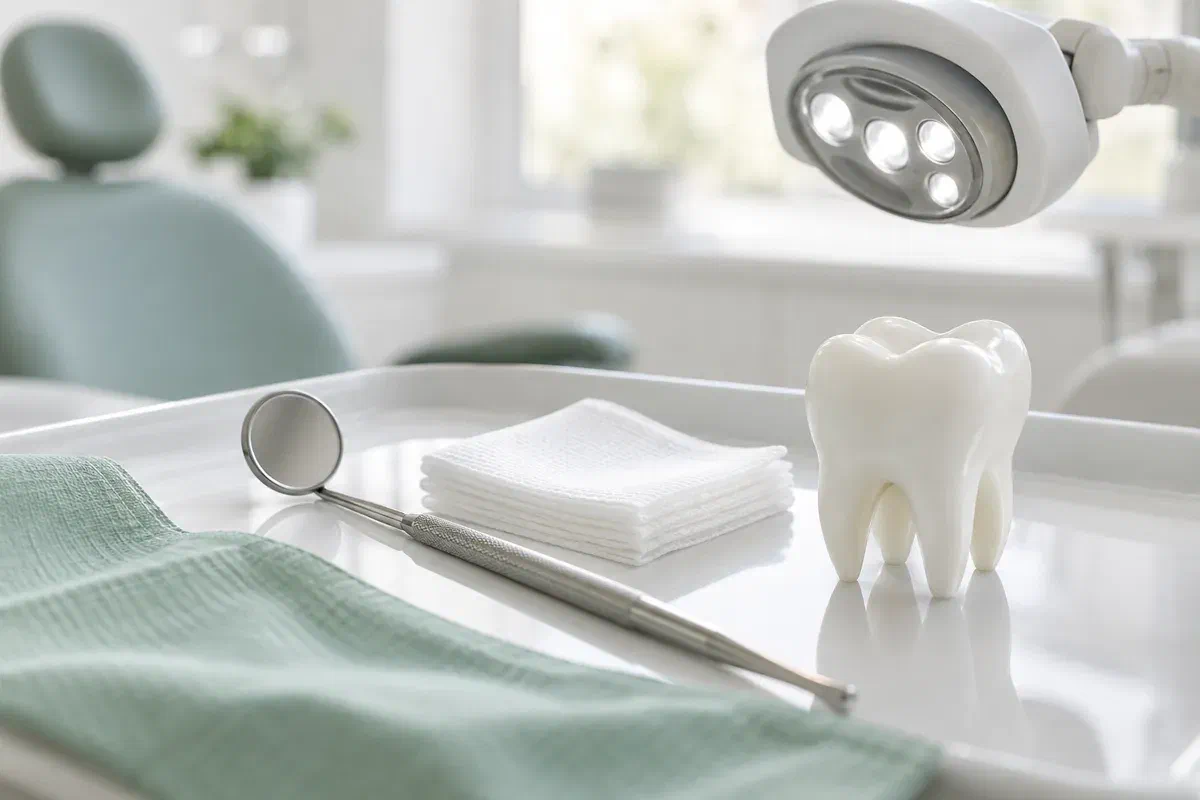
Dental mirror, gauze, examination light, and tooth model illustrating an oral examination
Patterns that matter

Watch for what does not heal, or keeps coming back.

Dental or not, the change is worth raising. A problem that has stayed past roughly two weeks needs assessment, and one that looks concerning or is moving fast should be seen sooner.

An ulcer, patch, or firm spot that lingers

A sore that outlasts a normal canker sore, any red or white patch, or tissue that feels hardened is worth a professional look. Mention bleeding, spreading or repeated return to one place. Feeling fine is not proof it is fine.

A bump, a numb patch, or a denture that rocks

Tell us about a lump in the mouth or the side of the neck, a patch of numbness that persists, or a denture that has started to move. A range of conditions can cause these, and an exam, with tests when appropriate, is how they are sorted.

New effort when you eat or speak

If chewing, swallowing, talking or tongue movement has become more effortful, describe it. A voice that stays hoarse or throat discomfort may need a doctor to examine areas past the dentist’s view. Ask us who is best placed to look.

Waiting out two weeks is not required. For a change that worries you, gets worse or has no explanation, contact a dentist or doctor sooner, and use emergency care if breathing or swallowing becomes hard.

What the visit can sort out

Recurring or not, a pattern deserves an explanation.

With a sore that returns, the history is half the assessment. The dentist can map exactly where it appears, compare it with any earlier records, ask about triggers and consider whether investigation is needed. A sharp cusp or habit of cheek-biting may turn out to be the culprit. If no local cause fits, a specialist opinion may be the right move. You should come away knowing what is understood and what is not.

Screening has boundaries. It does not stop cancer from forming and cannot confirm its absence. It is a way of noticing abnormal tissue and getting it followed up quickly. So if the same sore shows up again after a reassuring appointment, book another look instead of relying on the earlier result.

A record of each episode

Note the dates the sore appeared and disappeared, how big it got and anything that seemed to set it off. Earlier mouth lesions or relevant treatment belong in the conversation. A pattern over months is often more revealing than one visit.

Clarity on whether a cause was found

Ask the dentist whether a local cause has been identified or whether further information is needed. Spotting a sore is different from knowing what it is. An open explanation keeps you from assuming either the best or the worst.

A plan for next time it appears

Agree on what to do if it returns, who to contact and when a recheck is due. If a referral is made, ask how to chase it if you hear nothing. A recurring problem should not reset to zero at every visit.

How the exam runs

We trace the history before we look.

Show the dentist the spot, or describe where it usually appears, right at the start. If an area is sore or your jaw is tight, say so, and the exam can be explained and paced to suit.

  1. Mapping when and where it happens

    Expect questions about each episode, how long it lasts and what accompanies it, as well as tobacco, alcohol, earlier lesions and medical history. That background steers the exam. A clean history never turns a recurring sore into something to ignore.

  2. Examining the site and its neighbours

    The dentist checks the lips, cheeks, gums, the top and underside of the tongue and nearby structures by sight and gentle touch as appropriate. Dentures may be removed. Say if anything is tender.

  3. Judging whether to investigate

    When an area looks suspicious, prompt biopsy or specialist referral should follow instead of more routine checks. A biopsy examines a small piece of tissue to help pin down a diagnosis. The site and situation decide who performs it.

  4. Leaving with a plan for recurrence

    Know the next step and who arranges it before you go. If a short recheck suits a lower-concern finding, confirm the date and what changes justify an earlier call. A sore that persists or progresses needs reassessment.

If it comes back

Report the return, do not just wait it out.

Nothing usually needs to heal after the examination itself. The real work afterward is keeping any recheck or investigation and telling us about changes, rather than treating watchful waiting as the conclusion.

Log each flare-up

Jot down the date, the size and whether it is affecting eating or speech. Leave the area alone rather than prodding it. A photo can help describe what you saw but cannot replace examination or establish a diagnosis.

Keep the recheck even if it has healed

Come to the review or specialist appointment even when the sore has faded for now. If it changes beforehand, call for advice. Ask how results will be shared, and treat an unexplained silence as a reason to phone.

Consider tobacco and alcohol habits

If you use tobacco or drink regularly, ask us about information and help to cut down. That can be part of everyday care. Changing habits is worthwhile, yet a sore already present still needs to be properly investigated.

After the assessment

Routine care, a dated recheck, or a specialist.

The recommendation rests on what the dentist sees and what you report. Find out what each option is meant to establish, and confirm how you will know it has been completed.

No concerning finding

Return to regular visits

Carry on with routine checkups and report any new or lasting symptom, including a return of the same sore. A normal exam speaks for that visit. It is not permanent clearance.

A likely local trigger

Remove a cause, then recheck

The dentist may smooth a sharp edge or adjust an appliance and then check whether the tissue settles. That recheck needs a firm date and a plan if it does not. A sore that keeps returning should not be watched without end.

Appearance or pattern raises concern

Specialist opinion or biopsy

Further assessment may be needed to identify what a lesion is. Referral is not a cancer diagnosis. Ask which clinic you are being referred to, what records go with you and how results will be passed back.

Georgetown questions about mouth sores

Canker sores, cold sores, and the ones that linger.

The examination is the beginning of understanding a change. Ask about anything unclear and about the follow-up that will settle the question.

(905) 876-4488
How is an ordinary canker sore different from one that needs testing?
A typical canker sore is painful, heals within a week or two and does not keep returning to exactly one spot. A sore that lasts longer, keeps coming back in the same place or looks unusual should be examined.
Is a cold sore on my lip the same kind of concern?
Cold sores are common and usually heal on their own. A lip sore that does not heal fully, crusts repeatedly in one place or looks different from your usual cold sores is worth having checked.
How many times can a sore come back before I should have it looked at?
There is no fixed number. If a sore returns to one spot more than once, or one episode lasts beyond about two weeks, book an examination. The pattern itself is useful information for the dentist.
Should I put anything on a sore before the appointment?
A pharmacist or the dentist can suggest simple comfort measures, and it helps to tell us what you have already tried. Avoid relying on home treatments to judge whether something is healing, and do not delay the visit because a remedy seems to help.
Does the exam include under the tongue and the floor of the mouth?
Yes. The dentist looks at the top, sides and underside of the tongue and the floor of the mouth, along with the cheeks, gums, palate and lips, and may feel the neck as appropriate.
If my sore turns out to be from a sharp tooth, can it still be something else?
It can be either. Removing the sharp edge and seeing whether the sore heals tests that explanation. If it does not heal as expected, the area should be reassessed and further investigation considered.
Visiting from Georgetown

Bring the pattern in, and we will look closely.

Call our Bronte Street practice to book a tissue examination or to talk about a sore that keeps returning. Tell us where it shows up, how often and anything else you have noticed. The dentist will assess it and walk you through whether a recheck, testing or referral is the sensible next step.

Is it worse this time? Say so when you call. Online requests are not monitored for emergencies, and a screening appointment cannot replace diagnostic follow-up when one is needed.

Visit Milton Dental Clinic
Unit 1, 342 Bronte St. S, Milton, ON L9T 5B7
Get directions Clinic hours
Monday–Thursday
11am–7pm
Friday–Sunday
By appointment only

Areas we serve

  • Milton
  • Oakville
  • Mississauga
  • Georgetown
  • Halton Hills
  • Acton
  • Campbellville
  • Brampton
  • Burlington
  • Puslinch
  • Rockwood
  • Erin
  • Caledon
  • Etobicoke
  • Old Milton
  • Bronte Meadows
  • Timberlea
  • Dorset Park
  • Dempsey
  • Clarke
  • Beaty
  • Coates
  • Harrison
  • Scott
  • Willmott
  • Ford
  • Bowes
  • Cobden
  • Walker
  • Mountain View
  • Milton Heights
  • Hawthorne Village
  • Valley View
  • Fallingbrook
  • Nassagaweya
  • Trafalgar
  • Esquesing
  • Nelson
  • Brookville
  • Moffat
  • Glen Williams
  • Norval
  • Limehouse
  • Stewarttown
  • Ashgrove
  • Hornby
  • Silver Creek
  • Speyside
  • Scotch Block
  • North Oakville
  • River Oaks
  • Glen Abbey
  • West Oak Trails
  • Palermo
  • Bronte Creek
  • College Park
  • Joshua Creek
  • Uptown Core
  • Preserve
  • Iroquois Ridge
  • Lisgar
  • Meadowvale
  • Meadowvale Village
  • Churchill Meadows
  • Erin Mills
  • Central Erin Mills
  • Streetsville
  • East Credit
  • Creditview
  • Heartland
  • Sheridan
  • Mount Pleasant
  • Credit Valley
  • Huttonville
  • Churchville
  • Springbrook
  • Northwest Brampton
  • Bram West
  • Fletcher's Meadow
  • Fletcher's Creek South
  • Alton Village
  • Orchard
  • Millcroft
  • Headon Forest
  • Tansley
  • Brant Hills
  • Tyandaga
  • Kilbride
  • Lowville
  • Aberfoyle
  • Morriston
  • Arkell
  • Hillsburgh
  • Freelton
  • Carlisle
  • Waterdown
  • Flamborough
  • Mountsberg

How can we help?

Milton Dental Clinic

Have a question about your smile? Choose the option that works best for you.

For urgent dental concerns, please call.
Messages are reviewed during clinic hours.