

Illustrative consultation before an oral tissue examination
General & Family Dentistry

Oral Cancer Screening in Halton Hills

Sometimes a partner or grown child spots the change first. An oral tissue examination gives a loved one’s sore, patch, or lump a careful look and a clear answer about review, tests, or referral.

Halton Hills · checks for someone you care about

You noticed it. Now help them book.

It might be your dad chewing only on one side lately, or your partner’s voice staying rough for weeks. People are often slow to mention changes in their own mouth, so a family member is sometimes the first to bring it up. Most such changes have everyday causes. A lasting one still deserves a professional look rather than a shrug at the dinner table.

When nothing has been noticed, a check is screening. When someone has a sore, patch or lump, it is a symptom that needs assessment, and the person booking should say so. Where it is, how long it has been present and whether it seems to be changing are what help the dentist most, more than whether it hurts.

For households across Halton Hills, a support person is welcome to come along and help share the history. The dentist will explain what is seen and what should follow. A good result is reassuring, yet no exam can exclude every cancer, and a symptom that keeps going after the visit still needs follow-up.

Book a tissue check for a family member
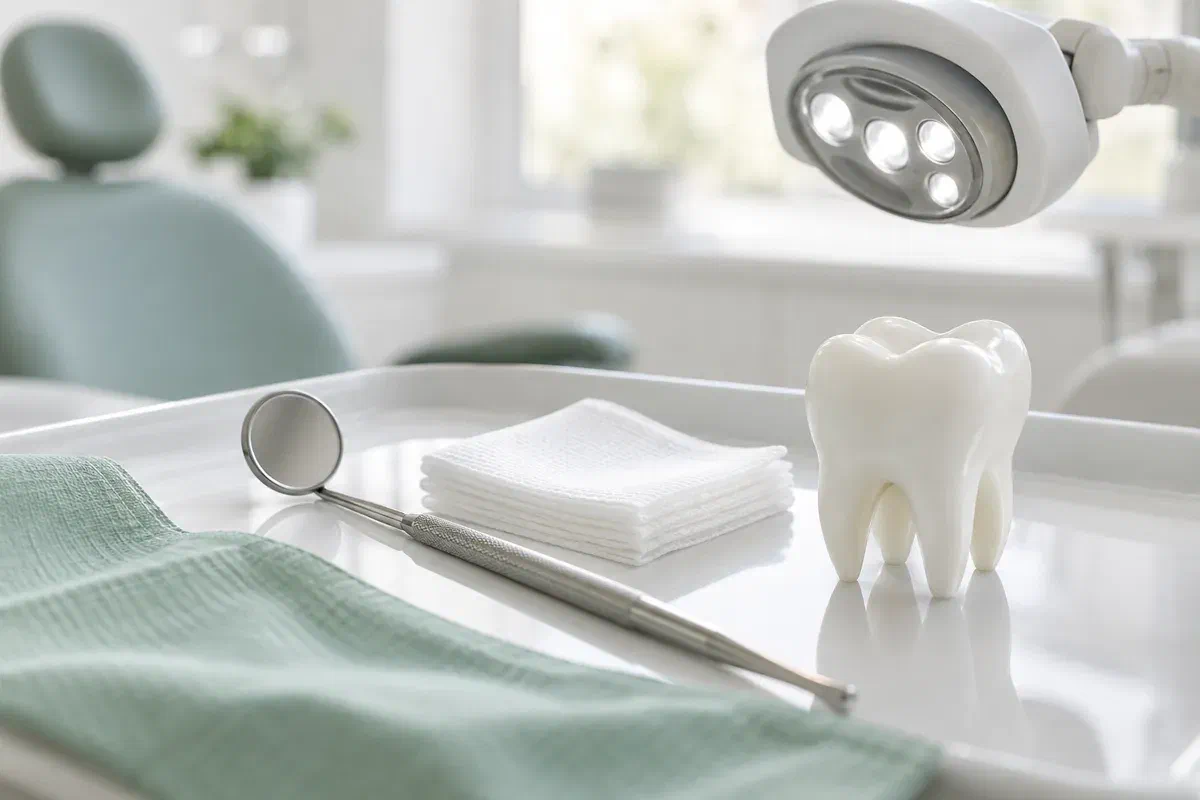
Dental mirror, gauze, examination light, and tooth model illustrating an oral examination
What family members often notice

Small clues at home can point to a mouth change.

Neither of you needs to know whether it is dental. If a change has carried on beyond about two weeks, it should be assessed, and if it looks alarming or is changing quickly, it may need to be seen before then.

A spot that keeps getting mentioned

A mouth ulcer that has not healed, a white or red patch, or an area that feels rough or thick is worth showing to a dentist. Note whether it bleeds, returns or is growing. If it does not hurt, that is no reason to leave it.

A swelling or a strange numb feeling

A lump felt in the cheek or along the neck, numbness that lingers, or a denture that suddenly sits badly are all worth reporting. These can have many causes, and an examination, sometimes with tests, is how the cause is found.

Eating or talking differently

Favouring one side, avoiding certain foods, slurred speech or trouble swallowing can all be clues. Persistent hoarseness or throat discomfort may need a doctor to examine areas beyond a dental view. We can help decide who should assess it.

Two weeks is a guide, not a waiting rule. A worrying, worsening or unexplained change should be seen sooner by a dentist or doctor, and breathing or swallowing difficulty needs emergency care.

How the visit helps

A shared understanding of what is going on.

An examination lets the dentist find and record the change, review the person’s history and decide what investigation, if any, is needed. A straightforward cause, such as a loose denture rubbing one spot, sometimes becomes clear. In other cases a specialist should take a look. Everyone involved should leave with a plain explanation and a plan that is honest about what is still uncertain.

Screening cannot prevent cancer, and it cannot prove that none is there. Its job is to help abnormal tissue be recognized and followed up in time. If the symptom continues after a reassuring visit, book again for a fresh look rather than relying on that one appointment.

Two memories are better than one

A family member may remember when the change started, whether it cleared and came back, or what makes it worse. Previous mouth lesions and relevant treatment also help. Together, those details give the dentist a better timeline.

An explanation everyone can follow

Ask whether a cause is clear or whether more information is needed. Seeing something is not the same as diagnosing it. Hearing the reasoning together makes it easier to support the next step calmly.

Someone keeping track

Agree who will be contacted, when the area will be rechecked and what to do if it changes first. With a referral, decide who will follow up if no appointment arrives. A concern should not get lost between offices or between relatives.

During the appointment

Here is what to expect when you come along.

Let the dentist know the exact concern before the exam begins. If the patient has a tender area, a stiff jaw or communication needs, mention that so each step can be explained and paced well.

  1. Hearing from the patient, and from you

    The dentist asks about the change, its duration and related symptoms, along with tobacco, alcohol, past lesions and medical care. A support person can help fill gaps. These details guide the exam, but no risk profile makes a symptom safe to ignore.

  2. A careful look and gentle feel

    The lips, cheeks, gums, tongue and nearby areas including the neck are examined by eye and light touch as appropriate. Dentures usually come out. Tell us if anything hurts and ask what is being checked.

  3. Deciding on further steps

    A suspicious area should lead promptly to biopsy or specialist referral, not to repeated screening. In a biopsy, a small tissue sample is examined to help reach a diagnosis. Who does it and where depends on the location and circumstances.

  4. Agreeing who does what next

    Before leaving, confirm the next step and who will arrange it. If a short recheck is recommended for a lower-concern finding, write down the date and which changes mean calling earlier. A lasting or progressing symptom needs reassessment.

Supporting them afterward

Help keep the follow-up on track.

There is usually no recovery after the examination itself. What matters is getting to any recommended review or investigation and reporting changes, rather than treating observation as the end of care.

Notice without nagging

Keep a simple note of when symptoms show up and whether the area seems to heal, grow or affect eating or speech. Discourage frequent poking at it. A photo may help describe it, but it cannot stand in for an exam or diagnosis.

Get to the appointments

Offer a ride or a reminder for rechecks and specialist visits, even if the area seems minor. If it changes beforehand, call for advice. Find out how results will be shared, and do not take silence to mean good news.

Talk about tobacco or alcohol, kindly

If tobacco or alcohol is part of the picture, the dentist can share information and support. That can be part of ongoing care. Cutting back helps, but it does not remove the need to investigate an existing unexplained lesion.

Understanding the result together

Each recommendation has a different purpose.

The path depends on what is found and the history you share. Ask what a recommendation is intended to settle, and agree who in the family will keep an eye on it.

No worrying finding

Usual dental visits, staying alert

Keep to the regular checkup schedule and report anything new or persistent. A normal result describes that day only. It is not a lasting guarantee, and a later change should bring them back.

An area to look at again

A planned recheck

The dentist may deal with a likely irritant, such as a rubbing denture, and check whether the tissue heals. That recheck needs a definite date and a plan if healing stalls. An area that persists should not simply be watched.

Findings that need investigation

Specialist assessment or biopsy

More assessment may be needed to learn what a lesion is. Referral is not a cancer diagnosis. Ask which clinic will see them, what information is being sent and how the appointment and results will be communicated.

Halton Hills family questions

When the concern is about someone else.

An examination is where understanding a change begins. If something is unclear, ask, and find out what follow-up will settle the question for everyone involved.

(905) 876-4488
Can I book an exam for my parent and come in with them?
Yes. Call with their details and the concern, and let us know you will be attending. With their permission, you can join the conversation and help remember the plan.
My partner keeps chewing on one side. Is that worth mentioning?
It can be. Chewing differently may relate to a sore tooth, a denture issue or a tender area in the mouth. If it has lasted more than a couple of weeks, an examination can help find out why.
What if the person I am worried about does not want to go?
Gently explain that most mouth changes have simple causes and that a check is the quickest way to know. Offering to book or attend with them often helps. If symptoms are severe, encourage urgent medical care.
Can someone with memory or communication difficulties have a tissue exam?
Usually, yes. A caregiver can help share history and keep them comfortable. Tell us about any needs when booking so we can allow time and explain each step in a way that suits them.
Is a sore throat that will not go away something to raise with a dentist?
You can mention it, but a persistent sore throat or hoarseness often needs a doctor’s assessment too, since parts of the throat are not fully visible in a dental exam. Do not let it go unchecked.
Does a referral always lead to a biopsy?
Not always. A specialist may examine the area, recommend further tests or advise a biopsy if needed. Referral means a closer look is warranted, not that a particular result is expected.
Booking from Halton Hills

Make the call together.

Contact our Bronte Street practice to arrange a tissue examination for yourself or a family member. Describe where the change is, about how long it has been noticed and any other symptoms. The dentist will check it carefully and tell you plainly whether a recheck, testing or referral is needed.

If the change is getting worse, mention it when you call. Online booking is not checked as an emergency line, and a screening appointment does not take the place of diagnostic follow-up.

Visit Milton Dental Clinic
Unit 1, 342 Bronte St. S, Milton, ON L9T 5B7
Get directions Clinic hours
Monday–Thursday
11am–7pm
Friday–Sunday
By appointment only

Areas we serve

  • Milton
  • Oakville
  • Mississauga
  • Georgetown
  • Halton Hills
  • Acton
  • Campbellville
  • Brampton
  • Burlington
  • Puslinch
  • Rockwood
  • Erin
  • Caledon
  • Etobicoke
  • Old Milton
  • Bronte Meadows
  • Timberlea
  • Dorset Park
  • Dempsey
  • Clarke
  • Beaty
  • Coates
  • Harrison
  • Scott
  • Willmott
  • Ford
  • Bowes
  • Cobden
  • Walker
  • Mountain View
  • Milton Heights
  • Hawthorne Village
  • Valley View
  • Fallingbrook
  • Nassagaweya
  • Trafalgar
  • Esquesing
  • Nelson
  • Brookville
  • Moffat
  • Glen Williams
  • Norval
  • Limehouse
  • Stewarttown
  • Ashgrove
  • Hornby
  • Silver Creek
  • Speyside
  • Scotch Block
  • North Oakville
  • River Oaks
  • Glen Abbey
  • West Oak Trails
  • Palermo
  • Bronte Creek
  • College Park
  • Joshua Creek
  • Uptown Core
  • Preserve
  • Iroquois Ridge
  • Lisgar
  • Meadowvale
  • Meadowvale Village
  • Churchill Meadows
  • Erin Mills
  • Central Erin Mills
  • Streetsville
  • East Credit
  • Creditview
  • Heartland
  • Sheridan
  • Mount Pleasant
  • Credit Valley
  • Huttonville
  • Churchville
  • Springbrook
  • Northwest Brampton
  • Bram West
  • Fletcher's Meadow
  • Fletcher's Creek South
  • Alton Village
  • Orchard
  • Millcroft
  • Headon Forest
  • Tansley
  • Brant Hills
  • Tyandaga
  • Kilbride
  • Lowville
  • Aberfoyle
  • Morriston
  • Arkell
  • Hillsburgh
  • Freelton
  • Carlisle
  • Waterdown
  • Flamborough
  • Mountsberg

How can we help?

Milton Dental Clinic

Have a question about your smile? Choose the option that works best for you.

For urgent dental concerns, please call.
Messages are reviewed during clinic hours.