

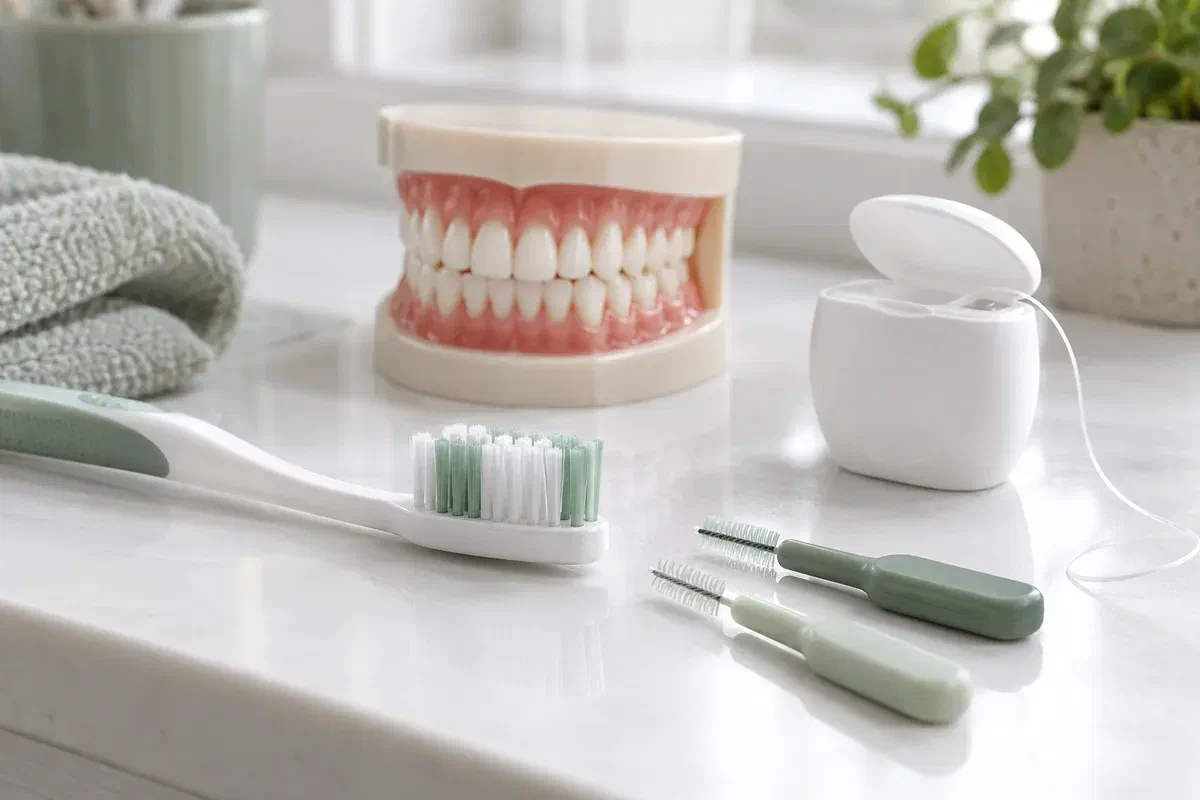
Illustrative brushing demonstration using a dental model
General & Family Dentistry

Oral Hygiene Instruction in Acton

Gagging at the back teeth, a toothpaste flavour you can't stand, floss that feels unbearable: these are real barriers. We adapt tools, timing and technique so cleaning feels tolerable and still reaches what it needs to.

When brushing sets off a gag

Back teeth, sensitive reflex

For some people, the moment the brush moves past the premolars, their throat tightens. Others can't bear a strong mint taste, or the feel of floss between their teeth makes them stop. These reactions are common and not a sign of weakness. They do mean that standard advice often goes unfollowed, and the back of the mouth is usually what gets left out.

If you're coming from Acton with this kind of difficulty, tell us plainly what sets it off. Bring your usual brush and aids. We'll watch how far you can comfortably reach, then try changes in brush size, angle, timing or toothpaste so the routine becomes something you can tolerate, all without any pressure or embarrassment.

This guidance fits into your regular dental and hygiene care and depends on what the examination finds. We'll demonstrate, let you try at your own speed and agree on a short plan. There's no need to push through discomfort in the chair or to change every product at once.

Talk to us about gagging or sensitivity
Soft toothbrush, interdental brushes, floss, and dental model for personal care instruction
Barriers we often hear about

What makes you stop partway through?

Describe exactly when cleaning becomes difficult: a gag, a taste, a texture, pain, catching or frustration. Knowing the trigger helps us tell whether a change of tool or technique will help or whether something needs further assessment.

Areas that are hard to reach comfortably

Back teeth, crowded spaces, a bridge or another restoration may require reaching further than feels tolerable. We'll find the area and look for a gentler route. Beneath a bridge, the method is usually different from cleaning between natural teeth.

Sore or bleeding gums

Point out where bleeding happens and whether the area is tender. Inflammation, a rough filling edge or a hurried, forceful stroke used to get it over with could be involved. Brushing harder or using a stronger rinse rarely resolves it.

Gag reflex, taste, texture and stamina

A sensitive gag reflex, strong reactions to flavour or texture, sore hands or fatigue all shape what is realistic. Tell us what you can manage. We can adjust tools, pacing and support rather than expecting you to tolerate a standard routine.

Bring your brush, toothpaste and any floss or picks. Seeing how far you get before it becomes difficult tells us where to start.

Why adjusting helps

Comfort first, so the cleaning actually happens

Daily plaque removal relies on reaching every relevant surface gently, including the ones at the very back. A toothbrush and an interdental aid have separate tasks. Once you know which areas each one must cover, we can look for the least uncomfortable way to do it, whether that means a smaller head, a different angle or a change in timing.

We'll ask you to try the approach in the chair, stopping whenever you need to, and to tell us honestly how it feels. If a step seems unlikely to happen at home, we'll rethink it right away. A tolerable routine you repeat each day does more than an ideal one you avoid.

Patient information: NIDCR — oral hygiene techniques and daily care

Understanding each step's purpose

Ask what a movement is meant to clean. Knowing why the back teeth matter makes it easier to keep going, and helps you notice when an aid isn't reaching. It also avoids buying products you won't use.

Aids that feel acceptable

Floss, interdental brushes, holders and other tools differ in size, texture and reach. Some may suit your sensitivities better than others. We'll show how to use each and when not to force one into a space.

Gradual progress, reviewed together

At a follow-up we can see whether plaque or gum inflammation has eased and whether cleaning has become more bearable. Let us know which changes helped. The plan can keep evolving.

Taking it at your pace

Small, comfortable steps

Knowing your triggers and current routine lets us tailor the advice. You can pause at any point, and nothing you tell us will be judged.

  1. Learn what triggers the difficulty

    We ask when gagging or discomfort starts, which tastes or textures bother you and which areas get skipped. Mention appliances, recent dental work and any help you receive. The examination shows whether instruction alone suits or other care is also needed.

  2. Demonstrate gentler options

    With a model, a mirror or your own mouth, we show smaller brush movements, different angles and ways to approach the back teeth. We'll focus on the area that's hardest for you.

  3. Try it with pauses

    You practise, stopping as often as needed, while we refine details. Tell us if a brush head feels too big, an aid catches or a step is unbearable. Swapping tools is better than forcing yourself through.

  4. Agree a tolerable plan

    We settle on a few changes, explain any product suggestions and write down useful details. Ask when progress should be reviewed and which symptoms mean you should contact us earlier.

Building tolerance at home

Go slowly, but don't skip the back.

Use the approach we worked out and come back if something isn't working. Extra pressure, extra products or a longer session won't necessarily help.

Start where it's easiest

Use fluoride toothpaste in a flavour you can tolerate and work through the surfaces we demonstrated in a set order. Some people find it easier to begin at the back while they're freshest. If brushing hurts or bristles flatten early, ask us to review your pressure.

Ease interdental aids in gently

Use the aid and technique chosen for each space. If one keeps catching, causes pain or triggers a gag every time, let us know. A different aid, a new angle or an examination of the tooth or restoration may be needed.

Adapt on tough days

When illness, nausea, fatigue or stress makes your reflex worse, ask how to scale things back without dropping the back teeth entirely. A helper might assist with agreed steps. An easier product doesn't automatically replace cleaning.

Patient information: NIDCR — cleaning between teeth and the role of professional care

Approaches for Acton households

What kind of adjustment do you need?

A technique change, a different tool or specific help with dental work may make the difference. The examination shows whether treatment is needed besides the advice.

When the method triggers discomfort

Gentler brushing and interdental technique

We can work on brush size, angle and the order you clean in, including reaching the gumline and gaps at the back. Ask us to show one area well before adding more. The goal is consistent practice, not a list of brands.

When dental work sits far back

Cleaning around restorations

A bridge or implant near the back of the mouth may call for a technique suited to its shape and position. Ask which aids are suitable and how to use them without snagging or damaging parts. Advice should reflect your actual restoration.

When reflexes, taste or texture get in the way

Sensory-friendly or assisted care

We may talk about a smaller head, a powered brush, a different aid, a milder toothpaste or help from someone at home. Bring them if you like. The plan should keep you involved and follow any medical or swallowing advice.

Acton questions about comfort

Gagging, flavours and textures

You can stop at any point during a demonstration. Tell us what's uncomfortable, and we'll look for another way.

(905) 876-4488
I gag when the brush reaches my back teeth. What can I do?
A smaller brush head, a different angle or a change in when and how you approach those teeth may help. We can try options with you during the visit. Tell us exactly where the gag starts so we can work around that point rather than pushing past it.
Is there fluoride toothpaste without a strong mint taste?
Fluoride toothpastes come in a range of flavours, including milder ones. Ask the team which options might suit you. Choosing a flavour you can tolerate can make it easier to brush thoroughly, especially at the back of the mouth.
Can I clean my back teeth at a different time from the rest?
Splitting the routine can work if all the relevant surfaces still get cleaned each day. Some people find a particular time easier for the back teeth. We can help you plan a sequence that suits your comfort without leaving areas out.
Is it all right to skip the back teeth when my gag reflex is bad?
Leaving them out regularly allows plaque to build up where it’s hardest to see. On difficult days, ask us for a shorter, gentler method rather than skipping. If gagging is stopping you from cleaning most days, let us know so we can rethink the approach.
The texture of floss bothers me. Are there alternatives?
Yes. Interdental brushes, floss holders and other aids feel different, and one may suit you better. Which option fits depends on the size of your spaces and any dental work. We can show a few during the visit so you can compare them.
Will a powered toothbrush make gagging better or worse?
It varies. Some people find the vibration or noise harder to tolerate, while others like a smaller head and less hand movement. It can be discussed as one option, and we can compare it with a manual brush for your comfort and mouth.
Visiting from Acton

No pressure. Just a routine you can tolerate.

Reach our Bronte Street practice to discuss gagging, taste or texture sensitivity, brushing or between-teeth cleaning. Tell us what sets off the difficulty. We'll assess the concern and suggest practical changes at a pace that suits you.

If you're dealing with pain, bleeding or a new change in your mouth, mention it when you book so it can be checked.

Visit Milton Dental Clinic
Unit 1, 342 Bronte St. S, Milton, ON L9T 5B7
Get directions Clinic hours
Monday–Thursday
11am–7pm
Friday–Sunday
By appointment only

Areas we serve

  • Milton
  • Oakville
  • Mississauga
  • Georgetown
  • Halton Hills
  • Acton
  • Campbellville
  • Brampton
  • Burlington
  • Puslinch
  • Rockwood
  • Erin
  • Caledon
  • Etobicoke
  • Old Milton
  • Bronte Meadows
  • Timberlea
  • Dorset Park
  • Dempsey
  • Clarke
  • Beaty
  • Coates
  • Harrison
  • Scott
  • Willmott
  • Ford
  • Bowes
  • Cobden
  • Walker
  • Mountain View
  • Milton Heights
  • Hawthorne Village
  • Valley View
  • Fallingbrook
  • Nassagaweya
  • Trafalgar
  • Esquesing
  • Nelson
  • Brookville
  • Moffat
  • Glen Williams
  • Norval
  • Limehouse
  • Stewarttown
  • Ashgrove
  • Hornby
  • Silver Creek
  • Speyside
  • Scotch Block
  • North Oakville
  • River Oaks
  • Glen Abbey
  • West Oak Trails
  • Palermo
  • Bronte Creek
  • College Park
  • Joshua Creek
  • Uptown Core
  • Preserve
  • Iroquois Ridge
  • Lisgar
  • Meadowvale
  • Meadowvale Village
  • Churchill Meadows
  • Erin Mills
  • Central Erin Mills
  • Streetsville
  • East Credit
  • Creditview
  • Heartland
  • Sheridan
  • Mount Pleasant
  • Credit Valley
  • Huttonville
  • Churchville
  • Springbrook
  • Northwest Brampton
  • Bram West
  • Fletcher's Meadow
  • Fletcher's Creek South
  • Alton Village
  • Orchard
  • Millcroft
  • Headon Forest
  • Tansley
  • Brant Hills
  • Tyandaga
  • Kilbride
  • Lowville
  • Aberfoyle
  • Morriston
  • Arkell
  • Hillsburgh
  • Freelton
  • Carlisle
  • Waterdown
  • Flamborough
  • Mountsberg

How can we help?

Milton Dental Clinic

Have a question about your smile? Choose the option that works best for you.

For urgent dental concerns, please call.
Messages are reviewed during clinic hours.