

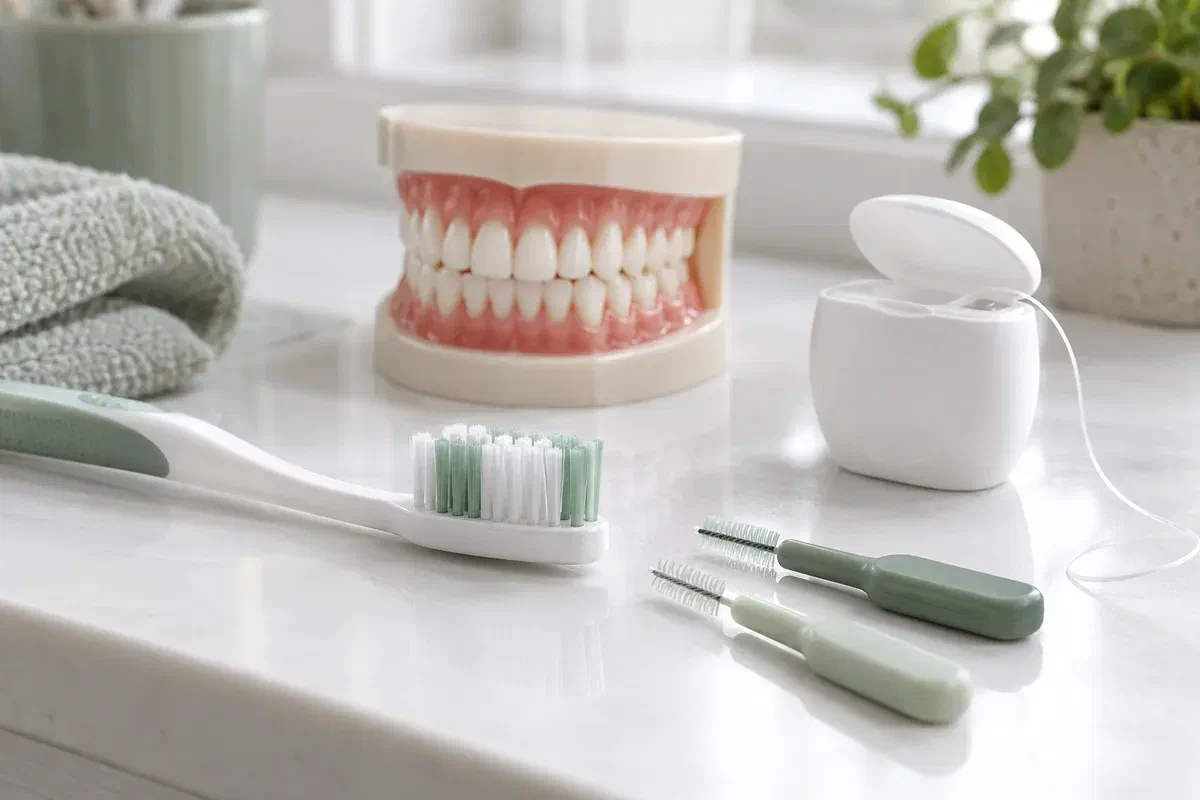
Illustrative brushing demonstration using a dental model
General & Family Dentistry

Oral Hygiene Instruction in Campbellville

That smooth, just-cleaned feeling after a hygiene visit fades faster than you'd like. Personal instruction shows you how to hold on to it longer, with brushing and between-teeth care suited to your mouth.

Between one cleaning and the next

Keep that fresh-from-the-hygienist feeling longer.

Run your tongue over your teeth on the drive home from a hygiene appointment and they feel glassy smooth. A few weeks on, the same rough patches return in the same places. Professional cleaning resets the mouth, but what happens at the sink every day decides how much builds up again before your next visit.

Rural households around Campbellville often like to group appointments and make each trip into town cover several needs. Adding instruction to a regular visit works well for that. Bring your toothbrush and any floss or picks, show us your routine, and point to the spots that roughen first. We'll explain what's being missed, kindly and plainly.

Instruction is part of your continuing dental and hygiene care and responds to what the examination shows. You'll see a method, try it, and go home with a brief plan. There's no expectation to buy new products or learn an elaborate sequence, and your current tools may already be up to the job.

Add instruction to your next visit
Soft toothbrush, interdental brushes, floss, and dental model for personal care instruction
Spots where buildup returns first

The same rough patch, every time

Tell us about anything that happens while you clean: soreness, snagging, gagging or impatience. A concrete example helps us judge whether it's a matter of technique or something that should be examined further.

A gap the brush doesn't reach

Crowded teeth or a restoration can create a pocket of space your usual aid skips. We'll show you which areas collect deposits and how to reach them. Under a bridge, the right approach is not the same as between two natural teeth.

Bleeding or puffy gums

Show us where the gums bleed or feel tender. Inflammation, a rough edge on dental work or excessive pressure are among the possibilities. Brushing harder or reaching for a stronger mouthwash seldom solves the problem on its own.

Physical or sensory hurdles

Sore hands after farm or yard work, limited reach, tiredness or a reaction to strong flavours can all make thorough cleaning harder. Tell us what feels manageable, and we'll think about tools, pacing and help.

Bring the toothbrush and aids you use at home. Watching you use them is quicker and more accurate than describing them.

Why it's worth adding to a visit

Make the time between cleanings work for you.

Every day, plaque has to be removed from the surfaces where it gathers, gently and effectively. A brush and an interdental aid share the work but cover different areas. When you understand that split, you can choose methods that suit your spaces and dental work, and the areas that tend to roughen first get proper attention.

We'll check that the advice makes sense by having you practise or talk it through. Say so if a step sounds unlikely to happen on a busy evening at home, and we'll simplify it. A brief routine done consistently is worth more than a thorough plan that lasts only a fortnight.

Patient information: NIDCR — oral hygiene techniques and daily care

A clear job for each step

Ask what a technique is meant to reach. Knowing its purpose helps you remember it and spot when an aid isn't doing its job. It also stops you from adding products without a reason.

The right size for every gap

Floss, interdental brushes, holders and other aids suit different spaces, and dental work can change what fits. We'll explain how to use each and when it shouldn't be pushed through a tight space.

Visible change at your next appointment

Your next hygiene visit can show whether deposits, inflamed gums or the practical difficulty have improved. Tell us what you kept up and what slipped, and the plan can be adjusted.

How the instruction fits into a visit

Observe, show, practise, plan

We'll be most helpful once we know what you really do at home. Please be candid; this is about better care, not about grading your habits.

  1. Hear about your routine

    We ask how often and how you brush, which aids you use and where cleaning gets tricky. Mention any discomfort, appliances, recent treatment or help from family. What the examination shows tells us whether instruction is enough or treatment is needed too.

  2. Point out the missed areas

    We show you where deposits tend to build in your mouth, then demonstrate brush placement and the approach to those spaces. We'll concentrate on the areas that matter most for you.

  3. Practise under guidance

    You try the movement while we watch and adjust small details. Tell us if an aid snags, a handle is awkward or anything hurts. A different tool may be the better choice.

  4. Set priorities for the months ahead

    We agree on a few realistic changes and explain any product suggestions. Ask when progress will be reviewed, often at your next hygiene visit, and which symptoms mean calling sooner. Notes help with sizes and routes.

Holding the gains

Daily habits shape what your hygienist finds next time.

Follow the method we planned and ask questions whenever they arise. Using more force, more products or more time isn't automatically more effective.

Give the rough-patch areas extra care

Brush with fluoride toothpaste, following a set order and paying attention to the surfaces we demonstrated. If brushing hurts or bristles splay quickly, ask us to check how firmly you're pressing.

Clean between teeth without forcing

Use the aid and method chosen for each space; not every gap takes the same size. If a tool catches repeatedly or causes pain, tell us. Technique, fit or a problem with the tooth or restoration could be the reason.

Keep going through busy seasons

When illness, fatigue or a demanding stretch of work makes cleaning harder, ask how to pare it back without losing the essentials. Another person in the household might handle the steps you've agreed on. A more convenient product doesn't automatically replace cleaning.

Patient information: NIDCR — cleaning between teeth and the role of professional care

Help for Campbellville homes

Pick a starting point.

A small change in method, a different aid or focused help with dental work may be what's needed. The examination shows when treatment is needed in addition.

When deposits keep returning in the same spots

Brushing and between-teeth refinement

We can refine brush angle, cleaning order and how you reach the gumline and spaces between teeth. Ask to work on one area thoroughly before adding more. Dependable daily practice matters more than product names.

When restorations make spaces harder to reach

Cleaning around dental work

Bridges, implants and other work may need methods matched to their design. Ask which aids suit yours and how to use them without snagging. Advice should be based on your own restoration.

When comfort or ability is a factor

Adapted or assisted cleaning

We may discuss a different handle, a powered brush, another aid or help from someone at home. They're welcome to come along. You stay involved, and any medical or swallowing advice is followed.

Questions from around Campbellville

Staying on top of buildup between visits

Ask as many questions as you need during the demonstration. If something feels awkward, say so and we'll try another way.

(905) 876-4488
Can several people in our household have instruction on the same trip?
Mention it when booking. If you’re grouping appointments for a household, the team can look at scheduling so everyone gets time for a demonstration and practice. Let us know who’s coming and what each person would like help with.
How can I keep my teeth feeling as clean as they do right after a hygiene appointment?
Consistent daily brushing and interdental cleaning aimed at the areas where buildup returns is the main factor. We can show you where those areas are in your mouth and how to reach them. Professional cleaning will still be needed for hardened deposits.
Why does tartar keep coming back between my cleanings?
Plaque that isn’t removed can harden into tartar over time, which then needs professional removal. Better home care helps control daily plaque, but it can’t remove tartar once it forms. Ask which areas tend to build up so you can focus on them.
How often should I replace my toothbrush?
A common recommendation is to replace it every few months or sooner if the bristles become frayed. Bristles that splay very quickly can also be a sign of heavy pressure, so bring your brush along and we can take a look.
Do children need different instruction from adults?
Instruction can be adapted to a child’s age and abilities, and parents often play a part in helping. Ask the team about your child’s needs. The approach should suit their mouth and be realistic for your household routine.
Should I floss before or after I brush?
What matters most is that both brushing and cleaning between teeth are done thoroughly. Ask us for a sequence that suits your routine and the aids you use. The best order is often the one you’ll actually stick with.
From Campbellville to our practice

One visit, a few practical changes

Contact our Bronte Street practice to add oral hygiene instruction to a visit, or to ask about brushing, interdental cleaning or dental work. Tell us where buildup returns first. We'll assess it and give practical guidance for daily use.

Mention any pain, bleeding or new oral change when you book so it can be assessed at the same appointment.

Visit Milton Dental Clinic
Unit 1, 342 Bronte St. S, Milton, ON L9T 5B7
Get directions Clinic hours
Monday–Thursday
11am–7pm
Friday–Sunday
By appointment only

Areas we serve

  • Milton
  • Oakville
  • Mississauga
  • Georgetown
  • Halton Hills
  • Acton
  • Campbellville
  • Brampton
  • Burlington
  • Puslinch
  • Rockwood
  • Erin
  • Caledon
  • Etobicoke
  • Old Milton
  • Bronte Meadows
  • Timberlea
  • Dorset Park
  • Dempsey
  • Clarke
  • Beaty
  • Coates
  • Harrison
  • Scott
  • Willmott
  • Ford
  • Bowes
  • Cobden
  • Walker
  • Mountain View
  • Milton Heights
  • Hawthorne Village
  • Valley View
  • Fallingbrook
  • Nassagaweya
  • Trafalgar
  • Esquesing
  • Nelson
  • Brookville
  • Moffat
  • Glen Williams
  • Norval
  • Limehouse
  • Stewarttown
  • Ashgrove
  • Hornby
  • Silver Creek
  • Speyside
  • Scotch Block
  • North Oakville
  • River Oaks
  • Glen Abbey
  • West Oak Trails
  • Palermo
  • Bronte Creek
  • College Park
  • Joshua Creek
  • Uptown Core
  • Preserve
  • Iroquois Ridge
  • Lisgar
  • Meadowvale
  • Meadowvale Village
  • Churchill Meadows
  • Erin Mills
  • Central Erin Mills
  • Streetsville
  • East Credit
  • Creditview
  • Heartland
  • Sheridan
  • Mount Pleasant
  • Credit Valley
  • Huttonville
  • Churchville
  • Springbrook
  • Northwest Brampton
  • Bram West
  • Fletcher's Meadow
  • Fletcher's Creek South
  • Alton Village
  • Orchard
  • Millcroft
  • Headon Forest
  • Tansley
  • Brant Hills
  • Tyandaga
  • Kilbride
  • Lowville
  • Aberfoyle
  • Morriston
  • Arkell
  • Hillsburgh
  • Freelton
  • Carlisle
  • Waterdown
  • Flamborough
  • Mountsberg

How can we help?

Milton Dental Clinic

Have a question about your smile? Choose the option that works best for you.

For urgent dental concerns, please call.
Messages are reviewed during clinic hours.