

Illustrative brushing demonstration using a dental model
General & Family Dentistry

Oral Hygiene Instruction in Etobicoke

When the trip in takes planning, one well-prepared visit should cover a lot. We demonstrate brushing and between-teeth cleaning for your mouth and dental work, and leave you with notes you can follow at home.

Planning a visit from Etobicoke

Make the trip count.

A visit from Etobicoke takes a bit more planning than a quick errand across town, so it pays to arrive ready. Think about the one part of your routine that frustrates you most. It might be the space behind a crown, gums that bleed in one corner, or a pick that keeps snapping in the same gap.

Pack your usual toothbrush and every aid you use, and jot down where the trouble happens. With those in hand, we can watch your technique, find the barrier and adjust the method during a single appointment. Our tone is practical and friendly, and there is no scorecard for how you've been doing so far.

Instruction belongs to your overall dental and hygiene care and responds to what the examination shows. Plan on a demonstration, time to practise and a written summary. You won't be asked to replace every product or memorize a long sequence, which makes the plan easier to carry home and keep.

Plan an instruction visit
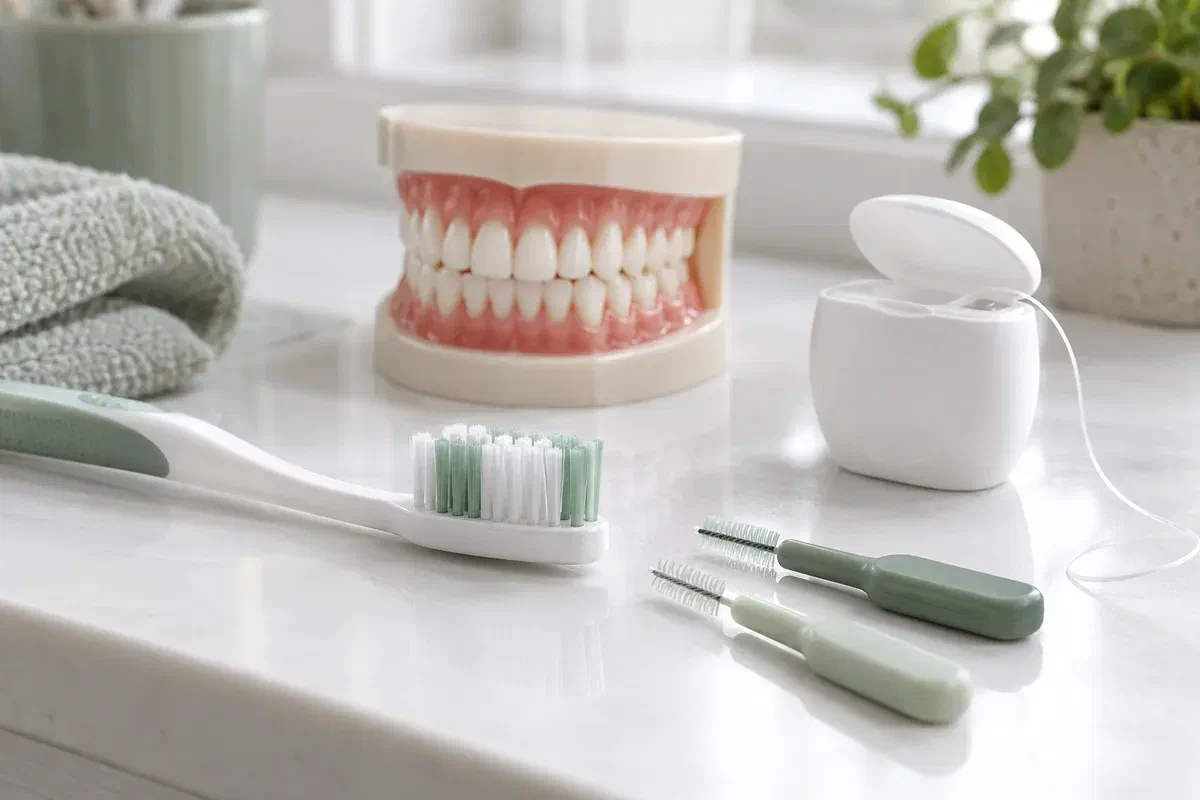
Soft toothbrush, interdental brushes, floss, and dental model for personal care instruction
Bring these to the appointment

Which problem should we tackle first?

Before you set out, note what happens when you clean: pain, catching, gagging or plain annoyance. A precise example helps us decide quickly whether we're looking at technique or something that needs further assessment.

One gap that defeats every tool

Crowding, a bridge or a restoration can reshape a space so floss shreds or a brush won't go in. We can pinpoint it and show you a way through. Cleaning beneath a bridge typically calls for a different method from cleaning between natural teeth.

Bleeding or tenderness in one area

Write down where it bleeds and whether it's sore to touch. Inflammation, a rough edge on dental work or a heavy-handed technique could each be involved. Brushing more forcefully or switching to a stronger rinse usually won't solve it.

Physical or sensory limits

Painful joints, reduced reach, fatigue or sensitivity to certain tastes can all make the routine harder. Tell us what you can do comfortably. We'll think about tools, pacing and assistance, rather than handing out a uniform set of rules.

Bring your brush, floss, picks and any other aids in a bag. Seeing your real tools in use saves time and is more reliable than trying to recall a past lesson.

What you'll take home

A plan clear enough to follow without us.

Day-to-day plaque control rests on reaching the right surfaces with a gentle, effective technique. Your toothbrush and interdental aids each do part of the work. Seeing that division clearly means you can select methods for your spaces and dental work and feel sure about them long after you've driven home.

Since follow-up visits take more planning for you, we put extra effort into checking the method is understood before you leave. Practise in the chair or explain it back. Flag any step that feels unworkable so it can be changed on the spot. A compact routine you keep is better than an ambitious one you drop.

Patient information: NIDCR — oral hygiene techniques and daily care

Purpose behind each movement

We explain what each step is designed to clean. That makes it easier to remember on your own and to notice when an aid isn't reaching. It also stops you from buying products without a reason.

Aids fitted to your spaces

Floss, interdental brushes, holders and other aids each suit particular gaps, and access around restorations matters. We show how to use each and the point at which you should stop rather than push it through.

Progress checked at your next visit

A review, often combined with routine care, can show whether your gums look calmer, deposits are lighter and the routine feels easier. Tell us what was easy to keep and what wasn't, and we'll revise the plan.

A single, well-organized appointment

Here's how we use the time.

Telling us exactly what you do now lets us move straight to what matters. Please be honest about habits and obstacles; we want effective care, not a critique.

  1. Go through your notes and tools

    We go over your brushing habits, your interdental tools and the trouble spots on your list. Mention discomfort, appliances, recent work and anyone who helps you. The examination findings show whether instruction alone suits or other treatment is also needed.

  2. Demonstrate the key technique

    Brush placement, movement and the approach to a particular space can be shown on a model, in a mirror or in your mouth. We'll concentrate on the area you flagged instead of a general tour.

  3. Practise and fine-tune

    You try it and we correct small details. Say if a handle feels awkward, an aid snags or a step hurts. Switching tools during the visit is easier than discovering at home that one doesn't fit.

  4. Leave with written steps and a plan

    We agree a few priorities, note any product suggestions and write down sizes or routes you'll need to remember. Ask when progress should be reviewed and which symptoms mean you should call before your next planned visit.

Between visits

Your notes, your brush, a steady pace

Use the method we planned together and call with questions rather than waiting. More force, more products or more time in front of the mirror won't necessarily help.

Follow your written sequence

Brush with fluoride toothpaste and give the surfaces we demonstrated your attention, in the order on your notes. That pattern protects against skipped areas when you're tired. If bristles splay quickly or brushing hurts, call and describe it.

Never force an interdental aid

Use the aid we chose for each space; gaps may need different sizes. If one repeatedly catches or causes pain, tell us. The cause could be technique, fit or something about the tooth or restoration that should be examined.

Adapt sensibly when life intervenes

If illness, fatigue or a change in ability makes things harder, ask how to adjust. A helper at home might take on agreed steps. A product that feels easier isn't automatically a replacement for the cleaning your mouth needs.

Patient information: NIDCR — cleaning between teeth and the role of professional care

Focus areas for Etobicoke visitors

Choose where to spend the appointment

You may need a small technique change, a different aid or detailed help with dental work. The examination shows whether treatment should be planned alongside the advice.

When your method is close but missing spots

Brushing and interdental refinement

We can work on angle, sequence and reaching the gumline and spaces between teeth. Ask for one area to be mastered first. Effective daily practice matters more than knowing which brand to buy.

When dental work dictates the method

Restorations and appliances

Bridges, implants and other work may need a technique suited to their design. Ask which tools fit yours and how to avoid snagging any part. The guidance should reflect your restoration, not a generic sketch.

When comfort or ability makes it harder

Adapted or supported cleaning

We may consider a wider grip, a powered brush, a different aid or help from someone you live with. Bring them if they'll assist. Your own participation comes first, along with any medical or swallowing advice you've had.

Questions before the drive

Getting the most from one appointment

If something isn't clear during the demonstration, ask then. Tell us what feels awkward so the advice can be reshaped before you leave.

(905) 876-4488
How can I get the most from one visit if coming back often isn't practical?
Arrive with your usual tools and a short list of the areas that trouble you. Mention when booking that you’re travelling from Etobicoke, so the visit can be planned with enough time to demonstrate, practise and write down the key steps you’ll follow at home.
Can my progress review happen at my next routine checkup?
Often, yes. Instruction can be part of your regular dental or hygiene care, so a review can sometimes be combined with a visit you’d already be making. Ask the team what makes sense for your situation.
Who should I contact if a technique feels wrong once I'm home?
Call the clinic and describe which movement, angle or tool is causing trouble. The team can advise whether it can wait for your next visit or whether a review should be booked sooner. Needing another look is a normal part of learning.
May I take notes or photos during the demonstration?
Notes are encouraged, and we can write down sizes, routes and steps for you. If you’d like photos of the tools or the model, ask the team at the visit. Anything that helps you remember the method later is worth discussing.
An area suddenly became painful. Should I keep cleaning it?
Don’t force an aid into a painful area. Contact the clinic to describe the pain. If there is swelling affecting swallowing or breathing, seek emergency medical care close to where you are. Sudden pain should be assessed, not managed by technique alone.
Food keeps getting stuck in one gap even though I clean it. Why?
A space that traps food may relate to the shape of the teeth, a restoration or a change in contact between teeth. Point it out at your visit so it can be examined. We can show a suitable cleaning method, and the exam will show whether anything else is needed.
Booking from the west end

One organized visit, a clearer routine

Contact our Bronte Street practice to plan an appointment covering brushing, between-teeth cleaning or care around dental work. Tell us what you'll bring and which area troubles you. We'll assess it and give you practical guidance, written down, for everyday use.

Raise any pain, bleeding or recent oral change at the time of booking, so it can be assessed during the same trip.

Visit Milton Dental Clinic
Unit 1, 342 Bronte St. S, Milton, ON L9T 5B7
Get directions Clinic hours
Monday–Thursday
11am–7pm
Friday–Sunday
By appointment only

Areas we serve

  • Milton
  • Oakville
  • Mississauga
  • Georgetown
  • Halton Hills
  • Acton
  • Campbellville
  • Brampton
  • Burlington
  • Puslinch
  • Rockwood
  • Erin
  • Caledon
  • Etobicoke
  • Old Milton
  • Bronte Meadows
  • Timberlea
  • Dorset Park
  • Dempsey
  • Clarke
  • Beaty
  • Coates
  • Harrison
  • Scott
  • Willmott
  • Ford
  • Bowes
  • Cobden
  • Walker
  • Mountain View
  • Milton Heights
  • Hawthorne Village
  • Valley View
  • Fallingbrook
  • Nassagaweya
  • Trafalgar
  • Esquesing
  • Nelson
  • Brookville
  • Moffat
  • Glen Williams
  • Norval
  • Limehouse
  • Stewarttown
  • Ashgrove
  • Hornby
  • Silver Creek
  • Speyside
  • Scotch Block
  • North Oakville
  • River Oaks
  • Glen Abbey
  • West Oak Trails
  • Palermo
  • Bronte Creek
  • College Park
  • Joshua Creek
  • Uptown Core
  • Preserve
  • Iroquois Ridge
  • Lisgar
  • Meadowvale
  • Meadowvale Village
  • Churchill Meadows
  • Erin Mills
  • Central Erin Mills
  • Streetsville
  • East Credit
  • Creditview
  • Heartland
  • Sheridan
  • Mount Pleasant
  • Credit Valley
  • Huttonville
  • Churchville
  • Springbrook
  • Northwest Brampton
  • Bram West
  • Fletcher's Meadow
  • Fletcher's Creek South
  • Alton Village
  • Orchard
  • Millcroft
  • Headon Forest
  • Tansley
  • Brant Hills
  • Tyandaga
  • Kilbride
  • Lowville
  • Aberfoyle
  • Morriston
  • Arkell
  • Hillsburgh
  • Freelton
  • Carlisle
  • Waterdown
  • Flamborough
  • Mountsberg

How can we help?

Milton Dental Clinic

Have a question about your smile? Choose the option that works best for you.

For urgent dental concerns, please call.
Messages are reviewed during clinic hours.