

Illustrative brushing demonstration using a dental model
General & Family Dentistry

Oral Hygiene Instruction in Mississauga

Most brushing happens half-awake or just before bed, often in a rush. Personal instruction helps you make those few minutes count, with a routine built around your teeth, your dental work and your week.

A routine for busy weekdays

Short on time? Your routine can still be thorough.

Picture the usual morning: phone in one hand, toothbrush in the other, one eye on the clock. In that kind of rush the same surfaces get skipped every day, and floss is the first thing to go. The problem is rarely motivation. It is that no one has shaped the routine around how little time you actually have.

For commuters heading out from Mississauga, we start by watching what you already do in those few minutes. Show us your brush and any aids, and tell us which part of the mouth you suspect is getting missed. Then we look for the changes that give the most benefit for the least extra effort, without scolding.

This is part of your ongoing dental and hygiene care, and it follows what the examination finds. Expect to see a technique, try it, and leave with a short plan you can realistically fit into a weekday. Nothing has to change all at once, and the tools you own may still be the right ones.

Book a quick routine check
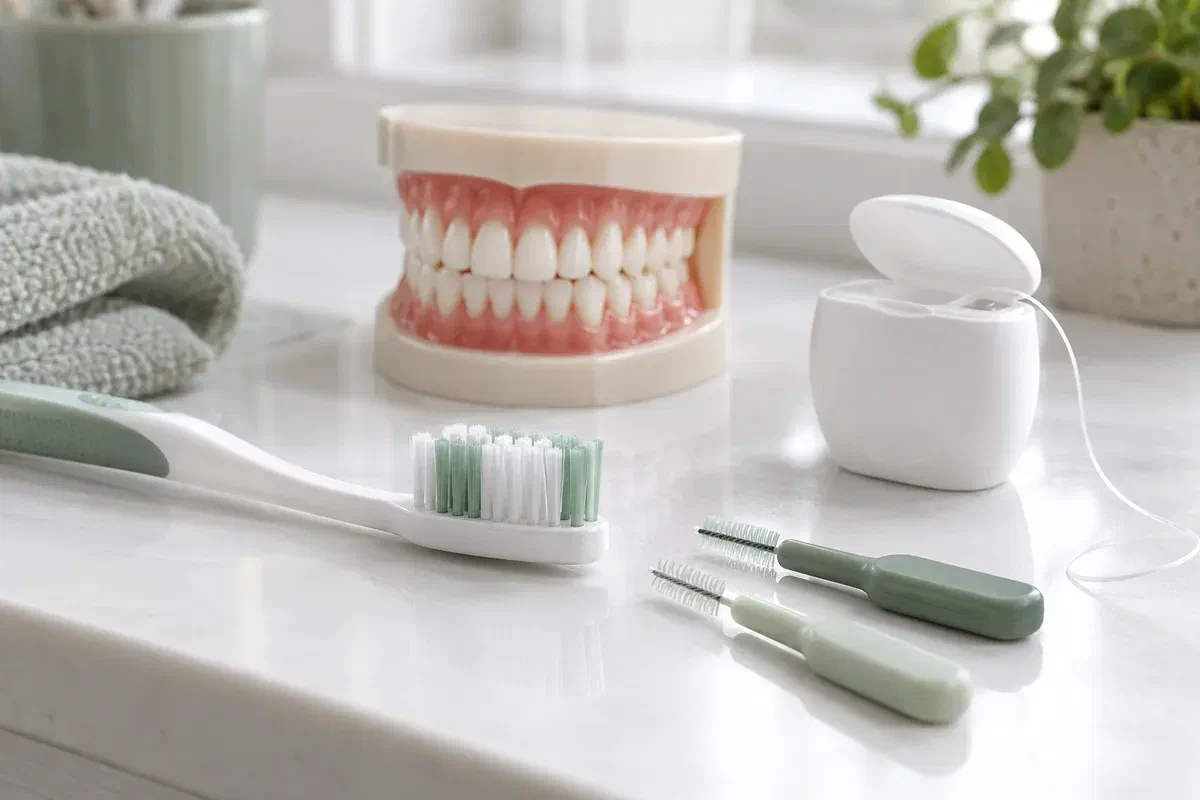
Soft toothbrush, interdental brushes, floss, and dental model for personal care instruction
Where rushed routines fall short

The spots a hurried brush usually skips

Tell us what goes on at the sink, including any discomfort, snagging, gagging or impatience. One real example is enough for us to judge whether it is a technique issue or something to investigate further.

Tight, crowded or restored spaces

Overlapping teeth, a bridge or a crown can make an area slow and fiddly to clean, so it gets left out. We can show the quickest effective route in. Under a bridge, that route is usually different from the one between natural teeth.

A sore or bleeding gumline

Let us know where bleeding shows and whether it is tender. Gum inflammation, a jagged spot on an old filling or a fast, heavy stroke can all play a part. More scrubbing or a stronger rinse is seldom the full answer.

Hands, fatigue or taste sensitivity

Achy wrists after a workday, a limited reach, low energy at night or trouble with a strong mint taste all count. Describe what you can manage, and we'll consider tools, timing and help rather than handing over a one-size routine.

Bring the brush and aids from your bathroom, even a travel kit. A few seconds of watching you use them shows us more than a description.

Why it's worth an appointment

Make every minute at the sink count.

Plaque is removed day by day by reaching the surfaces that need it, gently and efficiently. Your brush and your interdental aid have separate jobs, and once you know where each one belongs, you can stop doubling up in some places while missing others. That makes a short routine far more effective.

We want the plan to fit a real weekday, so we'll ask you to practise or explain it back. If a step sounds like something you'd skip on a late night, say it now and we'll find a simpler version. Two minutes done well and kept up beats a twenty-minute routine you abandon after the first week.

Patient information: NIDCR — oral hygiene techniques and daily care

No wasted movements

Ask what each step is meant to clean. Knowing the purpose helps the movement become automatic and lets you notice when an aid isn't reaching its target. It also means you won't spend time on products that add nothing for your mouth.

Tools that suit each gap

Floss, interdental brushes, holders and picks fit different spaces, and dental work can change which one reaches. We explain how to use each and when to stop rather than forcing it through a space that's too tight.

Check-ins that adjust the plan

A later visit can show whether plaque, inflamed gums or the practical problem has improved. Tell us which steps survived a busy month and which didn't. We can revise the plan instead of treating the first version as fixed.

What the visit looks like

Quick to learn, built to last

Knowing your real routine, including the shortcuts, lets us give advice that works. Please be candid; we're looking for what helps, not what to criticize.

  1. Map out your current minutes

    We ask when you brush, roughly how long it takes, which interdental aids you own and which areas feel difficult. Mention discomfort, appliances, recent dental work or help from anyone at home. The examination tells us whether instruction is enough or whether treatment is needed as well.

  2. Show the efficient technique

    Using a model, a hand mirror or your own mouth, we demonstrate brush placement, movement and access to tricky spaces. Ask us to concentrate on the area that confuses you rather than talking through every tooth in general terms.

  3. Practise until it clicks

    You try it, or explain it back, so we can correct small details. Mention if a handle is awkward, an aid snags or a step is uncomfortable. A different tool can be the better choice instead of persisting with one that doesn't fit.

  4. Set a realistic plan and review date

    We agree on the few changes most worth making and clarify any product advice. Ask when to come back and which symptoms mean calling earlier. Notes can help you remember the size of a brush or a route under a bridge.

Keeping it up on workdays

Same order, same pressure, every time.

Use the method we developed and ask for changes when your schedule or needs shift. Pressing harder, buying more products or taking longer will not necessarily improve results.

Brush in a fixed sequence

Use fluoride toothpaste and give the demonstrated surfaces proper attention. A set path around your mouth protects against missing areas when you're rushing out the door. If the bristles splay early or brushing hurts, ask us to check your pressure and angle.

Don't force interdental aids

Use the aid and technique chosen for each area; one size may not fit every gap. If a tool keeps catching or causes pain, let us know. The cause may be technique, fit or a problem with the tooth or restoration that needs assessment.

A fallback for exhausting days

When illness, fatigue or a temporary change in ability gets in the way, ask how to pare things back sensibly. Someone at home might help with agreed steps. An easier product is not automatically a substitute for the cleaning you need.

Patient information: NIDCR — cleaning between teeth and the role of professional care

Support for Mississauga schedules

Fit the help to the hurdle

The fix might be a technique tweak, a new tool or help cleaning around dental work. The examination shows when professional treatment is needed in addition to advice.

When the routine is rushed or patchy

Faster, better brushing and interdental care

We can refine brush angle, the order you work in and how you reach the gumline and gaps between teeth. Ask to perfect one area first, then build on it. The aim is a routine you can repeat on autopilot, not a product list.

When crowns, bridges or implants slow you down

Cleaning around dental work

Restorations may need methods tailored to how they're built. Ask which aids suit yours and how to clean quickly without straining any component. The advice should match your actual dental work rather than a generic picture.

When comfort or ability affects cleaning

Adapted or assisted care

A larger grip, an electric brush, a quicker interdental tool or a family member's help could each be worth discussing. They are welcome at the appointment. The plan keeps you involved and follows any medical or swallowing instructions you have.

Mississauga questions about busy routines

Can good cleaning really fit a hectic week?

If a demonstration doesn't make sense, say so. Tell us what feels awkward and we'll adapt the advice to your mouth and abilities.

(905) 876-4488
How do I fit between-teeth cleaning into a packed weekday?
Start with the areas that matter most for your mouth rather than trying to do everything at once. We can help you choose an aid that is quick to use in your spaces and suggest when in your day it is most likely to happen. A consistent short routine is more useful than an occasional long one.
If I miss a night, should I brush harder or longer the next morning?
Extra force is not the answer and can irritate the gums. Simply return to your usual gentle routine. If missed sessions are becoming common, tell us, and we can look for a simpler version that is easier to keep up when life gets busy.
How much time should I set aside for an instruction visit?
That depends on what you want to cover and whether it is combined with other care. Mention the areas you want help with when booking, so the team can allow enough time for a demonstration and a chance to practise.
Can a demonstration be added to my checkup so I only make one trip?
Often it can, since instruction can be part of your ongoing dental or hygiene care. Ask when you book and describe the area you struggle with. That helps the team plan the visit so you can make the most of the time you travel in for.
Are disposable floss picks good enough for my back teeth?
They can work for some people, but reach and fit vary. Back teeth and dental work may need a different angle or aid. Bring the picks you use, and we’ll check whether they reach the spaces properly or whether another option would suit you better.
I always miss the inside of my lower front teeth. How do I reach it?
That surface often needs a different brush angle from the rest of the mouth. Ask us to show the position on a model or in your own mouth, then try it while we watch. A small change in how you hold the brush can make that area much easier to reach.
Planning from Mississauga

A little coaching can make busy mornings easier.

Get in touch with our Bronte Street practice to talk about brushing, between-teeth cleaning or looking after dental work. Tell us which area you think is getting missed. We'll assess it and offer practical steps that fit around your schedule.

Flag any toothache, bleeding gums or unexpected changes when you book, and the team can check them during the same appointment.

Visit Milton Dental Clinic
Unit 1, 342 Bronte St. S, Milton, ON L9T 5B7
Get directions Clinic hours
Monday–Thursday
11am–7pm
Friday–Sunday
By appointment only

Areas we serve

  • Milton
  • Oakville
  • Mississauga
  • Georgetown
  • Halton Hills
  • Acton
  • Campbellville
  • Brampton
  • Burlington
  • Puslinch
  • Rockwood
  • Erin
  • Caledon
  • Etobicoke
  • Old Milton
  • Bronte Meadows
  • Timberlea
  • Dorset Park
  • Dempsey
  • Clarke
  • Beaty
  • Coates
  • Harrison
  • Scott
  • Willmott
  • Ford
  • Bowes
  • Cobden
  • Walker
  • Mountain View
  • Milton Heights
  • Hawthorne Village
  • Valley View
  • Fallingbrook
  • Nassagaweya
  • Trafalgar
  • Esquesing
  • Nelson
  • Brookville
  • Moffat
  • Glen Williams
  • Norval
  • Limehouse
  • Stewarttown
  • Ashgrove
  • Hornby
  • Silver Creek
  • Speyside
  • Scotch Block
  • North Oakville
  • River Oaks
  • Glen Abbey
  • West Oak Trails
  • Palermo
  • Bronte Creek
  • College Park
  • Joshua Creek
  • Uptown Core
  • Preserve
  • Iroquois Ridge
  • Lisgar
  • Meadowvale
  • Meadowvale Village
  • Churchill Meadows
  • Erin Mills
  • Central Erin Mills
  • Streetsville
  • East Credit
  • Creditview
  • Heartland
  • Sheridan
  • Mount Pleasant
  • Credit Valley
  • Huttonville
  • Churchville
  • Springbrook
  • Northwest Brampton
  • Bram West
  • Fletcher's Meadow
  • Fletcher's Creek South
  • Alton Village
  • Orchard
  • Millcroft
  • Headon Forest
  • Tansley
  • Brant Hills
  • Tyandaga
  • Kilbride
  • Lowville
  • Aberfoyle
  • Morriston
  • Arkell
  • Hillsburgh
  • Freelton
  • Carlisle
  • Waterdown
  • Flamborough
  • Mountsberg

How can we help?

Milton Dental Clinic

Have a question about your smile? Choose the option that works best for you.

For urgent dental concerns, please call.
Messages are reviewed during clinic hours.