

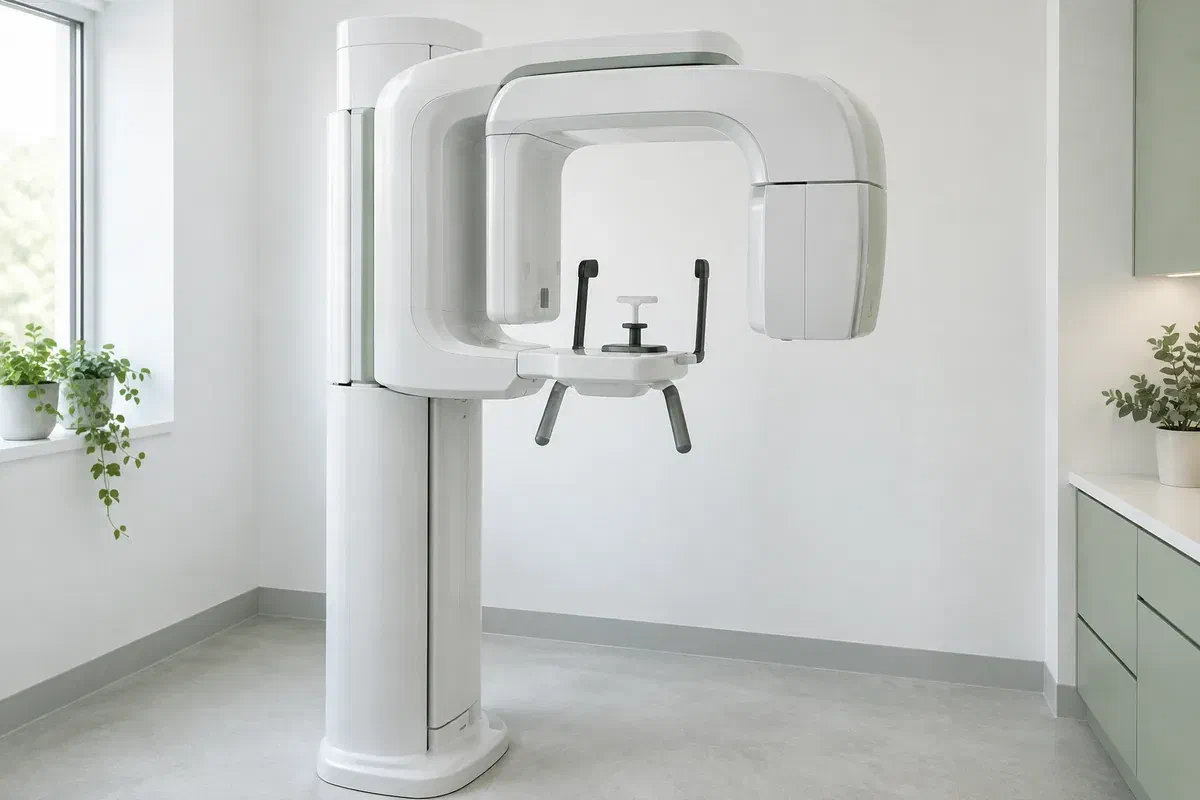
Illustrative discussion near generic panoramic imaging equipment, not actual clinic facilities
General & Family Dentistry

Panoramic Dental X-rays in Acton

Standing still at an imaging unit is harder for some people than others. If you or a relative in Acton has limited mobility, a sore neck or shaky balance, learn how panoramic X-rays work, what to mention beforehand and when another plan is better.

Access and comfort for Acton visitors

An X-ray should fit the person, not the other way round.

For a panoramic X-ray, you rest your chin on a support and keep your head steady while the machine moves around you. For most people that is simple. For someone using a walker, recovering from surgery or living with arthritis, it can take more planning. The result is a single wide, two-dimensional image of the teeth and both jaws, different in purpose from small close-up X-rays.

Before thinking about logistics, it helps to confirm the image is needed at all. The dentist should connect the recommendation to symptoms, examination findings and whatever records already exist, not to newness or the calendar. If the X-ray would not change the plan, the physical effort may not be worthwhile.

We are glad to discuss whether a wide view suits your assessment and what imaging arrangements are possible. Tell us early about mobility aids, neck or back pain, tremor, balance difficulty or trouble following spoken instructions. Mention recent X-rays and pregnancy or possible pregnancy too. Planning together keeps the visit safe.

Talk about positioning needs before booking
Illustrative unbranded panoramic dental X-ray unit in an empty imaging room
Why a wide image may be suggested

The question still comes before the logistics.

Panoramic views suit particular questions about where teeth sit and how the jaws look overall. Your symptoms and examination determine whether this test fits, and your comfort and safety help decide whether it is practical.

A tooth that never fully erupted

A wisdom tooth or other buried tooth may need to be located before any decision. The overview can show its position in the jaw. Ask whether more detailed imaging would be needed afterward; the image itself does not decide whether removal is appropriate.

Planning for dentures or several teeth

When treatment involves replacing or restoring teeth across the mouth, one broad record can help frame the plan. It complements the examination and other records. Ask what part of planning it informs and what else needs looking at.

A fall, swelling or new discomfort

A fall that affected the face, swelling, or a change in how the jaw works can raise a wider question. Describe what happened rather than asking for a specific X-ray, so the dentist can match the investigation to the problem.

Panoramic imaging unrolls the curved jaw onto a flat image, so parts overlap and some shapes are distorted. Fine detail may be lost, and the image does not take the place of an examination, close-up X-rays or other tests when they are needed.

What the image offers

Nothing held in the mouth, and a lot in view.

A panoramic image takes in both jaws and the arrangement of the teeth at once. Because the detector stays outside the mouth, it can suit people who find small intraoral sensors difficult to hold, such as those with a strong gag reflex or limited hand control. Detailed questions may still need a different view.

What matters is how the picture is explained. Ask which part relates to your concern, whether anything needs follow-up, and what the image cannot tell you. A broad view of the mouth is a starting point for discussion, not proof that all dental problems have been looked for.

Patient information: RadiologyInfo — panoramic dental X-ray

Seeing one issue within the whole

Viewing a tooth or finding in the setting of the entire jaw can make options easier to grasp. Ask why the overview matters in your case. A wider image helps when the question needs it, not by rule.

Sharing to reduce extra visits

If a specialist becomes involved, the image and notes may be sent where appropriate, which can sometimes spare you another imaging trip. Ask how that works. The specialist will still need to assess you.

A reason behind any further test

The overview may answer the question or show why more is needed. Before agreeing to another image, ask what is still unclear and how that next test would be managed with your mobility needs.

Making the appointment workable

What happens, and where to speak up.

Units and setups differ between providers, and some can be used seated. Ask where the image will be taken and whether your needs can be met there before the appointment is confirmed.

  1. Confirm the image is needed

    The dentist considers your history, examination and earlier records before recommending the view. Ask whether existing images would answer the question. If you are or could be pregnant, raise it at this stage so the dentist can weigh the need and any precautions.

  2. Plan the position in advance

    Jewellery, glasses, hearing aids and removable dentures often need to come out. The operator explains the chin rest and handholds. Ask whether a seated position is available, and describe neck, back or balance issues so the setup can be adjusted.

  3. Keep steady during the rotation

    The arm circles your head briefly while the image is recorded. You will be guided on head, lip and tongue position. If it becomes painful or unsafe, say so before the exposure. A caregiver can help explain needs beforehand.

  4. Receive a clear explanation

    The image must be reviewed and interpreted before it informs your care. Ask who will explain the result and whether further tests or referral may follow. When a separate imaging office does the X-ray, check that the file is being sent on to your dentist.

When you’re home again

Little aftercare, but keep the conversation going.

A panoramic X-ray normally involves no recovery period or special aftercare. Any other treatment done the same day may have separate instructions.

Understand what the image showed

Does the image back up what was proposed, point to something new, or show that no more is needed for this concern? Have unfamiliar words explained, and bring a family member if that helps. Knowing how the result affects your next step is the point.

Arrange follow-up with your needs in mind

If further assessment or referral is advised, mention mobility needs when booking and ask how results will be shared. An incidental finding needs explanation, not assumption. Ask what is known and what is still uncertain.

Keep a note of the X-ray

Tell future dentists when and where it was taken. If still suitable, it may avoid repeating the effort of imaging, depending on quality, the question and changes since.

Alternatives worth discussing

If the panoramic position won’t work.

Each imaging method provides different information, and some may suit your body better. Ask why one is recommended and how its value compares with the exposure involved.

If a broad view is needed and manageable

A panoramic overview

Fits selected questions about tooth position and jaw structure. It uses ionizing radiation and should have a clinical purpose. It does not stand in for every other dental view.

If one area is the focus

Targeted intraoral radiographs

Small, focused images can sometimes be taken while seated in the dental chair and may better show particular teeth or the bone around them. Your dentist should say why that closer look is useful. Having a panoramic does not by itself make bitewings unnecessary.

If a question remains unanswered

Further imaging only if justified

Now and then a different method, such as CBCT, is indicated. That scan is its own examination with its own positioning demands, not a routine upgrade. The dentist should explain what remains unknown and why more information is needed.

Accessibility questions from Acton

When movement is limited.

Imaging decisions should reflect your examination and what your care really requires. Tell the team about earlier images and any physical needs before the X-ray is taken.

(905) 876-4488
Can a panoramic X-ray be taken from a wheelchair?
Some units can accommodate a wheelchair, but not all. Ask the clinic or imaging provider before booking. If it cannot be accommodated, the dentist can discuss whether another approach would answer the question.
May a family member or caregiver come in with me?
They can usually help with getting into position and explaining your needs, though they may need to step away during the exposure. Ask the operator in advance how this is handled.
I have a tremor. Will that ruin the image?
Movement can blur a panoramic image. Mention the tremor ahead of time so the operator can use supports and explain the timing. If a clear image is unlikely, your dentist may consider alternatives.
Will the X-ray help plan new dentures?
It may be part of planning when the dentist needs a view of the jaws and any remaining teeth or roots. It is not always required. Ask what it would add to your denture assessment.
What should I tell the team if standing at the unit isn’t possible?
Explain your mobility, balance or positioning needs before attending. Equipment varies, so confirm what can be done. You should not be asked to hold an unsafe or painful position; a different plan may be appropriate.
Is a wide X-ray the same as a full 3D scan?
No. A panoramic image is two-dimensional. CBCT gives three-dimensional information, involves different positioning and has separate indications. The choice should follow the clinical question.
Panoramic X-rays for Acton

Tell us what you need to be comfortable.

Call our Bronte Street practice to discuss your concern and any imaging that has been suggested, and describe mobility or positioning needs in as much detail as you like. Mention recent X-rays too. We will explain the purpose, confirm what is possible and show how the result fits your care.

Imaging is recommended only for a clinical reason. Photos of equipment are illustrative; they do not confirm an on-site unit, wheelchair access to a particular machine or a specific appointment arrangement.

Visit Milton Dental Clinic
Unit 1, 342 Bronte St. S, Milton, ON L9T 5B7
Get directions Clinic hours
Monday–Thursday
11am–7pm
Friday–Sunday
By appointment only

Areas we serve

  • Milton
  • Oakville
  • Mississauga
  • Georgetown
  • Halton Hills
  • Acton
  • Campbellville
  • Brampton
  • Burlington
  • Puslinch
  • Rockwood
  • Erin
  • Caledon
  • Etobicoke
  • Old Milton
  • Bronte Meadows
  • Timberlea
  • Dorset Park
  • Dempsey
  • Clarke
  • Beaty
  • Coates
  • Harrison
  • Scott
  • Willmott
  • Ford
  • Bowes
  • Cobden
  • Walker
  • Mountain View
  • Milton Heights
  • Hawthorne Village
  • Valley View
  • Fallingbrook
  • Nassagaweya
  • Trafalgar
  • Esquesing
  • Nelson
  • Brookville
  • Moffat
  • Glen Williams
  • Norval
  • Limehouse
  • Stewarttown
  • Ashgrove
  • Hornby
  • Silver Creek
  • Speyside
  • Scotch Block
  • North Oakville
  • River Oaks
  • Glen Abbey
  • West Oak Trails
  • Palermo
  • Bronte Creek
  • College Park
  • Joshua Creek
  • Uptown Core
  • Preserve
  • Iroquois Ridge
  • Lisgar
  • Meadowvale
  • Meadowvale Village
  • Churchill Meadows
  • Erin Mills
  • Central Erin Mills
  • Streetsville
  • East Credit
  • Creditview
  • Heartland
  • Sheridan
  • Mount Pleasant
  • Credit Valley
  • Huttonville
  • Churchville
  • Springbrook
  • Northwest Brampton
  • Bram West
  • Fletcher's Meadow
  • Fletcher's Creek South
  • Alton Village
  • Orchard
  • Millcroft
  • Headon Forest
  • Tansley
  • Brant Hills
  • Tyandaga
  • Kilbride
  • Lowville
  • Aberfoyle
  • Morriston
  • Arkell
  • Hillsburgh
  • Freelton
  • Carlisle
  • Waterdown
  • Flamborough
  • Mountsberg

How can we help?

Milton Dental Clinic

Have a question about your smile? Choose the option that works best for you.

For urgent dental concerns, please call.
Messages are reviewed during clinic hours.