Buildup in hard-to-reach places
Brackets, crowded teeth and back molars all trap plaque that can harden. Mention who has trouble cleaning where. Please keep metal scrapers away from everyone’s teeth; they can damage gums and enamel.


One household, several mouths, very different cleaning needs. Families from Brampton can line up hygiene visits together, while each person still gets an assessment of their own teeth and gums.
A ten-year-old with new molars, a teenager in braces, a parent with a crown, a grandparent with receding gums. Booking everyone on one afternoon saves a lot of juggling, but each person will need something slightly different. Plaque hardens into tartar for all of them, and only professional removal clears it once it has set.
When you call, give us a short note on each person. Who has bleeding gums, who complains of cold sensitivity, who is nervous, who has braces or bridges? That helps us plan time realistically. For some it will be a quick maintenance visit; for others the assessment may point toward gum care, which is a separate service with its own follow-up.
Children and adults both deserve to understand what is happening. We explain instruments in plain words and agree on a pause signal before starting. If someone had a hard time at a past appointment, tell us. Everyone should go home knowing how to look after the areas we cleaned.
Visible stain is one piece. Gum symptoms, orthodontic or restorative work, and how each person felt at past visits all affect the plan.
Brackets, crowded teeth and back molars all trap plaque that can harden. Mention who has trouble cleaning where. Please keep metal scrapers away from everyone’s teeth; they can damage gums and enamel.
Note anyone whose gums bleed with brushing, feel tender, or whose teeth react to cold. These signs shape the gum check and comfort plan for that person and can show whether routine cleaning or a gum-care conversation fits.
White marks around braces, brown lines near fillings and yellowing all have different causes. Some surface stain may lift with cleaning; other colour does not. We will explain what each person’s marks seem to be.
Update the health and medication history for each family member, including blood thinners, medical advice and recent changes. Nobody should stop or change a prescribed medicine on their own in preparation for a cleaning.
Professional cleaning takes off hardened deposits that brushing and flossing leave behind, at any age. Since plaque and tartar contribute to gum inflammation, the value lies in healthier tissue, not just a polished feel. Each person’s gum findings determine how far the cleaning goes and what follow-up suits them.
Some surface stain can fade with the right approach, but cleaning will not produce identical bright smiles across the family. It does not fix cavities, replace damaged fillings or rebuild lost bone. We will explain which findings belong to the cleaning and which need their own discussion.
Patient information: NIDCR — plaque, tartar, and gum health
We find where deposits sit and choose techniques suited to that person’s teeth, gums and dental work. Let us know about implants, crowns or orthodontic appliances that may not be on file yet.
A teen who keeps missing the area around brackets, or a parent with one stubborn molar, often benefits from a quick demonstration. Showing a technique works better than repeating advice to brush longer.
After cleaning, we can review gums and comfort for each family member. One may return for routine upkeep while another needs a closer check sooner. Ask why the timing differs and what would prompt an earlier visit.
Timing depends on each person’s findings. Ask what is planned for every family member and whether anyone may need further assessment or another visit.
We review symptoms, health information, buildup and gum condition. Records such as X-rays may be suggested depending on age and history. Before we start, we agree on how to signal a break, including for younger children.
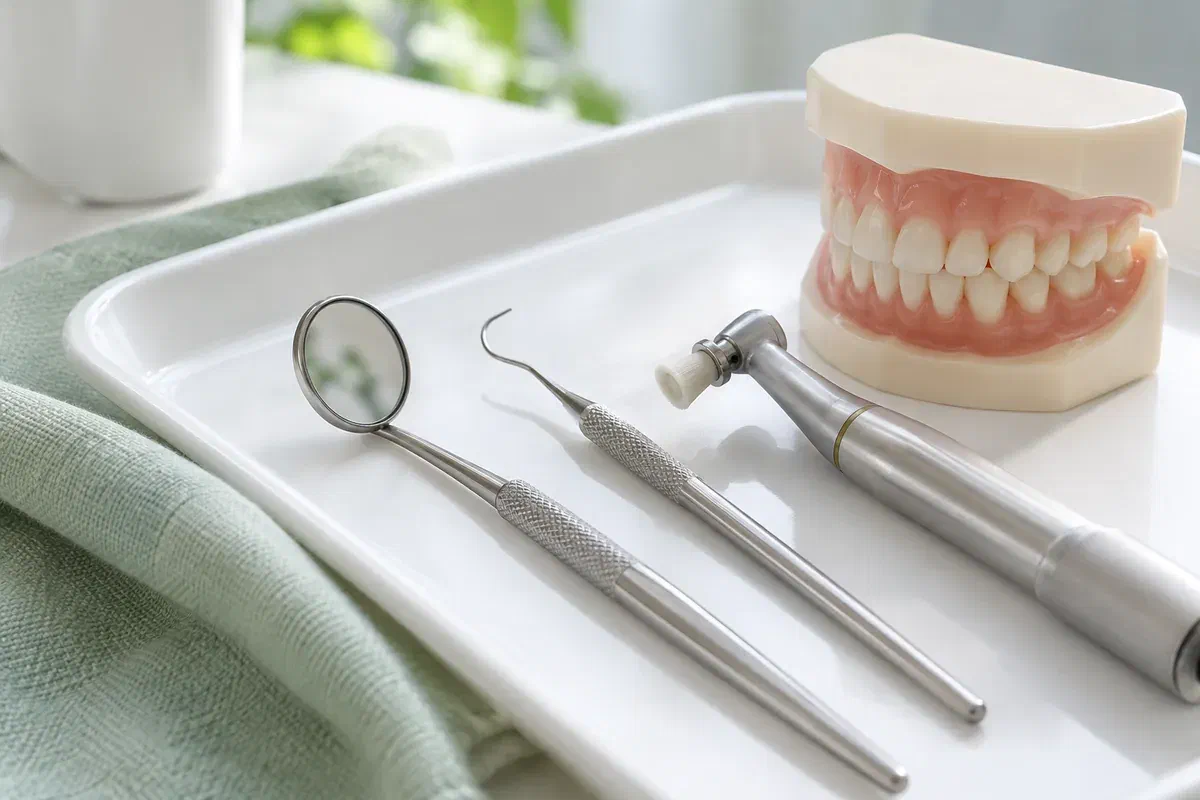
The hygienist chooses between hand scalers and a vibrating ultrasonic tool, or uses both, depending on the area. Sensations may include pressure, a hum or cool water. Anyone uncomfortable can say so, and we will pause and adjust.
Polishing may address some surface stain. It is not whitening and is not the core of the visit. If fluoride or another preventive product is suggested, we explain why and give clear instructions for afterward.
We explain what each person may notice later, show brushes or floss aids that suit them, and suggest next steps. If someone needs gum treatment, we explain how it differs from a routine cleaning.
Any instructions linked to a specific product or procedure come first. Advice may differ for anyone who had freezing, gum treatment or other care.
Everyone should continue with fluoride toothpaste and the cleaning aids we suggested. Children in particular should not be handed picks or scrapers to tackle buildup. If an area keeps building up, bring it to our attention.
Short-term soreness or sensitivity can happen, especially where gums were inflamed. Follow the advice from the appointment, and call if someone’s discomfort is worsening, significant or not improving. A new symptom is not automatically from the cleaning.
Fluoride varnish and similar products have specific eating and drinking guidance; follow those, not a blanket rule. Keep each person’s recall date and tell us about ongoing bleeding or changes.
Ask about instruments, sensitivity, stain or the type of cleaning suggested for each family member. Answers should relate to what we find.
Contact our Bronte Street practice to arrange family cleanings, ask about stain or buildup, or set up recall visits. Mention braces, bleeding, sensitivity or nervous patients when booking. We will assess each person and explain care clearly.
Cleaning type and appointment length depend on each person’s assessment. Mention new pain or swelling so an examination can be arranged.
