Buildup along the gumline
Tartar often hides at the edge of the gums, where it keeps the tissue irritated. Tell us where you feel roughness. Please do not scrape at it with a pick or online scaler, which can cut the gum and damage enamel.


Gums that bleed when you brush are a common reason to book. If you are travelling from Burlington, a cleaning visit can remove buildup, assess the gums, and tell you whether routine care is enough.
You spit after brushing and notice a streak of red. It is easy to brush harder in response, but that rarely solves anything. Plaque left along the gumline irritates the tissue, and plaque that hardens into tartar cannot be brushed off. A professional cleaning clears those deposits and lets us see how the gums are really doing.
Describe what you have noticed: where the bleeding happens, how often, and whether it comes with tenderness, bad taste, or teeth that feel sensitive. That picture helps us decide whether a routine cleaning is appropriate or whether gum disease needs assessing. Both involve deposit removal, yet they are distinct kinds of care with different follow-up.
Comfort matters, especially when gums are already sore. Let us know about any difficult past visit, and settle on a pause signal before we begin. You can ask about each instrument as we work. By the end you should understand what was found and how to look after your gums at home.
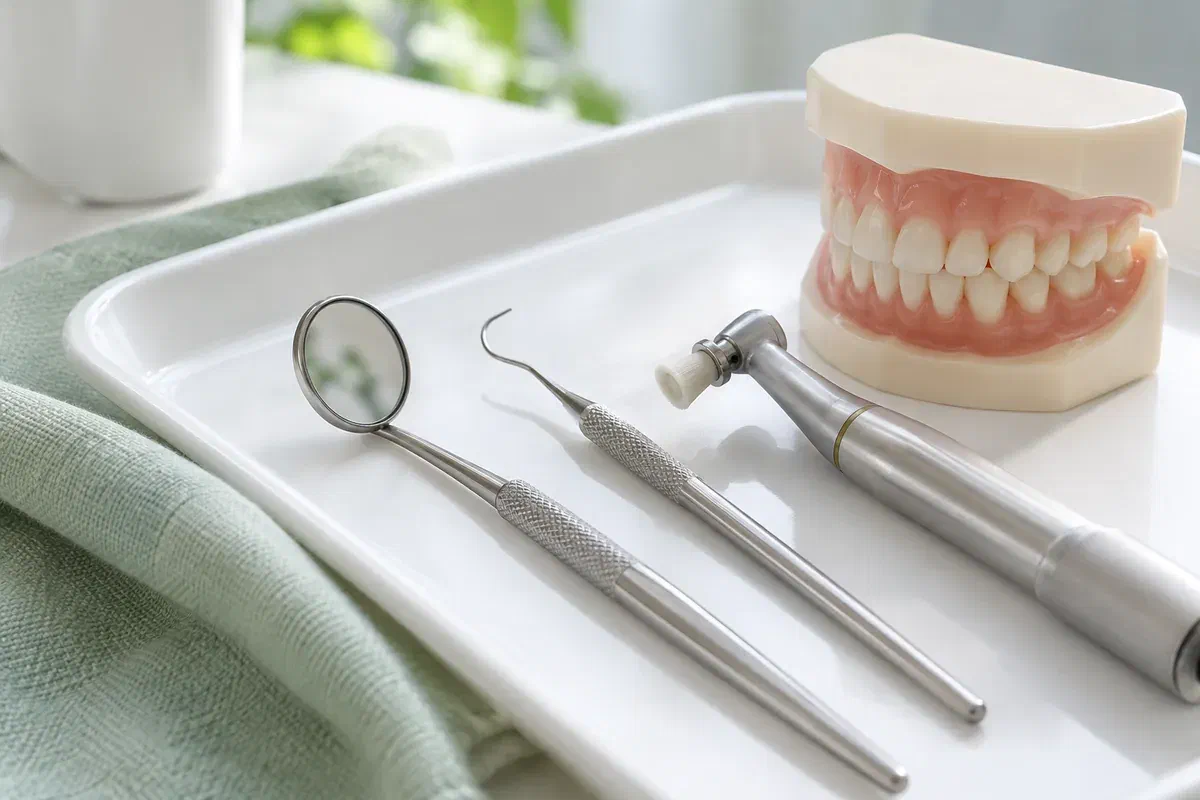
What you see in the mirror is only part of the story. Gum symptoms, existing dental work, and how previous visits felt all help us choose the right care.
Tartar often hides at the edge of the gums, where it keeps the tissue irritated. Tell us where you feel roughness. Please do not scrape at it with a pick or online scaler, which can cut the gum and damage enamel.
Raise any bleeding, swollen or tender areas, and sensitivity to cold, before cleaning starts. These signs guide the gum assessment and how we plan for comfort. They also help show whether a standard cleaning is right or gum care should be discussed.
Surface stain may be reduced during cleaning, but some colour changes are not deposits at all. Crowns, fillings, natural shade and deeper discolouration all behave differently. We can explain what you are seeing and what to expect.
Tell us about every medication, including blood thinners, which can affect bleeding, along with any recent medical advice or health changes. Never stop or alter a prescribed medicine in preparation for a cleaning unless your prescriber advises it.
Professional tools can remove the hardened deposits that brushing and flossing miss. Plaque and tartar are tied to gum inflammation, which is why bleeding often improves once the gums are cleaned and cared for consistently. The condition of the gums decides how deep the cleaning needs to go and what follow-up makes sense.
A cleaning is not a cure-all. It may lift some surface stain, but it does not guarantee bright, even teeth, repair decay, replace a damaged filling, or rebuild bone lost to gum disease. We will tell you which findings today’s visit addresses and which need separate attention.
Patient information: NIDCR — plaque, tartar, and gum health
We locate deposits and choose methods that suit the surfaces and the tissue around them. Mention implants, crowns or bridges not yet in your record so the technique suits those materials as well.
If one area bleeds again and again, it may be a spot your brush or floss skips. We can demonstrate how to reach it, which tends to help more than being told to try harder.
Gum findings can be reviewed after cleaning. The next appointment may be ordinary maintenance or a closer look at a stubborn area. Ask why we chose that interval and what would make an earlier visit sensible.
The steps and timing depend on the findings. Ask what the planned visit includes and whether further assessment or additional cleaning visits may be needed.
We review your symptoms, health details, buildup and gum condition. Sometimes X-rays or a fuller exam help clarify what is going on. We agree on a pause signal before instruments are used.
Hand scalers, a powered scaler, or both may be used, depending on what each area needs. Pressure, vibration and water are normal sensations. If something feels uncomfortable, say so and we will discuss and adjust.
Polishing may be used to address some surface stain. It is not whitening and is rarely the key part of the appointment. Any preventive product should have a clear purpose and instructions you understand.
We explain how your gums may feel afterward and show you suitable cleaning aids. If gum treatment or reassessment is recommended, we make clear how it differs from the cleaning completed today.
Follow any instructions specific to the products or care you received. Guidance may differ if the visit included freezing, gum treatment or another procedure.
Keep using fluoride toothpaste and the interdental aids recommended for you, even if your gums bleed a little at first. Do not use a metal pick or scraper to chase leftover roughness. Book a check if a spot still bothers you.
Sore gums or sensitive teeth can occur for a short time after cleaning. Follow the advice you were given and call if discomfort is increasing, severe, or not settling. A new symptom should not be assumed to be a normal after-effect.
A fluoride varnish or similar treatment comes with its own timing for food and drink, so go by that. Attend your review and let us know if bleeding continues, so the plan can reflect your response.
Ask about tools, tenderness, stain, or the type of cleaning suggested. Each answer should link back to what we find in your mouth.
Call our Bronte Street practice to talk about bleeding, buildup or your next maintenance visit. Mention sensitivity and any difficult experiences when you book. We will assess your gums and explain the cleaning and follow-up that suit you.
Cleaning type and appointment length depend on the assessment. Please mention new pain or swelling so an appropriate examination can be arranged.
