Rough spots and food traps
A gritty patch may be tartar, while food that keeps catching in the same place can signal a gap, a worn filling or decay. Tell us about both. Please do not dig at either with a metal tool; it can make things worse.


A cleaning can do a lot, but not everything. For rural households around Campbellville, it helps to know what tartar removal fixes, what it doesn’t, and how to fit an exam into the same trip.
It is tempting to hope a cleaning will sort out everything that feels off: the food trap between two molars, the dark spot on a back tooth, the gum that looks puffy. Some of that may improve. Removing tartar, which is plaque that has hardened beyond what a toothbrush can lift, does a lot for gums. It cannot fill a cavity or repair a cracked filling.
That is why we ask what you have noticed before we start. Bleeding, tenderness, a rough edge, cold sensitivity or a change in how teeth fit together all help us decide whether routine maintenance is appropriate, whether gum disease needs separate treatment, or whether another problem deserves an exam. Out in Campbellville, knowing this ahead lets you plan one trip rather than two.
Comfort and clear explanation are part of every visit. Tell us if previous cleanings were difficult and agree on a way to ask for a pause. You can ask what any instrument is for. We want you to leave knowing what the cleaning addressed and what, if anything, still needs attention.
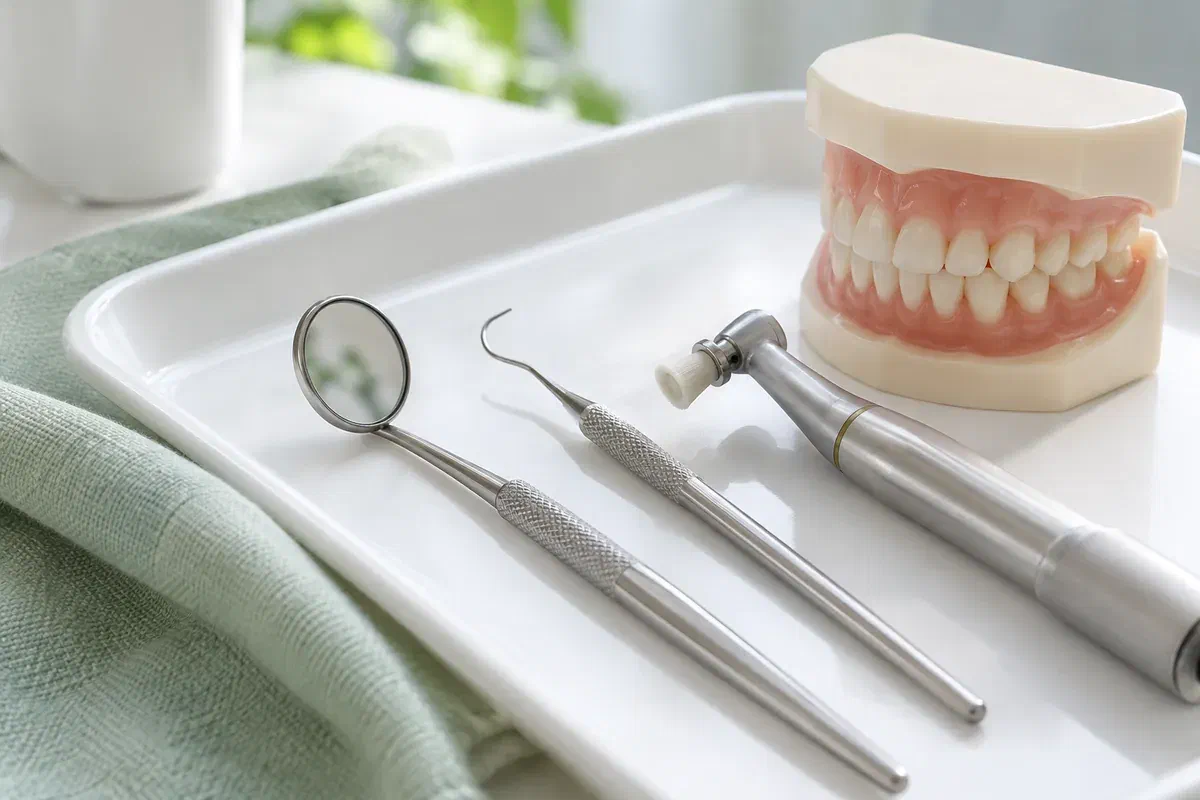
How teeth look is only one sign. Gum symptoms, existing restorations, changes in your bite and past experiences can all point to the right care.
A gritty patch may be tartar, while food that keeps catching in the same place can signal a gap, a worn filling or decay. Tell us about both. Please do not dig at either with a metal tool; it can make things worse.
These are worth raising before cleaning starts. They influence the gum assessment and comfort planning, and they help show whether routine cleaning will do or gum treatment should be discussed.
Some discolouration is surface stain that cleaning may reduce. A dark spot in a groove or along a filling edge could be stain, decay or the restoration itself. That needs an examination, and we will say what cleaning can change.
Update your health history and list all medications, including blood thinners, along with any medical advice or recent changes. Keep taking prescribed medicine as directed; do not change it yourself because of an upcoming cleaning.
Professional instruments remove hardened deposits that brushing and flossing leave behind. Because plaque and tartar are linked to gum inflammation, that is where the biggest benefit lies, rather than in the polished feeling afterward. The condition of your gums determines how extensive the cleaning should be and what follow-up is wise.
Here is the honest limit. Cleaning may lighten some surface stain, but it will not make teeth uniformly white. It does not treat decay, replace a failing restoration or rebuild bone lost to gum disease. When we find something like that, we will explain it and talk about whether it can be looked at on the same day.
Patient information: NIDCR — plaque, tartar, and gum health
We identify where deposits sit and choose methods suited to enamel, roots and restorations. If you have implants, crowns or bridges not yet in your file, let us know so they are cleaned appropriately.
A clean surface makes it easier to see decay, cracks or worn fillings. If something like that shows up, we will tell you rather than leaving it for next time, and explain the options.
After cleaning, we can check how the gums respond. The next appointment may be routine upkeep, a focused gum review or a treatment visit. Ask why that order was chosen and what would justify returning earlier.
Appointment length depends on what is found and whether an exam is booked alongside. Ask what is planned and whether further assessment or treatment may need a separate visit.
We go over your concerns, health information, buildup and gum condition. The dentist may examine specific teeth or suggest X-rays to understand a problem you mentioned. Before any instrument goes in, you choose how you will tell us to stop.
Depending on the area, the hygienist uses hand instruments, an ultrasonic scaler or both. You may feel pressure, vibration or water. Say so if anything is uncomfortable and we will stop and adjust.
Polishing may help with some surface stain. Think of it as a finishing touch rather than whitening or the core of the visit. Fluoride or other preventive products are explained before they are used, along with any aftercare.
We tell you what was cleaned, what we noticed and what each finding means. If gum treatment, a filling or another procedure is recommended, we explain how it differs from cleaning and how to plan it.
Follow any instructions for the specific products or treatment used. Guidance changes if your visit included freezing, gum treatment or another procedure.
Use fluoride toothpaste and the between-teeth cleaners we suggested. Do not try to scrape off remaining roughness with a household or online metal tool. If an area keeps catching food or feeling rough, mention it.
Some sore gums or sensitive teeth are possible for a little while, especially where inflammation was present. Follow the guidance given, and call if discomfort worsens, is significant or does not ease. A new symptom may be unrelated to the cleaning.
If you had fluoride varnish or another treatment, its own instructions govern eating and drinking. Keep any follow-up booked for gum care or other treatment, and let us know about ongoing bleeding or changes.
Ask about anything you have noticed, not only buildup. The answer should explain whether cleaning addresses it or something else is needed.
Get in touch with our Bronte Street practice to book a cleaning, raise concerns about buildup or stain, or ask about pairing it with an exam. Mention bleeding, sensitivity or a difficult past visit. We will explain what the cleaning covers and what else may be needed.
How long the visit takes, and what it includes, depend on assessment. If something has started to hurt or swell, let us know so it can be examined.
