Spots where tartar keeps returning
Many people have one or two areas that always build up, such as behind the lower front teeth. Let us know where yours are. Avoid home scrapers; they can harm the gums and scratch enamel without solving anything.


Starting with a new hygiene team means a fresh look at your teeth. From Mississauga, your first cleaning with us begins with history and assessment, then removes buildup and sets a plan that fits.
Changing dental offices can feel like starting over. You may not know when your last X-rays were taken or what your previous hygienist noted. That is fine. A first visit begins with listening and looking, because the cleaning you need depends on what is in your mouth now, not on a standard routine.
Tell us the backstory if you can. Has buildup been a recurring issue? Do certain areas bleed or feel tender? Have you been told about gum pockets before? For anyone coming from Meadowvale, Churchill Meadows or elsewhere in Mississauga, previous records help, but the assessment still decides whether routine maintenance fits or gum treatment needs discussing.
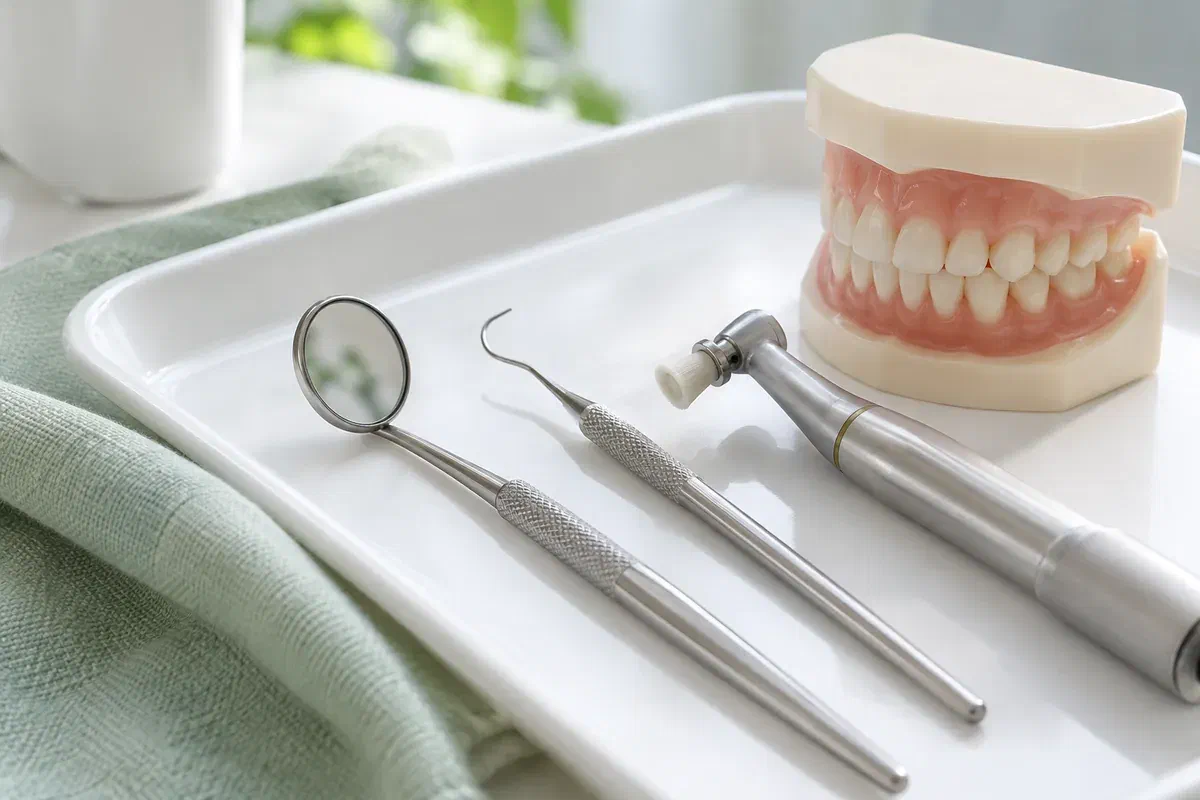
Ask questions freely. If cleanings have been uncomfortable before, say so and agree on how you will signal a break. We can explain each instrument and its job. You should finish with a clear sense of what was done, why, and how to keep up the result at home.
Your teeth’s appearance tells us something, but gum history, dental work and how earlier cleanings went tell us more.
Many people have one or two areas that always build up, such as behind the lower front teeth. Let us know where yours are. Avoid home scrapers; they can harm the gums and scratch enamel without solving anything.
If a previous dentist mentioned pockets, recession or gum disease, or if you notice bleeding, soreness or cold sensitivity, tell us early. That shapes the gum assessment and comfort planning, and whether routine cleaning or more involved care is suitable.
Some surface stain lifts during cleaning. Colour linked to crowns, fillings, the tooth’s natural shade or deeper discolouration does not behave the same way. Ask what a mark seems to be and what cleaning can change.
Bring a current list of medications, including blood thinners, and mention any physician advice or recent health changes. Keep taking prescribed medicines as instructed; do not adjust them yourself because a cleaning is booked.
Professional cleaning removes the hardened material that everyday brushing and flossing cannot. Plaque and tartar play a role in gum inflammation, so the visit is about tissue health as well as how teeth feel. Gum findings decide how extensive the cleaning should be and what follow-up is sensible.
Some surface stains may soften with appropriate technique, though cleaning does not promise uniformly white teeth. It will not repair decay, replace worn restorations or regrow lost bone. Part of a first visit is sorting out which findings cleaning handles and which need their own plan.
Patient information: NIDCR — plaque, tartar, and gum health
We note where deposits are and choose methods suited to the surfaces and surrounding tissue. Make sure we know about implants, veneers or crowns, especially if your records have not arrived yet.
A new team may spot a pattern your old routine missed, like one corner that always builds up. We can show you an aid or angle for that site, which is usually more practical than general advice.
After cleaning, we can review how your gums respond and recommend an interval. It may be routine maintenance or a focused check sooner. Feel free to ask how we reached that recommendation and what would justify an earlier visit.
Length and content depend on what we find. Ask what today includes and whether more assessment or another cleaning visit could follow.
We go through symptoms, health information, previous dental care and gum history, then examine buildup and gum condition. New X-rays or other records may be advised. We agree on a pause signal before starting.
Depending on the area, we may use hand instruments, a powered scaler or both. Expect pressure, a buzzing feeling or water spray. Let us know if anything is uncomfortable so we can stop and adjust.
Where suitable, polishing can address some surface stain. It is not a whitening treatment and not usually the most important step. If a fluoride or other preventive product is offered, we explain its purpose and aftercare.
We cover what you might feel afterward, show suitable home tools and suggest your next visit. If gum treatment or reassessment is recommended, we explain how it goes beyond today’s cleaning.
Product-specific and procedure-specific instructions take priority. Guidance may differ if freezing, gum treatment or another procedure was part of your visit.
Use fluoride toothpaste and the interdental cleaners we recommended. If an area still feels rough, do not attack it with a metal tool from the drugstore or online. Call to have it checked instead.
Gums can be tender and teeth a little sensitive after cleaning, more so where buildup was heavy. Stick with the guidance you left with, and contact us if discomfort grows, is significant or does not ease as expected. Do not assume every symptom is cleaning-related.
Where a preventive product was used, follow the eating and drinking guidance for that specific product. Keep your follow-up and report ongoing bleeding or changes so we can adjust your plan.
Ask about tools, sensitivity, stain, or the type of cleaning recommended. Answers should connect to what is found in your own mouth.
Contact our Bronte Street practice to arrange a first cleaning, discuss buildup or stain, or transfer your recall. Mention bleeding, sensitivity or any past difficulties when booking. We will assess your needs and explain care and follow-up.
Appointment length and the type of cleaning depend on assessment. Please mention any new pain or swelling so the right examination is arranged.
