Rough texture you can feel
A ridge or gritty patch your tongue keeps finding is often tartar in a hard-to-reach place. Show the hygienist where it is. Leave scraping tools in the drawer; they can injure the gum and mark the tooth.


Is that mark on your tooth stain, tartar, or something else? For people coming from Oakville, a professional cleaning starts by sorting that out, then removes what should go and checks the gums underneath.
A yellowish band near the gumline, a brown speck between two teeth, a dull patch on a filling. These can look alike in the bathroom mirror and mean quite different things. Tartar is plaque that has hardened, and it stays until it is professionally removed. Stain may sit on the surface or come from deeper in the tooth.
So the first job is a careful look. Tell us what caught your eye and whether anything else is going on, such as gums that bleed, a spot that feels rough, or sensitivity to cold. From there we can say whether routine cleaning fits or whether gum treatment needs discussing, since the two are different services even though both remove deposits.
Expect explanation as we go. If a previous cleaning was uncomfortable, mention it and agree on a pause signal. Ask what an instrument is doing whenever you like. Before you head back to Oakville, you should understand what changed and how to keep it that way at home.
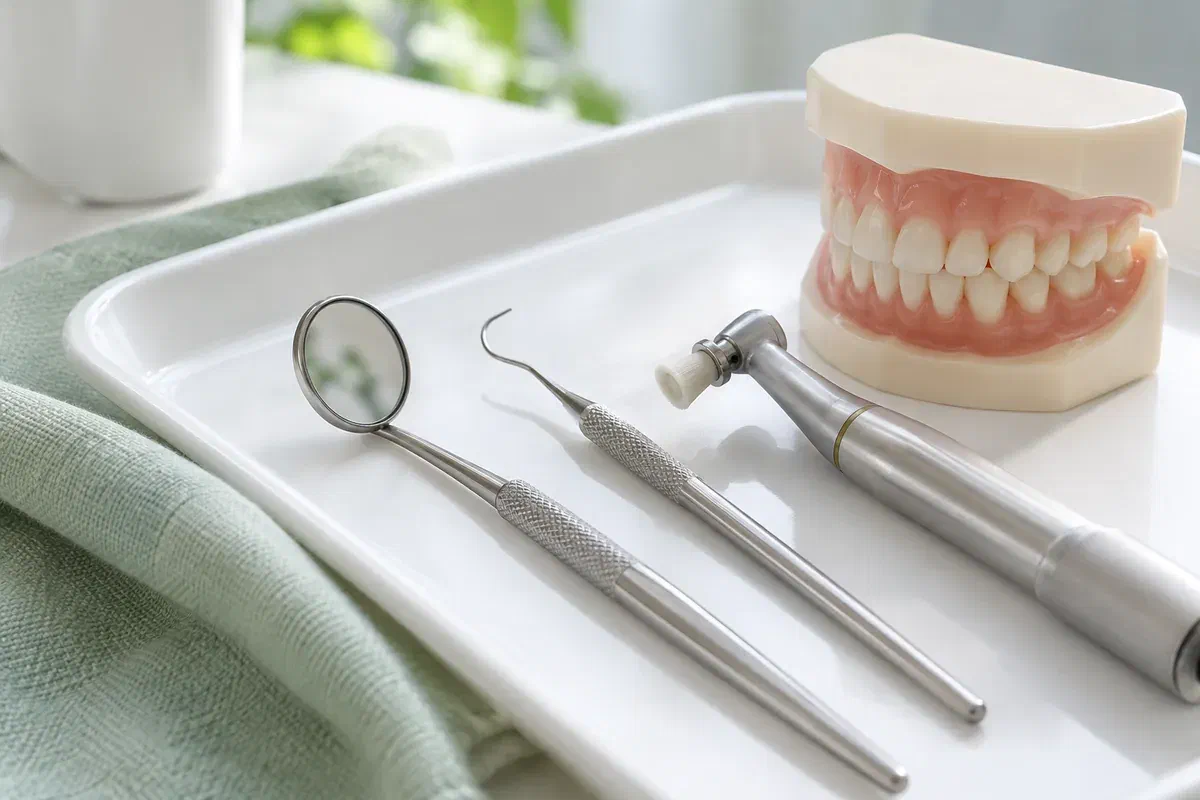
Colour is one clue. How the gums feel, what dental work you have, and how past visits went all help us decide what kind of care suits you.
A ridge or gritty patch your tongue keeps finding is often tartar in a hard-to-reach place. Show the hygienist where it is. Leave scraping tools in the drawer; they can injure the gum and mark the tooth.
Gums that bleed when brushed, feel sore in one spot, or teeth that react to cold all deserve a mention up front. They guide the gum assessment and how we keep you comfortable, and may change whether a standard cleaning is the right fit.
Some discolouration is surface stain that cleaning may reduce. Other colour comes from a crown, a filling, natural tooth shade or deeper change. We will tell you which it looks like and what a cleaning is likely to improve.
Bring your health and medication details up to date, including blood thinners, recent medical advice and any new conditions. Keep taking prescribed medication as directed; do not change it yourself before a cleaning.
Hardened deposits that home care cannot dislodge can be cleared with professional tools. Because plaque and tartar are linked to gum inflammation, the value goes beyond a smooth, fresh feeling. How your gums look and measure helps decide how deep the cleaning goes and what comes next.
Certain surface stains may lighten with the right technique. Even so, a cleaning cannot guarantee teeth of one uniform white. It will not treat a cavity, replace a failing restoration, or rebuild supporting bone. We will be clear about what today addresses and what deserves a separate plan.
Patient information: NIDCR — plaque, tartar, and gum health
We identify where deposits sit and match the technique to each surface and the tissue nearby. If you have implants, veneers or crowns that are not on file, let us know so the approach protects them.
Tartar that keeps forming in one place can reveal a gap in access or technique. We can demonstrate a tool or angle for that exact spot. That tends to work better than a general instruction to brush more.
We can look again at your gums and comfort after treatment. Your next appointment might be regular maintenance or a narrower check on one area. Ask how the interval was chosen and what would justify coming in sooner.
Appointment length depends on the findings. It is fair to ask what today includes and whether further assessment or extra cleaning visits may be needed.
We cover your symptoms, health updates, visible deposits and gum condition. Additional records or an examination may be recommended if something needs clarifying. We also agree how you will ask for a break.
Hand instruments, a powered scaler or a mix may be used depending on the area. You may feel pressure, vibration or water. Tell us if anything is uncomfortable so we can pause, talk and adapt.
Polishing can address some surface stain. It is a different thing from whitening and usually not the most important step. If we recommend fluoride or another preventive product, you will hear why and how to care for your teeth afterward.
We describe what you might notice later and how to keep the cleaned areas healthy, and can show you suitable tools. If deeper gum care is advised, we will explain how it goes beyond today’s cleaning.
Any product-specific or procedure-specific instructions come first. Guidance may be different if freezing, periodontal treatment or other care was involved.
Brush with fluoride toothpaste and use the interdental aids that suit your teeth. Do not try to copy professional scaling with a metal tool from home or online. If a spot keeps feeling rough, book a check.
Some temporary sensitivity or gum soreness is possible, depending on what was treated. Follow the advice you were given. Contact us if it is worsening, significant, or not improving as expected, and do not assume every new sensation is from the cleaning.
Products such as fluoride carry their own guidance on eating and drinking afterward; follow that rather than a general rule. Keep the review date and let us know about persistent bleeding or changes, so the next step reflects how you responded.
Ask about tools, sore areas, stain or the type of cleaning on offer. Every answer should connect to what is found in your own mouth.
Contact our Bronte Street practice to discuss stain, buildup or the timing of your next maintenance visit. When you book, mention bleeding, sensitivity or any cleaning that was difficult before. We will assess your needs and explain the plan.
What the cleaning involves and how long it takes depend on assessment. Please mention new pain or swelling so we can book a suitable examination.
