

Illustrative conversation during a return dental checkup
General & Family Dentistry

Recall Dental Examinations in Georgetown

A new prescription, a diagnosis, a stressful year: changes in your health can show up in your mouth. From Georgetown, a recall examination is a chance to connect those updates with your dental care.

Your health, your teeth

What happens in the rest of your life reaches your mouth too.

Since your last checkup, perhaps you started a new medicine, learned about a health condition, or went through months where sleep and routine fell apart. None of that is strictly dental, yet any of it can be relevant. A recall examination is the planned return visit where those updates meet a fresh look at your teeth and gums.

The dentist compares what is seen now with what was noted at your earlier assessment. Feeling fine is worth reporting, but it does not settle every question, since some changes are quiet. Your account of daily life, such as a mouth that feels drier or brushing that has become a chore, fills in the gaps.

From there, the plan may stay as it is, prevention may be adjusted to suit your circumstances, or treatment may be discussed. Ask what looks stable, what has changed, and why your next visit is timed the way it is. That way, the months ahead in Georgetown feel manageable.

Schedule your recall examination
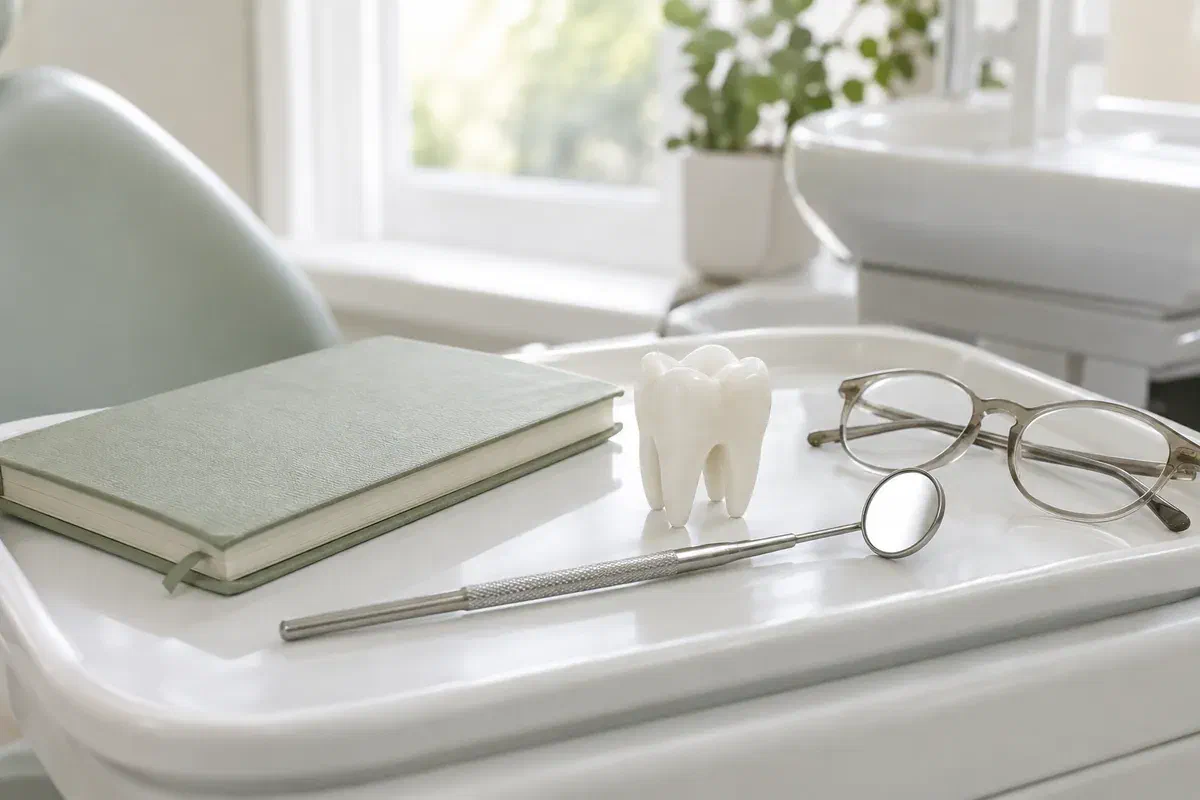
Illustrative dental mirror, tooth model, and notebook for an examination
Updates that matter

Start with the news, dental or not.

Earlier findings give the dentist context. Your present symptoms, health changes and questions show where today’s attention should go.

Something new in your mouth

A tooth that aches when you bite, sudden cold sensitivity, a rough or broken edge, or a fresh spot for food to trap: describe when you notice it and whether it is becoming more frequent. An occasional symptom still counts, even if it is absent on the day.

Medicines, diagnoses and dry mouth

Share any change in prescriptions or over-the-counter products, new diagnoses, or a mouth that feels dry more often. Bring a written list of medications. These details can shape which questions the dentist asks and what prevention is suggested.

Areas already on the dentist’s radar

If a tooth, gum site or restoration was discussed last time, ask about it and mention any difference since. A watched area should come with an explanation of why, and of what change would lead to a different recommendation.

New problems should not wait for your recall date. Call and describe what is going on, and together you can work out how soon it should be seen and in what kind of appointment.

Care that adjusts with you

When your health changes, your plan can too.

Continuing care means recall timing reflects your current findings and risk instead of a single schedule for everyone. A change in medical circumstances may be one reason your interval is adjusted. Ask what your timing is based on, and whether any treatment should be arranged as a separate visit.

A recall cannot promise that every condition will be detected, or that nothing will develop after the appointment. It works best alongside your daily habits, any treatment you agree to, and prompt contact when something new appears. A clear explanation of the findings helps you decide how to respond.

Patient information: CDA — continuing care and individualized recall

Comparison over time

Relevant earlier records give the dentist a baseline. Ask whether anything has altered since then, stayed the same, or remains unclear. If further testing or a period of watching is recommended, ask what it is meant to show.

Prevention that fits your health

A routine that suited you before may need adjusting if your health has shifted. If a product is uncomfortable or a technique is hard to manage right now, tell us. Honest feedback helps the team suggest something workable.

Sorting out priorities

With several matters to discuss, ask which deserve attention first and which can wait for review. Hearing the reason, alternatives and timing for each helps you plan around other health appointments without treating every item as urgent.

The appointment, in order

Health update, examination, explanation, plan

What is included depends on your needs and on what was booked. Ask ahead whether a cleaning, imaging or a separate treatment visit is planned or might be recommended.

  1. Review your health first

    The visit begins with changes since last time and the question you most want answered. Your medical history and medication list are reviewed alongside previous recommendations. Writing a few points down at home helps you cover the essentials.

  2. Examine teeth, gums and restorations

    The dentist checks your mouth with your history and recent health in mind. Speak up if anything is sore or if keeping your mouth open is tiring. Questions about what is being checked are always welcome.

  3. Consider additional information

    If a particular clinical question needs answering, an X-ray or another assessment might be suggested. A recall does not require identical images every time. Ask why a record would help and whether recent ones can be used.

  4. Agree on what comes next

    Talk through the findings, any treatment options and the recommended timing for further care. Ask which symptoms should prompt you to call before your next visit. Make sure you can tell your routine recall apart from any problem-focused appointment.

In the weeks that follow

Practical habits until next time

An examination alone generally needs no recovery care. If a cleaning, fluoride or treatment was done as part of the same visit, follow the separate instructions you were given.

Keep your notes together

Write down what was recommended and why, especially if it relates to a health change or involves more than one visit. Ask about any unfamiliar terms. It is more useful to know what your next appointment is for than to remember only the date.

Adapt your routine where needed

Follow the brushing and cleaning-between-teeth guidance discussed. If a health change makes it harder, such as fatigue or limited hand movement, let the team know rather than waiting. A simpler tool or a demonstration may make it easier.

Report changes promptly

New pain, swelling, a broken restoration or a lasting mouth change deserves a call. It also helps to tell us about further medication or health changes. Your booked recall may not be the right timing for a new concern.

Finding the right booking

Three appointments, three different purposes

When you call, explain what you need. The appointment should allow for the right kind of assessment, not just repeat the name of your last visit.

For continuing oral health review

Regular recall

This visit updates your overall picture, takes in any health changes, revisits prevention and watched areas, and sets your next interval. It can sometimes be coordinated with other care. Ask what is planned so you know what to expect.

When something new develops

Visit for a specific symptom

A cracked tooth, pain in one place or new swelling may need attention before your recall. Explain the symptom, how long you have had it, and anything that makes it better or worse. With that information, the front desk can help you choose an appropriate next step.

When healing or response needs review

Follow-up after treatment

Some treatment includes a separate review to see how you are recovering, which can matter more when your general health has changed. Its purpose and timing may differ from those of a regular examination. Check with the team whether you need two separate appointments, and what each one will look at.

Georgetown recall FAQs

Health, medicines and your checkup

Answers about medical updates, recall timing and how a return examination fits with the rest of your care.

(905) 876-4488
Why does the dental office need my medication list?
Some medicines and health conditions are relevant to dental care and to the advice you are given. An up-to-date list helps the dentist ask the right questions. Bring it to each recall, and mention any recent changes.
I’m pregnant. Should I still keep my recall appointment?
Let the team know when you book. Dental checkups are commonly part of ongoing care during pregnancy, and the dentist can discuss what is appropriate for you. Mention any gum changes or other concerns you have noticed.
My mouth feels drier lately. Is that worth mentioning?
Yes. Dry mouth can be relevant to your oral health and to the prevention advice discussed. Mention when you notice it, whether it is worse at night or during the day, and any medication changes, so the dentist has the full picture and can suggest practical next steps.
Can my recall interval change because of a health condition?
It can. Intervals are based on your findings and risk, which may be affected by changes in your health. Ask what has influenced your timing and what the next visit will focus on. If your health settles or changes again, the interval can be revisited at a later recall.
Does my checkup automatically include a cleaning?
Not always. Examinations and cleanings have different purposes and may be booked together or separately. Confirm what is planned, and ask whether cleaning needs will be decided after your mouth has been assessed.
If I feel unwell on the day of my recall, should I come in?
Call the clinic to explain and ask about rescheduling. If you also have a dental problem such as pain or swelling, mention it so the team can advise whether you should be seen sooner.
Checkups for Georgetown

Bring your updates, and we’ll take it from there.

Reach out to our Bronte Street practice when it is time for your recall. Mention any new symptoms, care from another provider, or changes to your health so the appointment can be arranged properly.

Recall timing is personal. New pain or swelling should be reported as soon as it begins, even if your checkup is already booked.

Visit Milton Dental Clinic
Unit 1, 342 Bronte St. S, Milton, ON L9T 5B7
Get directions Clinic hours
Monday–Thursday
11am–7pm
Friday–Sunday
By appointment only

Areas we serve

  • Milton
  • Oakville
  • Mississauga
  • Georgetown
  • Halton Hills
  • Acton
  • Campbellville
  • Brampton
  • Burlington
  • Puslinch
  • Rockwood
  • Erin
  • Caledon
  • Etobicoke
  • Old Milton
  • Bronte Meadows
  • Timberlea
  • Dorset Park
  • Dempsey
  • Clarke
  • Beaty
  • Coates
  • Harrison
  • Scott
  • Willmott
  • Ford
  • Bowes
  • Cobden
  • Walker
  • Mountain View
  • Milton Heights
  • Hawthorne Village
  • Valley View
  • Fallingbrook
  • Nassagaweya
  • Trafalgar
  • Esquesing
  • Nelson
  • Brookville
  • Moffat
  • Glen Williams
  • Norval
  • Limehouse
  • Stewarttown
  • Ashgrove
  • Hornby
  • Silver Creek
  • Speyside
  • Scotch Block
  • North Oakville
  • River Oaks
  • Glen Abbey
  • West Oak Trails
  • Palermo
  • Bronte Creek
  • College Park
  • Joshua Creek
  • Uptown Core
  • Preserve
  • Iroquois Ridge
  • Lisgar
  • Meadowvale
  • Meadowvale Village
  • Churchill Meadows
  • Erin Mills
  • Central Erin Mills
  • Streetsville
  • East Credit
  • Creditview
  • Heartland
  • Sheridan
  • Mount Pleasant
  • Credit Valley
  • Huttonville
  • Churchville
  • Springbrook
  • Northwest Brampton
  • Bram West
  • Fletcher's Meadow
  • Fletcher's Creek South
  • Alton Village
  • Orchard
  • Millcroft
  • Headon Forest
  • Tansley
  • Brant Hills
  • Tyandaga
  • Kilbride
  • Lowville
  • Aberfoyle
  • Morriston
  • Arkell
  • Hillsburgh
  • Freelton
  • Carlisle
  • Waterdown
  • Flamborough
  • Mountsberg

How can we help?

Milton Dental Clinic

Have a question about your smile? Choose the option that works best for you.

For urgent dental concerns, please call.
Messages are reviewed during clinic hours.