

Illustrative conversation during a return dental checkup
General & Family Dentistry

Recall Dental Examinations in Halton Hills

“We’ll keep an eye on it” only helps if someone actually looks again. For people in Halton Hills, a recall examination is that second look, plus a check on whatever else has changed in the meantime.

The second look

Watching a tooth means coming back to it.

Plenty of people leave a checkup having heard that a small spot, a worn filling or a patch of gum will be monitored. Months later, in Georgetown, Acton, Glen Williams or a quieter corner of Halton Hills, the question is simple: has it changed? A recall examination exists to answer that, and to look at the rest of your mouth too.

You may not have felt a thing. That is common, and it is one reason a return visit relies on more than how your teeth feel. The dentist compares current findings with earlier notes, so slow change has a chance to be noticed rather than assumed away.

Whatever you have observed, however minor, is worth sharing. Food that now catches near the watched tooth, a little sensitivity, or a habit that changed over winter can all be relevant. Afterward, you should understand whether monitoring continues, whether prevention shifts, or whether treatment is worth discussing.

Book your follow-up checkup
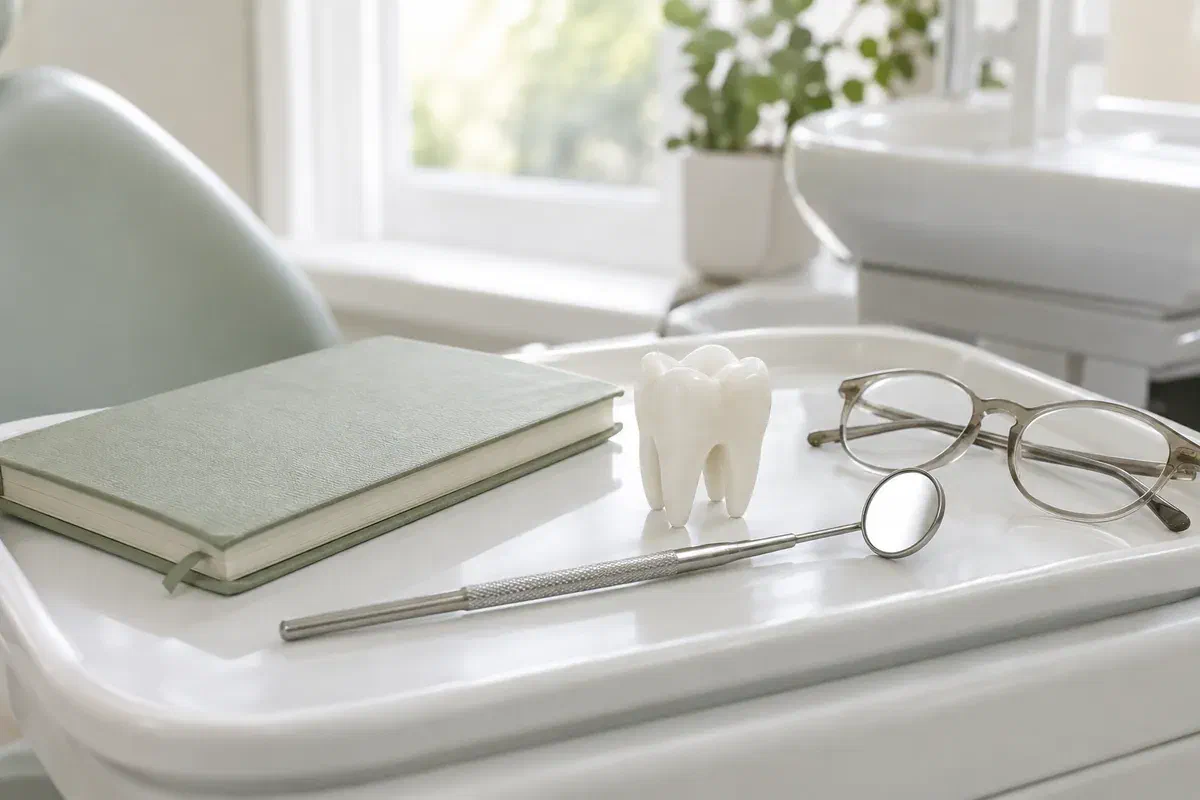
Illustrative dental mirror, tooth model, and notebook for an examination
Since the last appointment

Report the little things; they add up.

Your record shows what was found before. Your own account of the months since, and any health changes, helps decide what to focus on now.

How your teeth have been behaving

Notice anything when biting, a twinge with cold water, a rough patch or a gap where food collects? Describe roughly when it started and if it has become more frequent. Symptoms that are on and off are still worth sharing.

What has changed with your health

A new prescription, diagnosis, dry mouth or a stretch when home care slipped can all matter. Please bring your current medications on a list. What happens in the rest of your body can influence what the team asks about and suggests.

The area flagged for monitoring

Ask specifically about the tooth, gum site or restoration that was being watched. Say whether it has felt any different. You should hear the reason it was being monitored and what kind of change would lead to a new recommendation.

If a watched area suddenly becomes painful, or anything new develops, call rather than waiting for your recall. The team can help you decide on a focused visit or urgent care.

Why follow-through matters

Monitoring only works with a return date.

Continuing care lets the dentist set your interval around your own findings and risk. When something is being watched, the timing of the next look may be shorter; when things are steady, it may be longer. Ask what your interval is based on, and whether any watched area might need a separate appointment.

Monitoring is not a promise that nothing will progress, and no recall can guarantee every problem is caught. It is one part of your care, along with daily cleaning, treatment when it is advised, and calling about new symptoms. Knowing what is being watched, and why, makes the plan easier to follow.

Patient information: CDA — continuing care and individualized recall

A record to measure against

Earlier notes and images, where relevant, help the dentist judge whether a watched area has altered. Ask directly: has it changed, stayed the same, or is it still hard to tell? If more time or another test is suggested, ask what it should clarify.

Prevention aimed at the right spot

A watched area may benefit from extra care at home. If a suggested product or technique is awkward for that part of your mouth, say so. Specific feedback helps the team recommend something you can realistically manage.

A clear order of priorities

If several things are on the list, ask which one matters most now and which can be revisited next time. Understanding purpose, alternatives and timing lets you plan without treating every item as urgent.

How the visit runs

From your update to the decision on that watched spot

The content of each recall depends on your needs and what was booked. Ask beforehand whether a cleaning, imaging or separate treatment appointment is included or may be recommended.

  1. Tell us what you have noticed

    Begin with changes since the last visit and the question you most want answered, perhaps about the area being watched. The team goes over your health information and previous recommendations. A note written at home can help you remember everything.

  2. Examine and compare

    The dentist looks at your teeth, gums and existing dental work, paying attention to anything flagged before. Mention any soreness or difficulty keeping your mouth open. Feel free to ask what each part of the exam is looking for.

  3. Consider whether more information is needed

    Sometimes an X-ray or another assessment is the best way to see whether a watched area has changed, and it may be suggested for that reason. Images are not automatically taken at every recall. Ask what the record is for and whether recent ones exist.

  4. Decide what happens next

    Hear the findings, talk through any treatment choices, and agree on the timing of further care. Ask which signs mean you should call sooner. Make sure you know whether the watched area continues to be monitored or needs its own appointment.

Until the next look

Simple steps between recall visits

There is normally no special recovery after an examination alone. Follow any separate instructions if a cleaning, fluoride or treatment was carried out at the same time.

Note what is being watched

Write down which tooth or area is being monitored, why, and when it will be looked at again. If any term was unfamiliar, ask about it. Knowing the purpose of your next visit is more useful than remembering only the date.

Give the area extra attention at home

Follow the brushing and between-teeth cleaning advice discussed, especially around any watched spot. If it is hard to reach or the method feels awkward, let the team know now. A different brush or a quick demonstration may help.

Call if the pattern changes

Pain, swelling, a filling that breaks or a mouth change that lingers deserves a call, particularly near a monitored area. Mention your booked recall, but understand that a new problem may need a separate, sooner assessment.

Choosing your appointment

Is this a checkup, a problem visit, or a review?

Explain your reason for calling when you book. The time set aside should suit the assessment required, not just the label on your last appointment.

For ongoing oral health review

Recall examination

The regular visit where watched areas are revisited, prevention is reviewed and your next interval is set. Other care may be scheduled alongside it where that is appropriate. Ask what is planned so you know what the visit will include.

When something has changed suddenly

Examination for a new concern

A watched tooth that begins to ache, a broken filling or new swelling may need to be seen before your recall. Describe the symptom and when it began, so the team can suggest the right kind of appointment.

When healing needs checking

Review following treatment

After treatment, a separate follow-up may be planned to see how things are settling. Its timing and aims can differ from those of your regular checkup. Ask whether you need both visits and what each is for.

Halton Hills recall questions

On monitoring, timing and more

Answers to common questions about watched areas, recall timing and how a checkup relates to other care.

(905) 876-4488
How long can a tooth be monitored before something is done?
There is no single answer. It depends on what is being watched and whether it changes. Ask the dentist what would prompt treatment, how the area will be reviewed, and what you should look out for between visits.
Can I ask for a photo or image of the area being watched?
You can ask. Where images are available or appropriate, the dentist may be able to show you what is being monitored. Seeing it can help you understand why it is being followed over time.
Why would my next recall be booked sooner than usual?
A shorter interval may be suggested if something needs closer follow-up or your risk has changed. Ask what the reason is and what the next visit will focus on. Timing should reflect your current needs.
What if I can’t remember which tooth was being watched?
That is fine; it should be noted in your record. Ask at the start of your visit, and request a short written note afterward so you can keep track of it more easily next time.
Is a recall the same as having my teeth cleaned?
Not necessarily. Examinations and cleanings have different purposes and may be booked separately or together. Ask what your appointment includes and whether cleaning needs will be decided after the examination.
My watched tooth started hurting. Can it wait until my recall?
Call and describe the change instead of waiting. Pain in a monitored area may need assessment sooner. Mention swelling, fever or worsening discomfort so the team can advise you on the next step.
Return checkups for Halton Hills

Let’s take that second look together.

Phone our Bronte Street practice and ask for a recall appointment. Mention any watched areas, new symptoms, care received elsewhere, or health changes so we can arrange the right appointment.

Your recall interval is set for you and may change. If new pain or swelling develops, tell us when it starts, even with a visit already scheduled.

Visit Milton Dental Clinic
Unit 1, 342 Bronte St. S, Milton, ON L9T 5B7
Get directions Clinic hours
Monday–Thursday
11am–7pm
Friday–Sunday
By appointment only

Areas we serve

  • Milton
  • Oakville
  • Mississauga
  • Georgetown
  • Halton Hills
  • Acton
  • Campbellville
  • Brampton
  • Burlington
  • Puslinch
  • Rockwood
  • Erin
  • Caledon
  • Etobicoke
  • Old Milton
  • Bronte Meadows
  • Timberlea
  • Dorset Park
  • Dempsey
  • Clarke
  • Beaty
  • Coates
  • Harrison
  • Scott
  • Willmott
  • Ford
  • Bowes
  • Cobden
  • Walker
  • Mountain View
  • Milton Heights
  • Hawthorne Village
  • Valley View
  • Fallingbrook
  • Nassagaweya
  • Trafalgar
  • Esquesing
  • Nelson
  • Brookville
  • Moffat
  • Glen Williams
  • Norval
  • Limehouse
  • Stewarttown
  • Ashgrove
  • Hornby
  • Silver Creek
  • Speyside
  • Scotch Block
  • North Oakville
  • River Oaks
  • Glen Abbey
  • West Oak Trails
  • Palermo
  • Bronte Creek
  • College Park
  • Joshua Creek
  • Uptown Core
  • Preserve
  • Iroquois Ridge
  • Lisgar
  • Meadowvale
  • Meadowvale Village
  • Churchill Meadows
  • Erin Mills
  • Central Erin Mills
  • Streetsville
  • East Credit
  • Creditview
  • Heartland
  • Sheridan
  • Mount Pleasant
  • Credit Valley
  • Huttonville
  • Churchville
  • Springbrook
  • Northwest Brampton
  • Bram West
  • Fletcher's Meadow
  • Fletcher's Creek South
  • Alton Village
  • Orchard
  • Millcroft
  • Headon Forest
  • Tansley
  • Brant Hills
  • Tyandaga
  • Kilbride
  • Lowville
  • Aberfoyle
  • Morriston
  • Arkell
  • Hillsburgh
  • Freelton
  • Carlisle
  • Waterdown
  • Flamborough
  • Mountsberg

How can we help?

Milton Dental Clinic

Have a question about your smile? Choose the option that works best for you.

For urgent dental concerns, please call.
Messages are reviewed during clinic hours.