

Illustrative conversation during a return dental checkup
General & Family Dentistry

Recall Dental Examinations in Puslinch

“Do I need X-rays again?” is one of the most common questions at a checkup. For people from Puslinch, here is how a recall examination decides what to look at, and when extra records actually help.

Questions about the routine

Same checkup, different tools each time?

Some return visits include images, others do not, and it is natural to wonder why. The answer lies in what a recall examination is trying to learn. After your earlier assessment, the dentist wants to know what has changed and whether the previous plan still fits. The tools used depend on the question.

Sometimes a careful look and your own account are enough. Other times an X-ray may be suggested because something cannot be judged by eye alone. Either way, feeling comfortable is only one clue; some changes in teeth and gums develop quietly, which is why today is compared with earlier findings.

Coming from Puslinch, you might also arrive with records from another office. Bring along what you know, mention any symptoms however small, and ask questions as you go. By the end, you should understand what looks stable, what needs attention, and why your next visit is scheduled when it is.

Book a recall examination
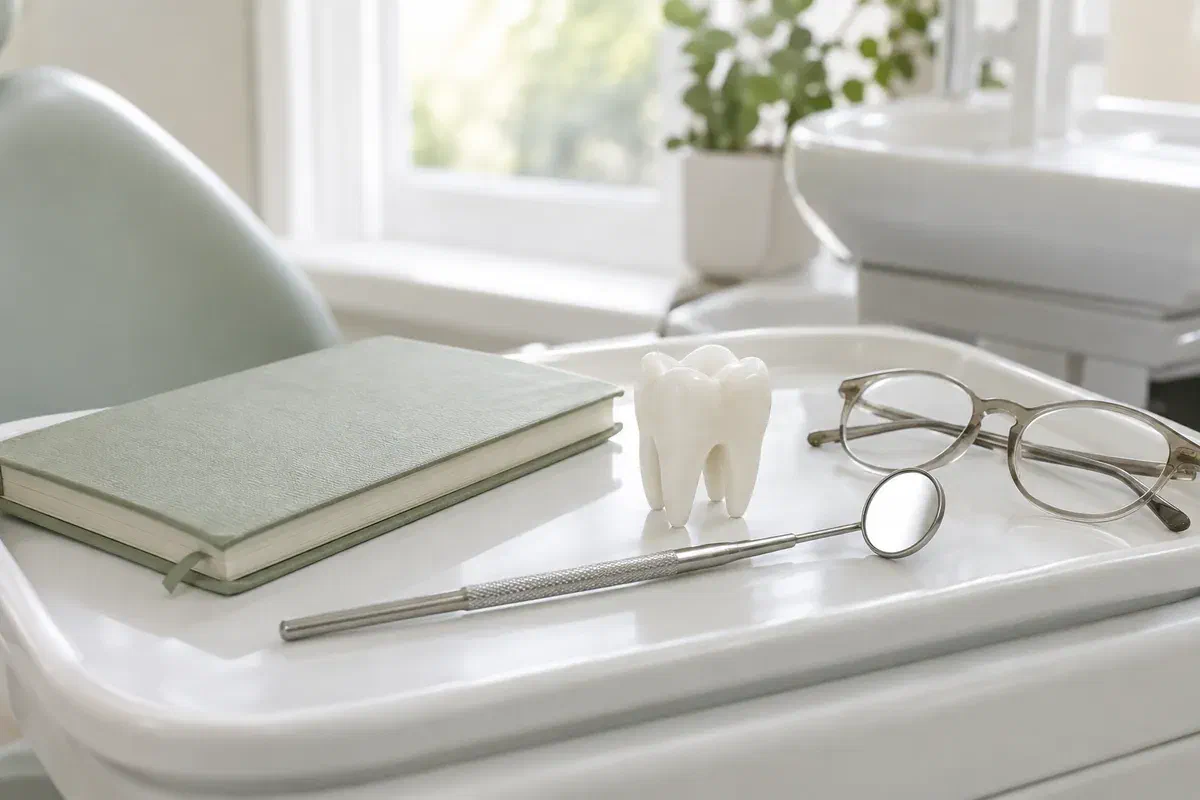
Illustrative dental mirror, tooth model, and notebook for an examination
Clues worth sharing

Your observations help decide what to check.

Old notes give a starting point. Symptoms you have noticed and any change in your health often decide whether further records would be useful today.

A tooth that seems different

Describe cold sensitivity, pain on biting, a rough edge or food packing between two teeth. When does it happen, and is it getting more frequent? A symptom that comes and goes can still point the dentist toward a particular area, even if it is quiet on the day.

Health and medication updates

Tell the team about new medicines, recent diagnoses, dry mouth or changes in your ability to keep up with home care. Bring an accurate medication list. Health changes may influence which questions are asked and which records or prevention ideas are discussed.

An area flagged last time

If a tooth, gum site or filling was being watched, raise it again and say whether it has felt any different. The dentist should be able to explain why it was flagged and what change, if any, would make further investigation worthwhile.

If a new problem develops before your recall, phone us. The team can help work out whether a focused visit, an urgent appointment, or simply waiting is the right course.

Individual, not automatic

Your care is tailored, including what is recorded.

Continuing care exists so that recommendations follow your findings and risk rather than one routine applied to all. That applies to timing, and it applies to imaging too. Your interval may change as your health does. Ask what your recall timing and any suggested records are based on, and whether treatment needs a separate visit.

No examination, with or without images, can promise that every condition will be detected or that nothing will develop later. A recall sits alongside daily care at home, treatment when indicated, and contacting us when symptoms arise. Clear explanations help you make informed choices about what to do next.

Patient information: CDA — continuing care and individualized recall

Earlier records as a reference

Relevant past images and notes can help show whether something has altered. Ask if a finding looks different from before, appears unchanged, or cannot yet be judged. If a new record is suggested, ask what specific question it is meant to answer.

Prevention adjusted to you

Use the visit to talk through how your home routine is working. If a product is difficult to use, or a technique has not made a difference, mention it. Honest feedback helps the team recommend a change you can sustain.

Priorities in plain terms

When several findings are discussed, ask which need attention soon and which can be reviewed later. A sentence on why each item matters, and what the options are, lets you plan without assuming everything is equally pressing.

From conversation to conclusions

The order of a typical recall

What your visit includes depends on your needs and what was booked. Before the day, ask if cleaning or imaging is expected, or whether a separate treatment visit might be recommended.

  1. Updates and your key question

    Open by explaining what has changed and the question you most want answered, including any concerns you have about X-rays. Your health information and earlier advice are reviewed together. A few notes written at the kitchen table beforehand help keep the conversation focused on what you came in for.

  2. The clinical examination

    The dentist looks at your teeth, gums and existing dental work, taking your history into account. Mention anything sore or any difficulty keeping your mouth open. You can ask what each part of the examination is checking.

  3. Deciding about imaging

    If an X-ray or other assessment would help answer a particular clinical question, it may be recommended and the reason explained. Imaging is not automatically repeated at each visit. Ask what a new image would show, and whether recent ones from another office can be reviewed instead.

  4. A plan for what follows

    Discuss the findings, any treatment options and the recommended timing for further care. Ask which symptoms mean you should call earlier. Leave knowing which upcoming visit is your routine recall and which, if any, addresses a specific issue.

After your recall

Stay on track between appointments.

An examination alone normally needs no recovery period. If a cleaning, fluoride or treatment was done at the same appointment, follow the separate guidance provided.

Keep a short summary

Note what was found, what was recommended and why, especially if records or more appointments were discussed. Ask about any unfamiliar term before you plan around it. Knowing what each next step is for is more useful than remembering a date.

Continue your home care

Keep to the cleaning routine discussed for your mouth, including the spaces between teeth. If something about it is not working, tell the team rather than saving it for the next checkup. A small adjustment or a quick demonstration may help.

Get in touch when something changes

New pain, swelling, a damaged restoration or a mouth change that persists deserves a call. Your booked recall was planned for routine review and may not be suitable timing for a fresh problem, which might need a different assessment.

Picking the appointment

A recall, a problem visit, or a treatment review

Let us know why you are calling. The appointment should fit the assessment you need rather than echo the label of your last visit.

For ongoing review of your oral health

Regular recall

Here the overall picture is brought up to date, prevention and any watched areas are revisited, and your next interval is agreed. Other care may be arranged with it when appropriate. Ask beforehand what will be included.

When a new symptom calls for attention

Focused examination

A broken tooth, localized pain or new swelling might need assessment before your recall. Explain what you are experiencing and for how long. The team can then help you pick a suitable next step rather than simply moving your checkup forward.

When healing or progress needs checking

Post-treatment review

Some treatment has a planned follow-up to see how you are responding. Its aims and timing can differ from a regular examination. Ask if you need both appointments, and what each is intended to show.

Puslinch recall FAQs

Imaging, records and other questions

Answers on X-rays, records from other offices, timing and what a recall does and does not include.

(905) 876-4488
Why were X-rays suggested this time but not at my last visit?
Imaging is recommended when it is expected to help answer a specific clinical question. That need can change from one visit to the next. Ask the dentist what the images are meant to show.
Can I decline X-rays at my recall?
You can discuss it. Ask why images are recommended, what question they would help answer, and what may be harder to assess without them. The dentist can explain the reasons so you can make an informed decision about your care, and your choice can be noted in your record.
Can images from my previous dentist be used?
Recent records may be useful. Ask about having them sent before your visit. The dentist will explain whether they answer the current question or whether new ones would add information.
How do I know when my next recall should be?
The dentist recommends a timing based on your findings and risk, and you can discuss it. Ask what it is based on and what would change it. The front desk can help you book, and it is worth mentioning any seasons when travelling in from the township is harder for you.
Is my teeth cleaning part of the recall examination?
Not necessarily. They have different purposes and may be scheduled together or separately. Confirm what your visit includes and whether cleaning needs will be decided after the examination.
I have a new ache, but my recall is in two weeks. Should I just wait?
Call and describe the symptoms. Your upcoming visit may not be soon enough or the right type of appointment. Mention any swelling, fever, injury or worsening pain so the team can advise you.
Recall exams for Puslinch

Ask your questions, and get a clear plan.

Contact our Bronte Street practice to schedule your recall. When you book, mention any new symptoms, records or treatment from another office, or health changes so the appointment can be set up appropriately.

Recall timing, and whether records are needed, are decided individually. Report new pain or swelling when it begins, even with a checkup already booked.

Visit Milton Dental Clinic
Unit 1, 342 Bronte St. S, Milton, ON L9T 5B7
Get directions Clinic hours
Monday–Thursday
11am–7pm
Friday–Sunday
By appointment only

Areas we serve

  • Milton
  • Oakville
  • Mississauga
  • Georgetown
  • Halton Hills
  • Acton
  • Campbellville
  • Brampton
  • Burlington
  • Puslinch
  • Rockwood
  • Erin
  • Caledon
  • Etobicoke
  • Old Milton
  • Bronte Meadows
  • Timberlea
  • Dorset Park
  • Dempsey
  • Clarke
  • Beaty
  • Coates
  • Harrison
  • Scott
  • Willmott
  • Ford
  • Bowes
  • Cobden
  • Walker
  • Mountain View
  • Milton Heights
  • Hawthorne Village
  • Valley View
  • Fallingbrook
  • Nassagaweya
  • Trafalgar
  • Esquesing
  • Nelson
  • Brookville
  • Moffat
  • Glen Williams
  • Norval
  • Limehouse
  • Stewarttown
  • Ashgrove
  • Hornby
  • Silver Creek
  • Speyside
  • Scotch Block
  • North Oakville
  • River Oaks
  • Glen Abbey
  • West Oak Trails
  • Palermo
  • Bronte Creek
  • College Park
  • Joshua Creek
  • Uptown Core
  • Preserve
  • Iroquois Ridge
  • Lisgar
  • Meadowvale
  • Meadowvale Village
  • Churchill Meadows
  • Erin Mills
  • Central Erin Mills
  • Streetsville
  • East Credit
  • Creditview
  • Heartland
  • Sheridan
  • Mount Pleasant
  • Credit Valley
  • Huttonville
  • Churchville
  • Springbrook
  • Northwest Brampton
  • Bram West
  • Fletcher's Meadow
  • Fletcher's Creek South
  • Alton Village
  • Orchard
  • Millcroft
  • Headon Forest
  • Tansley
  • Brant Hills
  • Tyandaga
  • Kilbride
  • Lowville
  • Aberfoyle
  • Morriston
  • Arkell
  • Hillsburgh
  • Freelton
  • Carlisle
  • Waterdown
  • Flamborough
  • Mountsberg

How can we help?

Milton Dental Clinic

Have a question about your smile? Choose the option that works best for you.

For urgent dental concerns, please call.
Messages are reviewed during clinic hours.