
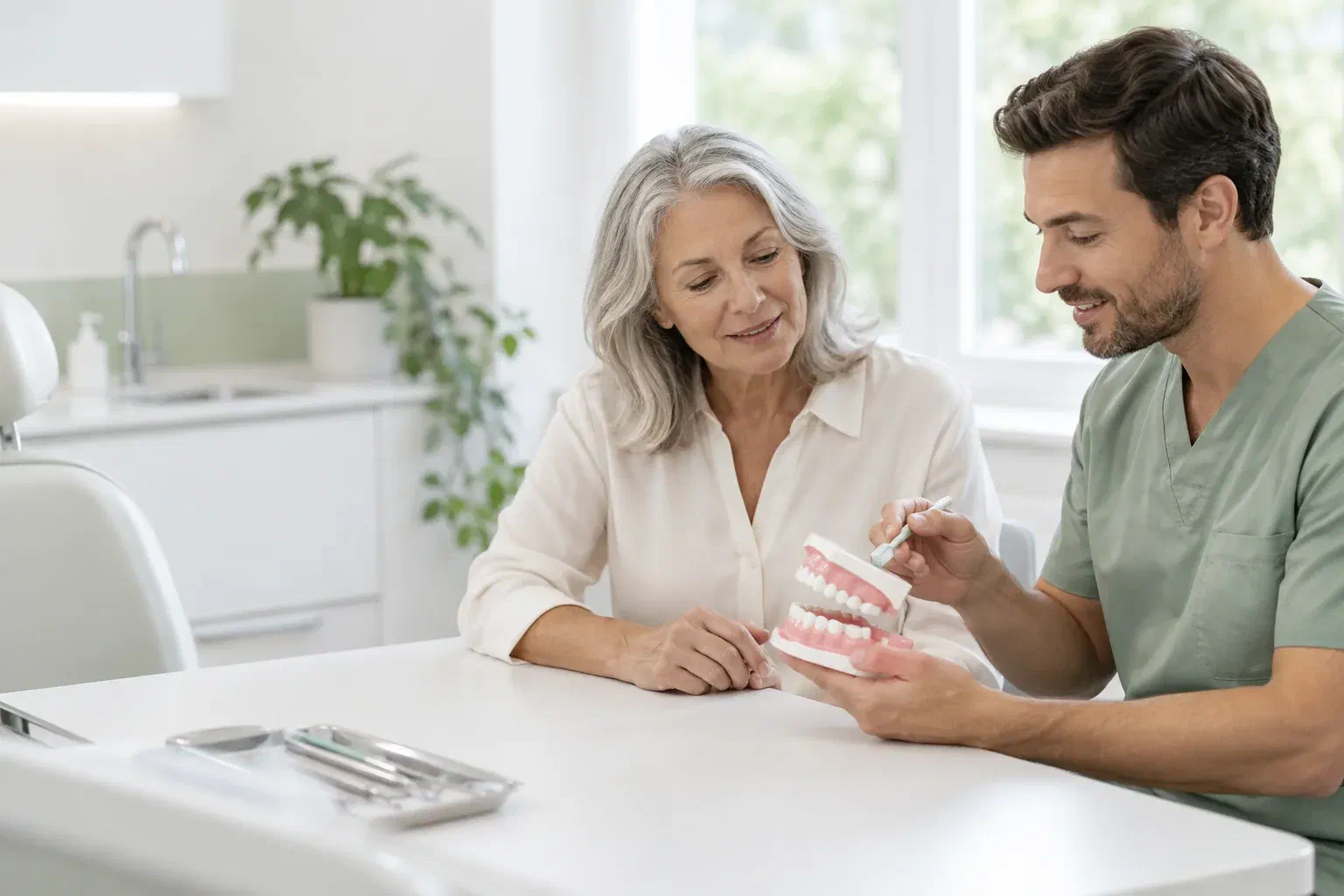
Illustrative conversation about caring for exposed root surfaces
General & Family Dentistry

Root-Cavity Prevention in Brampton

Helping a parent or partner brush can be the moment you first see receded gums and exposed roots. Families from Brampton can bring a loved one in for an exam, a caregiver-friendly routine, and clear advice on dryness and fluoride.

When someone helps with brushing

Two pairs of hands, one plan for the roots.

Caregivers often notice it first: gums that sit lower than they used to and a band of darker tooth showing at the base. That band is usually root. Without the enamel that protects the upper tooth, roots can be more vulnerable to decay, particularly when brushing has become harder or the mouth is dry. Exposure is a warning sign to plan, not a diagnosis of a cavity.

If your household is coming from Brampton, it helps when the person who assists with brushing comes along. The dentist examines the roots, and we ask both of you about sensitivity, dryness, food that stays behind, and which areas are difficult to reach. That shared picture helps separate protection needs from a problem that needs repair.

The routine we suggest should work for whoever holds the brush. That may mean a different grip or brush, a fluoride product with simple directions, or a look at medicines that reduce saliva. No routine can promise a healthy root, and it should be revisited when health, medicines, or the level of help needed changes.

Plan root care with a caregiver
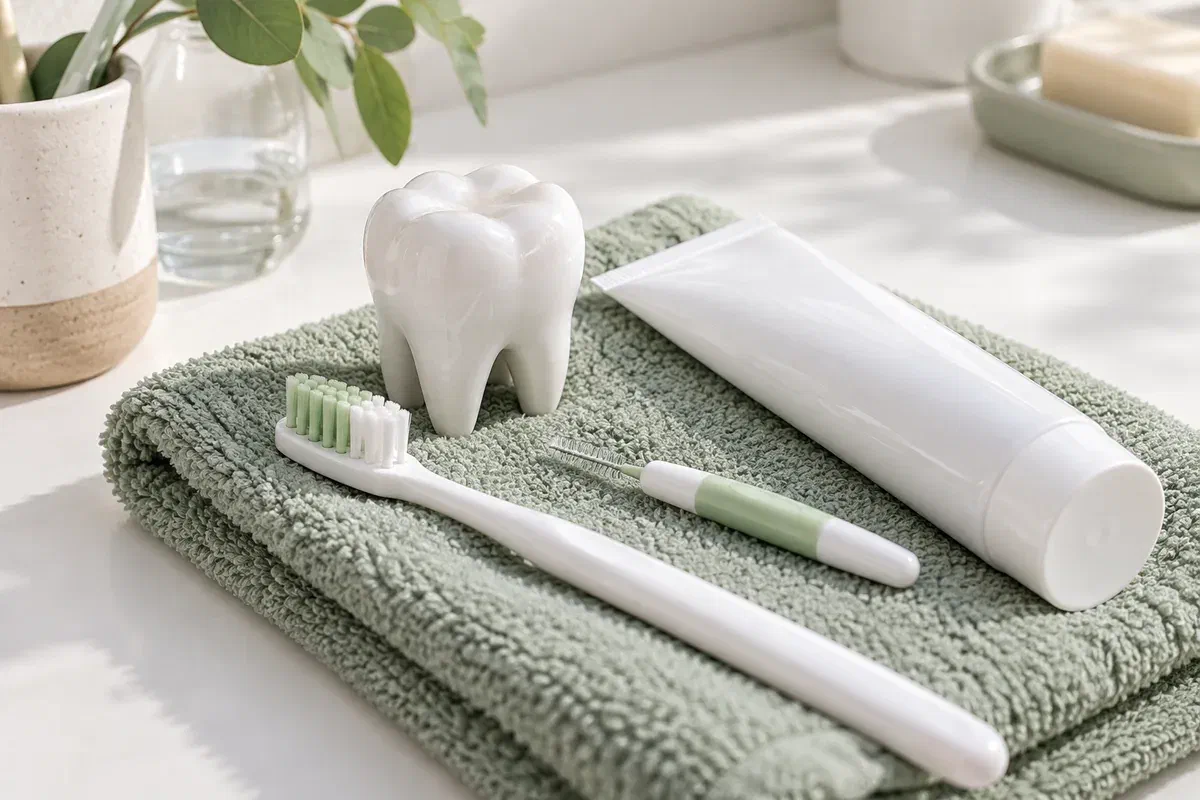
Illustrative soft toothbrush and interdental brush for a preventive routine
What helpers often spot

Notice it, describe it, then let us look.

Root-surface risk involves the exposed area, saliva, and how easily it can be cleaned. Share what you see; the exam decides whether there is decay.

Wincing at the gumline

Your family member may flinch when you brush near the gum, or avoid cold drinks on one side. Note when this began and what seems to trigger it. Several conditions cause sensitivity, so we examine first instead of guessing at the cause.

A mouth that stays dry

Cracked lips, frequent sips, or trouble swallowing dry food can signal reduced saliva, sometimes linked to medicines. Bring a full medicine list. Prescribed treatment should continue; we can discuss raising the dryness with the prescriber.

Areas the brush keeps missing

Helping someone else brush means working at an awkward angle, and a partial denture, bridge, or crowded teeth can add to that. Show us where plaque builds up. A demonstration with you holding the brush is often the most useful part.

A dark area at the gum edge does not by itself mean decay. Avoid scraping it with a pick. Arrange an assessment if it changes, food packs there, or your family member says it hurts.

Why a shared routine helps

Clear steps take the guesswork out of helping.

Prevention for roots draws on daily cleaning, fluoride, how often sweet things are eaten or sipped, and saliva. Every mouth weighs these differently. An older adult with a dry mouth and past root decay needs more support than someone with a little recession and no history of cavities.

None of this restores lost tooth or guarantees that a root will stay sound, and an exposed root does not always need a filling. For any recommendation, it is fair to ask whether it is meant to stop decay starting, keep an early spot from progressing, or repair something already found.

Patient information: ADA — aging, exposed roots, and caries risk

Knowing where to aim

When both of you can see which surfaces matter, brushing becomes quicker and more effective. We point out the areas and show the brush position from the helper’s side. A practice run in the chair builds confidence for home.

Simple product directions

Any fluoride product we suggest comes with its purpose, timing, and whether a pharmacy has to fill it. Tell us what is already in the bathroom. A short, clear list is easier for a household to keep up than several overlapping products.

Room to change as needs grow

More help may be needed over time, dryness may increase, or new dental work may change access. Bring those updates to reviews. We would much rather adapt the routine than have a family keep following one that no longer works.

What to expect together

A visit planned around the person and the helper.

An exam separates exposed but healthy roots from active decay. Advice follows the findings and what the household can manage between visits.

  1. Hear from both of you

    We ask about past cavities, recession, dryness, medicines, eating and drinking patterns, and who does what during brushing. Honest detail about the real routine helps us suggest changes that will last.

  2. Examine roots and gums

    The dentist looks over the exposed surfaces and gum tissue and decides whether additional records would help. Ask which spots look healthy, which should be watched, and whether any need treatment. A mirror helps both of you see the location.

  3. Build the routine

    We agree on tools a helper can manage, the right fluoride level, and how to handle dryness or between-meal sweets. Anything stronger than a store product, or applied in the chair, comes with written steps and a follow-up date. Treatment for existing decay is discussed separately.

  4. Plan the check-in

    Set a time to recheck the areas and know what will be compared. If brushing becomes harder before then, call us. Prevention works best as an ongoing conversation, adjusted using findings and what the family tells us.

Daily care at home

Gentle, regular, and shared.

Follow the advice given for this person’s mouth. Keep any prescribed fluoride product in its original container and out of reach of children in the home.

Light strokes near the gum

Pressing harder can make the gum sore without cleaning better. Use the brush and angle we demonstrated and ask about gentle ways to clean between teeth. If brushing causes discomfort, tell us so we can look at why.

Watch the comfort sweets

Hard candies, sweetened drinks, or lozenges used to relieve dryness can work against the plan when taken often. Tell us what is being used. We can suggest alternatives and look into the dryness itself.

Pass changes on to us

If you notice new pain, a change in a tooth’s surface, or food collecting, call rather than testing the area. Keep reviews going even when all seems well, since comfort alone cannot show that a root surface is stable.

Deciding what comes next

What the exam finds shapes the choice.

Ask about the findings before comparing options. Keeping a healthy root healthy, handling an early lesion, and fixing a cavity are each a separate decision.

Roots that need looking after

A home routine with coaching

A helper-friendly brushing method, suitable fluoride, and a look at snacking or sipping make up the base. We list the surfaces to watch and set a recheck. This path still includes review of anything diagnosed.

Raised risk or an early lesion

Added fluoride or lesion care

Sometimes the dentist suggests going a step further, for example a fluoride treatment placed in the chair or a stronger product for home. Find out what it is meant to achieve, where its limits lie, whether it changes how the tooth looks, and who will track it. Suitability is confirmed for this person, not assumed.

When decay has caused damage

Repairing the tooth

The depth and position of a cavity, how easily it can be reached, and the tooth’s overall condition guide repair. The dentist explains what is possible. Prevention continues afterward, because a repair does not remove the reasons decay began.

Patient information: ADA — fluoride and caries prevention

Caregiver questions

Brushing for a loved one raises good questions.

Questions about brushing for another person, fluoride, dryness, and gumline changes are all welcome. Advice should be based on an examination.

(905) 876-4488
Can I come into the appointment to learn how to brush for my parent?
Yes, with their agreement. Having the helper present lets us demonstrate techniques at the right angle and answer questions on the spot. It is often the most practical way to turn advice into a routine at home.
What kind of toothbrush is easiest when brushing for someone else?
It depends on the person and on you. Some helpers prefer a powered brush, while others find a small-headed manual brush easier to control. Bring what you use now, and we can try options during the visit.
Is it normal for older gums to recede?
Recession becomes more common with age, but it has several possible causes. The dentist can look at the pattern and suggest whether a separate gum assessment is worthwhile. Either way, the exposed root may need extra protection.
My mother takes several medicines. Could they be drying her mouth?
Some medicines can reduce saliva. Please bring a complete list to the visit. Do not change any prescription yourselves; if dryness seems linked, we can talk about raising it with her doctor or pharmacist.
Can we book family appointments from Brampton on the same day?
Ask the front desk; grouping visits is often possible depending on the schedule. Weekday appointments are offered Monday to Thursday from 11am to 7pm, and Friday to Sunday are by appointment only.
Does a partial denture affect the roots it sits against?
Teeth that support a partial denture can collect plaque where the clasps or edges sit, including on exposed root. Ask how to clean those areas and the denture itself. Report any soreness or food trapping around those teeth.
Visiting from Brampton

Bring the person you help, and bring your questions.

Call our Bronte Street practice about recession, dryness, or changes near the gum for you or someone you care for. We will examine the roots, explain the findings, and talk through preventive or treatment options that suit.

An exposed root is not the same as a decayed one. New pain or an area that is changing should be checked rather than handled only with prevention products.

Visit Milton Dental Clinic
Unit 1, 342 Bronte St. S, Milton, ON L9T 5B7
Get directions Clinic hours
Monday–Thursday
11am–7pm
Friday–Sunday
By appointment only

Areas we serve

  • Milton
  • Oakville
  • Mississauga
  • Georgetown
  • Halton Hills
  • Acton
  • Campbellville
  • Brampton
  • Burlington
  • Puslinch
  • Rockwood
  • Erin
  • Caledon
  • Etobicoke
  • Old Milton
  • Bronte Meadows
  • Timberlea
  • Dorset Park
  • Dempsey
  • Clarke
  • Beaty
  • Coates
  • Harrison
  • Scott
  • Willmott
  • Ford
  • Bowes
  • Cobden
  • Walker
  • Mountain View
  • Milton Heights
  • Hawthorne Village
  • Valley View
  • Fallingbrook
  • Nassagaweya
  • Trafalgar
  • Esquesing
  • Nelson
  • Brookville
  • Moffat
  • Glen Williams
  • Norval
  • Limehouse
  • Stewarttown
  • Ashgrove
  • Hornby
  • Silver Creek
  • Speyside
  • Scotch Block
  • North Oakville
  • River Oaks
  • Glen Abbey
  • West Oak Trails
  • Palermo
  • Bronte Creek
  • College Park
  • Joshua Creek
  • Uptown Core
  • Preserve
  • Iroquois Ridge
  • Lisgar
  • Meadowvale
  • Meadowvale Village
  • Churchill Meadows
  • Erin Mills
  • Central Erin Mills
  • Streetsville
  • East Credit
  • Creditview
  • Heartland
  • Sheridan
  • Mount Pleasant
  • Credit Valley
  • Huttonville
  • Churchville
  • Springbrook
  • Northwest Brampton
  • Bram West
  • Fletcher's Meadow
  • Fletcher's Creek South
  • Alton Village
  • Orchard
  • Millcroft
  • Headon Forest
  • Tansley
  • Brant Hills
  • Tyandaga
  • Kilbride
  • Lowville
  • Aberfoyle
  • Morriston
  • Arkell
  • Hillsburgh
  • Freelton
  • Carlisle
  • Waterdown
  • Flamborough
  • Mountsberg

How can we help?

Milton Dental Clinic

Have a question about your smile? Choose the option that works best for you.

For urgent dental concerns, please call.
Messages are reviewed during clinic hours.