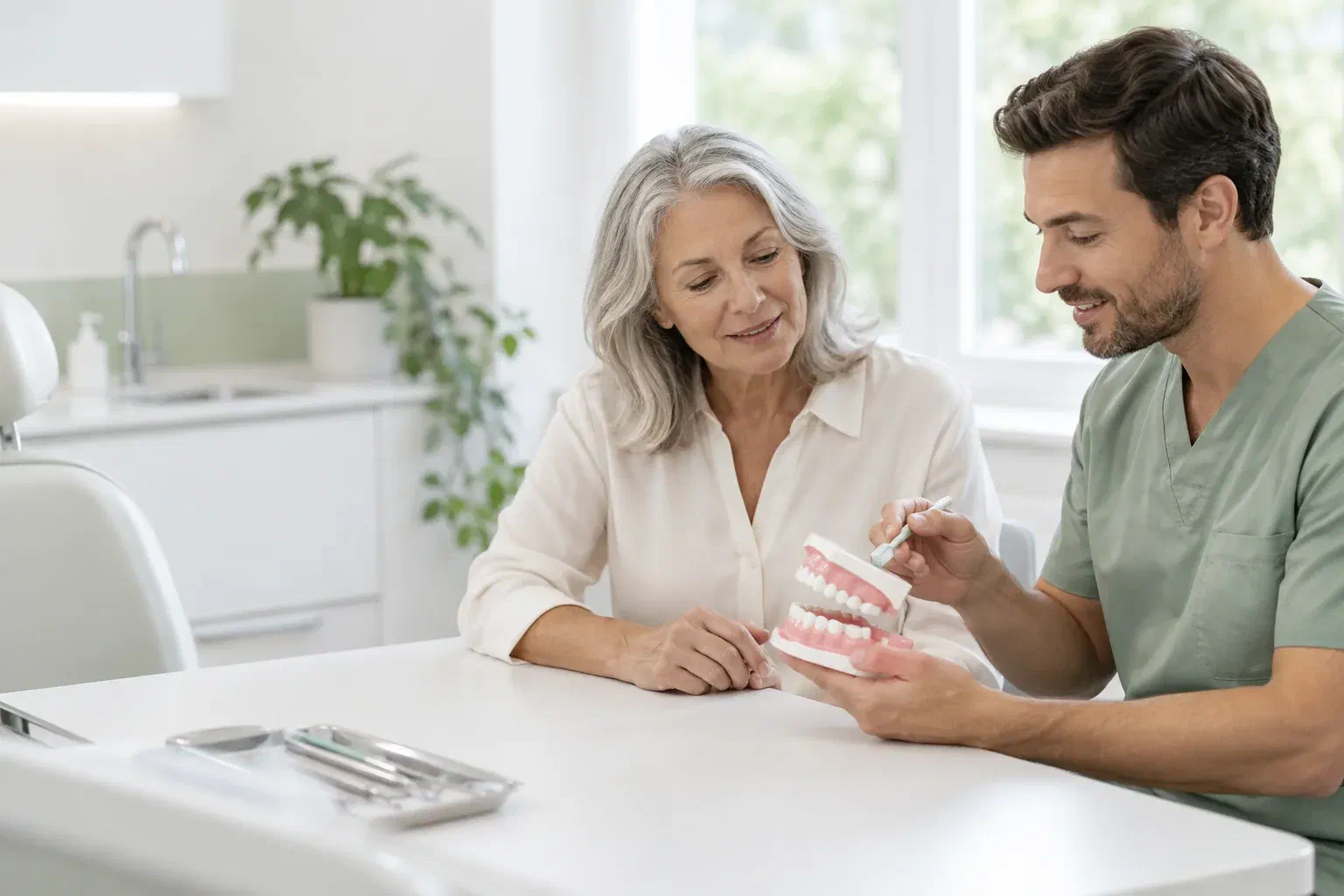
Illustrative conversation about caring for exposed root surfaces
General & Family Dentistry

Root-Cavity Prevention in Caledon

Offered a fluoride treatment at your check-up and unsure whether you need it? For exposed roots, that choice depends on your own risk. From Bolton or elsewhere in Caledon, come in to weigh it up with the dentist and leave with a clear home plan.

A Caledon decision point

Should you say yes to the fluoride?

It is a common moment in the dental chair: the cleaning is done, and someone asks whether you would like a fluoride application. For exposed roots, it is a reasonable question to think about. Root surface, uncovered when gum recedes, has no enamel shell and can decay more easily. That does not mean a cavity is present, and it does not mean every exposed root needs extra fluoride.

Households across Caledon, from Bolton to the smaller villages, can use a visit to our Bronte Street practice to look at the decision properly. The dentist examines the exposed roots, and we ask about sensitivity, dryness, past cavities, food trapping, and how easy the gumline is to clean. Those answers show whether the job is protection, closer management, or repair.

Sometimes the answer is an in-office application; sometimes a home product, better technique, or habit changes are enough. Dryness linked to medicines may also come up. No fluoride step guarantees a root will stay healthy, so the choice should be revisited as your health, medicines, or routine change.

Weigh up fluoride for exposed roots
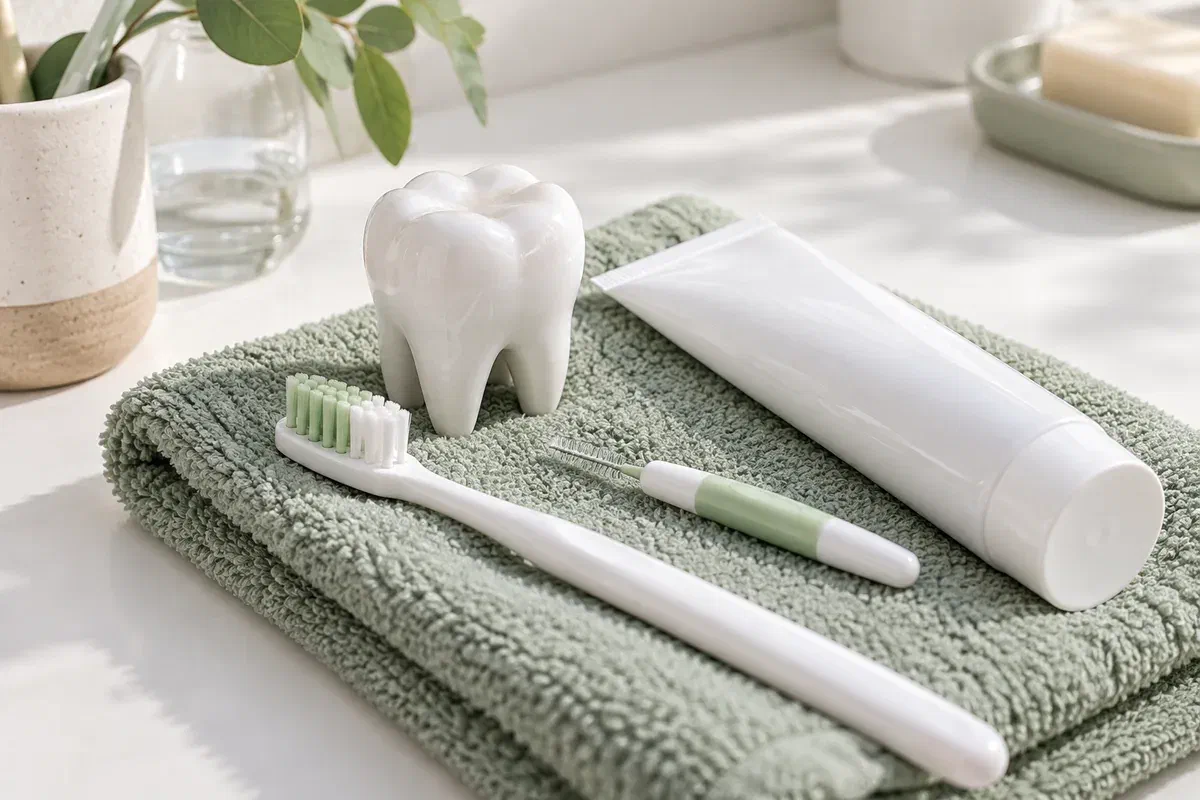
Illustrative soft toothbrush and interdental brush for a preventive routine
Factors that shape the decision

Why one person needs more than another

Whether extra fluoride makes sense depends on the exposed surface and the conditions around it. Tell us what you notice, and let the examination determine whether decay is present.

Recession with sensitivity

A tooth that looks longer, or stings with cold near the gum, may have exposed root. Mention when it began and what triggers it. Sensitivity can stem from several causes, so the dentist checks before recommending fluoride or a desensitizing product.

Reduced saliva

Less saliva can raise root-surface risk, which may change the fluoride discussion. Tell us if your mouth feels dry, especially after a medicine change, and bring your list. Keep taking prescribed treatment; the dryness can be raised with your prescriber.

Areas that are tricky to clean

Crowded teeth, a bridge, or a filling edge can keep plaque on a root despite careful brushing. Show us where. Better cleaning in that spot can be just as important as any fluoride step, and we can demonstrate how.

Discolouration near the gum does not, alone, prove root decay. Please do not scrape at it. Book a check if the colour shifts, food starts lodging there, or the tooth becomes uncomfortable.

What a considered choice offers

Fluoride as part of a plan, not a reflex.

Root-cavity prevention weighs fluoride alongside cleaning, sugar frequency, and saliva. For someone with a dry mouth and earlier root decay, extra fluoride is often part of the conversation. For someone with slight recession and a clean record, home care may carry most of the load.

Fluoride cannot rebuild lost structure, and no step guarantees an exposed root stays sound. Exposure also does not mean you need fillings. Each time something is suggested, ask what it is intended to do: protect healthy roots, help an early change stabilize, or address damage that has been found.

Patient information: ADA — aging, exposed roots, and caries risk

An informed yes or no

Knowing your risk lets you decide about in-office fluoride with confidence. Ask what it involves, how often it might be repeated, and what it adds to your home routine.

Home products that match

If a home fluoride product is suggested, we explain its purpose, the right amount and timing, and whether it requires a prescription. Bring your current toothpaste so we can tell you whether it already fits.

A routine that is revisited

Risk can rise or fall. If dryness changes, new dental work alters access, or someone begins helping with brushing, mention it at reviews. The fluoride plan can be stepped up or scaled back accordingly.

From question to decision

Understand your risk, then choose.

The exam separates healthy exposed roots from decay and helps gauge risk. The fluoride and home-care plan follows those findings and what suits you.

  1. Go through your history

    We talk about any earlier cavities, how far your gums have receded, whether your mouth runs dry, which medicines you take, and how you eat and clean. Mention if anyone helps you. Everyday detail helps us judge where you sit on the risk scale.

  2. Look at every exposed root

    Each uncovered root and the gum around it is examined, and the dentist weighs up whether images or other records are worth taking. You will hear which surfaces are sound, which are being watched, and whether anything needs care now, and the dentist can show you where.

  3. Decide on fluoride and home steps

    With the findings in hand, we discuss whether an in-office application, a home product, or neither is recommended, along with cleaning tools and ideas for dryness or frequent sweets. If decay needs treatment, that is discussed separately, with its benefits and limitations.

  4. Review the choice later

    Agree on when the roots will be rechecked and what will be looked at. Tell us before then if anything changes. Fluoride decisions are not permanent; they can be revisited as findings and your circumstances change.

After the visit

Make the home routine count.

Follow the instructions given for your mouth, including any advice about eating or drinking after an in-office application. Store prescribed products away from children.

Brush gently at the root

Use the soft brush and technique we showed you, not extra pressure. We can demonstrate how to clean between teeth without irritating the gum. If brushing hurts, let us know so we can check the cause.

Think about sweet sips

Frequent sugary drinks, candies, or lozenges, especially for a dry mouth, can work against fluoride. Tell us what you use. We can suggest alternatives and talk about having the dryness assessed.

Report changes promptly

New pain, a rough patch, or food trapping should be mentioned rather than tested with cold water or a sharp object. Keep your reviews even if you feel fine, because comfort cannot confirm a root surface is stable.

The range of choices

Home care, added fluoride, or repair?

The examination tells you which applies. A sound exposed root, an area where an early lesion is forming, and a tooth that has lost structure each lead to a different plan.

Lower-risk roots needing protection

Home prevention alone

Careful cleaning, a suitable fluoride toothpaste, and attention to snacking or sipping may be enough. We note which roots to keep an eye on and the recheck date. This choice still includes review of anything diagnosed.

Higher risk or an early lesion

In-office or prescription fluoride

A professionally applied fluoride, a prescription product, or another approach to an early lesion may be recommended. Ask its purpose, what it will not achieve, whether it affects appearance, and how its effect will be checked.

When prevention cannot reverse the damage

Restoring a cavity

Depth, location, access, and the condition of the tooth determine repair options, which the dentist explains. Fluoride and good habits still matter afterward, because a filling does not change the factors that led to decay.

Patient information: ADA — fluoride and caries prevention

Fluoride decision questions

Before you accept or decline

Ask about in-office fluoride, home products, recession, and dryness. The right answer depends on your examination and risk.

(905) 876-4488
What actually happens during an in-office fluoride application?
A fluoride product is applied to the teeth by the dental team, often after cleaning. The process is usually quick. Ask what product is used, any instructions about eating or drinking afterward, and why it was suggested for you.
Is in-office fluoride worth it if I already use fluoride toothpaste?
It depends on your risk. For some people, toothpaste and good technique are enough; for others, an additional step is recommended. The dentist can explain the reasoning based on your exam.
How often would a professional fluoride treatment be repeated?
There is no single schedule. Frequency depends on your risk and what reviews show. Ask what interval is suggested and whether it might change over time.
Can fluoride stain or change how my teeth look?
Some fluoride products used for lesion management can affect appearance, while others do not. Ask about this specifically if it matters to you, so you can weigh it before deciding.
Can several family members from Caledon have check-ups on the same day?
Ask the front desk about grouping appointments. Weekday hours are Monday to Thursday, 11am to 7pm, and Friday to Sunday are by appointment only, so planning ahead helps.
Will receded gums grow back if I protect the roots well?
Root-surface prevention protects exposed tooth; it does not restore gum that has receded. If recession concerns you, ask about the cause and whether a separate gum assessment would help.
For Caledon

Decide about fluoride with the facts in front of you.

Reach our Bronte Street practice with questions about exposed roots, recession, dryness, or professional fluoride. The dentist will examine the roots, explain the findings, and help you choose a preventive or treatment path that suits.

Exposed roots are not automatically decayed. New pain or an area that is changing should be assessed rather than handled only with fluoride.

Visit Milton Dental Clinic
Unit 1, 342 Bronte St. S, Milton, ON L9T 5B7
Get directions Clinic hours
Monday–Thursday
11am–7pm
Friday–Sunday
By appointment only

Areas we serve

  • Milton
  • Oakville
  • Mississauga
  • Georgetown
  • Halton Hills
  • Acton
  • Campbellville
  • Brampton
  • Burlington
  • Puslinch
  • Rockwood
  • Erin
  • Caledon
  • Etobicoke
  • Old Milton
  • Bronte Meadows
  • Timberlea
  • Dorset Park
  • Dempsey
  • Clarke
  • Beaty
  • Coates
  • Harrison
  • Scott
  • Willmott
  • Ford
  • Bowes
  • Cobden
  • Walker
  • Mountain View
  • Milton Heights
  • Hawthorne Village
  • Valley View
  • Fallingbrook
  • Nassagaweya
  • Trafalgar
  • Esquesing
  • Nelson
  • Brookville
  • Moffat
  • Glen Williams
  • Norval
  • Limehouse
  • Stewarttown
  • Ashgrove
  • Hornby
  • Silver Creek
  • Speyside
  • Scotch Block
  • North Oakville
  • River Oaks
  • Glen Abbey
  • West Oak Trails
  • Palermo
  • Bronte Creek
  • College Park
  • Joshua Creek
  • Uptown Core
  • Preserve
  • Iroquois Ridge
  • Lisgar
  • Meadowvale
  • Meadowvale Village
  • Churchill Meadows
  • Erin Mills
  • Central Erin Mills
  • Streetsville
  • East Credit
  • Creditview
  • Heartland
  • Sheridan
  • Mount Pleasant
  • Credit Valley
  • Huttonville
  • Churchville
  • Springbrook
  • Northwest Brampton
  • Bram West
  • Fletcher's Meadow
  • Fletcher's Creek South
  • Alton Village
  • Orchard
  • Millcroft
  • Headon Forest
  • Tansley
  • Brant Hills
  • Tyandaga
  • Kilbride
  • Lowville
  • Aberfoyle
  • Morriston
  • Arkell
  • Hillsburgh
  • Freelton
  • Carlisle
  • Waterdown
  • Flamborough
  • Mountsberg

How can we help?

Milton Dental Clinic

Have a question about your smile? Choose the option that works best for you.

For urgent dental concerns, please call.
Messages are reviewed during clinic hours.