
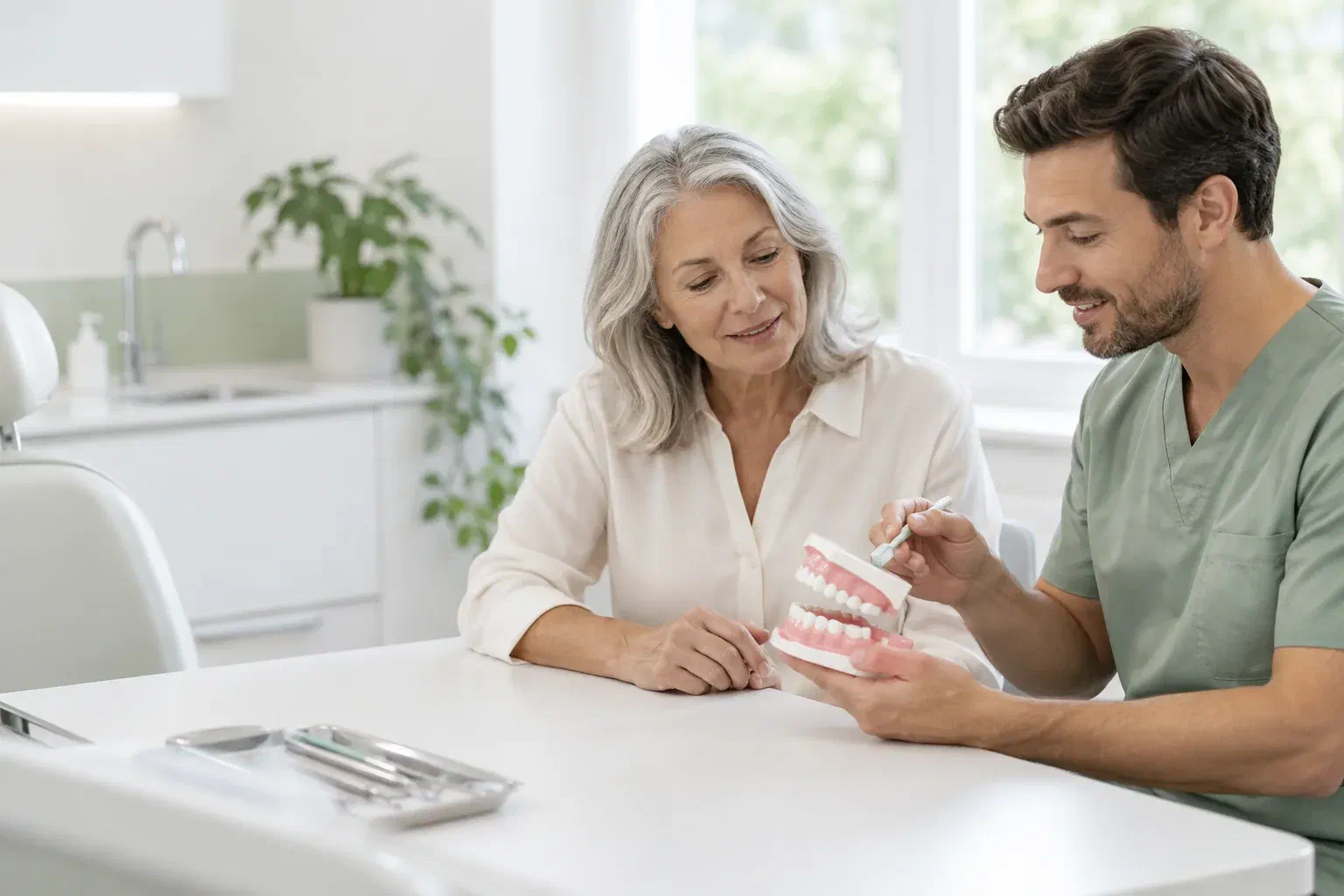
Illustrative conversation about caring for exposed root surfaces
General & Family Dentistry

Root-Cavity Prevention in Mississauga

Standing in the toothpaste aisle wondering which tube protects exposed roots? Before you buy, let us examine those surfaces. Visitors from Mississauga get product advice tied to their actual risk, plus a cleaning and review plan.

Before the toothpaste aisle

Choose the product after the exam, not before.

Shelves are full of pastes promising sensitivity relief, extra strength, or enamel care. Exposed roots raise a slightly different question. Once gum recedes, the root underneath lacks enamel and can be more prone to decay. Exposure alone is not a cavity, and the best product depends on what the surfaces look like and what else affects your risk.

For people travelling from Mississauga, including the western neighbourhoods such as Meadowvale and Churchill Meadows, we begin with an examination rather than a shopping list. We look at the root surfaces and ask about twinges, dryness, places that trap food, and spots that are tricky to brush. That tells us whether the job is protection or repair.

After that, recommendations get specific: which fluoride strength, how to use it, and whether a prescription is involved, along with brushing changes or a talk about dry-mouth medicines. No product guarantees a healthy root, and the plan should be updated when your health, medicines, or routine change.

Get product advice for exposed roots
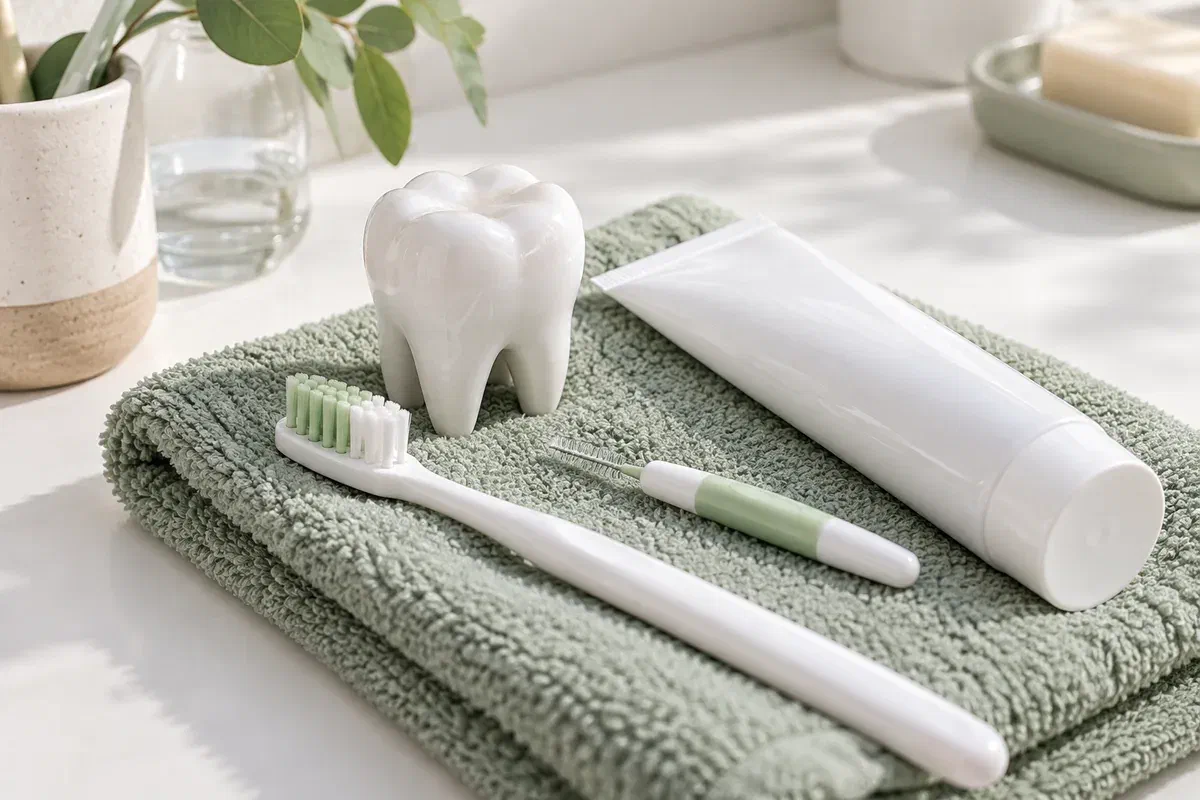
Illustrative soft toothbrush and interdental brush for a preventive routine
Details that guide the choice

Your symptoms narrow the options.

The right advice depends on the exposed surface and everything around it. Tell us what you notice without deciding for yourself whether a tooth is decayed.

Sensitivity right at the gum

A sudden sting with cold drinks, or a tooth that looks longer than before, may mean a root is exposed. Tell us when it started and what provokes it. Since other problems can also cause sensitivity, we check before picking a toothpaste for you.

Ongoing dryness

If your tongue sticks to the roof of your mouth, or dryness began with a medicine change, mention it. Bring your medication list. Do not stop anything prescribed; we can discuss whether to raise it with your pharmacist or doctor.

Hard-to-reach surfaces

Crowding, a bridge, or a filling edge can make one area difficult no matter which paste you use. Show us the spot. The right tool and a demonstration often matter more than the product on the brush.

Colour change near the gum is not enough to call something root decay. Avoid scraping it. Book an assessment if the surface changes, food collects, or the tooth feels uncomfortable.

Why advice beats guessing

The right tube is one part of a bigger plan.

Fluoride matters, and so do cleaning technique, how often sugar is in your mouth, and how much saliva you produce. A person with a dry mouth and earlier root decay may need a stronger approach than someone with a small area of recession and few cavities.

Even the best product cannot rebuild lost structure or guarantee an exposed root stays healthy, and it is not true that every root needs a filling. When something is recommended, it is fair to ask which job it has: keeping a sound surface sound, slowing an early change, or dealing with damage that is already there.

Patient information: ADA — aging, exposed roots, and caries risk

The product matched to your risk

We explain what a suggested fluoride product is for, when in the day it works best, and if it is something only a pharmacy can dispense. If you are making the trip from Mississauga, pack your current toothpaste so we can tell you if it already fits or what to change.

Technique that reaches the surface

Even a well-chosen paste only helps where it reaches. We show you which roots need attention and how to angle the brush. Trying it during the visit makes the movement easier to repeat at home.

Fewer products, used well

Stacking rinses, gels, and pastes can make a routine hard to follow. We aim for a short list you will actually use. If dryness, new dental work, or your health changes, the list can be revised at your review.

How we decide together

Look first, recommend second.

Examination tells a vulnerable but healthy surface apart from active decay. Recommendations follow from what is found and what you can keep doing at home.

  1. Tell us what you use now

    Bring or describe your toothpaste, rinses, and aids. We also ask about past cavities, recession, dryness, medicines, and eating habits, and whether anyone helps with your care. Real detail leads to better advice than an idealized routine.

  2. Examination of the roots

    The dentist checks the exposed surfaces and gums and decides whether more records are needed. Ask which areas are healthy, which need monitoring, and whether any need treatment. A mirror can make the location easy to see.

  3. Pick products and methods

    We settle on a fluoride approach, the brushes and aids that suit your hands, and a way of handling dryness or between-meal sweets. Anything prescription-strength or applied in the chair comes with written directions and a date to look at it again. Treatment for decay, if needed, gets its own explanation.

  4. Check whether it is working

    Agree when the roots will be reviewed and what will be compared. If the product is hard to use or irritates, tell us sooner. A prevention plan should change based on findings and your experience, not stay frozen after one visit.

Using what was recommended

A good product, used the right way.

Follow the directions given for your mouth. Prescription-strength fluoride products need their own instructions and should be kept away from children.

Let the brush do the work

Scrubbing an exposed root does not clean it better. Use the soft brush and motion we showed you, and ask how to get between teeth gently. If cleaning hurts, tell us so we can look at why and adjust the method.

Look at what you snack on

Sweet drinks, candies, or lozenges taken often to deal with dryness can undo some of the benefit of fluoride. Tell us what you use and how often. We can suggest swaps and look into the dryness itself.

Leave the tooth alone, but tell us

If an area hurts, feels rough, or catches food, mention it rather than testing it with ice or a toothpick. Keep your reviews even when it feels fine, because comfort cannot show whether the root surface is stable.

Beyond the over-the-counter shelf

When a store product is enough, and when it is not.

The examination comes first. Protecting a healthy root, managing an early lesion, and repairing a cavity are separate decisions.

Roots that mainly need protection

Home prevention with guidance

Your regular or a suggested toothpaste, a careful brushing method, and attention to snacking or sipping may be the core. We note which surfaces to watch and when. Choosing prevention does not mean skipping review of anything diagnosed.

Higher risk or an early lesion

Stronger or in-office measures

The dentist may talk about a prescription fluoride product, a professional application, or another way to manage an early lesion. Ask what it is meant to do, what it cannot do, whether it affects appearance, and how it will be followed.

Where structure is already lost

A filling or other repair

Depth, location, access, and the tooth’s overall condition guide the repair options. The dentist explains them. Prevention still applies afterward, because the factors that led to decay do not disappear with a filling.

Patient information: ADA — fluoride and caries prevention

Product and prevention questions

What to ask before you buy

Questions about fluoride strength, sensitivity pastes, rinses, and dryness are welcome. Recommendations should follow an exam of your own teeth.

(905) 876-4488
Is a high-fluoride toothpaste right for everyone with recession?
Not always. Some people benefit from a stronger product, while others are well served by their usual toothpaste and better technique. It depends on your risk. If a prescription product is suggested, it comes with specific directions.
Do sensitivity toothpastes also prevent root cavities?
Many contain fluoride, but their main purpose is to ease discomfort. Relief from sensitivity does not tell you whether a root is healthy. Bring the product you use, and we can discuss whether it suits your plan.
Should I add a fluoride mouthrinse?
A rinse can be part of some plans, but it is not automatically needed. Ask whether it adds anything to what you already use and how to time it. A simpler routine you follow consistently may do more than several products used sometimes.
Can children in the house use my prescription toothpaste?
No. Prescription-strength fluoride products are for the person they were prescribed for and should be stored out of children’s reach. Children’s fluoride needs are assessed separately, and the team can advise on what suits them.
Why do you want to see my brush and toothpaste at the visit?
Seeing what you actually use helps us give practical advice. A worn brush, a very firm one, or a product that does not match your risk can all be adjusted. It also avoids recommending something you already have.
If I have exposed roots, does that mean I will need fillings there?
No. Many exposed roots stay healthy with appropriate care and review. A filling is considered when a lesion with lost structure is found. Ask what the exam shows and what the plan is for each area.
Planning from Mississauga

Bring your toothpaste. Leave with a plan.

Reach our Bronte Street practice to talk about exposed roots, dryness, or which products suit you. We will examine the surfaces, explain what we see, and help you weigh preventive or treatment options for your teeth.

Exposed root is not automatically decay. New pain or a surface that keeps changing should be examined rather than treated only with store products.

Visit Milton Dental Clinic
Unit 1, 342 Bronte St. S, Milton, ON L9T 5B7
Get directions Clinic hours
Monday–Thursday
11am–7pm
Friday–Sunday
By appointment only

Areas we serve

  • Milton
  • Oakville
  • Mississauga
  • Georgetown
  • Halton Hills
  • Acton
  • Campbellville
  • Brampton
  • Burlington
  • Puslinch
  • Rockwood
  • Erin
  • Caledon
  • Etobicoke
  • Old Milton
  • Bronte Meadows
  • Timberlea
  • Dorset Park
  • Dempsey
  • Clarke
  • Beaty
  • Coates
  • Harrison
  • Scott
  • Willmott
  • Ford
  • Bowes
  • Cobden
  • Walker
  • Mountain View
  • Milton Heights
  • Hawthorne Village
  • Valley View
  • Fallingbrook
  • Nassagaweya
  • Trafalgar
  • Esquesing
  • Nelson
  • Brookville
  • Moffat
  • Glen Williams
  • Norval
  • Limehouse
  • Stewarttown
  • Ashgrove
  • Hornby
  • Silver Creek
  • Speyside
  • Scotch Block
  • North Oakville
  • River Oaks
  • Glen Abbey
  • West Oak Trails
  • Palermo
  • Bronte Creek
  • College Park
  • Joshua Creek
  • Uptown Core
  • Preserve
  • Iroquois Ridge
  • Lisgar
  • Meadowvale
  • Meadowvale Village
  • Churchill Meadows
  • Erin Mills
  • Central Erin Mills
  • Streetsville
  • East Credit
  • Creditview
  • Heartland
  • Sheridan
  • Mount Pleasant
  • Credit Valley
  • Huttonville
  • Churchville
  • Springbrook
  • Northwest Brampton
  • Bram West
  • Fletcher's Meadow
  • Fletcher's Creek South
  • Alton Village
  • Orchard
  • Millcroft
  • Headon Forest
  • Tansley
  • Brant Hills
  • Tyandaga
  • Kilbride
  • Lowville
  • Aberfoyle
  • Morriston
  • Arkell
  • Hillsburgh
  • Freelton
  • Carlisle
  • Waterdown
  • Flamborough
  • Mountsberg

How can we help?

Milton Dental Clinic

Have a question about your smile? Choose the option that works best for you.

For urgent dental concerns, please call.
Messages are reviewed during clinic hours.