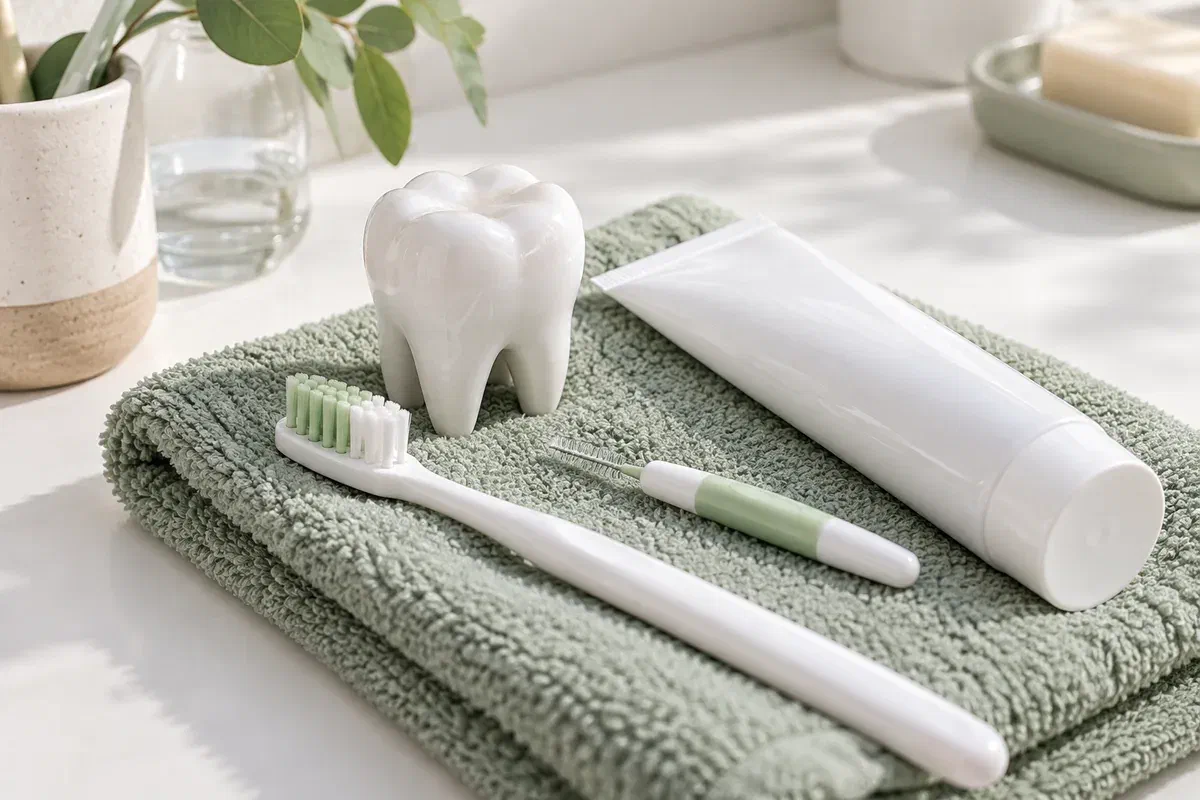
Illustrative conversation about caring for exposed root surfaces
General & Family Dentistry

Root-Cavity Prevention in Rockwood

Sore knuckles or a weak grip can make the gumline the first place your brushing slips. Coming from Rockwood, have exposed roots checked and find brushes, handles, and a fluoride routine that work with the hands you have today.

Hands, grip and the gumline

When the toothbrush handle starts to feel too thin

Arthritis, an old injury, or simply stiffer fingers can change brushing without you noticing. The gumline, where exposed roots sit after recession, is often what gets missed. Roots do not have the enamel that guards the rest of the tooth, so plaque left there may matter more. Exposure alone is not a cavity, but it is a good reason to make the routine easier.

When you visit from Rockwood, we spend time on the practical side. Alongside the examination of your exposed roots, we ask which movements are hard, how long you can comfortably brush, and whether anyone helps. Sensitivity, dryness, and food-trapping spots also come up, because they help separate surfaces needing protection from any needing repair.

Then we try things. A thicker or angled handle, a powered brush, a floss holder, or a different interdental aid may suit your hands better, alongside fluoride advice and a look at dryness. No tool guarantees a healthy root, so the plan is reviewed whenever your hands, health, or medicines change.

Find tools that suit your grip
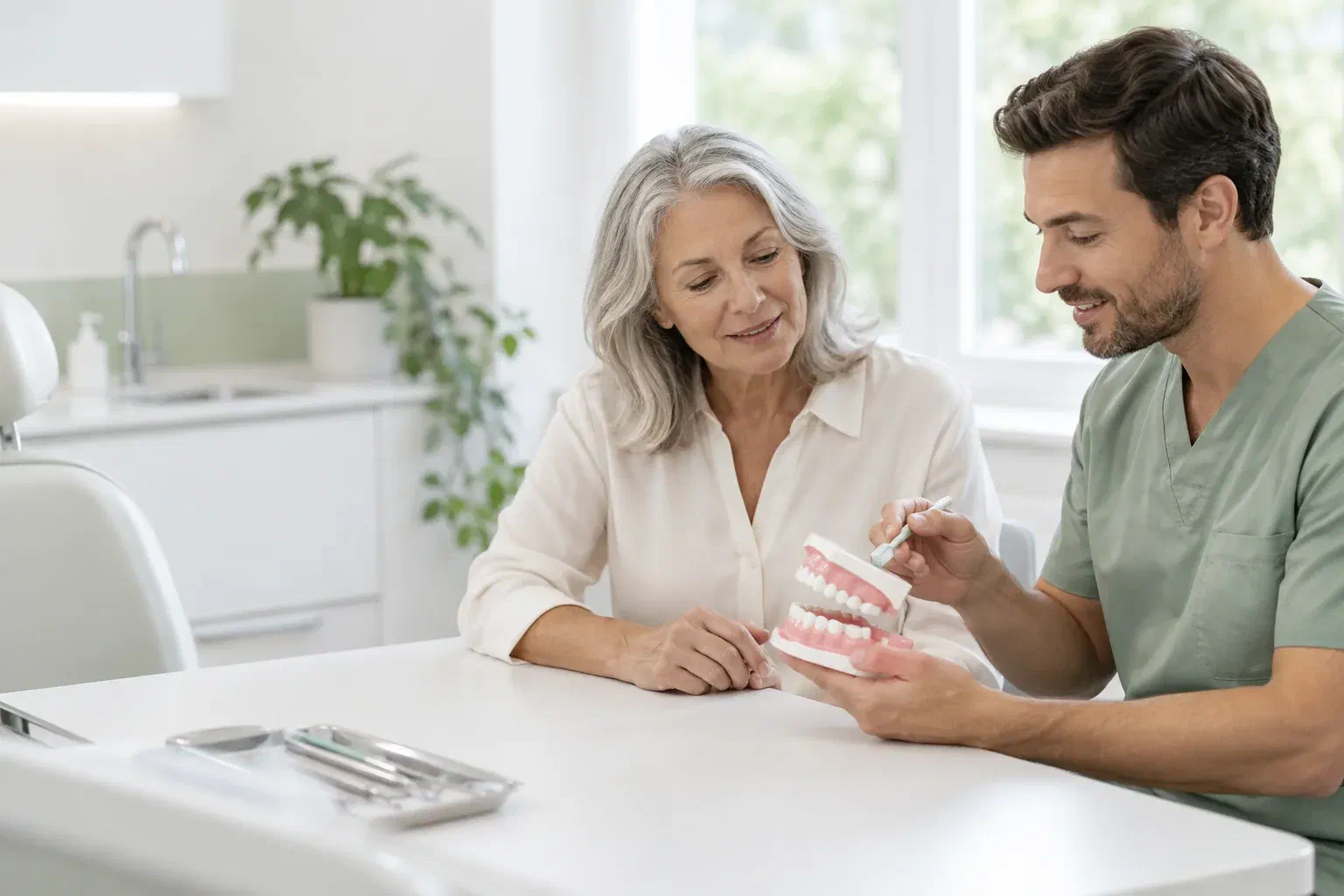
Illustrative soft toothbrush and interdental brush for a preventive routine
Signs the routine is slipping

Your hands may be telling us something.

Root-cavity risk involves the exposed surface, saliva, and how well it can be cleaned. Describe what you notice and the exam will judge whether decay is present.

Twinges where the brush misses

Sensitivity near the gum on a tooth you find hard to reach is worth mentioning. Note when it started and what sets it off. Since sensitivity has various causes, the dentist checks before suggesting a product or assuming it is recession alone.

Dryness alongside joint medicines

Some people notice a dry mouth after starting or changing medicines. Bring your full list, including anything for joint pain. Please do not stop or change a prescription yourself; the dryness can be discussed with your prescriber.

Areas you simply cannot reach

The inside of the lower teeth, the back molars, or one side of the mouth are often where a stiff wrist gives up. Show us which areas. Adapted tools and a brief demonstration usually help more than trying to brush harder.

A brown or yellow patch near the gum is not enough, alone, to diagnose root decay. Avoid picking at it. Have it looked at if the patch grows, starts trapping food, or turns tender.

Making prevention manageable

Easier tools, more reliable cleaning.

Prevention combines cleaning, fluoride, how often sugar is around, and saliva. When hands are less nimble, cleaning tends to be the weak link, so tools and technique get extra attention. A dry mouth or past root decay can mean a fuller plan still.

A routine cannot rebuild lost structure or guarantee an exposed root will stay healthy, and exposure does not mean a filling is due. If we suggest something, ask what role it plays: protecting a root that is healthy now, steadying an early change, or fixing damage that is already present.

Patient information: ADA — aging, exposed roots, and caries risk

A handle you can hold

We can show you brushes with wider or angled handles, and how to build up a regular handle if that suits. Trying them in the chair lets you feel which one gives the most control along the gumline.

Fluoride that is easy to apply

If a fluoride product is part of the plan, we explain its purpose, the simplest way to use it, and whether it must come from a pharmacy. Tell us if opening a tube or bottle is difficult; packaging matters too.

A routine that changes with your hands

Joint symptoms can come and go, and new dental work or a helper can change what works. Mention these at reviews. We would rather adapt the routine than have you struggle with tools that no longer suit.

What the visit covers

Hands-on, in every sense.

The dentist first sorts out which exposed roots are sound and which show decay. Then advice is matched to the findings and to what your hands can do comfortably.

  1. Tell us what is hard

    We ask about previous cavities, recession, dryness, medicines, eating habits, and which parts of brushing are difficult. Mention anyone who helps. Being specific about the hard parts helps us find the right tools.

  2. Examine the roots

    The dentist checks the exposed surfaces and gums, and may suggest an image or photo if it would clarify anything. Ask which areas are healthy, which to watch, and which need care, if any. We can show you the spots so you know where to aim.

  3. Try tools and agree a plan

    You can test brushes and aids during the visit. We agree on fluoride and ideas for dryness or frequent sweets. Directions for any prescription product or in-chair application are written clearly. If decay needs treatment, the dentist explains that option and its limits as its own discussion.

  4. Arrange a follow-up

    Set a review date and know what the dentist will check. Call earlier if your hands flare up or the routine becomes too hard. Prevention keeps working when it adjusts to findings and how you are managing.

Making it work at home

Comfortable for your hands, gentle on your gums.

Use the tools and routine recommended for you. Prescribed fluoride products have their own instructions and should be stored safely away from children.

Let the tool help

With a larger handle or powered brush, there is no need to grip hard or press firmly. Rest the brush at the angle we practised and move slowly. If cleaning hurts your gums or your hands, tell us so the method can change.

Notice your go-to snacks

Sweet drinks, candies, or lozenges used often, including for a dry mouth, can work against the plan. Tell us what you rely on. We can suggest alternatives and talk about having the dryness assessed.

Short sessions are fine

If brushing everything at once is tiring, ask whether splitting it into shorter sessions would help. Report new pain, a rough surface, or food trapping rather than testing the area, and keep your reviews even when it feels fine.

Options for your situation

Prevention, extra support, or repair

The exam decides which is relevant. Roots that are uncovered yet sound, a spot where softening has only just begun, and a tooth where decay has broken structure down each lead to a different plan.

Healthy roots that need protecting

Adapted home prevention

This starts with tools that are easy to grip, a fluoride level matched to your risk, and a look at how often sweet things appear in your day. We note which roots to keep watching and when. Choosing prevention never means a diagnosed problem goes without review.

Higher risk or an early lesion

Professional or prescription extras

When cleaning is harder, the dentist might discuss a fluoride application in the office or a stronger home product, or another way to handle an early lesion. Find out its purpose, where it falls short, whether it alters appearance, and how it will be followed.

When prevention will not be enough

Restorative care

Depth, location, access, and the tooth’s overall condition guide repair choices, which the dentist will explain. Prevention still matters afterward, because a filling does not change the factors that made cleaning difficult.

Patient information: ADA — fluoride and caries prevention

Grip and brushing questions

Brushing with sore hands

Bring questions about tools, technique, recession, fluoride, and dryness. Advice should follow an examination of your own mouth.

(905) 876-4488
Would a powered toothbrush be easier with arthritis?
Many people find a powered brush easier because it does more of the movement. Weight and handle shape matter too. You can try options at the visit and choose what feels most comfortable.
Can I make my regular toothbrush handle thicker?
Some people use a foam grip or a similar adaptation to widen a handle. Ask us to show you what is available and whether it suits your grip. The goal is control without squeezing.
Is there an easier way to floss if my fingers are stiff?
Floss holders, interdental brushes with long handles, and water flossers are alternatives some people find simpler. We can check which suits each space in your mouth and show you how to use it.
Can a family member help with my brushing?
Yes, and they are welcome at the visit with your agreement. We can show them the angle and areas to focus on. Sharing the routine on hard days is perfectly reasonable.
Do arthritis medicines cause dry mouth?
Some medicines can contribute to dryness, though not all do. Bring a full list and mention when dryness began. Do not change any medicine yourself; the dentist can discuss whether to raise it with your doctor.
If I cannot clean an area well, should it be filled to protect it?
Not usually on that basis alone. A filling is considered when a lesion with lost structure is present. For hard-to-clean areas, adapted tools and fluoride are often the first step, with review to check how it is going.
From Rockwood

Let’s find a routine your hands can manage.

If brushing has become a struggle, or you have noticed recession or dryness, get in touch with our Bronte Street practice. Mention that you are coming from Rockwood and whether you would like extra time to try tools. The dentist will look at your exposed roots, explain what is found, and help you choose prevention or treatment that fits your hands and your mouth.

An exposed root is not necessarily decayed. New pain or a surface that looks different should be examined, not managed with new tools alone.

Visit Milton Dental Clinic
Unit 1, 342 Bronte St. S, Milton, ON L9T 5B7
Get directions Clinic hours
Monday–Thursday
11am–7pm
Friday–Sunday
By appointment only

Areas we serve

  • Milton
  • Oakville
  • Mississauga
  • Georgetown
  • Halton Hills
  • Acton
  • Campbellville
  • Brampton
  • Burlington
  • Puslinch
  • Rockwood
  • Erin
  • Caledon
  • Etobicoke
  • Old Milton
  • Bronte Meadows
  • Timberlea
  • Dorset Park
  • Dempsey
  • Clarke
  • Beaty
  • Coates
  • Harrison
  • Scott
  • Willmott
  • Ford
  • Bowes
  • Cobden
  • Walker
  • Mountain View
  • Milton Heights
  • Hawthorne Village
  • Valley View
  • Fallingbrook
  • Nassagaweya
  • Trafalgar
  • Esquesing
  • Nelson
  • Brookville
  • Moffat
  • Glen Williams
  • Norval
  • Limehouse
  • Stewarttown
  • Ashgrove
  • Hornby
  • Silver Creek
  • Speyside
  • Scotch Block
  • North Oakville
  • River Oaks
  • Glen Abbey
  • West Oak Trails
  • Palermo
  • Bronte Creek
  • College Park
  • Joshua Creek
  • Uptown Core
  • Preserve
  • Iroquois Ridge
  • Lisgar
  • Meadowvale
  • Meadowvale Village
  • Churchill Meadows
  • Erin Mills
  • Central Erin Mills
  • Streetsville
  • East Credit
  • Creditview
  • Heartland
  • Sheridan
  • Mount Pleasant
  • Credit Valley
  • Huttonville
  • Churchville
  • Springbrook
  • Northwest Brampton
  • Bram West
  • Fletcher's Meadow
  • Fletcher's Creek South
  • Alton Village
  • Orchard
  • Millcroft
  • Headon Forest
  • Tansley
  • Brant Hills
  • Tyandaga
  • Kilbride
  • Lowville
  • Aberfoyle
  • Morriston
  • Arkell
  • Hillsburgh
  • Freelton
  • Carlisle
  • Waterdown
  • Flamborough
  • Mountsberg

How can we help?

Milton Dental Clinic

Have a question about your smile? Choose the option that works best for you.

For urgent dental concerns, please call.
Messages are reviewed during clinic hours.