

Illustrative older adult speaking with a hygienist before a cleaning visit
General & Family Dentistry

Teeth Cleaning for Seniors

Plan a cleaning visit around your teeth, dental work, and comfort. Teeth cleaning for seniors in Milton includes a conversation about changing home-care needs, sensitive areas, and practical support between appointments.

A closer look at cleaning for seniors

Care for the teeth you have and the routine you live with.

Older adults bring very different mouths and experiences to a cleaning appointment. Some have mostly natural teeth; others have crowns, bridges, implants, or a partial denture. The appropriate care depends on those details and the condition of the gums, rather than age alone.

At Milton Dental Clinic, tell us what makes care comfortable and what has become difficult. A tender root, a stiff hand, a dry mouth, or trouble hearing instructions can change how a visit should be planned. The conversation should address you directly and respect the level of help you want.

Professional cleaning removes deposits that need clinical attention and provides an opportunity to discuss maintenance. It does not replace an examination or repair a damaged tooth. Our aim is to help you understand the cleaning recommended, any separate concerns that need assessment, and a home routine that remains realistic for your circumstances.

Plan a cleaning appointment
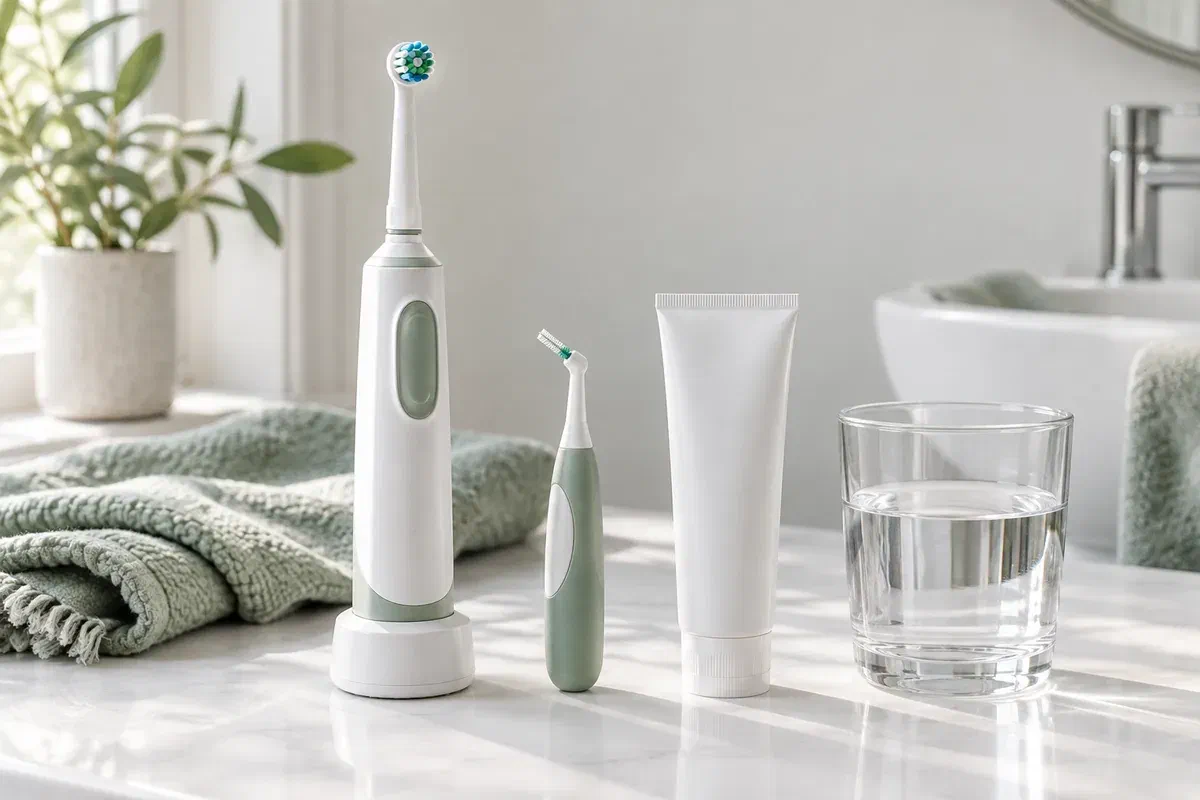
Illustrative easy-grip toothbrush and oral-care tools on a bright counter
What to discuss before your visit

Comfort, communication, and cleaning access all matter.

Mention practical needs when booking so arrangements can be discussed in advance. Bring relevant information about your health and the dental work you already have.

Changes around teeth or restorations

Describe bleeding, tenderness, food trapping, or an area that feels rough. Mention removable appliances as well as fixed dental work. Different surfaces may need different cleaning approaches, and a loose tooth or damaged restoration needs assessment beyond ordinary deposit removal.

Difficulty with a familiar routine

Tell us if holding a brush, threading floss, seeing a difficult area, or remembering the routine has become harder. These details can guide a more usable approach. You should not have to struggle with a tool simply because it worked well years ago.

Health or appointment-comfort needs

Bring a current medication list and mention relevant medical advice, swallowing difficulties, or discomfort when lying back. Ask about any access or communication arrangements you need before arriving. The team can discuss what is feasible and whether further planning is required.

Do not stop blood thinners or other prescribed medicines to prepare for cleaning unless the responsible clinician has specifically directed it. Share the medication information so dental care can be planned appropriately.

The value of appropriate maintenance

Keep the cleaning connected to comfort and everyday function.

A professional visit can address deposits and help identify where ongoing maintenance is difficult. The usefulness of the appointment is not measured only by how polished the teeth look. Gum findings, cleaning access, and the condition of existing dental work also deserve attention.

No cleaning can guarantee that teeth or restorations will last indefinitely. It cannot reverse every change in supporting tissues or solve pain with an unidentified cause. Ask which part of the visit addresses maintenance and which findings require a separate examination or treatment plan.

Patient information: CDA — dental examinations and oral care as you age

Attention to the surfaces you actually have

Natural teeth, implants, and restorative materials are not interchangeable. Explain what dental work has been completed elsewhere if it is missing from the record. Ask how the cleaning approach and home-care advice relate to those particular areas.

A routine that supports independence

A larger handle, a different brush head, or another interdental tool may make care easier for some people. Ask to try the recommended movement rather than relying on a product name. The right choice is one you can use effectively and comfortably.

Support that follows your preferences

If you want a family member or caregiver involved, discuss their role with the team. They may help remember instructions or assist with daily care. Their involvement should support your understanding and choices, with appropriate consent and decision-making arrangements where needed.

Your cleaning appointment

Plan the visit around the findings and the person.

The amount of cleaning, instruments, and appointment length depend on your needs. Ask what can be accomplished in the visit and whether further care or reassessment may be recommended.

  1. Review information and agree comfort arrangements

    Discuss health updates, medicines, recent dental work, and the areas you want addressed. Tell the team how you prefer instructions to be explained. Agree a pause signal and mention positioning concerns before the procedure begins rather than trying to manage discomfort silently.

  2. Assess deposits and gum condition

    The team checks the areas requiring care and considers whether routine cleaning or a more involved gum-treatment discussion is appropriate. Ask about bleeding or tenderness that has been recurring. An examination may be needed to clarify findings that cleaning alone cannot explain.

  3. Carry out the indicated cleaning

    Suitable instruments are selected for the deposits, surfaces, and clinical needs. Tell the clinician if you need a pause, a clearer explanation, or help managing water during the procedure. Changes to the approach can be discussed according to what is clinically appropriate.

  4. Review the home routine and follow-up

    Ask for a demonstration around any difficult bridge, implant, or exposed root area. Confirm the next appointment's purpose and any instructions for products used today. If another person helps at home, discuss how those instructions can be shared clearly with your permission.

Making maintenance manageable

Choose a routine that can be repeated comfortably.

Follow the aftercare instructions for the treatment completed. Tell the team if an instruction is difficult because of vision, dexterity, swallowing, memory, or another practical concern.

Use tools that fit your abilities

Practise the suggested method with the chosen brush or interdental aid. A powered brush or larger handle may be useful, but it is not a universal requirement. Ask for a different approach if the recommended tool is awkward or uncomfortable to use.

Keep dryness and changing symptoms in the conversation

Report persistent dryness, new soreness, or a change in chewing comfort. These concerns should not be dismissed as inevitable with age. Ask what assessment is needed and whether any home-care or preventive advice should change while the cause is considered.

Follow the plan for appliances and dental work

If you have a removable partial denture, bridge, or implant restoration, use the instructions specific to it. Do not apply a harsh cleaner to every surface indiscriminately. Ask how to clean the appliance and the remaining teeth as separate parts of the routine.

Patient information: ADA — oral care considerations for older adults

Choosing the right level of care

Age does not decide the treatment. The assessment does.

Discuss the purpose of each recommendation and whether appointments address cleaning, gum disease, dental repairs, or a combination of needs.

When deposit removal and prevention are appropriate

Routine maintenance cleaning

This care addresses identified deposits and supports an ongoing home routine. The interval and extent depend on your mouth. Ask why the proposed schedule is suitable rather than assuming every older adult needs the same frequency.

When the supporting tissues need more attention

Periodontal care and reassessment

Established gum disease may require a more involved treatment plan and follow-up. The team should explain how this differs from routine cleaning. Discuss the expected visits, comfort arrangements, and what will be checked to assess the response.

When another concern affects the visit

Additional assessment or care coordination

Pain, a broken restoration, significant medical considerations, or complex support needs may call for additional planning. Ask whether another clinician or service should be involved. A cleaning appointment should fit into that broader plan rather than substitute for it.

Questions about teeth cleaning for seniors

Make the appointment easier to prepare for.

Tell us what would help you understand the visit and manage care afterward. Practical questions are part of planning appropriate treatment.

(905) 876-4488
Does being a senior automatically mean I need a deeper cleaning?
No. The condition of the gums and supporting tissues determines whether periodontal treatment is indicated. Age alone does not establish that need. Ask the team to explain the findings and the purpose of the recommended cleaning before comparing appointment types or lengths.
Can I bring someone to help remember my cleaning instructions?
Discuss this when booking and explain the role you would like them to have. With your permission, a support person may help with questions or instructions. The team should still address you directly and clarify any consent or decision-making arrangements relevant to your care.
What should I mention if lying back for cleaning is difficult?
Describe the reason and any relevant medical advice when arranging the appointment. Also mention swallowing or breathing concerns. The team can discuss suitable planning and whether coordination is needed. Do not assume a particular chair position or adjustment can be guaranteed without that discussion.
Do I still need professional cleaning if only a few natural teeth remain?
The remaining teeth and surrounding tissues still need appropriate assessment and maintenance. A partial denture does not remove that need. Ask what care is recommended for the teeth, the appliance, and the tissues beneath it, because each may have different requirements.
Should I remove my hearing aids during a cleaning appointment?
Tell the team how you hear best and whether equipment sounds are uncomfortable. There is no single instruction suitable for everyone. Agree how explanations and pauses will be communicated before cleaning begins, and ask for written information if that would help you afterward.
What if arthritis makes the home-care technique shown after cleaning too difficult?
Explain which movement or grip is the problem. The team can discuss alternative tools or assistance rather than expecting you to persist with an unsuitable method. Ask to practise an adapted approach and report back if it remains difficult once you try it at home.
Teeth cleaning for seniors in Milton

Let’s plan care that fits your mouth and your day.

Contact our Bronte Street practice to arrange an assessment of your cleaning needs. Mention dental work, sensitive areas, and any practical support or comfort requirements so we can discuss the visit before you arrive.

Please confirm access and support arrangements when booking. Treatment type and appointment length depend on individual assessment.

Visit Milton Dental Clinic
Unit 1, 342 Bronte St. S, Milton, ON L9T 5B7
Get directions Clinic hours
Monday–Thursday
11am–7pm
Friday–Sunday
By appointment only

How can we help?

Milton Dental Clinic

Have a question about your smile? Choose the option that works best for you.

For urgent dental concerns, please call.
Messages are reviewed during clinic hours.