

Illustrative older adult speaking with a hygienist before a cleaning visit
General & Family Dentistry

Teeth Cleaning for Seniors in Acton

Implants, bridges and crowns were an investment in comfort and chewing. Older adults from Acton can book a cleaning that treats each of those surfaces appropriately and shows how to look after them at home.

Acton · Implants, bridges and crowns

Protecting the work you have already had done

A dental implant does not decay the way a natural tooth can, yet the gum around it still needs care. A bridge looks like a row of teeth but hides a space underneath where food and plaque collect. Older crowns develop margins that the brush can miss. These are the details a seniors’ cleaning should pay attention to.

Of course, the mix is different for every person. Some people in their seventies have one implant and otherwise natural teeth; others have several bridges or a removable partial. What is present, and what the gums show, guide the visit far more than age. We will also ask what has become uncomfortable or hard to manage.

A professional clean removes deposits that need clinical instruments and highlights spots that daily care is not reaching. It does not take the place of an examination, and it cannot fix a cracked crown or a failing restoration. You should leave clear on what was cleaned, what needs its own appointment, and how to care for each piece of dental work at home in Acton.

Book a cleaning visit
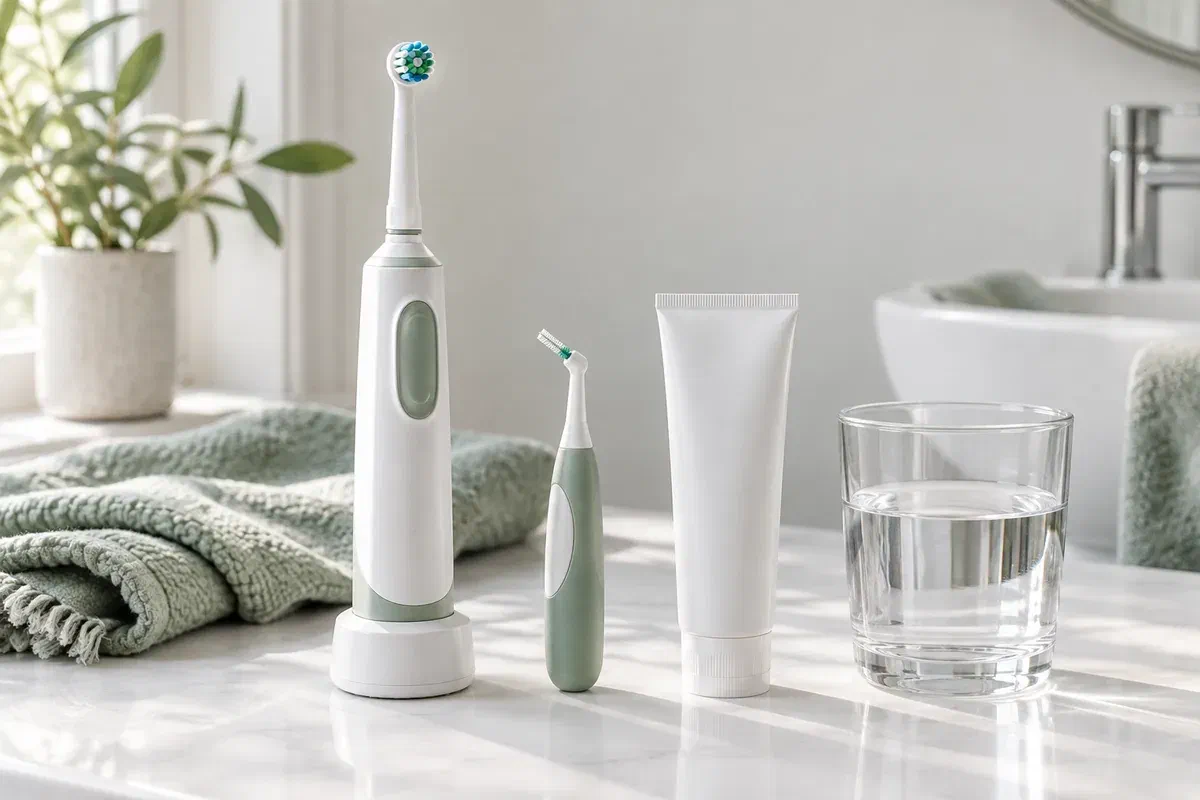
Illustrative easy-grip toothbrush and oral-care tools on a bright counter
Before your appointment

Tell us about your dental work

Mention practical needs when you book so they can be prepared for. A list of implants, bridges and other restorations, especially those placed elsewhere, is very helpful.

Changes around restorations

Bleeding around an implant, tenderness under a bridge, food packing next to a crown, or an edge that suddenly feels rough are all worth reporting. Mention removable appliances too. A loose crown or chipped restoration needs assessment that goes beyond deposit removal.

Cleaning tools that no longer work

Threading floss under a bridge or reaching the back of an implant can become harder as grip or eyesight changes. Tell us which steps are slipping. The team can suggest an approach that suits your dental work and your hands today.

Health and comfort information

Bring your medication list and any relevant medical advice. Mention swallowing difficulties, breathing concerns or discomfort when reclining. Ask about access and communication support ahead of time so the team can explain what is feasible.

A blood thinner or other prescription should be taken as usual before your cleaning unless the clinician in charge of it has instructed otherwise. We ask for the details only so your dental care can be planned safely.

The case for regular maintenance

Each surface checked, each one cleaned properly

Hardened deposits are removed, and the hygienist also notes how the gums around implants and bridges are responding, which areas are difficult to reach, and whether crowns and fillings show wear. That record helps catch changes early and shapes the advice you take home.

A cleaning cannot promise that implants, bridges or natural teeth will last forever. It cannot undo all changes in the gum and bone, and it cannot account for pain whose cause is unknown. Ask which findings belong to routine maintenance and which call for an examination or a separate plan.

Patient information: CDA — dental examinations and oral care as you age

Methods matched to the material

Implant components, porcelain, metal and natural enamel each need suitable instruments and care. If treatment was done at another practice and is not in your record, describe it. Ask the hygienist to explain what they used and why.

Home aids you can manage

Floss threaders, interdental brushes, water flossers or a brush with a larger handle may suit some people with bridges and implants. Try the motion in the chair with guidance. Choose what you can use well and comfortably.

Support from someone you trust

A family member or caregiver can learn how to clean around your dental work and help on difficult days, if you wish. Discuss their role in advance. Their involvement should support your own decisions, with consent clarified where appropriate.

What the visit involves

A cleaning that knows your restorations

How much cleaning is needed, which instruments are used and how long it takes depend on you. Ask at the start what today can cover and whether a recheck or follow-up may be recommended.

  1. Review your record and concerns

    We go through changes in your health, medicines, any new dental work and the areas you want examined. Say how you prefer things explained. Agree on a pause signal, and mention any trouble with reclining before we begin.

  2. Assess gums around each restoration

    The team checks deposits and the gums around implants, bridges and natural teeth, and considers whether routine cleaning suits you or gum care should be discussed. Mention recurring bleeding. Some findings may need an examination or imaging to explain.

  3. Clean with suitable instruments

    Tools are selected for the deposits, materials and clinical needs in your mouth. Ask for a break, a clearer explanation or help with water at any time. The approach can be adjusted where it is clinically appropriate.

  4. Learn the routine for each area

    Ask for a demonstration under the bridge, around the implant and beside any exposed root. Find out the reason for your next booking and whether today’s products come with instructions. With your consent, a helper can learn the same steps.

Looking after your dental work

Small daily habits protect larger repairs

Follow the aftercare guidance for the treatment provided. If something is difficult because of your eyesight, grip, swallowing, memory or another practical reason, tell the team so the advice can be reworked.

Stick with the right aid

Use the interdental brush, threader or other tool you practised with, using the technique shown. A powered brush or wider handle helps some people but is not essential. Ask for another option if a tool feels clumsy.

Report dryness or new tenderness

Dryness that persists, new soreness around an implant, or a change in how your bite feels should be mentioned. Such changes are not simply age. The team can advise whether a check is needed and how to adapt care meanwhile.

Follow instructions for each restoration

Every type of restoration, from a removable partial to a fixed bridge, comes with its own care steps. Do not use a harsh cleaner on every surface. Treat removable appliances and fixed dental work as separate parts of the routine.

Patient information: ADA — oral care considerations for older adults

Choosing the next step

Routine care, gum treatment or a closer look?

Ask the reason behind every recommendation, and whether a visit focuses on cleaning, gum disease, repairs to dental work or several of these.

For regular deposit removal and prevention

Maintenance cleaning

This visit removes identified deposits and supports your home routine around restorations. Timing and scope depend on your mouth. Ask why a recall interval has been suggested rather than assuming one schedule fits all older adults.

For tissues around teeth or implants that need more

Gum care and reassessment

Established gum disease, or inflammation around an implant, may need a more involved plan and follow-up. Ask what makes it different from routine cleaning, how many visits are likely, how comfort will be managed and how progress is measured.

For problems a cleaning can’t solve

Repairs or further assessment

Pain, a loose crown, a damaged bridge, medical concerns or significant support needs could mean more preparation, possibly with the provider who placed the work. Cleaning should fit into that plan rather than substitute for it.

Acton seniors ask

Cleaning around implants and bridges

Bring any question that would make the visit clearer or your home care easier. Practical questions are part of planning suitable treatment.

(905) 876-4488
Do implants need professional cleaning if they can’t get cavities?
Yes. The gum and bone around an implant still need assessment and maintenance. Deposits can build up around it just as they do around natural teeth. Ask how the team checks your implant and how you should clean it at home.
How do I clean under a fixed bridge?
Aids such as floss threaders or small interdental brushes are common options, depending on the space. Ask the hygienist to show you, then try it yourself in the chair. Report back if the technique is still hard at home.
My implant was placed by another dentist. Is that a problem?
Not at all, but please share any details you have, such as when it was placed and by whom. That information helps the team assess and clean it appropriately, and decide whether to consult the original provider.
Is a water flosser a good idea for my bridge?
It may help some people, but it is not suitable as a universal answer. Ask whether it fits your dental work and abilities, and how it compares with other interdental aids for your mouth.
Does being older mean my implants will fail?
Age alone does not decide that. Gum health, general health and home care all play roles. Ask what your findings show and what maintenance is recommended to support your implants.
What should I do if a crown feels loose after cleaning?
Mention it before leaving or call the clinic. A loose crown needs assessment, which is separate from the cleaning. Keep it safe if it comes off, and avoid chewing on that side until it has been checked.
Seniors’ cleaning for Acton

Bring your questions about implants and bridges

Phone our Bronte Street team and ask for a seniors’ cleaning assessment. Tell us about your implants, bridges, crowns and any sore areas, along with comfort or support needs, so we can discuss the visit before you arrive.

Please mention access or support arrangements when booking. The kind of care provided and its length depend on your individual assessment.

Visit Milton Dental Clinic
Unit 1, 342 Bronte St. S, Milton, ON L9T 5B7
Get directions Clinic hours
Monday–Thursday
11am–7pm
Friday–Sunday
By appointment only

Areas we serve

  • Milton
  • Oakville
  • Mississauga
  • Georgetown
  • Halton Hills
  • Acton
  • Campbellville
  • Brampton
  • Burlington
  • Puslinch
  • Rockwood
  • Erin
  • Caledon
  • Etobicoke
  • Old Milton
  • Bronte Meadows
  • Timberlea
  • Dorset Park
  • Dempsey
  • Clarke
  • Beaty
  • Coates
  • Harrison
  • Scott
  • Willmott
  • Ford
  • Bowes
  • Cobden
  • Walker
  • Mountain View
  • Milton Heights
  • Hawthorne Village
  • Valley View
  • Fallingbrook
  • Nassagaweya
  • Trafalgar
  • Esquesing
  • Nelson
  • Brookville
  • Moffat
  • Glen Williams
  • Norval
  • Limehouse
  • Stewarttown
  • Ashgrove
  • Hornby
  • Silver Creek
  • Speyside
  • Scotch Block
  • North Oakville
  • River Oaks
  • Glen Abbey
  • West Oak Trails
  • Palermo
  • Bronte Creek
  • College Park
  • Joshua Creek
  • Uptown Core
  • Preserve
  • Iroquois Ridge
  • Lisgar
  • Meadowvale
  • Meadowvale Village
  • Churchill Meadows
  • Erin Mills
  • Central Erin Mills
  • Streetsville
  • East Credit
  • Creditview
  • Heartland
  • Sheridan
  • Mount Pleasant
  • Credit Valley
  • Huttonville
  • Churchville
  • Springbrook
  • Northwest Brampton
  • Bram West
  • Fletcher's Meadow
  • Fletcher's Creek South
  • Alton Village
  • Orchard
  • Millcroft
  • Headon Forest
  • Tansley
  • Brant Hills
  • Tyandaga
  • Kilbride
  • Lowville
  • Aberfoyle
  • Morriston
  • Arkell
  • Hillsburgh
  • Freelton
  • Carlisle
  • Waterdown
  • Flamborough
  • Mountsberg

How can we help?

Milton Dental Clinic

Have a question about your smile? Choose the option that works best for you.

For urgent dental concerns, please call.
Messages are reviewed during clinic hours.