

Illustrative older adult speaking with a hygienist before a cleaning visit
General & Family Dentistry

Teeth Cleaning for Seniors in Brampton

Ever nodded along to dental instructions you didn’t quite catch? Seniors travelling from Brampton can plan a cleaning visit where explanations are paced, repeated or written down, and where questions are welcome.

Communication comes first

Instructions you can hear, follow and keep

The hum of dental equipment, a mask over the clinician’s face, and a reclined chair all make conversation harder. For someone using hearing aids, or simply processing information more slowly than before, home-care advice can slip past unheard. A good cleaning visit makes room for explanations that actually land.

Beyond communication, every older mouth is its own case. Some people keep nearly all their natural teeth; others have crowns, bridges, implants or a partial. The gum findings and the dental work present decide how cleaning is approached. A birthday does not.

Professional cleaning removes deposits that need clinical tools and shows where daily care is falling short. It is not a full examination and does not repair damaged teeth. You should go home understanding what was cleaned, what needs separate attention, and exactly how to carry on at home.

Ask about a seniors’ cleaning
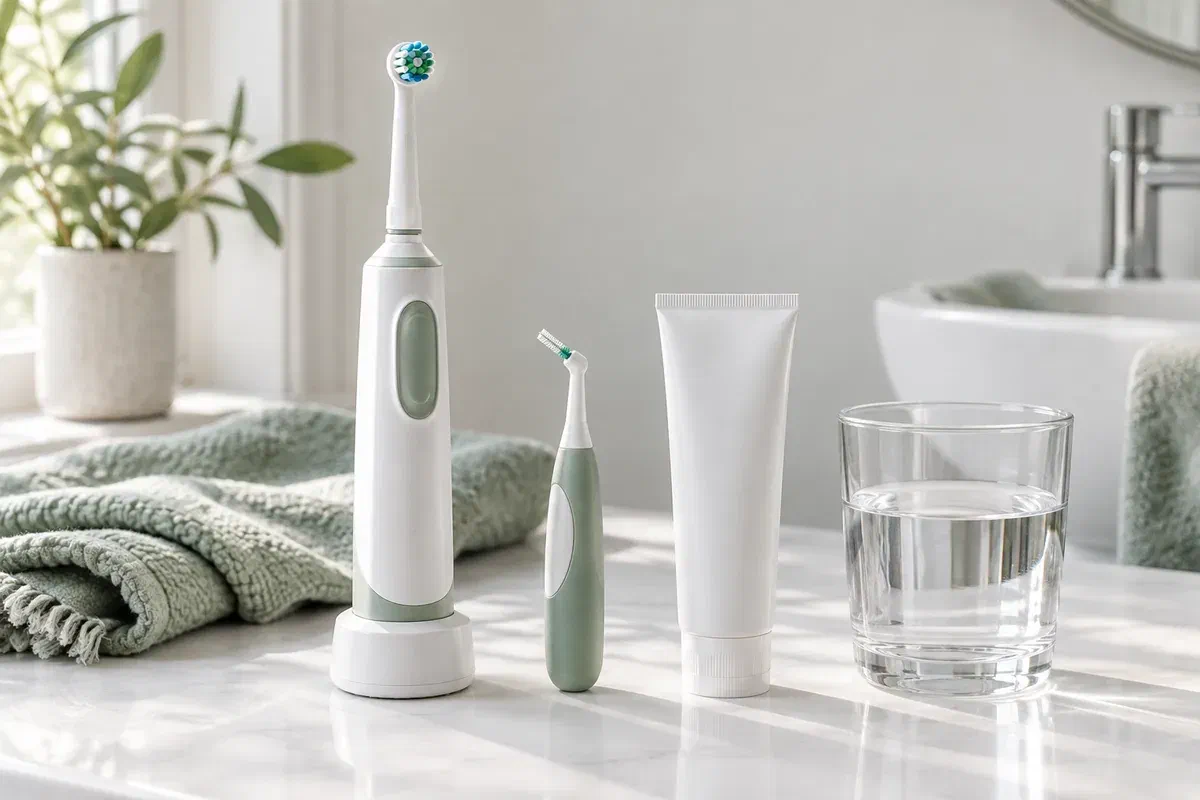
Illustrative easy-grip toothbrush and oral-care tools on a bright counter
Help us plan around you

Hearing, health and the teeth themselves

Practical arrangements are much easier when raised at booking. Please bring health details and whatever you know about the dental work you already have.

Teeth and dental work that have changed

Tell us about bleeding gums, a sore area, food catching in one place, or a rough edge on a crown or filling. Mention any removable appliance. A loose tooth or broken restoration will need assessment in addition to cleaning.

How you hear and take in instructions

Let us know if you use hearing aids, lip-read, prefer a slower pace, or remember things better when they are written. Say if another language is easier for you, so we can discuss options. These details shape how the visit and the home routine are explained.

Health and positioning needs

Bring a current list of medicines and any instructions from your doctor. Mention swallowing difficulty, breathing concerns or discomfort when lying back. Ask about access or communication arrangements before arriving so the team can say what can be done.

You do not need to skip or adjust a blood thinner or other prescription before your cleaning, unless the clinician responsible for that medicine has specifically told you to. Simply share the information with us.

What you take home from the visit

Understanding is part of the result

The hygienist clears hardened deposits, then turns the findings into advice you can use. That part depends on clear communication. Gum health, places your brush is missing, and the condition of older restorations are all worth explaining in words that make sense to you.

No cleaning can promise permanent teeth or dental work, reverse every change in the gums, or explain pain with no known cause. Asking questions helps you see the difference between routine maintenance and a finding that needs a separate examination or plan. Ask the team to point out which is which.

Patient information: CDA — dental examinations and oral care as you age

Explanations specific to your mouth

Implants, bridges and natural teeth are cleaned differently. If work was done at another practice and is not in your records, describe it. Ask how today’s cleaning and your home instructions relate to those areas.

Practice, not just a product name

A wide handle, a smaller brush head or a different interdental aid may suit you better. Rather than writing down a brand, try the movement in the chair while the hygienist watches. The right tool is one you can use comfortably and well.

Another set of ears, if you want one

A relative or caregiver can listen alongside you, take notes, or help with daily cleaning. Discuss their role with the team first. They are there to support your understanding and your decisions, with consent and decision-making arrangements clarified as needed.

Through the appointment

Clear at every stage

Instruments, appointment length and the amount of cleaning depend on your needs. If you have made the trip from Brampton, ask at the start what today’s visit can cover and whether more care or a recheck may be advised.

  1. Agree how we will communicate

    Before the chair reclines, we review health changes, medicines, recent dental work and your concerns, face to face. Decide together how explanations will be given and how you will signal a pause. Mention any discomfort with positioning now, not partway through.

  2. Assess the gums and build-up

    The team checks where deposits sit and whether ordinary cleaning fits or a gum-treatment conversation is needed. Findings can be explained after sitting up, when it is easier to hear. Mention bleeding that keeps returning.

  3. Clean with agreed check-ins

    Instruments are chosen to suit the deposits, surfaces and clinical needs. The clinician can stop at agreed points to check how you are doing. Ask for a break, a repeat explanation or help with water whenever you need it.

  4. Review the routine in writing

    Ask for a demonstration around any difficult bridge, implant or exposed root, and request written notes if that helps. Confirm the purpose of the next visit and any instructions for products used today. With your permission, a helper can receive the same notes.

Once you are home

Keep the notes where you brush

Follow the aftercare instructions for the treatment you had. If anything is unclear, or hard because of vision, dexterity, swallowing or memory, call and ask for it to be explained again or adjusted.

Repeat what you practised

Use the brush or interdental aid chosen at the visit with the method you were shown. An electric brush or larger handle helps some people but is not a must. If the tool is uncomfortable, ask what else could work.

Report dryness or anything new

A dry mouth that does not settle, a new sore spot or a change in chewing comfort should be mentioned. Such changes are not just something to accept with age. Ask what needs checking and whether your home routine should change for now.

One set of steps per appliance

Partials, bridges and implant restorations each have their own care instructions. Avoid using a harsh cleaner on all of them alike. Ask the team to list the steps for the appliance and for your natural teeth separately.

Patient information: ADA — oral care considerations for older adults

Making sense of the recommendation

Three kinds of follow-up, explained plainly

Ask what each recommendation is for, and whether a visit is about cleaning, gum disease, repairs or a mix of needs.

For ordinary deposits and prevention

Routine cleaning

This visit removes the deposits found and supports what you do at home. How often you return and how much is done depend on your own mouth. Ask why a recall interval was chosen instead of assuming one schedule suits all seniors.

For gums and bone needing extra care

Gum treatment with reassessment

Established gum disease can call for a more involved plan and later review. The team should explain, in plain language, how it differs from routine cleaning, the visits expected, comfort arrangements, and what will be checked to see whether it is helping.

For concerns beyond the cleaning

Coordinated or additional care

Pain, a broken restoration, medical considerations or complex support needs may mean extra planning, perhaps with your physician or another provider. A cleaning appointment should form part of that bigger plan, never a replacement for it.

Questions from Brampton

Ask until it makes sense

Bring any question that would help you understand the visit or manage care afterward. No practical question is too small.

(905) 876-4488
Can the hygienist explain things before the chair goes back?
Yes, ask for that. Many people hear and follow better when sitting up, facing the speaker. Findings and instructions can also be reviewed at the end, once instruments are off and the room is quieter.
Is it all right to ask for instructions in writing?
Absolutely. Written notes can help you remember the routine and share it with a helper, with your permission. Ask for anything unclear in the notes to be explained before you leave.
What if I prefer to discuss my care in another language?
Mention this when booking so the team can talk through what is possible. You may also choose to bring someone you trust to help. Either way, the team should speak to you directly about your care.
Should I keep my hearing aids in during the cleaning?
There is no single rule. Tell the team how you hear best and whether equipment noise bothers you. Agree on how pauses and explanations will work before cleaning begins, so you are not left guessing.
I feel embarrassed asking the same question twice. Is that a problem?
Not at all. Asking again is a sensible way to make sure advice is useful. If a point is still unclear afterward, call and ask, or bring it up at your next visit.
Does my age mean I’ll be offered a deeper cleaning?
No. Whether periodontal treatment is indicated depends on the gums and supporting tissues, not age. Ask the team to explain what they found and why a particular cleaning is recommended.
Seniors’ cleaning for Brampton adults

Book a visit that leaves time for questions

Contact our Bronte Street practice to arrange a cleaning assessment. Tell us about your dental work, sore areas, and how you prefer instructions to be given, so the visit can be planned before you arrive.

Please confirm communication, access and support needs when booking. Treatment type and appointment length depend on individual assessment.

Visit Milton Dental Clinic
Unit 1, 342 Bronte St. S, Milton, ON L9T 5B7
Get directions Clinic hours
Monday–Thursday
11am–7pm
Friday–Sunday
By appointment only

Areas we serve

  • Milton
  • Oakville
  • Mississauga
  • Georgetown
  • Halton Hills
  • Acton
  • Campbellville
  • Brampton
  • Burlington
  • Puslinch
  • Rockwood
  • Erin
  • Caledon
  • Etobicoke
  • Old Milton
  • Bronte Meadows
  • Timberlea
  • Dorset Park
  • Dempsey
  • Clarke
  • Beaty
  • Coates
  • Harrison
  • Scott
  • Willmott
  • Ford
  • Bowes
  • Cobden
  • Walker
  • Mountain View
  • Milton Heights
  • Hawthorne Village
  • Valley View
  • Fallingbrook
  • Nassagaweya
  • Trafalgar
  • Esquesing
  • Nelson
  • Brookville
  • Moffat
  • Glen Williams
  • Norval
  • Limehouse
  • Stewarttown
  • Ashgrove
  • Hornby
  • Silver Creek
  • Speyside
  • Scotch Block
  • North Oakville
  • River Oaks
  • Glen Abbey
  • West Oak Trails
  • Palermo
  • Bronte Creek
  • College Park
  • Joshua Creek
  • Uptown Core
  • Preserve
  • Iroquois Ridge
  • Lisgar
  • Meadowvale
  • Meadowvale Village
  • Churchill Meadows
  • Erin Mills
  • Central Erin Mills
  • Streetsville
  • East Credit
  • Creditview
  • Heartland
  • Sheridan
  • Mount Pleasant
  • Credit Valley
  • Huttonville
  • Churchville
  • Springbrook
  • Northwest Brampton
  • Bram West
  • Fletcher's Meadow
  • Fletcher's Creek South
  • Alton Village
  • Orchard
  • Millcroft
  • Headon Forest
  • Tansley
  • Brant Hills
  • Tyandaga
  • Kilbride
  • Lowville
  • Aberfoyle
  • Morriston
  • Arkell
  • Hillsburgh
  • Freelton
  • Carlisle
  • Waterdown
  • Flamborough
  • Mountsberg

How can we help?

Milton Dental Clinic

Have a question about your smile? Choose the option that works best for you.

For urgent dental concerns, please call.
Messages are reviewed during clinic hours.