

Illustrative older adult speaking with a hygienist before a cleaning visit
General & Family Dentistry

Teeth Cleaning for Seniors in Georgetown

A sore back, a stiff neck or breathing that tightens when you lie flat can make the dental chair the hardest part of a cleaning. Seniors from Georgetown can raise those concerns early and plan the visit around them.

Comfort in the chair

The cleaning starts before you recline

For some older adults, the deposits are not the worry. The worry is twenty minutes tipped back with an aching neck, water pooling at the throat, or a chest that feels tight when flat. Saying so at the outset is far better than gripping the armrests and hoping it ends soon.

The mouth itself still steers the cleaning. Mostly natural teeth, crowns, a bridge, implants or a partial all need suitable handling, and the gum findings tell the team more than age. We will also ask about hearing, grip, and whether you would like someone with you.

Professional cleaning removes the build-up brushing leaves behind and shows where daily care needs adjusting. It is not an examination and will not repair a damaged tooth. Leaving the chair, you should understand what was done, anything that needs separate assessment, and a home routine that works from Georgetown between visits.

Plan a comfortable cleaning
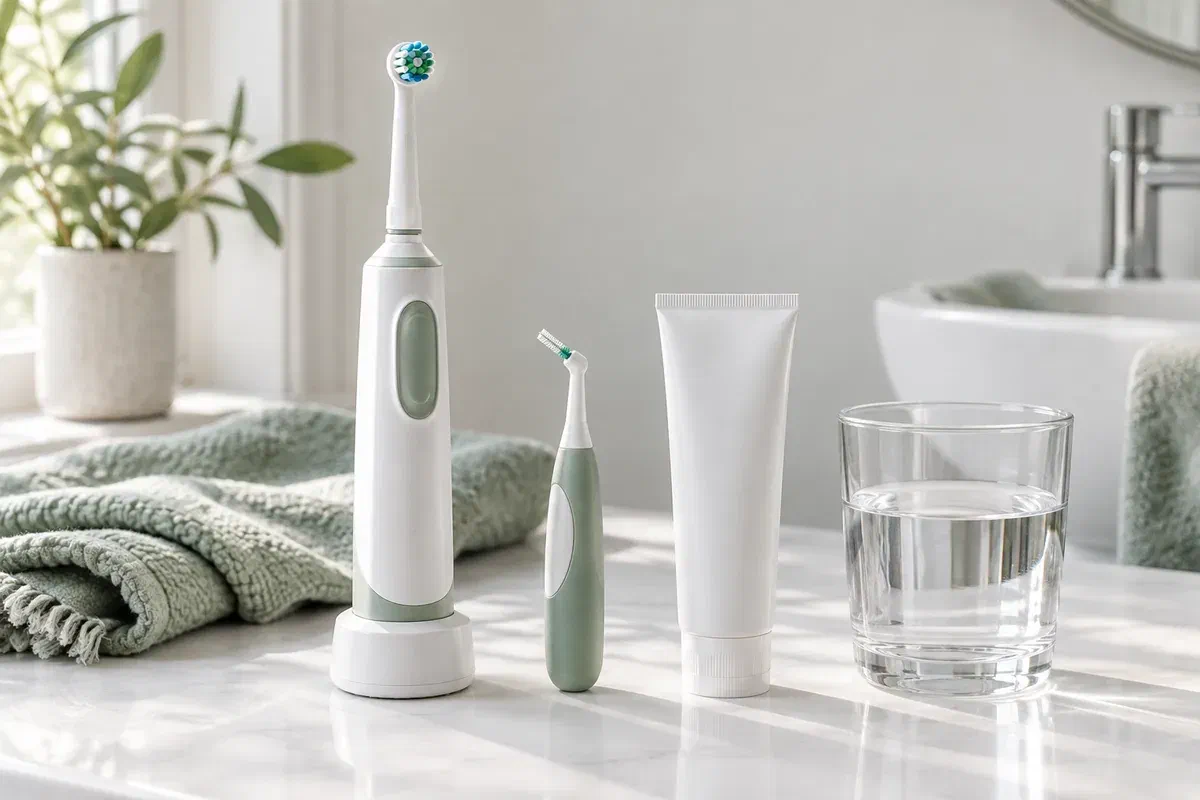
Illustrative easy-grip toothbrush and oral-care tools on a bright counter
Raise it at booking

Comfort details the team needs to hear

Practical concerns can be talked through in advance when you mention them early. Please bring health information and any record of previous dental work.

What has changed in your mouth

Describe bleeding gums, a tender tooth, food trapping or a crown edge that feels rough. Partials and dentures count too. Teeth that have started to move, or fillings that have broken, need assessment alongside cleaning, so it helps to know in advance.

Daily care that has become harder

If gripping a brush, threading floss, seeing the back teeth or remembering the steps is now a struggle, say so. That helps the team suggest a method that fits your hands and habits. Old tools do not have to stay just because they once worked.

Breathing, swallowing and positioning

Bring your current medicine list and any advice from your doctor. Mention breathing conditions, reflux, swallowing difficulty, or neck and back pain when lying back. Ask about access needs beforehand so the team can explain what can be arranged and whether further planning is needed.

Please do not stop a blood thinner or other prescribed medicine in preparation for a cleaning. Any change should come only from the clinician who prescribes it. Share the details so dental care can be planned around your treatment.

Why the visit is worth planning

Comfortable enough to keep coming back

When a visit is manageable, it becomes easier to keep up regular maintenance. The cleaning removes hardened deposits, and the hygienist notes gum health, areas that are hard to reach and the condition of older dental work. All of that matters more than how polished the teeth look afterward.

Cleaning has honest limits. It cannot guarantee that teeth or restorations will last indefinitely, turn back all gum and bone changes, or explain pain without an identified cause. Ask which findings are routine maintenance and which need an examination or their own plan.

Patient information: CDA — dental examinations and oral care as you age

Care for the materials in your mouth

Implants, bridges and natural teeth are not handled the same way. Mention dental work done elsewhere that may not be on file. The hygienist can then tailor both the cleaning and your take-home advice to each of those areas.

Easier tools for home

A thicker handle, a different brush head or another between-teeth aid may make care at home simpler. Practise the movement with guidance during the visit instead of just noting a product name. Pick what you can use comfortably.

A support person, if you choose

Someone you trust can help you remember instructions or assist with daily cleaning. Discuss their role with the team. They are there to support your understanding and decisions, with consent or decision-making arrangements confirmed where they apply.

Step by step in the chair

Breaks are part of the plan

The amount of cleaning, the instruments and the time required vary between people. Ask at the start what can be covered today and whether a further visit or recheck might be suggested.

  1. Talk first, sitting upright

    Before the chair moves, we catch up on your health, prescriptions, any recent treatment and what is bothering you. Explain what makes lying back difficult. Agree how you will signal a pause, so you never feel you must endure discomfort quietly.

  2. Check deposits and the gums

    The team assesses build-up and gum health and considers whether routine cleaning suits you or a gum-treatment discussion is needed. Mention bleeding or tenderness that keeps returning. Some findings need an examination to interpret.

  3. Clean in manageable stretches

    Tools are matched to the build-up and the surfaces involved. Ask to sit up, rest, or have water cleared whenever you need it. Changes to how the cleaning is done can be discussed within what is clinically appropriate.

  4. Finish with home-care practice

    Ask the hygienist to show you how to clean any awkward bridge, implant or root surface. Check what the next visit is for and whether products used today come with instructions. With permission, the guidance can be passed to someone who helps you.

Care at home afterward

Keep the routine as gentle as the visit

Follow the aftercare instructions for the treatment you had. If a step is difficult for you, whether because of vision, grip, swallowing or remembering, let the team know so the advice can be changed.

Use the aid you were shown

Practise with the brush or interdental tool chosen at the visit. A powered brush or wide handle helps some people but is not required. If the tool feels uncomfortable or awkward, ask for an alternative.

Mention dryness or new soreness

Let us hear about dryness that lingers, a newly sore area, or meals that have become harder to chew. Such changes are not an automatic part of later life. The team can discuss what to check and how to adapt home care while the cause is considered.

Keep appliances on their own routine

Partial dentures, bridges and implant crowns each have specific care instructions. Avoid harsh cleaners on every surface. Clean the appliance and your natural teeth as separate steps.

Patient information: ADA — oral care considerations for older adults

After the assessment

What kind of care fits?

Each recommendation should have a clear purpose. Ask whether a visit is for cleaning, gum disease, repairs or a combination of these.

When regular deposit removal is the aim

Routine maintenance cleaning

This care removes identified deposits and supports your daily routine. Frequency and extent depend on your mouth, not your age. Ask why a given interval suits you rather than assuming all older adults are seen on one schedule.

When supporting tissues need more

Periodontal care and reassessment

Established gum disease may call for a more involved plan and follow-up. You deserve to hear what sets it apart from a regular clean, how many sittings may be needed, how breaks and positioning will be arranged, and what will be rechecked later.

When other needs shape the visit

Further assessment and planning

Pain, a broken restoration, medical concerns or complex support needs may call for extra planning, sometimes with your doctor or another provider. A cleaning should sit inside that larger plan rather than replace it.

Comfort questions from Georgetown

What seniors often want to know

Ask about anything that would make the appointment more comfortable or the care afterward easier. Practical questions help us plan suitably.

(905) 876-4488
Can the chair stay more upright during my cleaning?
Explain why lying back is difficult, and share any advice from your doctor, when you book. The team can discuss what may be possible for your care and whether anything else should be planned. Specific positions cannot be promised before that conversation, but your concerns will be taken seriously.
I have reflux. Should I mention it?
Yes. Reflux, swallowing difficulty and breathing conditions can all affect how comfortable a cleaning feels. Mentioning them in advance, along with any medicines you take for them, lets the team consider how the appointment might be organised and when breaks may help.
What if I need to cough or sit up suddenly?
Agree a signal before cleaning starts, such as raising a hand. The clinician can stop, move instruments away and help you sit up. You do not need to wait for a natural break, and nobody will mind how often you use the signal.
Can I bring a cushion or neck support?
Ask when booking. The team can talk through what may help and whether your own support is suitable to use during the visit. Bring it along if they agree, and mention how you normally use it.
Does an older adult always need more time in the chair?
Not necessarily. Appointment length depends on the cleaning required, the condition of your gums and your comfort needs, not your age. Ask what the visit will involve and whether splitting care across shorter appointments might be considered for you.
Will I be expected to manage water on my own?
No. Tell the clinician if water is building up or swallowing is difficult, and they can pause or help clear it. Mentioning this beforehand helps everyone plan, especially if swallowing has become harder lately.
Planning a seniors’ cleaning from Georgetown

Tell us what makes the chair difficult

Reach out to our Bronte Street practice to arrange a cleaning assessment. Let us know about your dental work, tender areas and any positioning, breathing or support needs, so the visit can be discussed before you arrive.

Please share access and support needs as you book. What treatment you receive, and how long it takes, will depend on your assessment.

Visit Milton Dental Clinic
Unit 1, 342 Bronte St. S, Milton, ON L9T 5B7
Get directions Clinic hours
Monday–Thursday
11am–7pm
Friday–Sunday
By appointment only

Areas we serve

  • Milton
  • Oakville
  • Mississauga
  • Georgetown
  • Halton Hills
  • Acton
  • Campbellville
  • Brampton
  • Burlington
  • Puslinch
  • Rockwood
  • Erin
  • Caledon
  • Etobicoke
  • Old Milton
  • Bronte Meadows
  • Timberlea
  • Dorset Park
  • Dempsey
  • Clarke
  • Beaty
  • Coates
  • Harrison
  • Scott
  • Willmott
  • Ford
  • Bowes
  • Cobden
  • Walker
  • Mountain View
  • Milton Heights
  • Hawthorne Village
  • Valley View
  • Fallingbrook
  • Nassagaweya
  • Trafalgar
  • Esquesing
  • Nelson
  • Brookville
  • Moffat
  • Glen Williams
  • Norval
  • Limehouse
  • Stewarttown
  • Ashgrove
  • Hornby
  • Silver Creek
  • Speyside
  • Scotch Block
  • North Oakville
  • River Oaks
  • Glen Abbey
  • West Oak Trails
  • Palermo
  • Bronte Creek
  • College Park
  • Joshua Creek
  • Uptown Core
  • Preserve
  • Iroquois Ridge
  • Lisgar
  • Meadowvale
  • Meadowvale Village
  • Churchill Meadows
  • Erin Mills
  • Central Erin Mills
  • Streetsville
  • East Credit
  • Creditview
  • Heartland
  • Sheridan
  • Mount Pleasant
  • Credit Valley
  • Huttonville
  • Churchville
  • Springbrook
  • Northwest Brampton
  • Bram West
  • Fletcher's Meadow
  • Fletcher's Creek South
  • Alton Village
  • Orchard
  • Millcroft
  • Headon Forest
  • Tansley
  • Brant Hills
  • Tyandaga
  • Kilbride
  • Lowville
  • Aberfoyle
  • Morriston
  • Arkell
  • Hillsburgh
  • Freelton
  • Carlisle
  • Waterdown
  • Flamborough
  • Mountsberg

How can we help?

Milton Dental Clinic

Have a question about your smile? Choose the option that works best for you.

For urgent dental concerns, please call.
Messages are reviewed during clinic hours.