

Illustrative older adult speaking with a hygienist before a cleaning visit
General & Family Dentistry

Teeth Cleaning for Seniors in Halton Hills

Down to a handful of natural teeth and relying on a partial? Those remaining teeth, and the gums under the appliance, still deserve regular care. Seniors from across Halton Hills can plan a cleaning built around exactly what they have.

Fewer teeth, same importance

Every remaining tooth is worth looking after

It is easy to assume that once a partial denture does most of the work, cleanings matter less. In fact, the natural teeth holding that partial in place often carry extra load, and the gums beneath it need attention too. Keeping those teeth healthy can affect how well the appliance fits and how comfortable it feels.

Of course, not everyone in their later years has a partial. Some have nearly all their own teeth; others have crowns, bridges or implants. The mix you have, and the condition of your gums, guide the cleaning. Your age is not the measure.

A professional cleaning removes deposits that home care cannot clear and shows where maintenance is getting difficult. It is not an examination, and it cannot repair a damaged tooth or a broken clasp. By the end, you should know what was done, what needs separate attention, and how to care for teeth and appliance at home in Halton Hills.

Arrange a cleaning visit
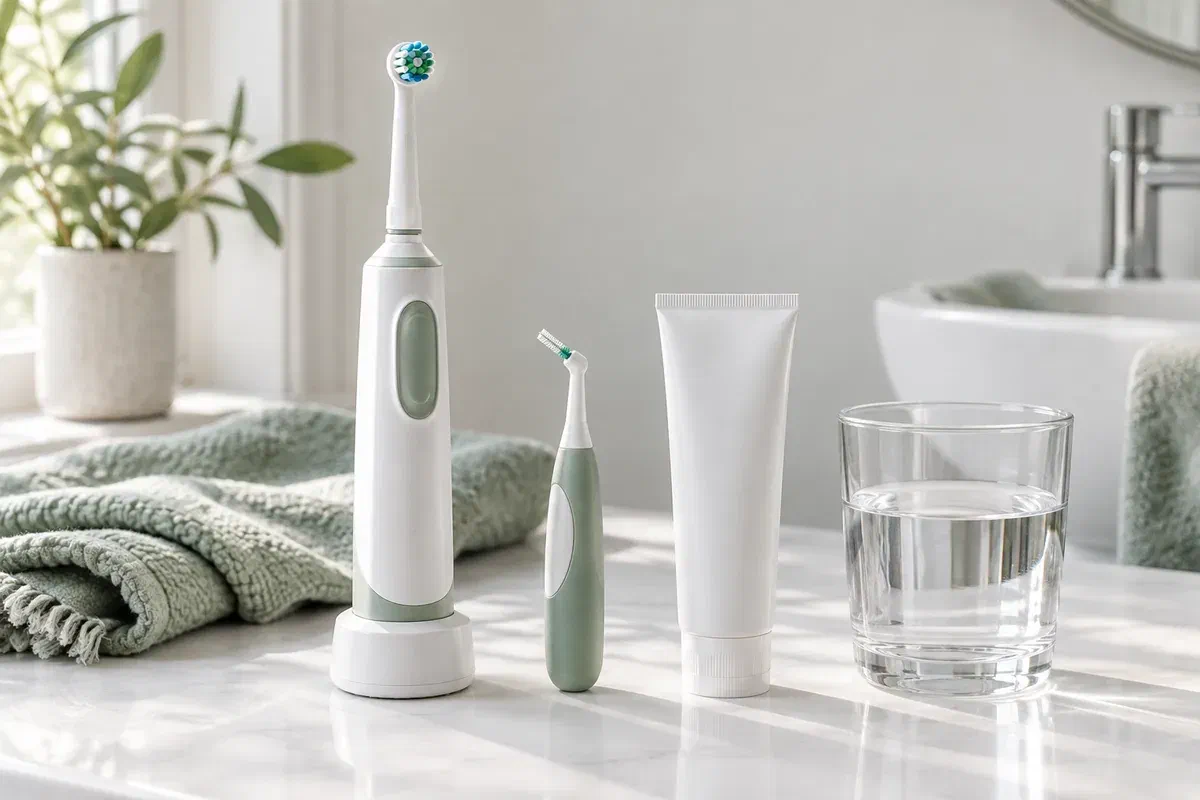
Illustrative easy-grip toothbrush and oral-care tools on a bright counter
Things to bring up

Teeth, appliance and the gums in between

Mentioning practical needs while booking lets us prepare. Please bring the appliance itself, your health information, and any record of dental work done elsewhere.

Changes around anchor teeth

Describe bleeding, soreness, food catching under the partial, or a clasp that rubs. A tooth that feels loose or a filling that has chipped next to the appliance needs assessment beyond routine cleaning, so let us know before the day.

Handling the appliance and brush

Removing and replacing a partial, cleaning it, and then brushing the teeth around it can be hard with stiff fingers or weaker eyesight. Tell us which part is the struggle. A different method or tool may make the whole routine more manageable.

Health, swallowing and comfort

Bring your current medication list and any advice from your physician. Mention swallowing difficulties, breathing concerns or discomfort when reclining. Ask about access or communication arrangements before you arrive, so the team can explain what is feasible.

Keep to your normal schedule for blood thinners and other prescriptions unless the clinician overseeing them has given you a different instruction. We need the list so your cleaning can be planned with it in mind, not so that anything is stopped.

Why it still matters

Protecting the teeth your partial depends on

The cleaning itself removes hardened deposits from the teeth that remain. Just as valuable is the look at where plaque collects around clasps and edges, how the gums under the appliance are responding, and whether older fillings or crowns on those anchor teeth are holding up.

There are things cleaning cannot do. It cannot guarantee your remaining teeth or the partial will last indefinitely, reverse every change in the supporting tissues, or explain discomfort with an unknown cause. Ask which findings fall under maintenance and which need an examination, an adjustment or a separate plan.

Patient information: CDA — dental examinations and oral care as you age

Different surfaces, different care

Natural teeth, crowns, implants and the materials of a partial are not cleaned the same way. If any work was done by another dentist and is not on your file, describe it. Ask how cleaning and home advice apply to each part of your mouth.

Keeping it simple to do yourself

A denture brush with a bigger handle, a smaller brush for anchor teeth, or another interdental aid may suit you. Practise in the chair before deciding. The right choice is one you can use properly and without strain.

Help when you want it

A family member or caregiver can learn how to clean the appliance and help on difficult days, if you would like that. Discuss their role with the team. Their support should strengthen your own understanding and choices, with consent clarified where relevant.

During your visit

How a cleaning works with a partial

The instruments used, how much cleaning is needed and the length of the visit vary. Ask at the beginning what can be completed today and whether a follow-up, adjustment or recheck may be needed.

  1. Review your health and the appliance

    We go over health updates, medicines, recent dental work and any concerns, including how the partial fits. Tell us how you like explanations given. Agree a signal for a break, and mention positioning worries before starting.

  2. Check the teeth and the gums beneath

    With the appliance out, the team looks at deposits, the gums and the tissues it covers, and considers whether routine cleaning suits or gum care should be discussed. Mention sore spots or recurring bleeding. An examination may be needed for some findings.

  3. Clean teeth, then review the partial

    The hygienist picks instruments to suit the build-up on each tooth and your clinical needs. The appliance may be checked as well. Ask for a pause, a clearer explanation or help with water at any time, and say if anything feels uncomfortable.

  4. Practise both routines before leaving

    Ask to be shown how to clean the anchor teeth and the appliance, step by step. Confirm what the next visit is for and any instructions tied to products used today. With your permission, a helper can learn the routine alongside you.

Day to day at home

Two short routines, done well

Use the instructions given for the treatment you had. If any step is difficult because of eyesight, dexterity, swallowing, memory or something else practical, let the team know and it can be changed.

Brush your own teeth with care

Use the brush or interdental aid you practised with, especially around teeth that support the partial. A powered brush or wider grip helps some people, but no one is required to use one. Ask for another option if your tool is awkward.

Notice dryness, sores or rubbing

Report a mouth that stays dry, a new sore under the appliance, or chewing that feels different. These deserve attention rather than being blamed on age. The team can suggest whether a check is needed and what to do until then.

Clean the partial separately

Follow the specific instructions for your appliance, and use products intended for it. Avoid harsh cleaners that may suit one material but not another. Treat the partial and your remaining teeth as two separate tasks each day.

Patient information: ADA — oral care considerations for older adults

Which care comes next

Matching the plan to what you have

Ask the purpose behind each recommendation, and whether a visit is for cleaning, gum disease, repairs, appliance adjustments or a combination.

When routine deposit removal and prevention fit

Maintenance cleaning

This visit removes the deposits found and supports your daily care of teeth and appliance. Frequency and scope depend on your mouth. Ask why the recommended interval suits you instead of assuming every older adult follows the same one.

When anchor teeth need closer support

Gum treatment and follow-up

Established gum disease around the remaining teeth may call for a more involved plan and reassessment. The team should explain how it differs from routine cleaning, the visits to expect, comfort planning, and how progress will be checked.

When something else affects the visit

Additional assessment or repairs

Pain, a broken clasp or restoration, medical concerns or complex support needs may require extra planning. You may be referred, or another provider may be consulted. Cleaning should be part of that broader plan rather than a stand-in for it.

Halton Hills seniors ask

Partials, remaining teeth and cleaning

Partials raise plenty of everyday questions, and all of them are welcome. Practical questions are part of planning treatment that suits you.

(905) 876-4488
I only have six teeth left. Is a cleaning still worthwhile?
Yes. Those teeth and their gums still need assessment and maintenance, especially if they support an appliance. Ask what care is recommended for them and how it relates to the partial and the tissues beneath it.
Should I wear my partial to the appointment?
Wear it or bring it, so the team can see how it fits and check the areas it covers. You may be asked to remove it during the cleaning. Mention any sore spots or changes in fit when you arrive.
How should I clean the partial at home?
Follow the instructions for your specific appliance and the products suited to its materials. Ask the team to demonstrate how to hold and clean it safely, and how that routine differs from brushing your natural teeth.
Is it all right to sleep with my partial in?
Ask the team about your own appliance and mouth, since advice can depend on individual circumstances. Mention your current habit at the visit so the guidance you receive is specific to you.
What if a clasp feels loose after the cleaning?
Mention it before you leave, or call afterward. A clasp or appliance that has changed fit may need assessment or adjustment, which is separate from the cleaning itself. Don’t try to bend it yourself.
Can my daughter learn to clean the partial for me?
With your agreement, yes. Discuss her role when booking. She can watch the demonstration and ask questions, while the team continues to speak with you directly about your care and choices.
Seniors’ cleaning for Halton Hills

Care for the teeth that are holding everything together

Phone our Bronte Street practice to set up a cleaning assessment. Bring your partial, and tell us about your dental work, sore areas and whatever would make the appointment easier, so we can plan it with you in advance.

Please mention access or support arrangements when you book. The type of care and how long the visit takes depend on your individual assessment.

Visit Milton Dental Clinic
Unit 1, 342 Bronte St. S, Milton, ON L9T 5B7
Get directions Clinic hours
Monday–Thursday
11am–7pm
Friday–Sunday
By appointment only

Areas we serve

  • Milton
  • Oakville
  • Mississauga
  • Georgetown
  • Halton Hills
  • Acton
  • Campbellville
  • Brampton
  • Burlington
  • Puslinch
  • Rockwood
  • Erin
  • Caledon
  • Etobicoke
  • Old Milton
  • Bronte Meadows
  • Timberlea
  • Dorset Park
  • Dempsey
  • Clarke
  • Beaty
  • Coates
  • Harrison
  • Scott
  • Willmott
  • Ford
  • Bowes
  • Cobden
  • Walker
  • Mountain View
  • Milton Heights
  • Hawthorne Village
  • Valley View
  • Fallingbrook
  • Nassagaweya
  • Trafalgar
  • Esquesing
  • Nelson
  • Brookville
  • Moffat
  • Glen Williams
  • Norval
  • Limehouse
  • Stewarttown
  • Ashgrove
  • Hornby
  • Silver Creek
  • Speyside
  • Scotch Block
  • North Oakville
  • River Oaks
  • Glen Abbey
  • West Oak Trails
  • Palermo
  • Bronte Creek
  • College Park
  • Joshua Creek
  • Uptown Core
  • Preserve
  • Iroquois Ridge
  • Lisgar
  • Meadowvale
  • Meadowvale Village
  • Churchill Meadows
  • Erin Mills
  • Central Erin Mills
  • Streetsville
  • East Credit
  • Creditview
  • Heartland
  • Sheridan
  • Mount Pleasant
  • Credit Valley
  • Huttonville
  • Churchville
  • Springbrook
  • Northwest Brampton
  • Bram West
  • Fletcher's Meadow
  • Fletcher's Creek South
  • Alton Village
  • Orchard
  • Millcroft
  • Headon Forest
  • Tansley
  • Brant Hills
  • Tyandaga
  • Kilbride
  • Lowville
  • Aberfoyle
  • Morriston
  • Arkell
  • Hillsburgh
  • Freelton
  • Carlisle
  • Waterdown
  • Flamborough
  • Mountsberg

How can we help?

Milton Dental Clinic

Have a question about your smile? Choose the option that works best for you.

For urgent dental concerns, please call.
Messages are reviewed during clinic hours.