

Illustrative patient describing tooth sensitivity during a dental conversation
General & Family Dentistry

Treatment for Sensitive Teeth in Oakville

Sometimes you can feel the zing but cannot say which tooth it came from. If you are travelling from Oakville, we help you describe that vague, shifting sensitivity and trace it to a cause before any treatment is chosen.

Hard to pin down

Upper or lower, left or right: not knowing is normal.

Plenty of people arrive saying something like, it is somewhere on this side. Tooth sensations can be surprisingly hard to locate, and a reaction from a lower tooth can feel as though it is coming from above. That uncertainty is not a problem. It is simply where the investigation begins.

What you can usually describe is the circumstance: a cold smoothie, cool air on a morning walk, or the brush near the gum. The examination then looks for the reason, which may be exposed dentin, but can also be decay, a small crack, a worn restoration, or a gum concern. Picking a toothpaste before that is known can mask a problem that needs its own treatment.

Nobody will ask you to bite on ice to demonstrate it. Tell us how the sensation behaves during ordinary eating, drinking, and cleaning, and whether it is spreading, settling, or holding steady. The dentist can then explain the most likely source, the care that suits it, and what improvement to expect.

Describe your sensitivity to us
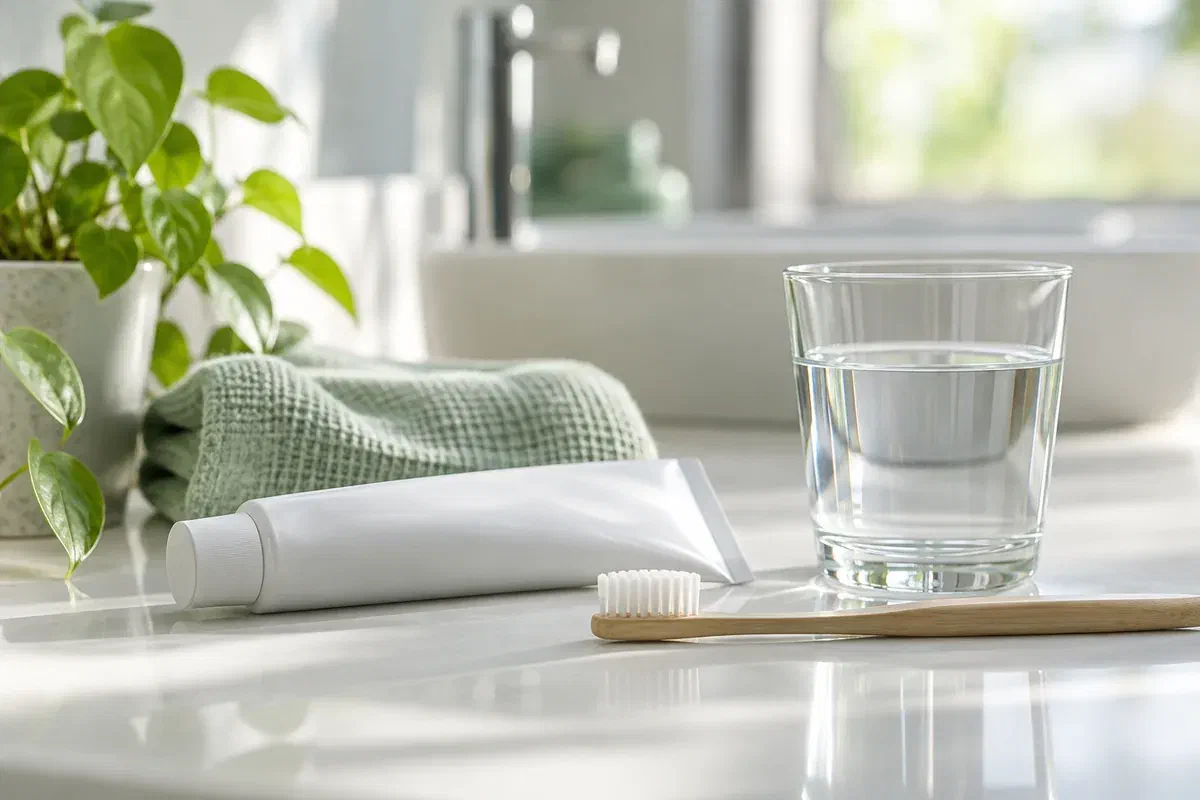
Illustrative soft toothbrush, toothpaste, and drinking water for gentle daily care
Clues worth sharing

What kind of sensitivity is it?

Before you call, think about the setting in which it happens, how far it seems to spread, and how many seconds or minutes it lasts. Those plain details are more useful than a guess at the diagnosis.

A short, repeatable zing

Cold, air, sweets, or the toothbrush can each be a trigger. Say whether it feels like a whole region or one spot. Even a quick reaction is worth checking when it is new, getting stronger, or making you rush past that area while brushing.

Pain that keeps going or comes from nowhere

Mention it if the discomfort outlasts the drink, disturbs your sleep, or starts unprompted. Those features can change how soon you should be seen and what the dentist investigates. A different toothpaste is not the natural next move at that stage.

Sensitivity with an obvious starting point

Recent treatment, a whitening kit, a new rinse, an injury, or a bite that suddenly feels off can all be relevant. That timing narrows the questions but does not answer them, so the area still needs a proper look.

Call promptly about swelling, a chipped or broken tooth, pain when chewing, or anything getting steadily worse. Have a routine visit booked already? Mention the new symptom so we can work out whether it needs an earlier or longer appointment.

Why we look before treating

Find the source, and the plan gets simpler.

Dentin is the layer beneath enamel, and when it loses its protection, everyday stimuli can register as a sharp signal. Because other conditions produce much the same sensation, the examination is what separates them. Depending on what is found, care might mean a home product, a treatment applied in the office, or a repair aimed at one tooth.

Results vary, and no treatment can guarantee relief that is quick or permanent. Ask what the recommended approach is expected to change, how to use it correctly, and when you will review the response. The plan should also say what to do if the feeling lingers or changes.

Patient information: ADA MouthHealthy — sensitive teeth and possible causes

One clear target

Once the source is identified, treatment can focus on that tooth or surface instead of the whole side of your mouth. Ask the dentist to show or describe the finding so you understand why a particular step is recommended.

An end to guessing in the toothpaste aisle

Bring a list or photos of the products you have tried and say how each worked. That avoids repeating something that did not help, and the dentist can explain whether a new suggestion acts differently.

Comfortable, complete cleaning

When a region is tender, it is tempting to brush around it, which makes ongoing care harder. Show us where the routine falls apart so technique and tools can be adjusted. The goal is thorough cleaning you can manage while treatment is reviewed.

Step by step

How we trace a sensitive tooth

Testing is chosen according to what the dentist sees, not run as a fixed routine. If you are concerned that a test may hurt, mention it so each step is explained beforehand.

  1. Map out the symptoms

    Tell us when it started, what sets it off, the general area, and how long it lasts. Mention night pain and any recent dental work. Saying it feels like the upper left is enough; you do not have to name a single tooth.

  2. Check teeth, fillings, and gums

    The dentist examines the likely surfaces, restorations, and gum tissue nearby. Targeted tests or X-rays may be recommended to narrow down the source. Ask what each is for, and signal if you need to take a break.

  3. Explain what was found

    You will hear what is clear and what is still uncertain. When a conservative approach fits, the team describes how to use it and how it will be monitored. If a tooth needs repair, ask about the options, trade-offs, and timing.

  4. Agree on home care and follow-up

    Confirm your routine at home, any treatment provided, and when to report back. Ask which developments should prompt an earlier call. A product trial should have a reason and a set review, not drift on while the cause is unknown.

Daily care afterward

Treat the area gently, and give the plan time.

Use the instructions that match your diagnosis and the specific treatment you had. Aftercare for a new restoration differs from aftercare for a desensitizing toothpaste.

Skip the self-tests

Checking the tooth with cold again and again only keeps it irritated. Use a soft brush and the method you were shown, and do not scrub harder over the tender spot. Tell us if that area remains difficult to clean.

Follow directions, one product at a time

A desensitizing paste may need consistent use for a while before its effect can be judged. Use it as instructed rather than combining treatments or applying more often. Ask what to do about whitening products if they seem related.

Notice the changes that count

A brief record can help: what triggers it, how long it lasts, and whether meals or brushing are easier. Avoid testing on purpose. Contact us if discomfort increases, starts by itself, or is not easing as expected.

Options to discuss

Which approach fits your finding?

Ask what each choice is meant to do. Exposed dentin, a structural issue, and a problem inside the tooth can lead to very different conversations.

When conservative care is appropriate

Desensitizing treatment

For a suitable sensitive surface, the dentist may recommend a home product or an in-office application. Discuss how to use it, what it will not do, and when to review it. It should follow a diagnosis, not cover for changing pain.

When a tooth or filling needs treatment

Protecting or repairing a specific tooth

Decay, a crack, or a worn restoration may need a repair or another protective step. The best choice depends on the condition and how much tooth structure remains. Ask why a treatment is advised and what alternatives exist.

When the diagnosis needs more than surface care

Additional gum or internal tooth care

Some findings call for a separate discussion about gum treatment or care within the tooth, and a referral may be considered. Root canal treatment is not a default for sensitivity; it depends on the diagnosis and the options available to you.

Asked by Oakville visitors

Questions about vague or shifting sensitivity

Ask about where it seems to come from, what sets it off, the products you have used, and when progress will be reviewed. Sensitivity can describe several different problems.

(905) 876-4488
Why does the sensitivity seem to move between teeth?
Tooth sensations can be hard to localize, and more than one area may be involved. That is one reason the dentist examines and may test several teeth. Describe what you feel without worrying about getting the exact tooth right.
Can a lower tooth feel as though it is an upper one?
It can be difficult to tell where tooth discomfort is coming from, and sensations sometimes seem to come from a different spot. The examination and any appropriate tests help clarify the source, so just describe the area as best you can.
Do sweet foods count as a sensitivity trigger?
They can. Some people notice a sharp feeling with sweets as well as with cold or brushing. Mention every trigger you notice, because the pattern helps the dentist decide what to examine and which explanations to consider.
Could a tiny crack be behind the zing?
A damaged tooth is one possible cause of sensitivity, along with exposed dentin, decay, and restoration problems. Pain when biting or releasing a bite is worth mentioning. The dentist will examine the tooth before discussing what, if anything, it needs.
Is it safe to keep using a whitening kit until my appointment?
If the whitening seems to bring on discomfort, stop and ask for advice before resuming. Bring the product and your schedule to the visit. More desensitizing products alongside the same whitening routine are not a replacement for an assessment.
How should I plan the trip in if I am coming from Oakville?
When you call, describe your symptoms so the team can suggest a suitable appointment and tell you what to bring, such as product names and notes on triggers. If swelling or severe pain develops before your visit, phone first or seek urgent care.
From Oakville to our Milton team

You describe the feeling; we find where it starts.

Call our Bronte Street practice to explain what you have noticed and book a suitable assessment. Let us know whether pain lingers, appears without warning, or began after recent treatment, so your next step can be planned well.

Care depends on the underlying cause. New swelling or strong, worsening pain should be reported promptly, not managed with products alone.

Visit Milton Dental Clinic
Unit 1, 342 Bronte St. S, Milton, ON L9T 5B7
Get directions Clinic hours
Monday–Thursday
11am–7pm
Friday–Sunday
By appointment only

Areas we serve

  • Milton
  • Oakville
  • Mississauga
  • Georgetown
  • Halton Hills
  • Acton
  • Campbellville
  • Brampton
  • Burlington
  • Puslinch
  • Rockwood
  • Erin
  • Caledon
  • Etobicoke
  • Old Milton
  • Bronte Meadows
  • Timberlea
  • Dorset Park
  • Dempsey
  • Clarke
  • Beaty
  • Coates
  • Harrison
  • Scott
  • Willmott
  • Ford
  • Bowes
  • Cobden
  • Walker
  • Mountain View
  • Milton Heights
  • Hawthorne Village
  • Valley View
  • Fallingbrook
  • Nassagaweya
  • Trafalgar
  • Esquesing
  • Nelson
  • Brookville
  • Moffat
  • Glen Williams
  • Norval
  • Limehouse
  • Stewarttown
  • Ashgrove
  • Hornby
  • Silver Creek
  • Speyside
  • Scotch Block
  • North Oakville
  • River Oaks
  • Glen Abbey
  • West Oak Trails
  • Palermo
  • Bronte Creek
  • College Park
  • Joshua Creek
  • Uptown Core
  • Preserve
  • Iroquois Ridge
  • Lisgar
  • Meadowvale
  • Meadowvale Village
  • Churchill Meadows
  • Erin Mills
  • Central Erin Mills
  • Streetsville
  • East Credit
  • Creditview
  • Heartland
  • Sheridan
  • Mount Pleasant
  • Credit Valley
  • Huttonville
  • Churchville
  • Springbrook
  • Northwest Brampton
  • Bram West
  • Fletcher's Meadow
  • Fletcher's Creek South
  • Alton Village
  • Orchard
  • Millcroft
  • Headon Forest
  • Tansley
  • Brant Hills
  • Tyandaga
  • Kilbride
  • Lowville
  • Aberfoyle
  • Morriston
  • Arkell
  • Hillsburgh
  • Freelton
  • Carlisle
  • Waterdown
  • Flamborough
  • Mountsberg

How can we help?

Milton Dental Clinic

Have a question about your smile? Choose the option that works best for you.

For urgent dental concerns, please call.
Messages are reviewed during clinic hours.